The 30 Most Expensive Beach Towns in the U.S.: Where Coastal Living Costs the Most
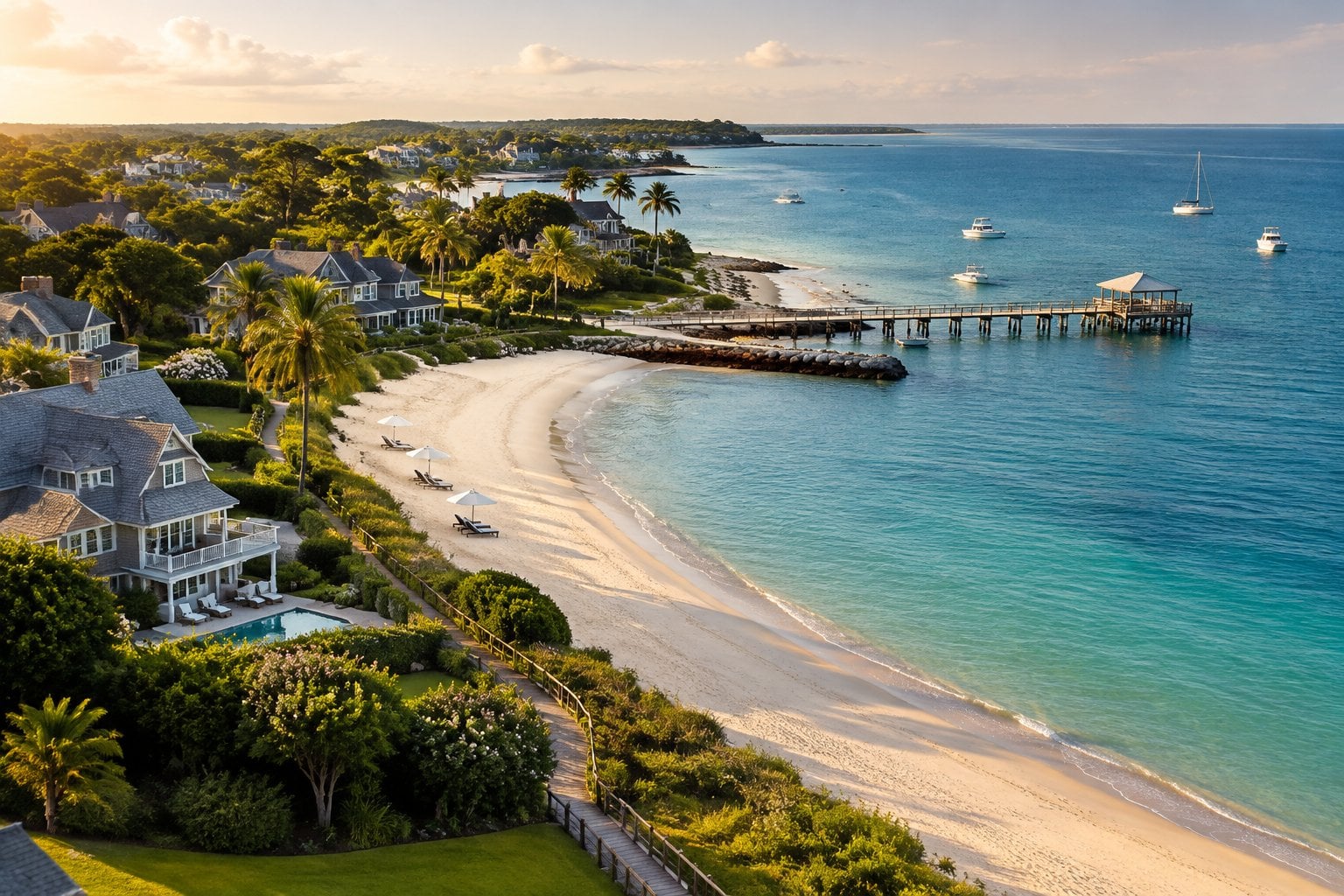
Coastal living comes at a premium in many parts of the United States. Limited land, high demand, and desirable climates push home prices well above national averages in certain towns along the coast.
If you are curious about where oceanfront living costs the most, this list breaks down 30 beach towns with the highest property values in the country. Factors like proximity to the water, local amenities, and community exclusivity all play a role in these rankings.
Each town on this list offers its own combination of scenery, lifestyle, and real estate trends. Understanding what drives these prices can help you better evaluate coastal markets, whether you are researching, planning a visit, or simply curious about American real estate.
1. Jupiter Island, Florida
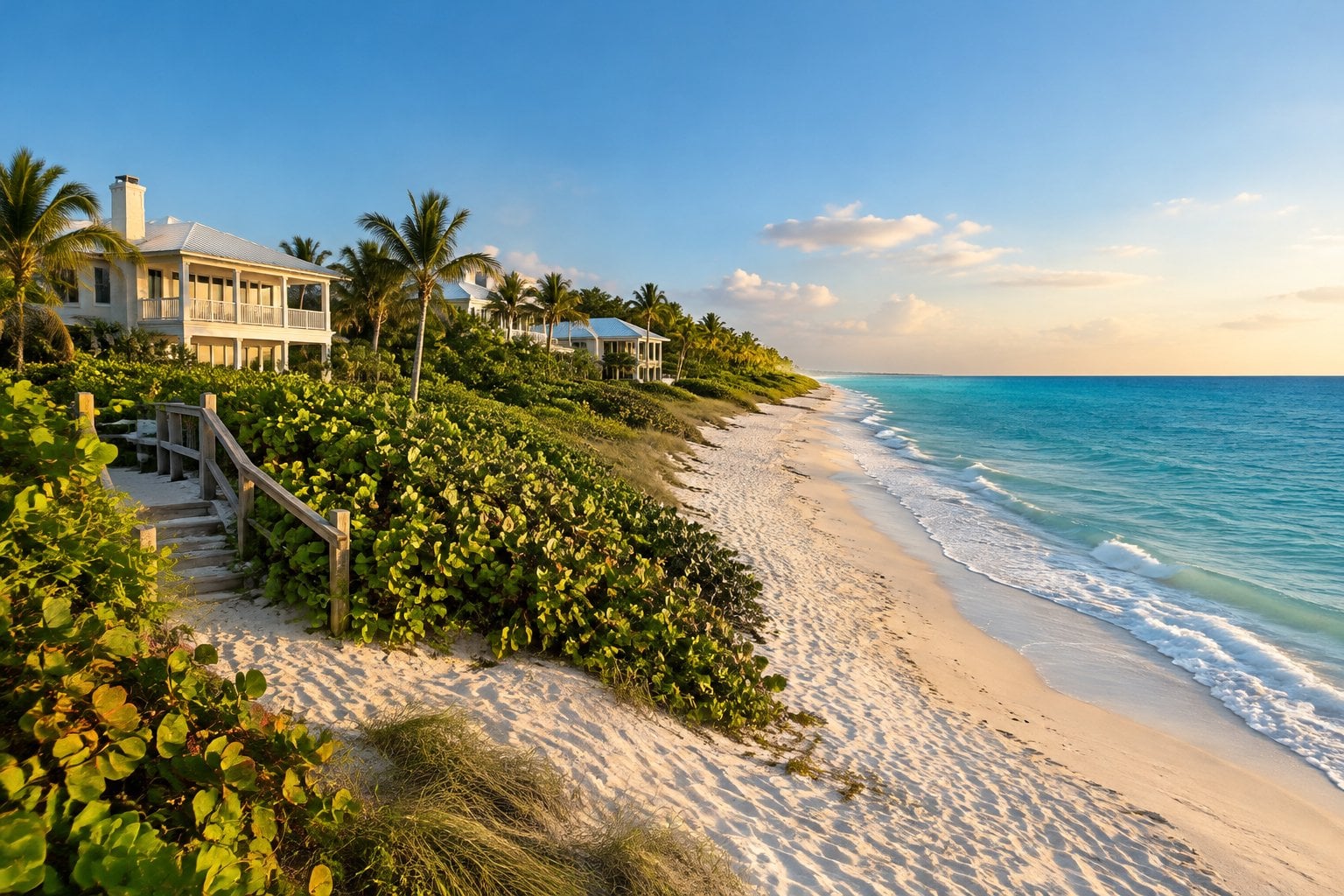
If you’re looking for the most expensive beach town in the country, Jupiter Island tops the list. This narrow barrier island sits in Martin County, about 85 miles north of Miami, separating the Atlantic Ocean from the Intracoastal Waterway.
Typical home values here exceed $9 million, and the island has recorded individual sales in the tens of millions of dollars in recent years. You won’t find commercial development or high-rise condos—zoning keeps the island almost entirely residential, with large private estates spread across generous lots.
The population stays small, and privacy is a defining feature of life here. Many residents maintain a low public profile despite significant wealth, and the island has long attracted business leaders, athletes, and old-money families.
Your cost of living on Jupiter Island reflects the scarcity of available land and the premium placed on waterfront access. Properties often include direct ocean frontage or Intracoastal docks suitable for large boats. The combination of limited inventory, strict building codes, and consistent demand keeps prices at the top of Florida’s luxury market year after year.
2. Sagaponack, New York
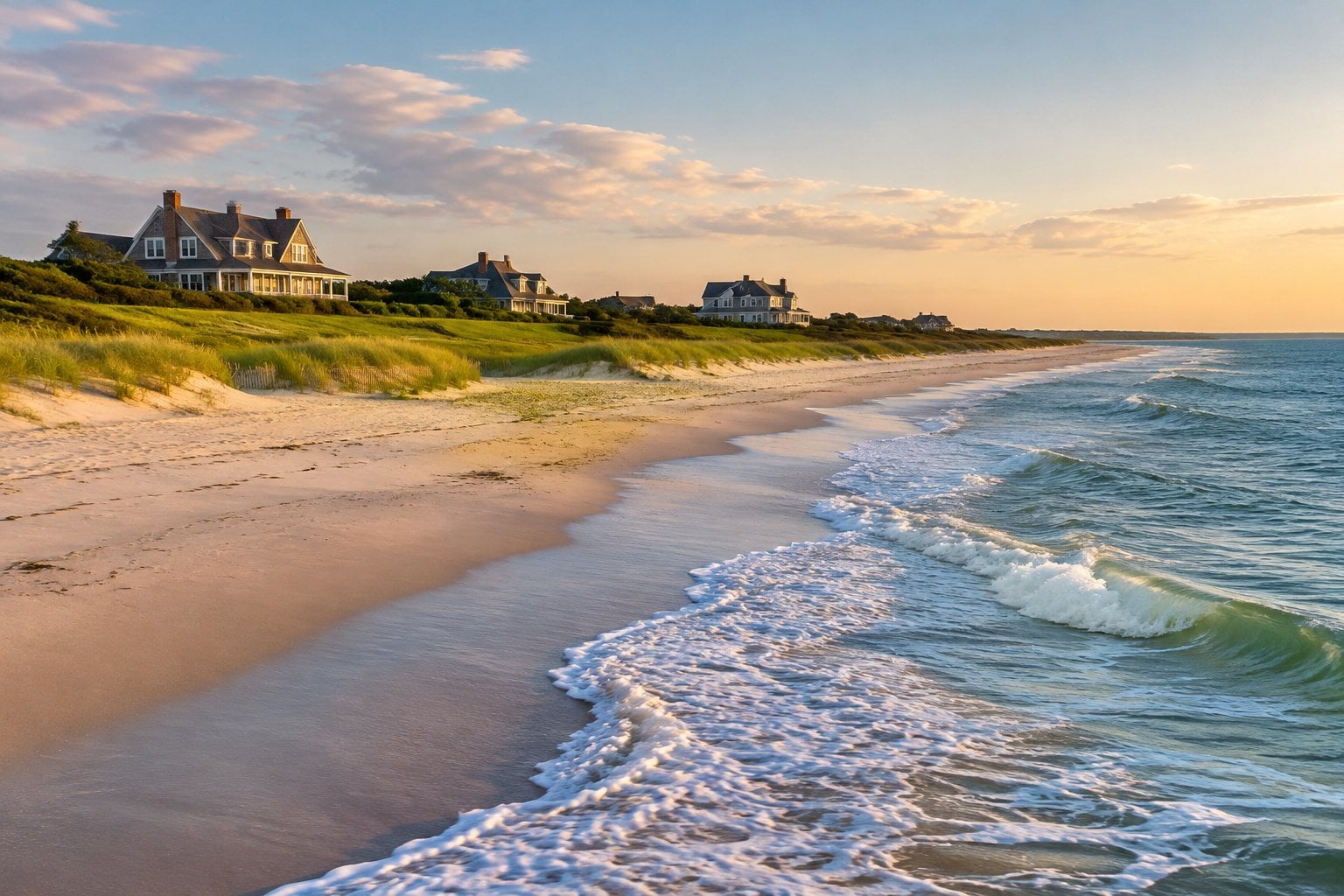
Sagaponack sits within the Town of Southampton on the South Fork of Long Island. You’ll find a small year-round population here, with fewer than 1,000 residents calling it home.
If you’re looking at real estate in this village, expect to pay a premium. Median home sale prices have ranked among the highest of any ZIP code in the country for over a decade, often topping $5 million.
You won’t find a commercial district or much in the way of shops and restaurants within the village itself. What you will find are agricultural reserves, horse farms, and oceanfront estates spread across low-density lots.
The coastline here consists of quiet Atlantic beaches, less crowded than those in neighboring Hamptons villages. Your neighbors, if you buy in, are likely to include hedge fund managers, entertainers, and other high-net-worth buyers drawn to the privacy this community offers.
Proximity to Manhattan, roughly two to three hours by car depending on traffic, adds to the appeal for weekend and summer residents.
3. Manalapan, Florida
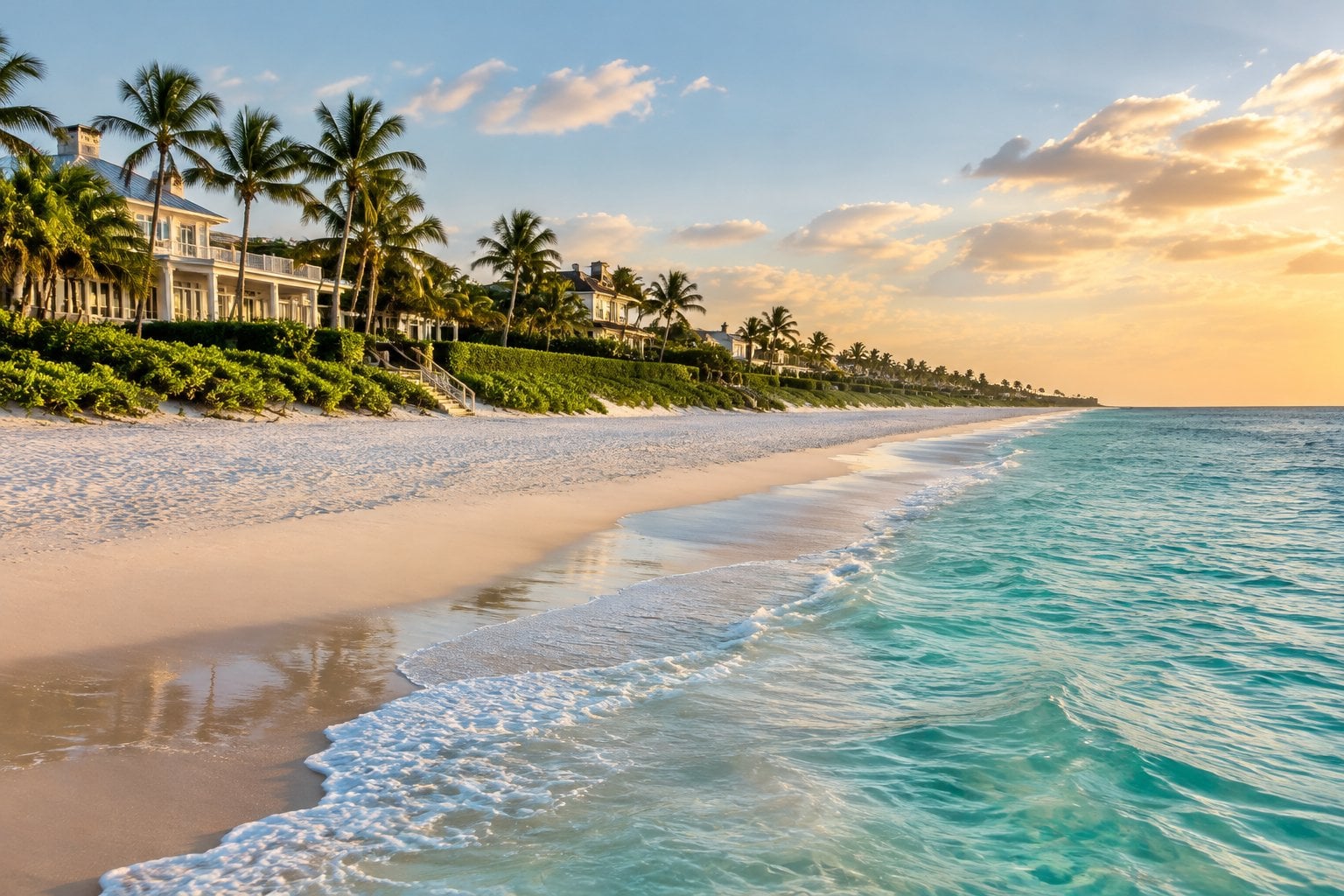
You’ll find Manalapan tucked onto a narrow barrier island between Palm Beach and Boca Raton, along Florida’s southeastern coast. It’s one of the smallest towns on this list, with a year-round population under 500 people.
Despite its size, you’re looking at one of the highest median home prices in the country. Sales in recent years have regularly topped eight figures, with some oceanfront estates selling for tens of millions of dollars.
Much of this comes down to scarcity. Manalapan has limited buildable land, strict zoning, and a long stretch of private beachfront, which keeps inventory extremely tight.
You’ll notice the buyer pool here skews toward billionaires and ultra-high-net-worth individuals rather than typical second-home owners. Larger compounds, private docks, and direct ocean access are common features.
Cost of living in Manalapan reflects this exclusivity, with property taxes and maintenance costs well above state averages. If you’re searching for understated luxury rather than a bustling tourist scene, this is one of the quietest, most private coastal communities in South Florida.
4. Palm Beach, Florida
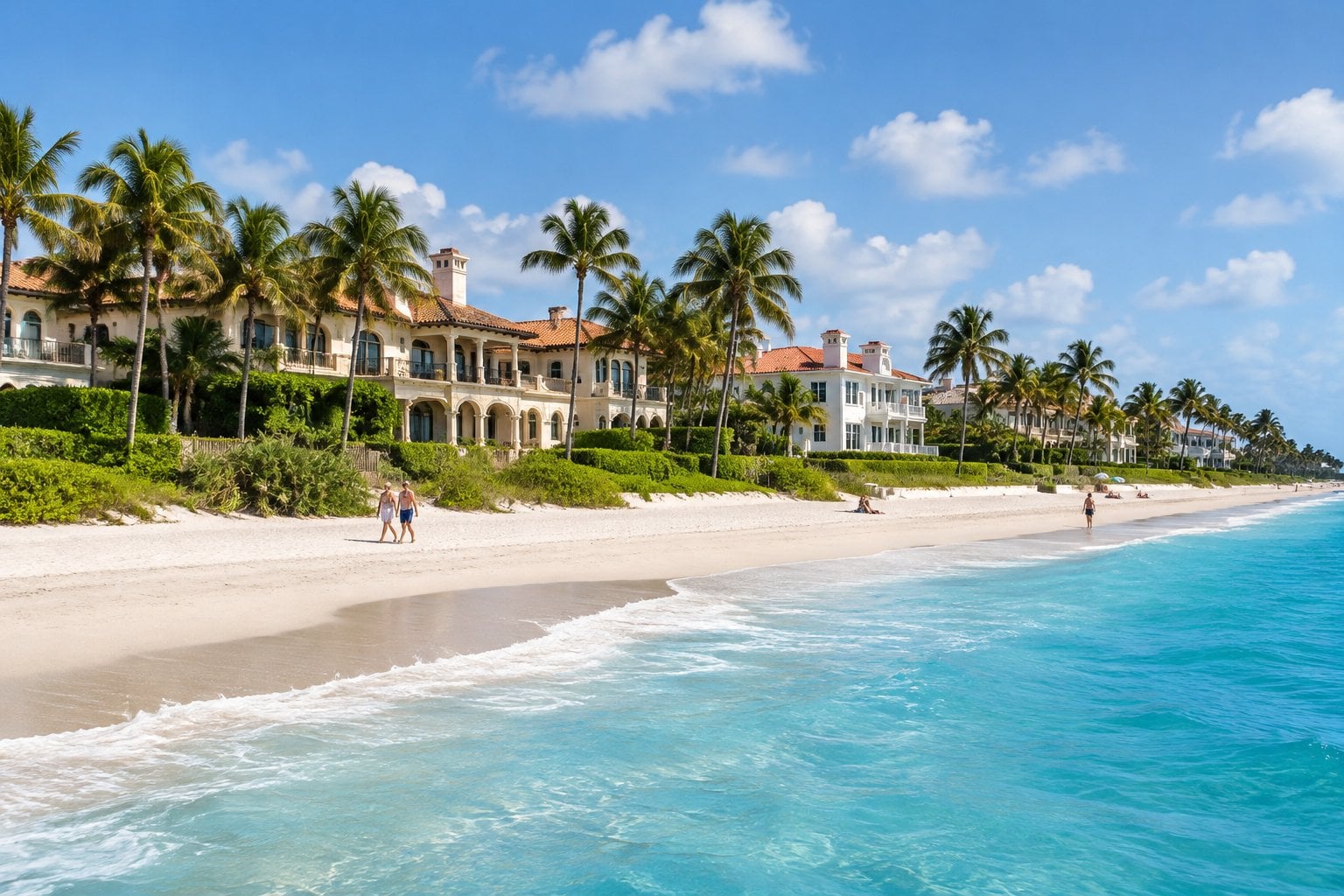
Palm Beach sits on a narrow barrier island along Florida’s southeastern coast, separated from West Palm Beach by the Intracoastal Waterway. You’ll find a mix of historic estates, oceanfront mansions, and condominiums, with Worth Avenue serving as the town’s well-known shopping and dining district.
Home prices here rank among the highest in the country. Median prices for single-family homes often reach into the eight figures, and even condos typically sell well above $1 million.
The town has fewer than 10,000 year-round residents, though that number shifts seasonally as part-time homeowners arrive for the winter months. You’ll notice strict zoning and architectural guidelines throughout the island, which help preserve its low-density, manicured character.
Cost of living extends beyond housing. Property taxes, private club memberships, and services catering to high-net-worth residents all contribute to daily expenses that exceed national averages by a wide margin.
The beaches themselves are quiet and less commercialized than you might expect, with public access points limited compared to other coastal towns. Many oceanfront properties maintain private stretches of sand, reinforcing the area’s reputation for privacy and exclusivity.
5. Montecito, California
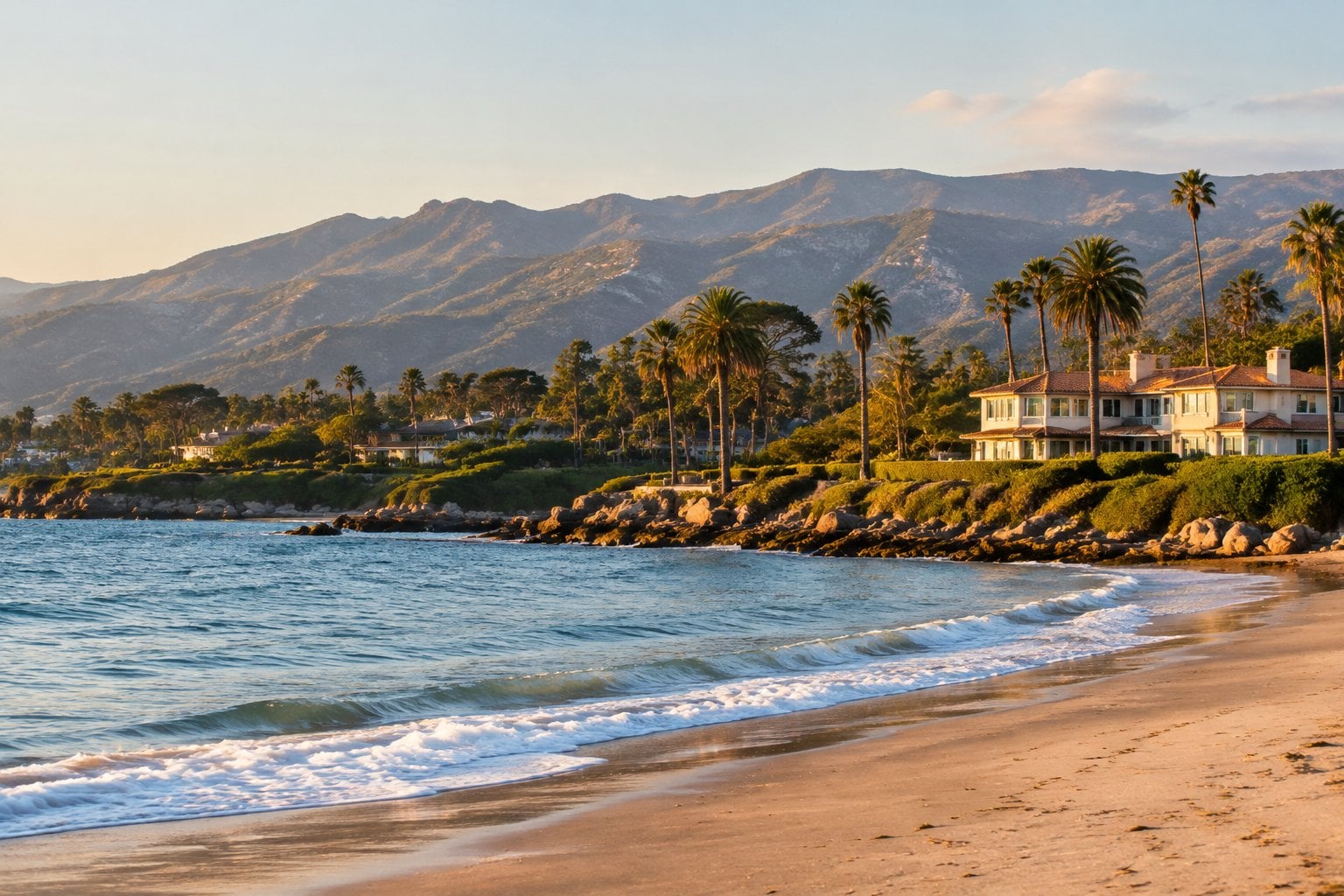
You’ll find Montecito tucked along the Santa Barbara County coast, just east of Santa Barbara proper. It’s a small, unincorporated community known for its large estates, Mediterranean-style architecture, and dense tree cover that shields many homes from view.
Home prices here are among the highest in the country, with median values often reaching into the seven figures and well beyond for oceanfront or hillside properties. You won’t find much in the way of budget housing options in this market.
Several celebrities and high-profile residents own property in Montecito, which has helped cement its reputation as an exclusive enclave. The town’s proximity to the Santa Ynez Mountains gives you both coastal and mountain views within a short drive.
Cost of living extends beyond housing, with dining, services, and everyday expenses priced to match the surrounding affluence. Despite its small size, Montecito draws visitors to its upscale shops and restaurants along Coast Village Road.
6. Malibu, California
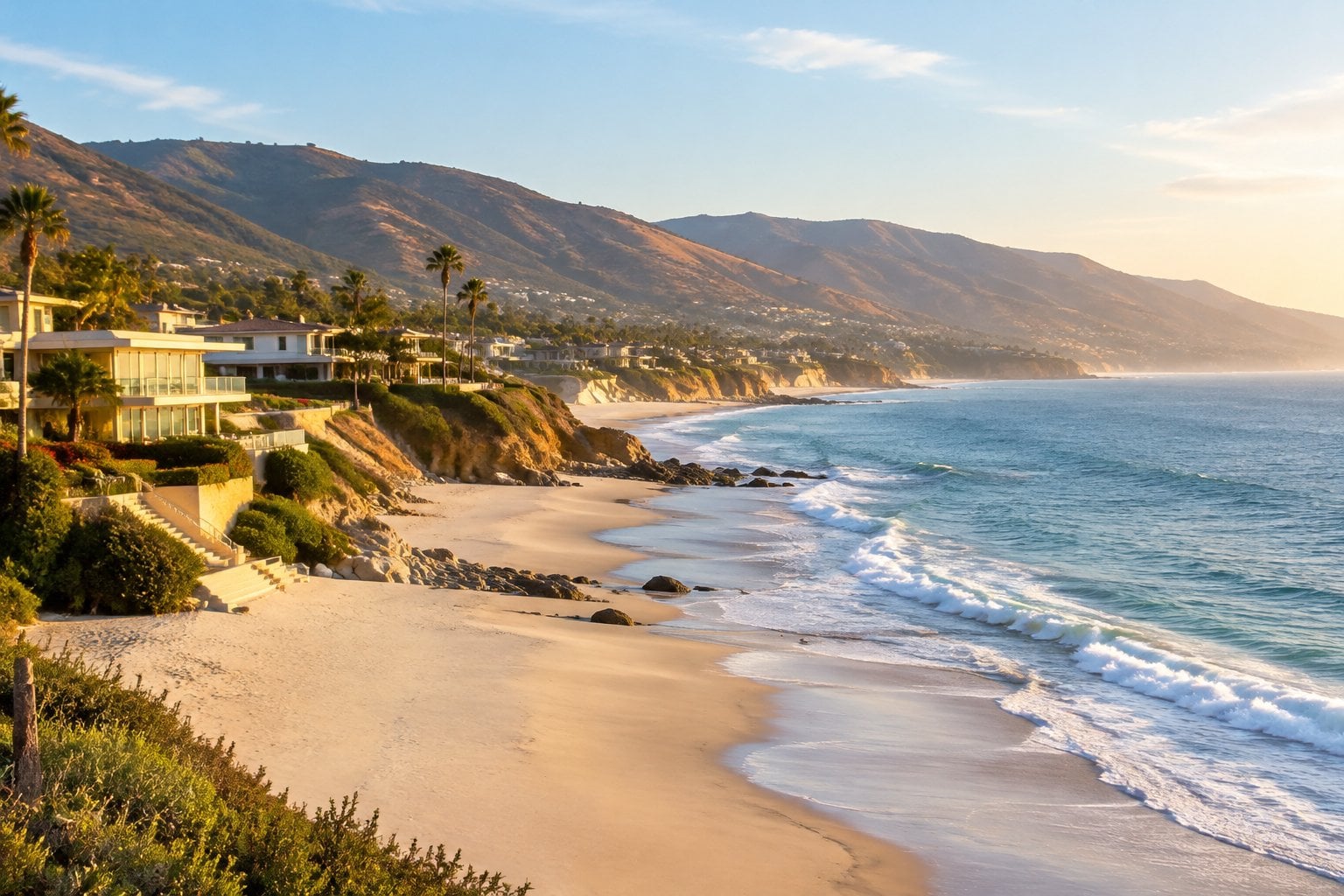
You already know Malibu’s name, even if you’ve never visited. This 21-mile stretch of Pacific coastline in Southern California has built a reputation as one of the most exclusive addresses in the country.
Home prices here run high, often into the millions, with oceanfront properties on stretches like Carbon Beach commanding far more. You won’t find bargains in this market.
The town draws celebrities and business executives who want privacy along with proximity to Los Angeles. Many properties sit behind gates or tucked into canyons, shielded from public view.
Despite its wealth, Malibu keeps a low-key, beach-casual feel. You’ll notice surf shops and seafood shacks sitting near multimillion-dollar homes, a contrast that defines the area’s character.
The coastline itself explains much of the appeal. Rocky bluffs, sandy coves, and consistent surf breaks give you a dramatic backdrop that’s hard to replicate elsewhere.
Cost of living extends beyond housing, too. Groceries, dining, and services all carry a premium here, reflecting the affluence of the community you’d be joining.
7. Nantucket, Massachusetts
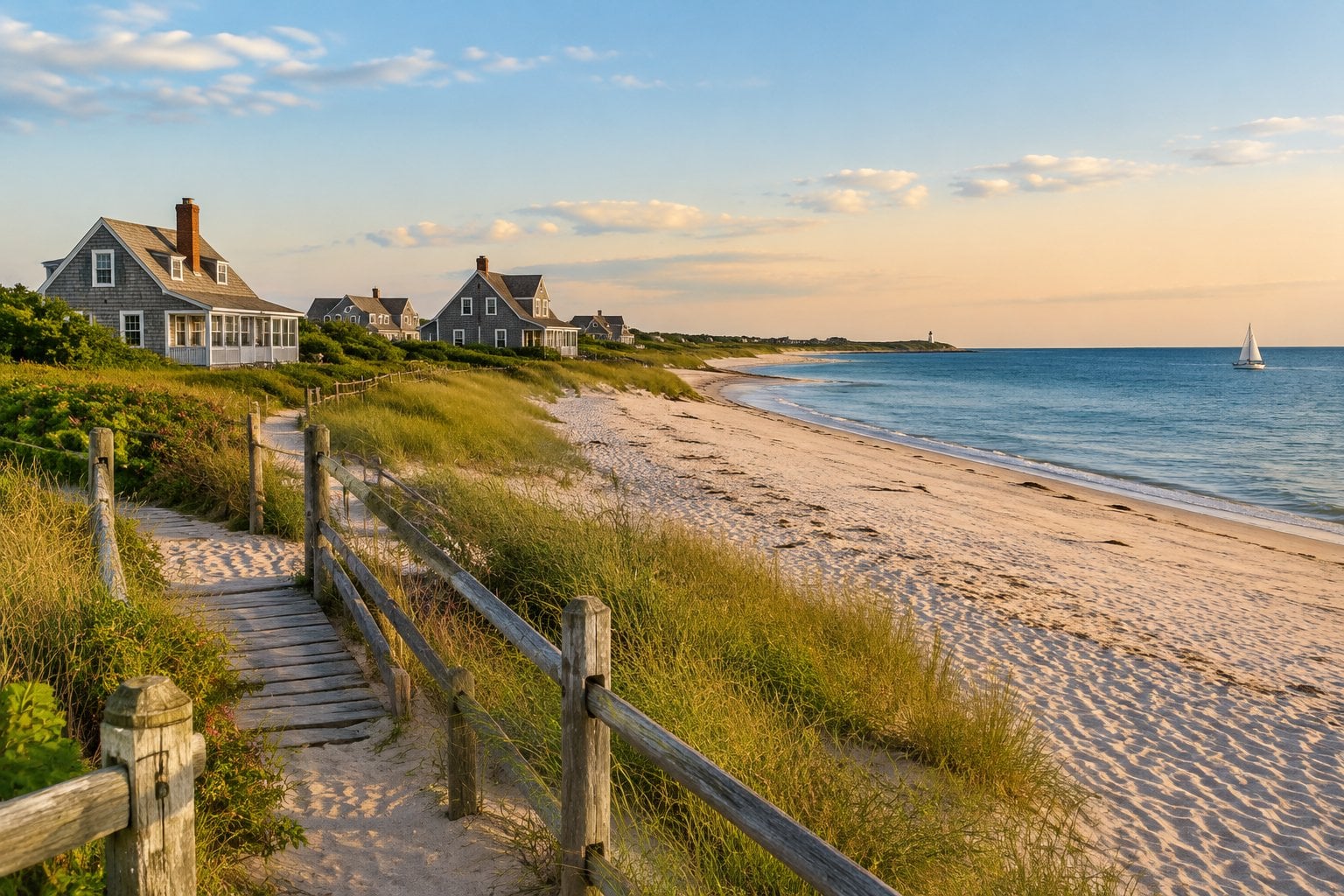
You’ll find Nantucket sitting about 30 miles off Cape Cod, and it consistently ranks among the most expensive places to own property in the country. Median home values here run well above $3 million, putting the island ahead of major metros like San Jose when it comes to real estate costs.
Your year-round population stays under 15,000, but that number swells dramatically each summer as visitors arrive by ferry and plane. More than half the homes on the island are seasonal, which tells you a lot about how the local economy and housing market function.
If you’re planning a visit, expect to pay for it. Hotel rates here often exceed $600 per night during peak season, which puts it among the pricier beach destinations in the country.
What draws you to Nantucket isn’t just the price tag. You get cobblestone streets, well-preserved colonial architecture, and quiet beaches lined with dunes and beach grass. The island’s whaling history shows up in its museums and historic homes, giving you a sense of place that goes beyond its reputation for wealth.
8. Manhattan Beach, California
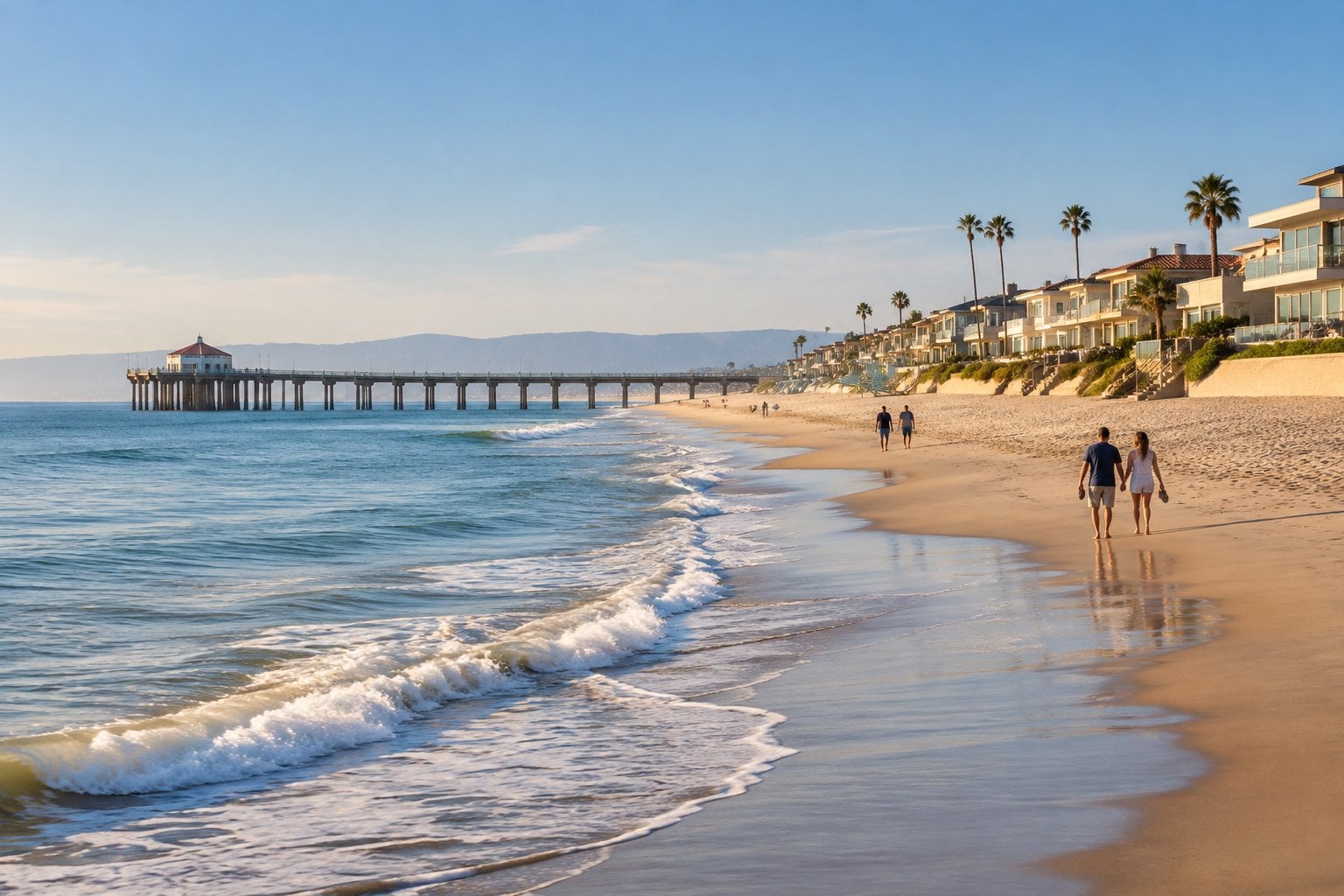
Manhattan Beach sits along the LA County coastline, just south of the city’s sprawl. You’ll find a compact, affluent community that prizes its beach culture while maintaining a polished, upscale feel.
If you’re looking at real estate here, expect median home prices well above $3 million. That figure puts Manhattan Beach among the priciest residential markets in the country, not just among beach towns.
The cost of living matches the real estate numbers. You’re looking at expenses roughly double the national average, with housing driving most of that gap.
The town attracts tech executives, entertainment industry professionals, and others who want proximity to Los Angeles without living in it. You’ll notice the demographic skews toward dual-income households with significant earning power.
Despite the price tag, Manhattan Beach keeps a relatively low-key atmosphere compared to flashier California destinations. You get wide sandy beaches, a walkable downtown, and a strong focus on outdoor recreation, all wrapped in one of the wealthiest zip codes on the Pacific coast.
9. Del Mar, California
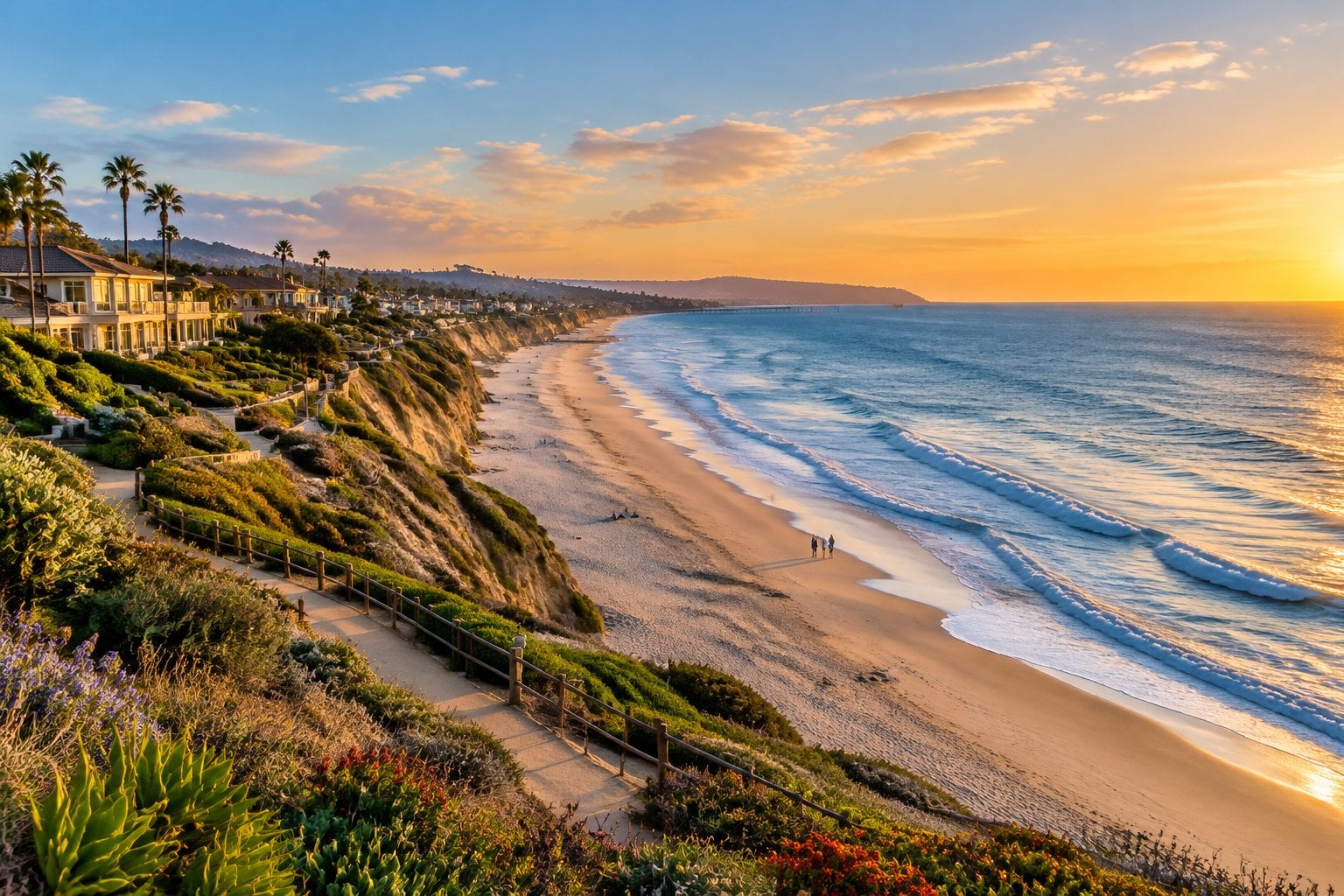
Del Mar sits in San Diego County, along a stretch of bluffs and beaches that command some of the highest home prices in the state. You’ll find median home values well into the millions, among the steepest of any coastal town in the country.
Several factors drive this. The town’s limited size keeps inventory scarce, and its location along the Pacific gives nearly every property some proximity to the water or coastal views.
The Del Mar Thoroughbred Club adds another layer to the town’s identity. Horse racing season brings visitors and attention each summer, reinforcing Del Mar’s reputation as a destination with a distinct character beyond its real estate values.
Cost of living here extends past housing. Dining, services, and everyday expenses track with the elevated property market, so you should expect premium pricing across the board if you spend time in the area.
Del Mar’s small-town feel, paired with its proximity to San Diego, makes it appealing to those who want coastal living without being far from a larger city. That balance contributes directly to its standing among the most expensive beach towns in the U.S.
10. Laguna Beach, California
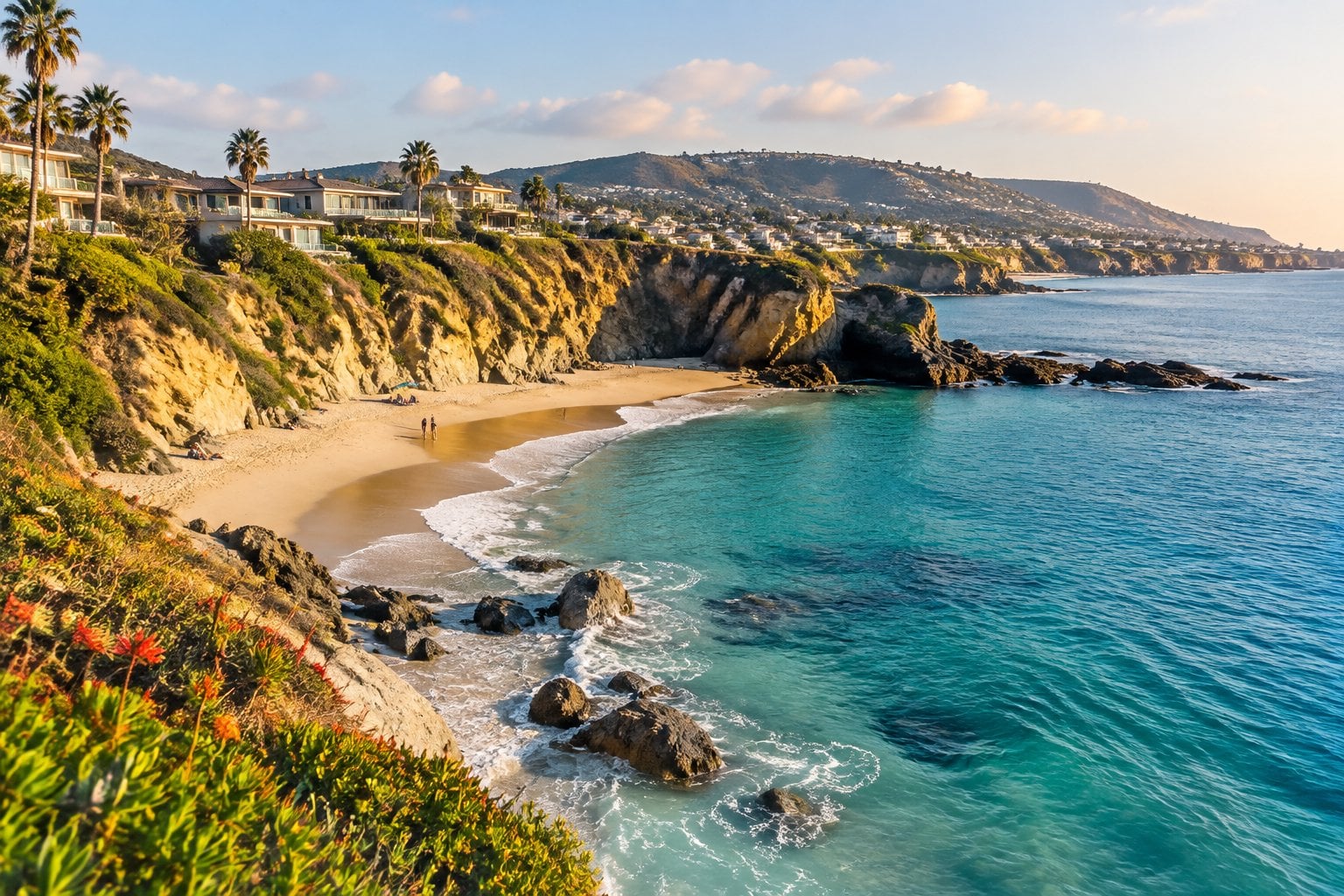
Laguna Beach sits along Orange County’s coastline, known for its rocky coves, tide pools, and stretches of sandy shoreline. You’ll find a town that built its identity around art, with galleries and a long-running summer arts festival drawing visitors each year.
Home prices here run high. Median values typically land in the millions, with oceanfront and hillside properties commanding the steepest premiums.
Your cost of living extends well beyond housing. Groceries, dining, and everyday services all run above state and national averages, reflecting the town’s affluent character and coastal location.
Laguna Beach draws comparisons to other wealthy Southern California communities, and it consistently ranks among the priciest cities in the state and country. If you’re considering a move here, expect housing costs to make up the largest share of your budget, with rent and home prices far exceeding what you’d find in inland Orange County cities.
The trade-off is access to a well-preserved coastal environment and a community that has resisted heavy commercial development along its shoreline.
11. Newport Beach, California
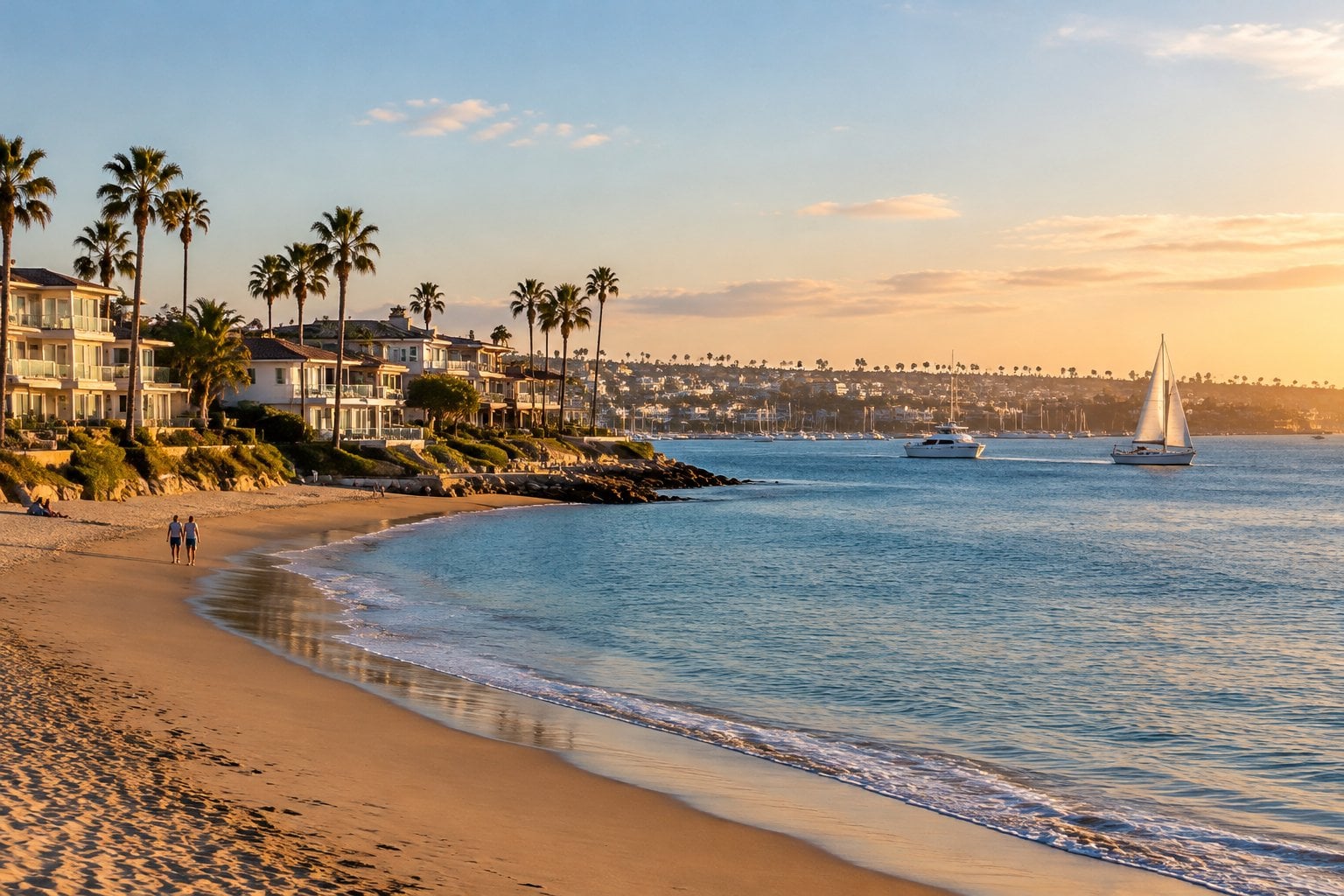
Newport Beach sits along the Orange County coastline, and you’ll find it among the priciest beach towns in the country. Median home values here run well into the millions, with some neighborhoods pushing far beyond that figure.
If you’re browsing listings, you’ll notice Newport Coast and Corona del Mar stand out as particularly expensive pockets within the city. Balboa Island adds another layer of exclusivity, with its tightly packed waterfront homes and private docks.
You’ll see the city’s harbor packed with yachts and sailboats, a visual reminder of the wealth concentrated here. Several of California’s highest-valued ZIP codes fall within Newport Beach’s borders, a distinction that has grown more pronounced over the past two decades.
The town draws residents from entertainment and sports industries, alongside longtime Orange County families. Beyond real estate, you’ll find daily expenses here—dining, services, and retail—reflect the overall cost of living in this part of coastal Southern California.
12. Carmel-by-the-Sea, California
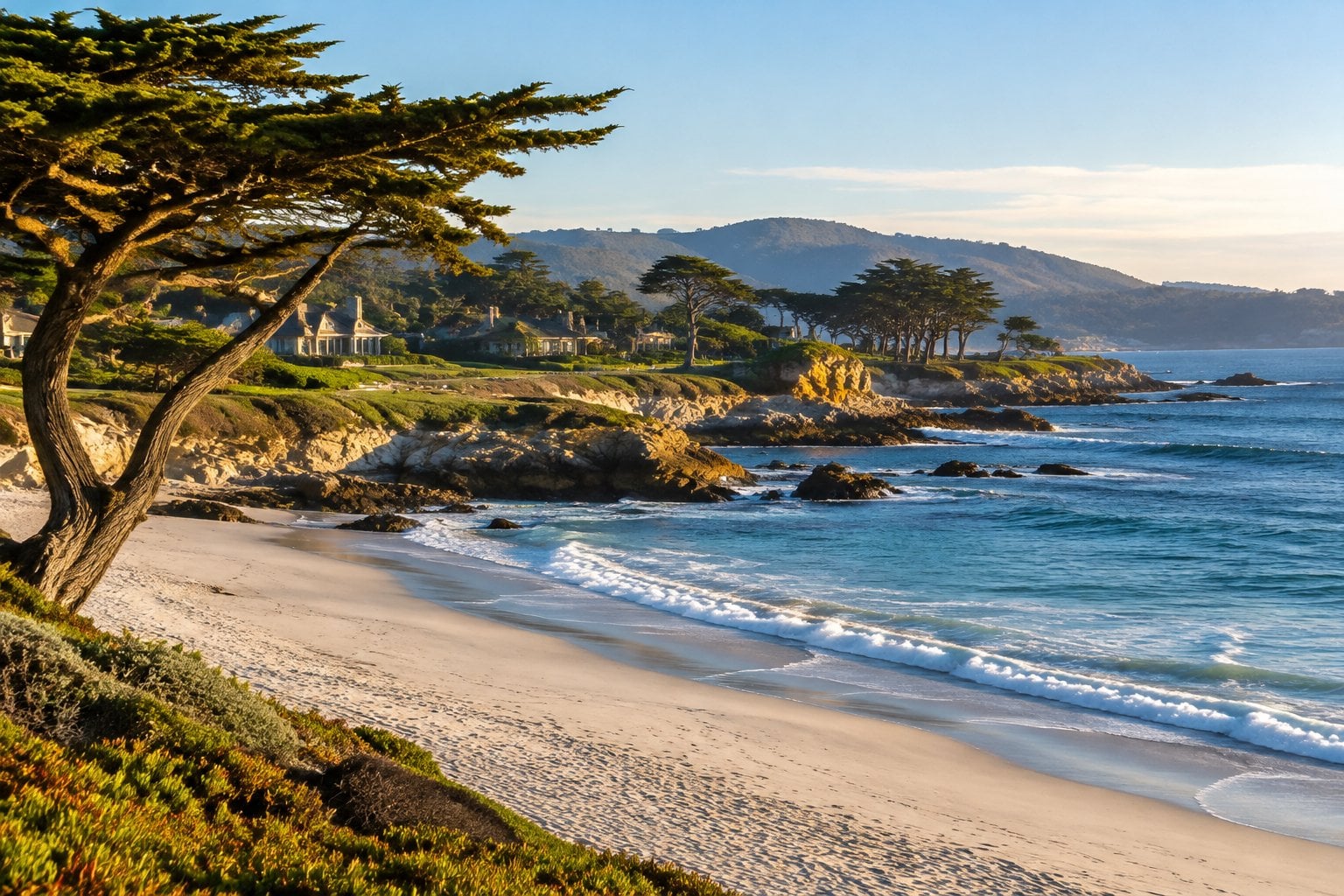
You’ll find Carmel-by-the-Sea tucked along the Monterey Peninsula on California’s Central Coast. This small village covers about one square mile, giving it a compact, walkable feel unlike most coastal towns on this list.
Median home prices here run well into the millions, often cited in the $2 million to $3 million range. That price tag buys you a storybook cottage rather than a sprawling estate, since lot sizes tend to be modest.
You’ll notice the town’s European-village character right away, with tree-lined streets, art galleries, and boutique shops replacing chain stores entirely. Carmel’s white-sand beach curves along the Pacific, offering dramatic views without the crowds you’d find in Southern California.
Cost of living extends beyond housing, too. Dining, hotel stays, and everyday expenses rank among the highest in the state, reflecting the town’s exclusivity.
If you’re drawn to artistic heritage and natural beauty over flashy development, Carmel offers a quieter, more refined version of coastal luxury.
13. Coronado, California
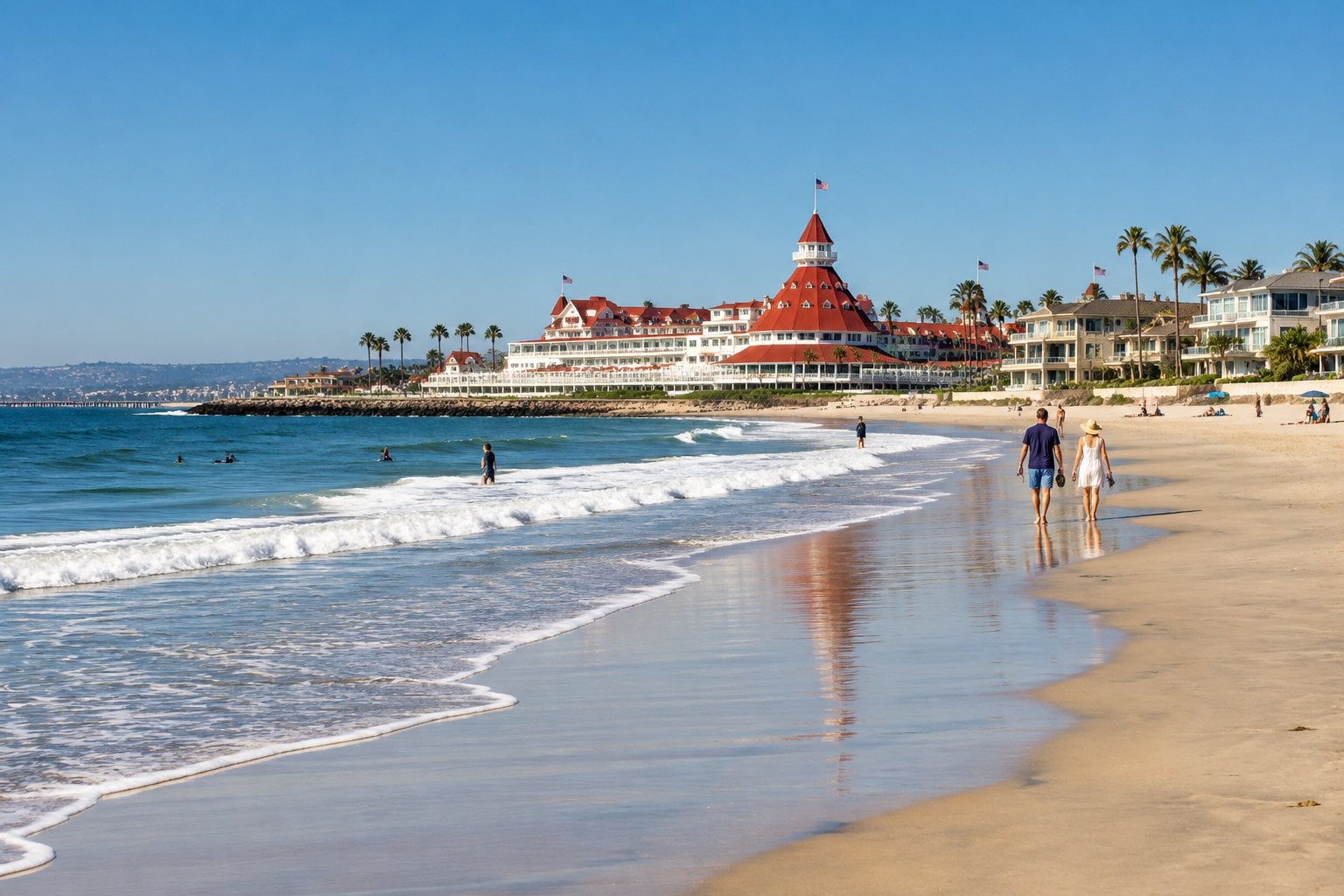
Coronado sits across the bay from San Diego, connected by a scenic bridge that gives you a clear view of the city skyline. You’ll find a coastal community known for its wide, white-sand beach and the historic Hotel del Coronado, which anchors the town’s identity.
Home prices here run well above the national median, with many properties priced in the high six figures to multiple millions. If you’re looking at waterfront or near-beach homes, expect the upper end of that range.
Your day-to-day expenses in Coronado also rank among the highest in California. Groceries, dining, and services typically cost more than in surrounding San Diego neighborhoods, reflecting the town’s status as a sought-after coastal enclave.
The military presence from the nearby naval base adds a distinct character to the community, blending longtime residents with active-duty families. You’ll notice a mix of historic cottages, mid-century homes, and newer luxury builds throughout the residential streets, giving the town a layered architectural feel despite its small size.
14. East Hampton, New York
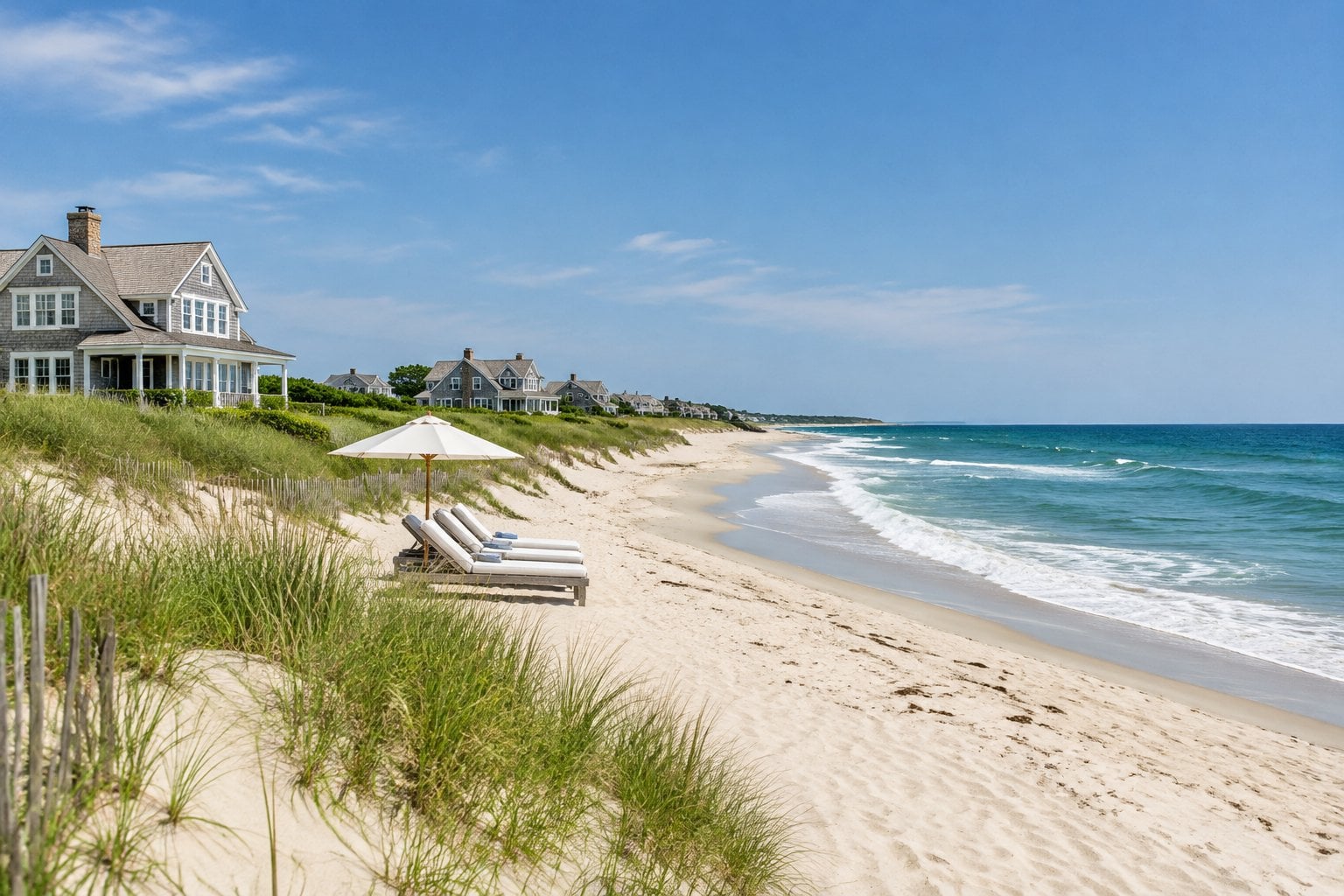
East Hampton sits on the South Fork of Long Island, in Suffolk County, and it carries a reputation as one of the most exclusive beach towns in the country. You’ll find oceanfront estates here that command some of the highest prices in the Hamptons region.
Median home values in East Hampton run well above $2 million, and prices have climbed over recent years. If you’re looking at properties near Main Beach, listing prices can climb well above that, often reaching into the millions for homes with direct ocean access.
The town’s appeal comes from its combination of natural beauty and privacy. You get wide, sandy beaches, quiet lanes lined with hedgerows, and a historic village center that dates back centuries.
East Hampton has long attracted New York City residents seeking a seasonal retreat, and that demand keeps prices elevated. Cost of living here extends beyond real estate, with dining, shopping, and services priced to match the area’s affluent, high-demand summer population.
15. Southampton, New York
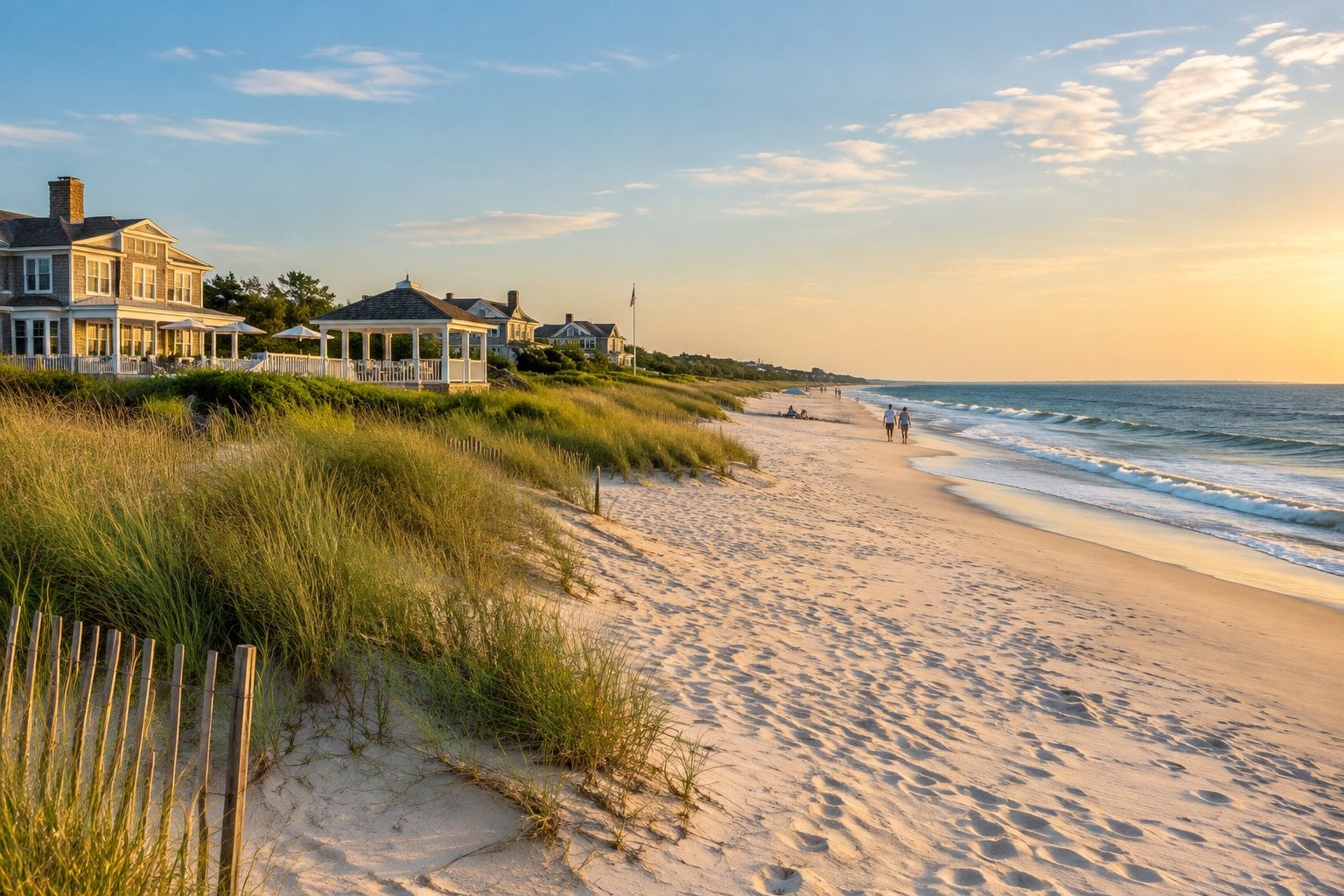
Southampton sits on the eastern end of Long Island and ranks among the most expensive beach towns in the country. You’ll find median home prices well above $2 million, placing it in the same tier as the wealthiest coastal communities in the United States.
The town has attracted affluent families for generations, and its summer population swells with visitors from Manhattan and beyond. You’ll notice the influence of old money alongside newer wealth, both drawn to the area’s reputation and privacy.
Southampton’s coastline includes miles of Atlantic beachfront, with wide stretches of sand bordering the ocean. You’ll also find calmer waters along Shinnecock Bay, which offers a different pace from the open Atlantic side.
If you’re visiting, expect high costs for dining, lodging, and rentals, especially during peak summer months. Daily expenses here reflect the surrounding real estate market, so budget accordingly.
Southampton’s combination of historic estates, upscale shopping, and beach access continues to make it one of the priciest destinations on the East Coast.
16. Avalon, New Jersey
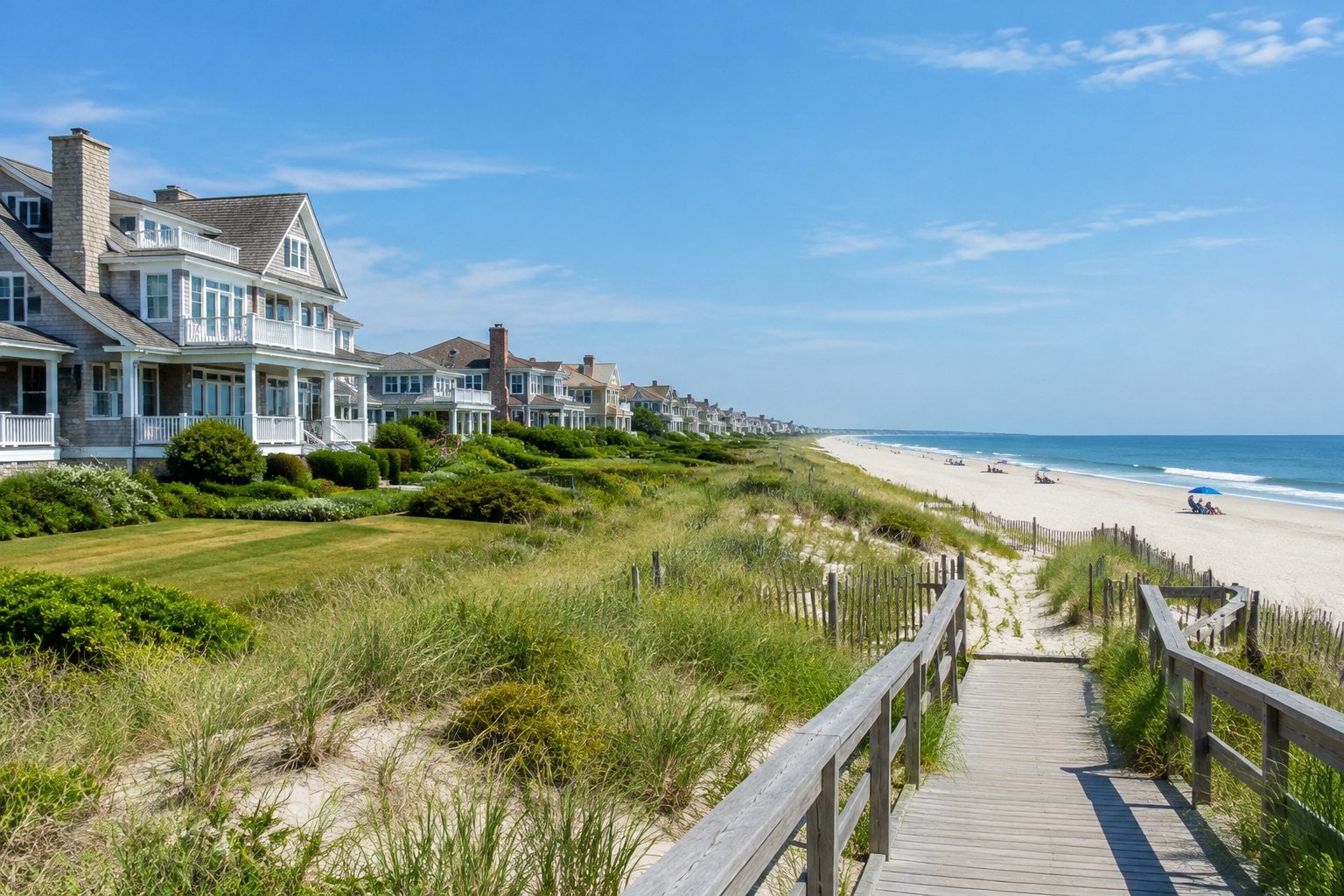
Avalon sits on Seven Mile Island along the Jersey Shore, in Cape May County. You’ll find it known for quiet, well-kept streets and wide sandy beaches that draw summer visitors year after year.
Median home prices here run well above $2 million, placing Avalon among the most expensive beach towns in New Jersey and the broader United States. If you’re looking at real estate here, you should expect premium pricing on nearly every property type, from modest cottages to large beachfront homes.
The town has a small year-round population, and much of its housing stock serves as seasonal residences. You’ll notice this shapes the local character, with a quieter off-season and a busy, lively atmosphere during summer months.
Cost of living in Avalon extends beyond housing. Dining, services, and recreation tend to carry higher price tags than in neighboring inland communities, reflecting the town’s affluent, resort-oriented identity.
17. Hermosa Beach, California
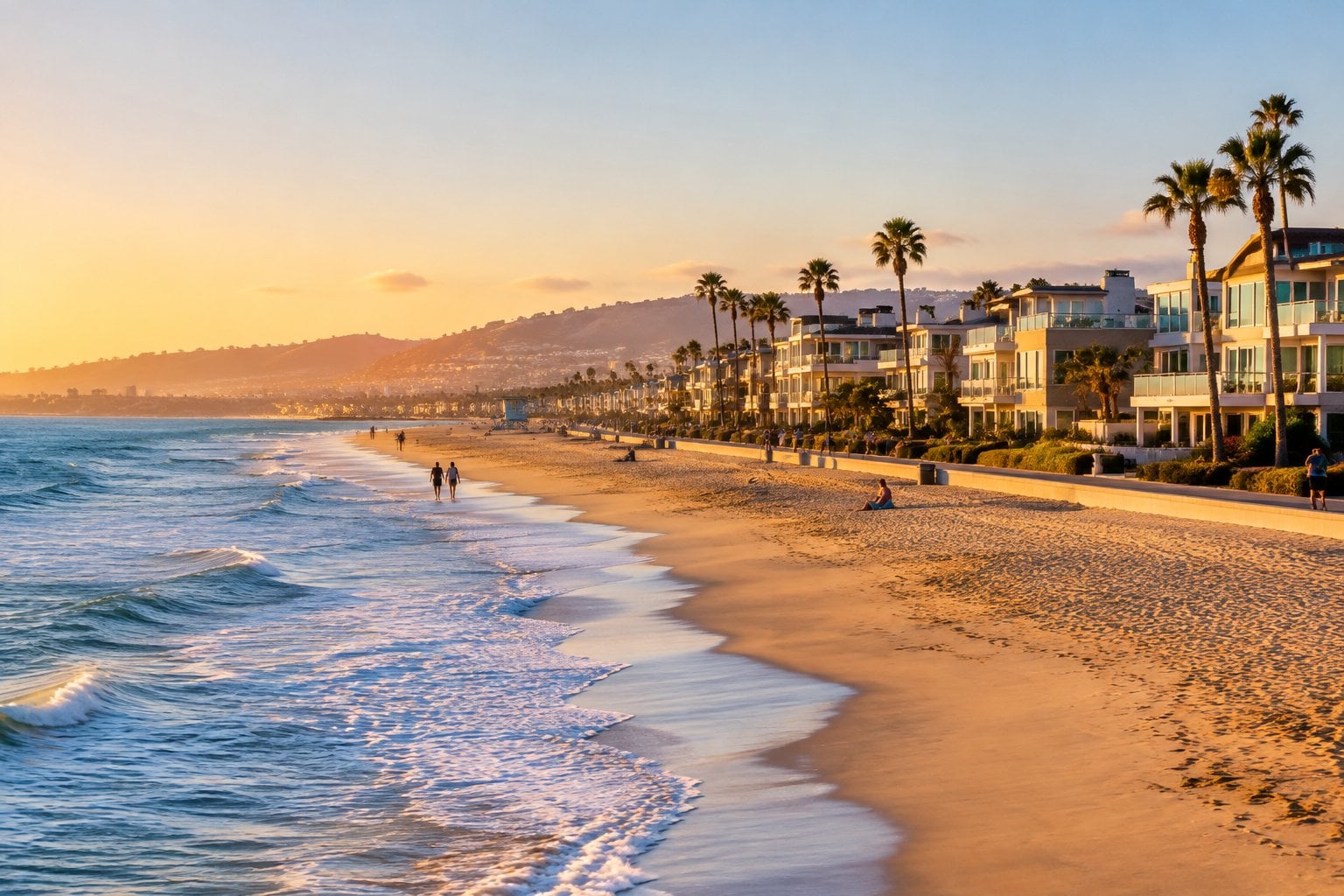
Hermosa Beach sits on the Santa Monica Bay coastline in Los Angeles County, part of the trio of beach cities alongside Manhattan Beach and Redondo Beach. You’ll find a compact, walkable community built around its beach and the Strand, a paved path that runs along the shoreline.
Home prices here run well above the national median, and you can expect the cost of living to sit far higher than the U.S. average. Housing drives most of that gap, with everyday expenses like groceries and services also elevated compared to typical American cities.
The town draws professionals who work in nearby Los Angeles and want a smaller, laid-back setting outside the city. You’ll notice a mix of surf culture and volleyball courts alongside higher-end homes near the water.
With a population under 20,000, Hermosa Beach keeps a small-town feel despite its location in one of the country’s largest metropolitan areas. Its limited size and ocean frontage keep demand, and prices, consistently high.
18. La Jolla, California
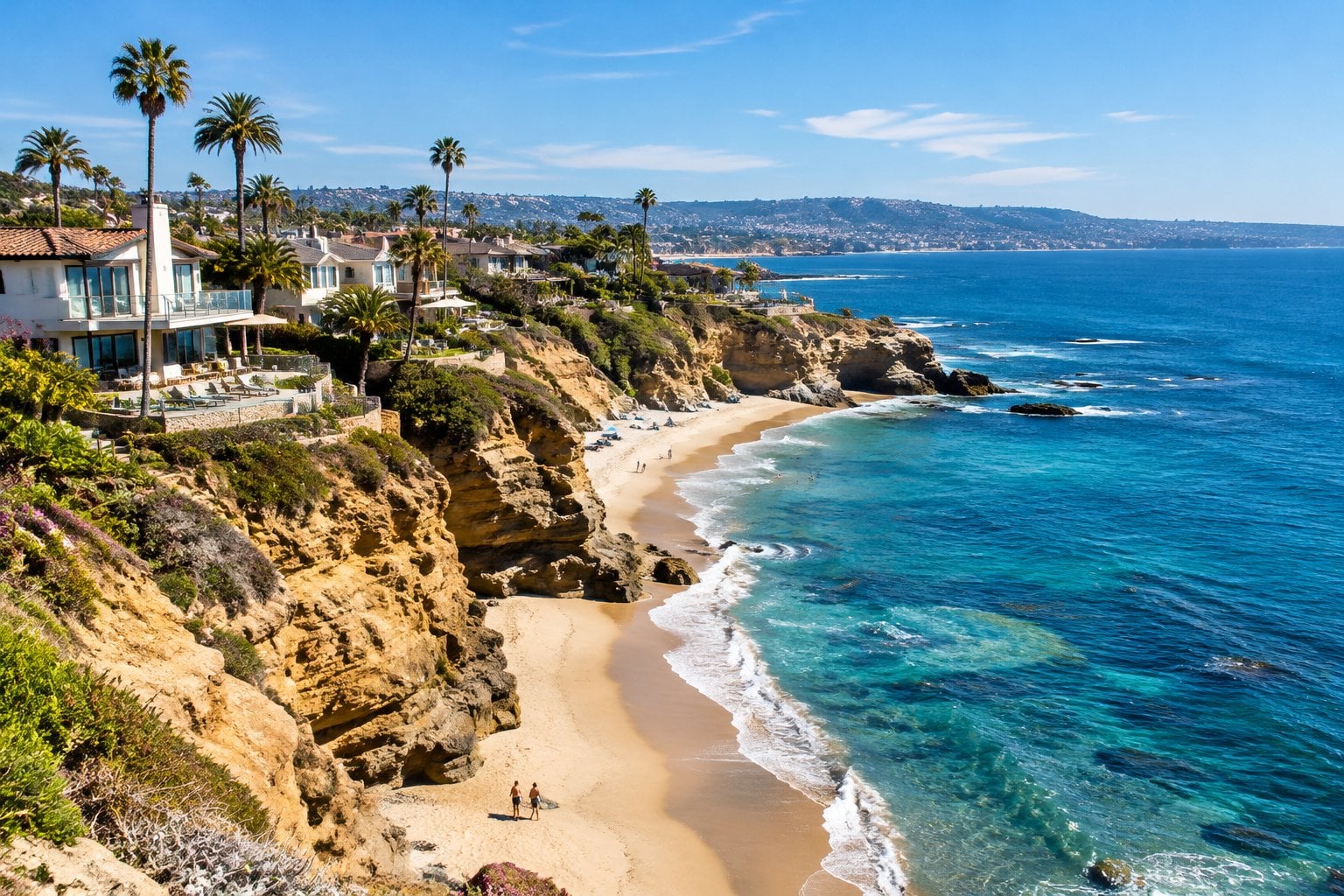
La Jolla sits along San Diego’s coastline on the Pacific Ocean, known for its rocky coves, sea caves, and resident colony of sea lions near the famous cove.
You’ll find median home prices here well into the millions, with oceanfront properties in neighborhoods like La Jolla Farms and Lower Hermosa pushing prices even higher. Price per square foot ranks among the highest in San Diego County.
The village center offers upscale shopping, galleries, and restaurants, giving the area a polished, resort-like feel. You can walk from boutique storefronts to scenic overlooks within minutes.
Cost of living here extends beyond housing. Dining, services, and everyday expenses run higher than the national average, reflecting the area’s affluent population and proximity to UC San Diego.
If you’re considering a visit rather than a purchase, you’ll still notice the premium pricing at hotels and restaurants near the shoreline. La Jolla draws both tourists and wealthy residents, making it one of California’s most recognized coastal communities.
19. Kiawah Island, South Carolina
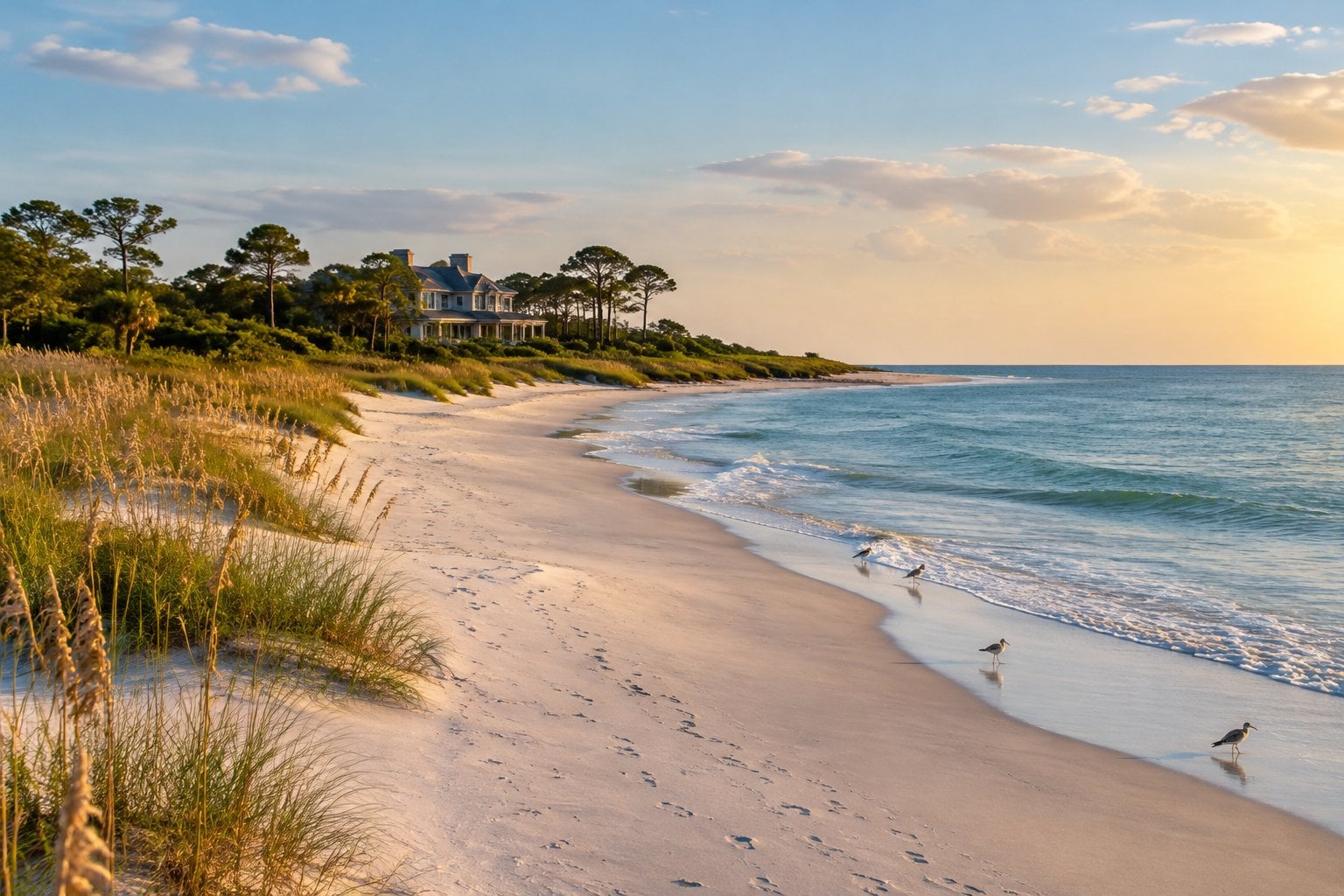
Kiawah Island sits southeast of Charleston and ranks among the most exclusive barrier islands on the East Coast. You’ll find a median home price near $3 million, placing it firmly among the priciest coastal markets in the country.
Most of the island is private, with gated communities and limited public access shaping its residential character. If you’re considering a purchase here, expect to compete in a market dominated by second homes and resort properties rather than year-round starter homes.
Kiawah’s wealth is reflected beyond real estate. Household incomes on the island rank among the highest of any South Carolina community.
The coastline itself draws comparisons to the state’s best beaches, with wide stretches of sand bordering the Atlantic. Beachwalker Park, located on the island, consistently ranks among the best public beaches in national surveys.
You should also budget for high weekly rental rates if visiting rather than buying, since short-term stays here rival those in other elite markets like Nantucket and Laguna Beach.
20. Edgartown, Massachusetts
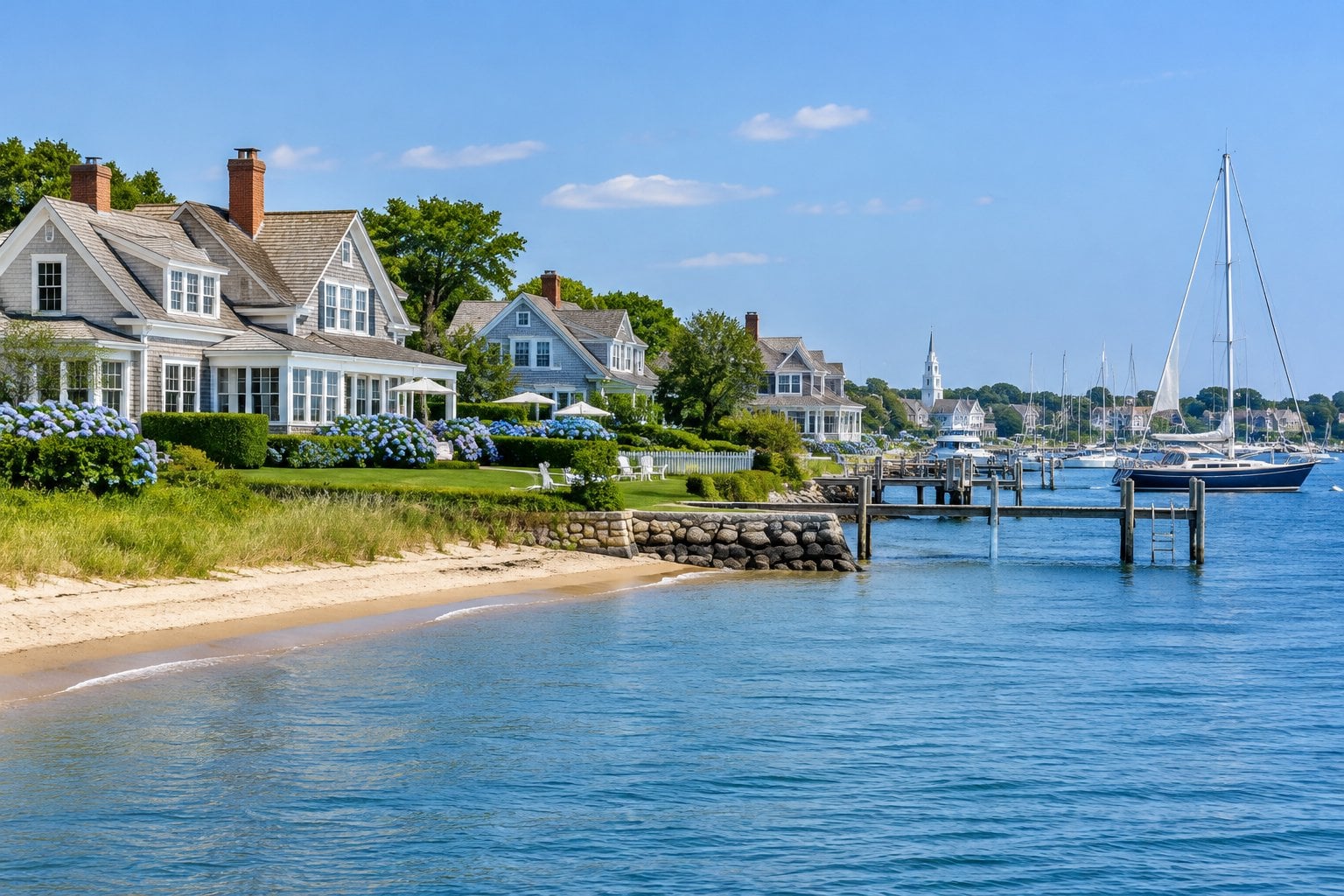
You’ll find Edgartown on Martha’s Vineyard, and it stands apart as the island’s most polished town. Whaling-era mansions line the streets near the harbor, many of them well over a century old and still immaculately maintained.
Home prices here rank among the highest in the country. You’re looking at a market where multimillion-dollar properties are common, especially along the waterfront and near Edgartown’s historic district.
Day to day costs reflect that same premium. Groceries, dining, and basic services all run higher than mainland Massachusetts, partly due to the logistics of shipping goods to an island.
The harbor itself anchors the town’s identity. You can watch sailboats and ferries move through the water, and the nearby beaches offer calmer conditions than the Atlantic-facing shores elsewhere on the Vineyard.
Summer brings a steady influx of visitors and seasonal residents, which keeps the local economy active but also pushes rental rates upward. If you’re considering a visit or a purchase here, expect a market shaped by limited inventory, strong demand, and a long tradition of exclusivity.
21. Key Biscayne, Florida
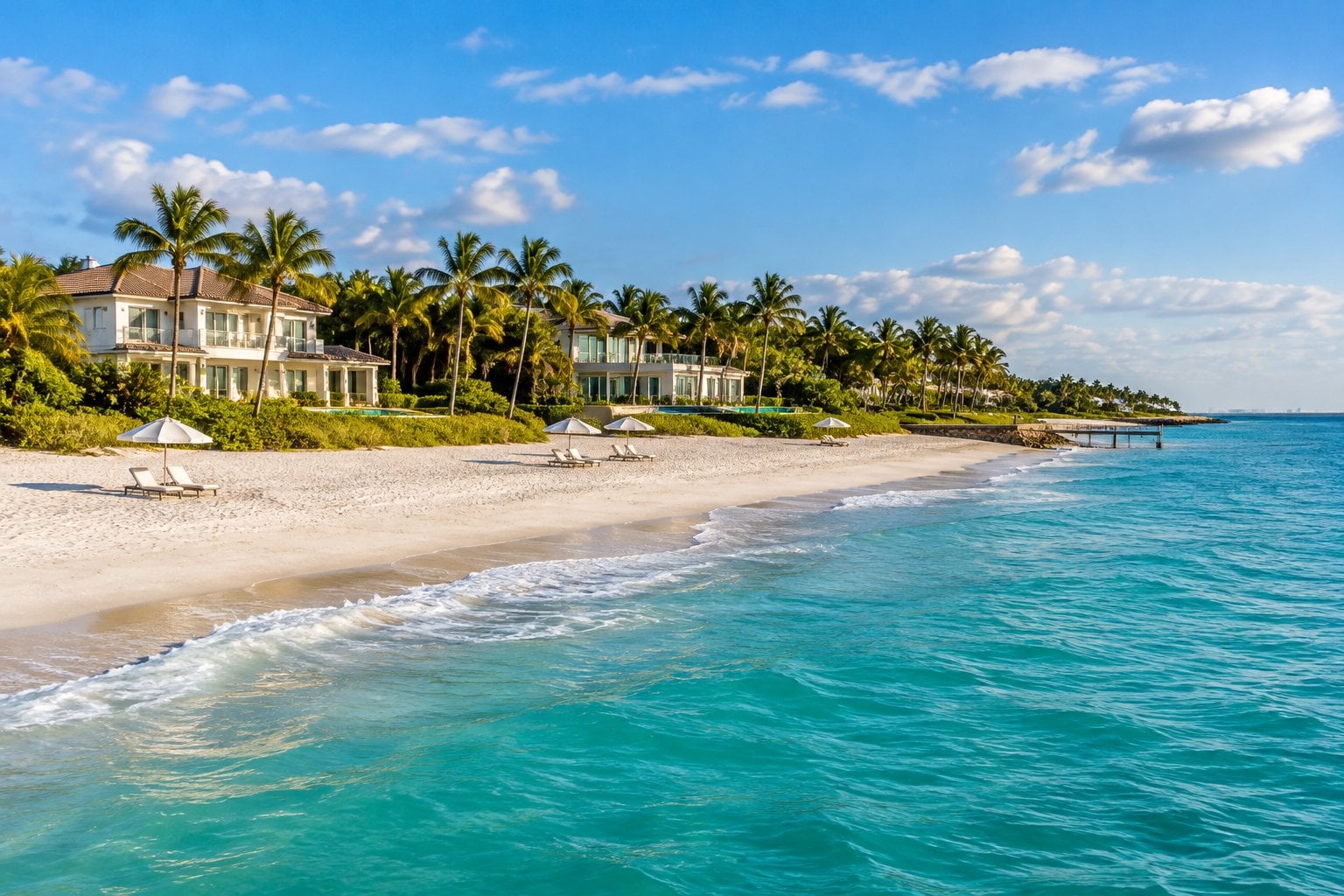
You’ll find Key Biscayne on a barrier island just south of Miami, connected to the mainland by the Rickenbacker Causeway. It ranks among the most expensive places to live in Florida, with median home values well above a million dollars.
The island offers white sand beaches and clear views of the Atlantic Ocean. You get a mix of high-rise condos and single-family homes, many with direct water access or ocean views.
Living costs here extend beyond housing. Property taxes, insurance, and monthly association fees in condo buildings all add to your overall expenses, and homeowners insurance in particular reflects the risks of coastal property in South Florida.
The community tends to be quiet and residential compared to Miami Beach’s busier scene. You’ll notice a strong emphasis on privacy, with gated properties and limited commercial development.
Despite its proximity to downtown Miami, Key Biscayne maintains a distinct identity. Many residents value the slower pace and the sense of separation the causeway provides, even though the city center is only a short drive away.
22. Naples, Florida
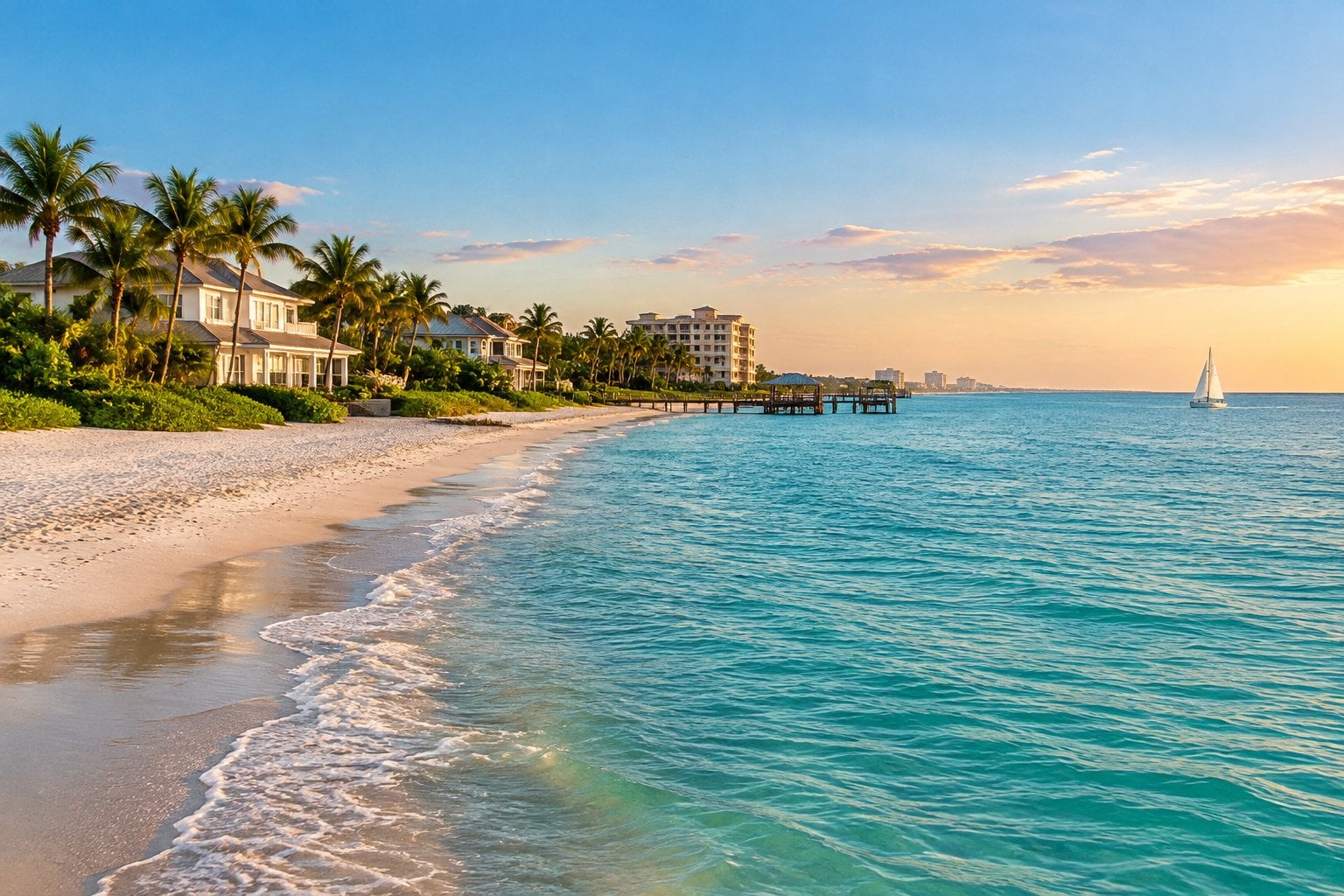
Naples sits on Florida’s Gulf Coast in Collier County, and you’ll find it among the most expensive places to own property in the state. Median home prices here run well into seven figures, with some waterfront estates reaching far higher.
Port Royal stands out as the city’s premier neighborhood. You’ll encounter deep-water canals, private docks, and homes designed for serious boating access.
Your cost of living in Naples extends beyond real estate. Groceries, dining, and services all carry a premium compared to national averages, reflecting the affluence of year-round and seasonal residents alike.
The appeal centers on calm Gulf waters, wide sandy beaches, and a climate that supports outdoor living most of the year. Many buyers are drawn by Florida’s lack of state income tax, which adds to the financial case for relocating here.
You’ll also notice a quieter, more understated atmosphere than some other luxury coastal markets. Naples favors manicured landscaping and low-rise architecture over flash, making it a refined choice if you’re seeking upscale beach living without constant crowds.
23. Hanalei, Hawaii
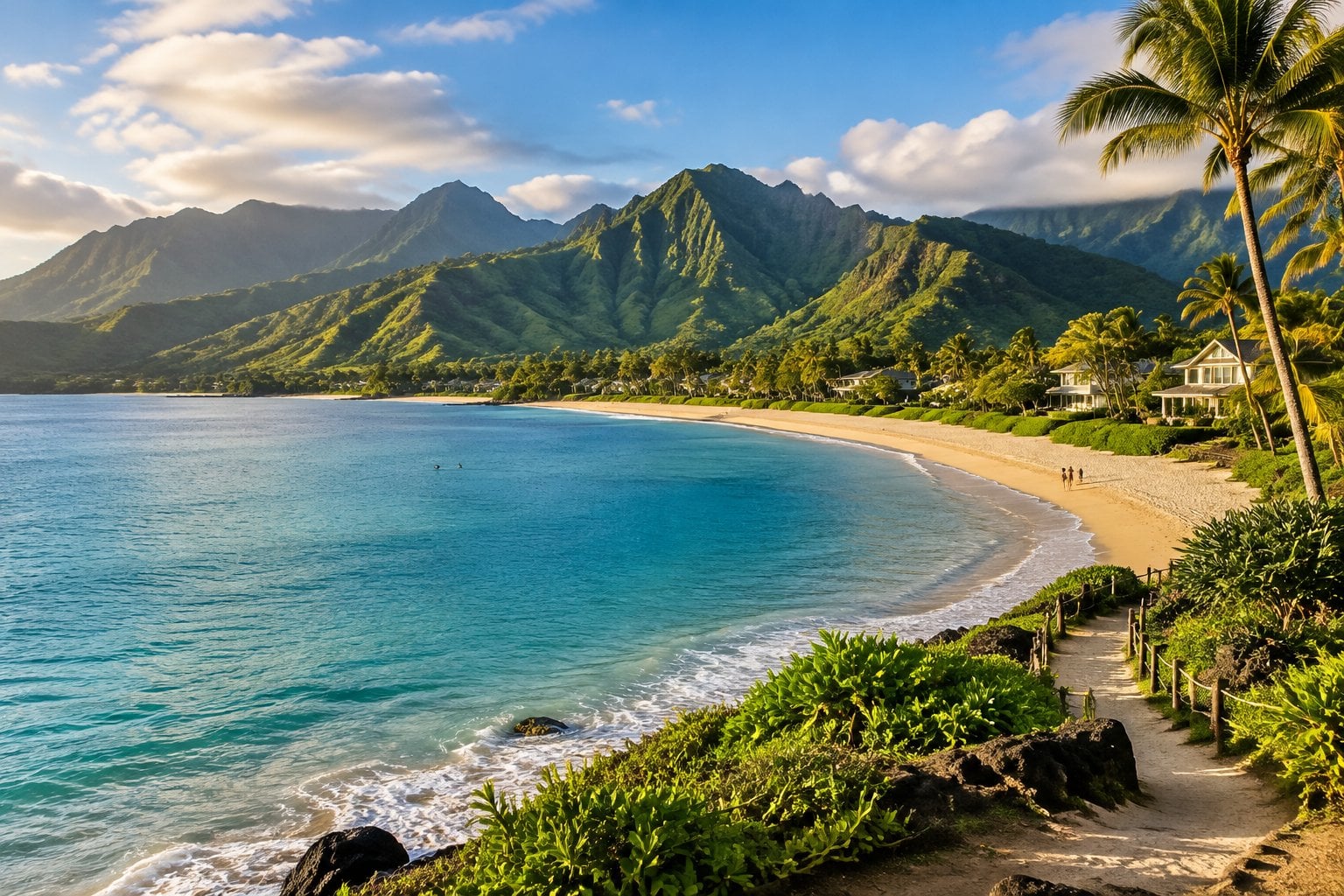
You will find Hanalei tucked along Kauai’s north shore, where the bay stretches for two miles and backs up against green mountain ridges. This is one of the most photographed stretches of coastline in Hawaii, and the setting explains much of the appeal.
Home prices here rank among the highest in the state, with typical values running into the millions. That figure sits far beyond the statewide average, reflecting both limited inventory and strong demand from buyers seeking a north shore address.
Land is scarce in Hanalei, and the town itself is small, which keeps competition for available properties intense. You won’t find large-scale development here, since much of the surrounding area is protected or restricted.
Daily costs in Hanalei follow Kauai’s broader pattern of elevated pricing, from groceries to services, since many goods arrive by ship. If you’re considering a purchase here, expect to pay a premium not just for the home itself but for the island lifestyle that comes with it.
24. Isle of Palms, South Carolina
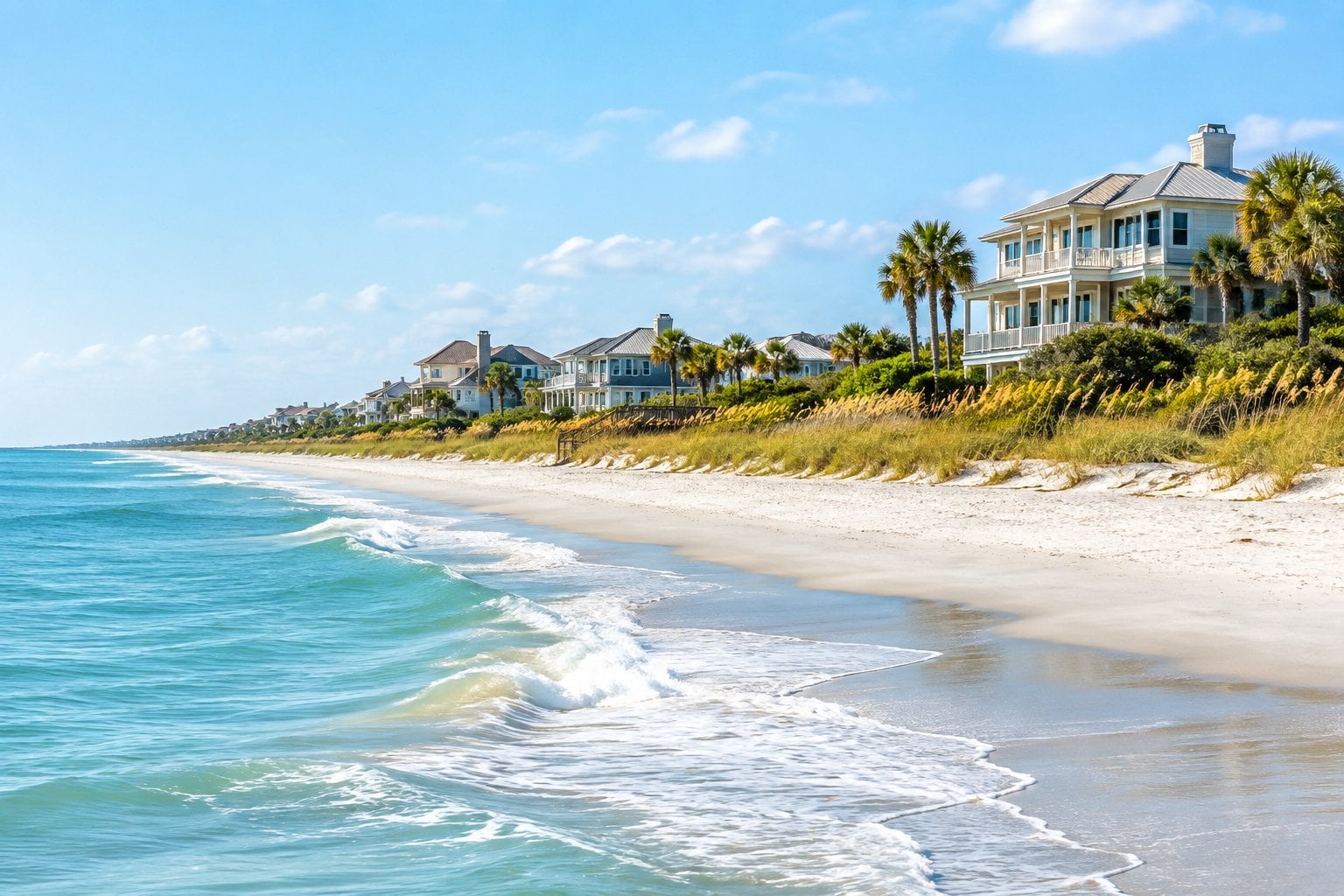
Isle of Palms sits just a short drive from downtown Charleston, making it one of the more accessible luxury beach markets on this list. You get seven miles of shoreline here, along with calmer surf than you’ll find on many other barrier islands.
Home prices on the island typically exceed one million dollars, and oceanfront properties can command significantly more. The real estate market reflects strong demand from buyers seeking both vacation rentals and permanent coastal residences.
Wild Dunes Resort anchors much of the island’s appeal, offering golf courses, dining, and organized recreation alongside the natural beach access. You’ll notice the development here balances resort-style amenities with quieter residential stretches.
Cost of living runs higher than the South Carolina state average, driven largely by property values and insurance costs common to barrier island locations. Still, Isle of Palms remains somewhat more attainable than ultra-exclusive markets like Kiawah Island nearby.
Your proximity to Charleston’s historic district, restaurants, and airport adds practical value beyond the beach itself, which helps explain the island’s standing among the Southeast’s premier coastal addresses.
25. Kailua, Hawaii
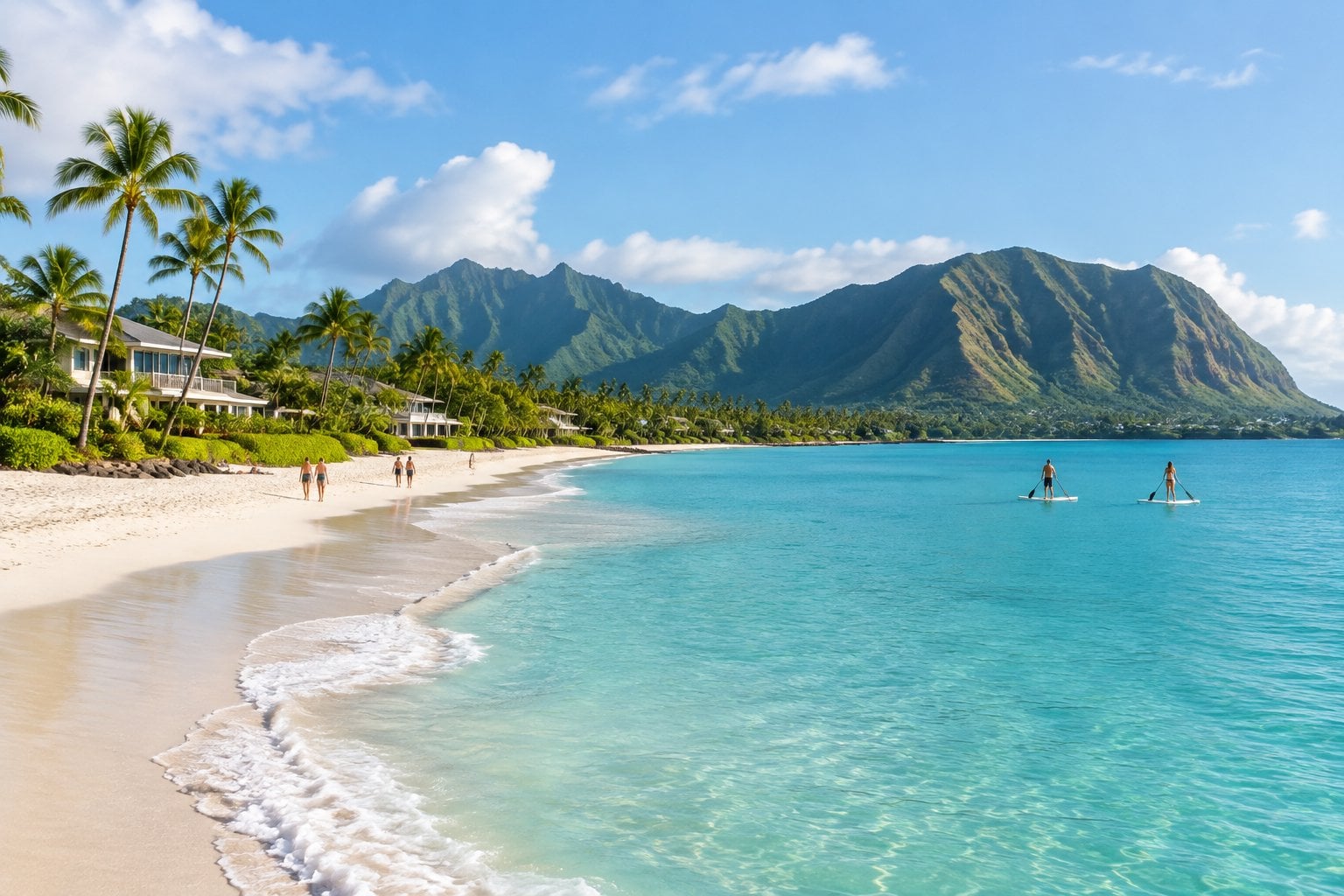
Kailua sits on the windward coast of Oahu, facing a stretch of coastline known for calm turquoise water and fine sand. You’ll find a beach town atmosphere here that feels far removed from the tourist density of Waikiki, even though it’s only a short drive away.
Home prices reflect Hawaii’s broader real estate pressures. Median single-family home prices typically run well above $1 million, and beachside properties often climb well past $3 million.
Condos and townhomes give you a somewhat more accessible entry point, with median prices generally landing in the $800,000 range. Even so, your overall cost of living here runs higher than most mainland beach towns.
Groceries, utilities, and services all carry a premium tied to the islands’ shipping and import costs. You’ll also notice limited land availability keeps supply tight, which continues to push values upward.
Kailua appeals to buyers who want a residential, low-key beach community rather than a resort-driven one. Its proximity to Kailua Bay and the Mokulua Islands adds to its long-term desirability among both residents and second-home owners.
26. Carpinteria, California
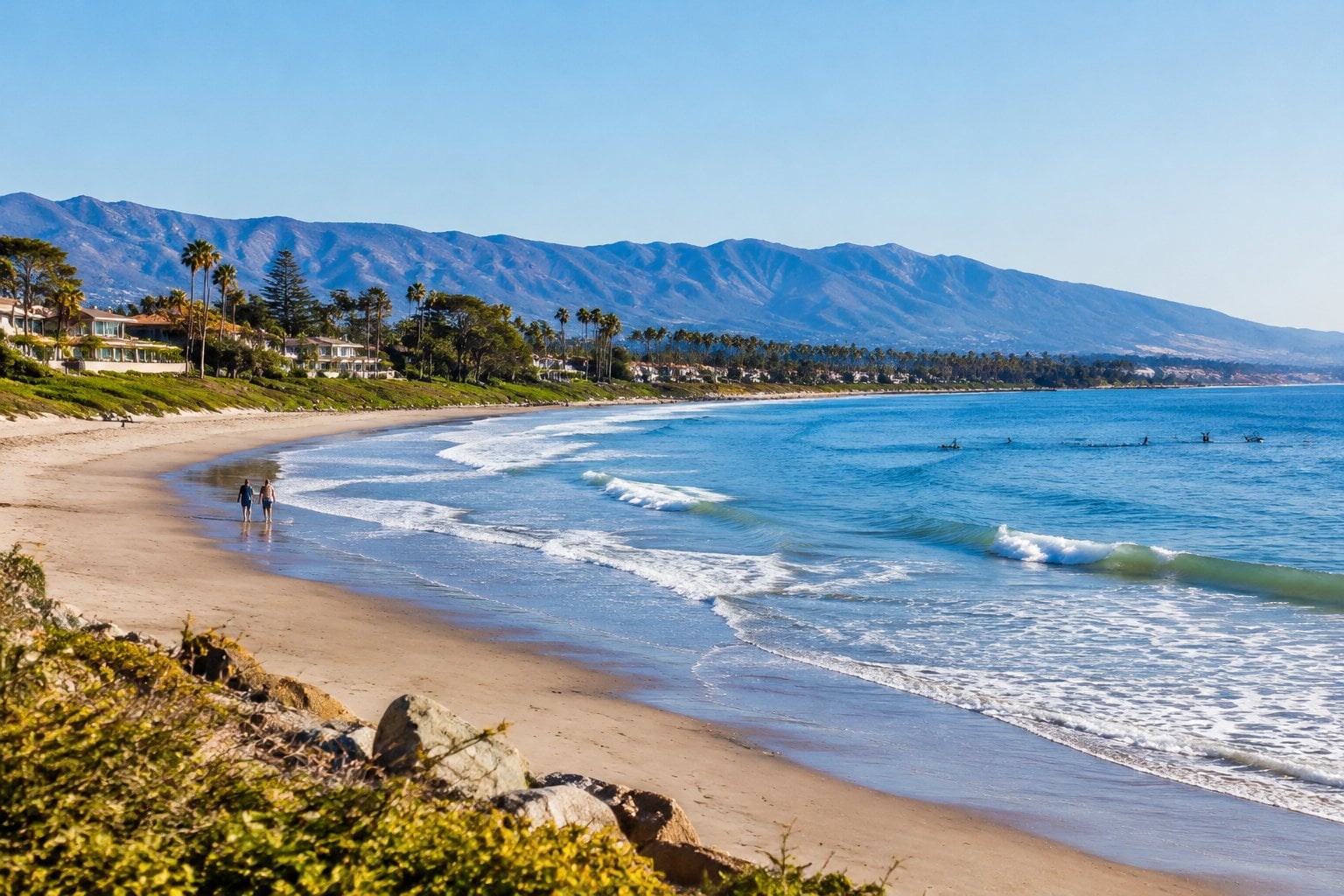
Carpinteria sits along the Santa Barbara County coastline, just southeast of Santa Barbara itself. You’ll find a small, close-knit city here, home to roughly 13,000 residents.
Home prices in Carpinteria run far above the California average. The town’s limited housing supply and desirable coastal location keep values well above national and even state averages.
You’ll notice the appeal right away. Carpinteria offers wide, sandy beaches, a relatively mild climate, and a slower pace than nearby Santa Barbara or Montecito.
Agriculture still shapes the surrounding area, with avocado and flower farms visible just beyond the beachfront neighborhoods. This mix of rural character and coastal luxury sets Carpinteria apart from more built-up beach towns.
Cost of living here extends beyond housing. You’ll pay more for everyday goods, services, and dining compared to inland California communities.
Many buyers are drawn to Carpinteria for its quieter lifestyle, proximity to Santa Barbara’s amenities, and consistent demand for coastal property. That demand keeps the market competitive and prices elevated year after year.
27. Wrightsville Beach, North Carolina
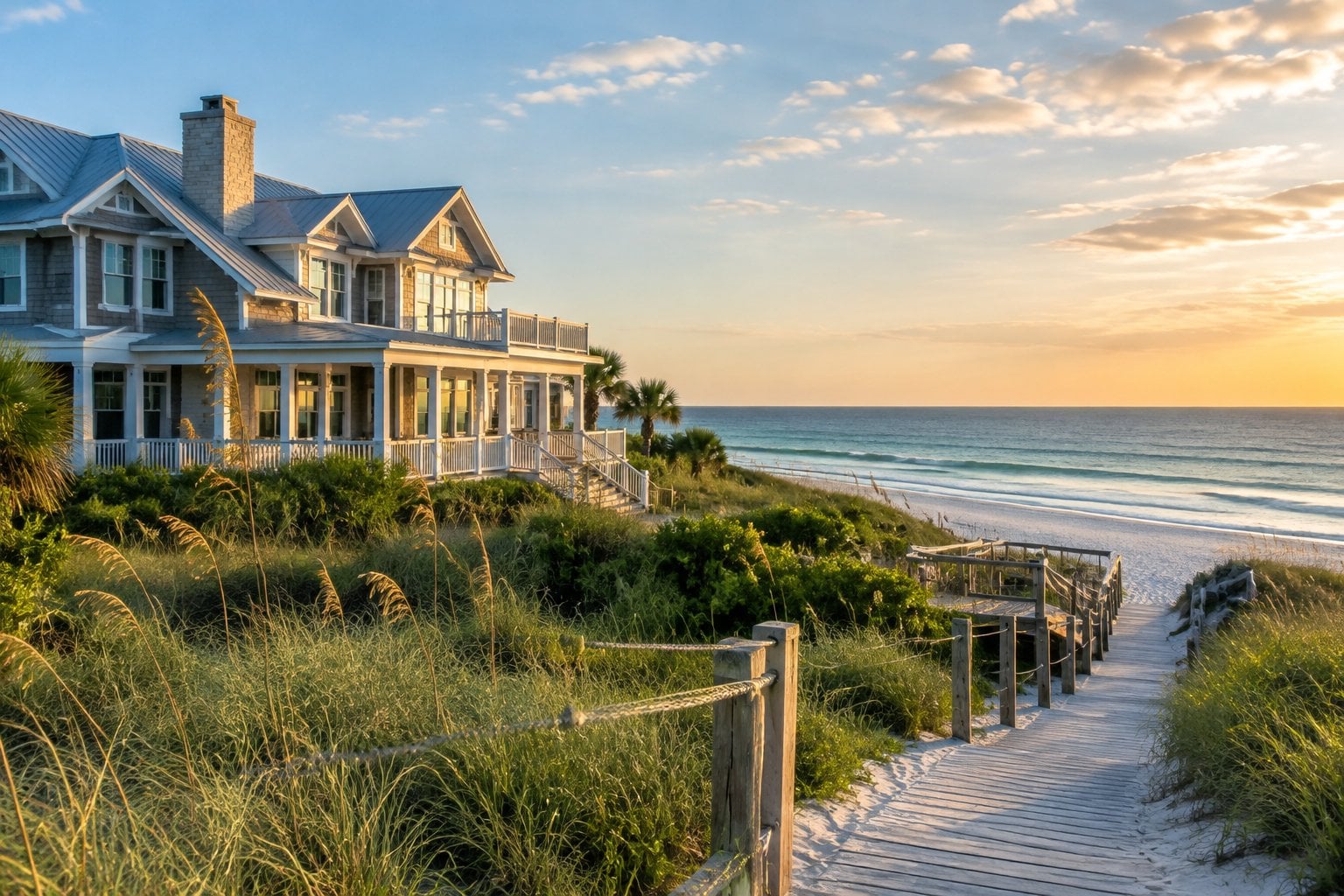
You’ll find Wrightsville Beach on a narrow barrier island just east of Wilmington, with the Atlantic on one side and a protected harbor on the other. This small community has fewer than 3,000 year-round residents, so you’re dealing with a tight, limited housing supply.
Home prices here reflect that scarcity. Median values run well above the state average, often above $1 million depending on proximity to the water, and the gap between Wrightsville Beach and the rest of North Carolina is wide.
Your overall cost of living will also sit noticeably above the national average, with housing driving most of that difference. Groceries, services, and local amenities tend to carry a premium too, since you’re paying for a resort-style setting.
If you’re drawn to surf breaks, a popular loop drive for walking or biking, and easy access to Wilmington’s job market and services, this town offers that combination. You should expect competition for inventory, since demand from buyers seeking coastal living consistently outpaces what’s available.
28. Kennebunkport, Maine
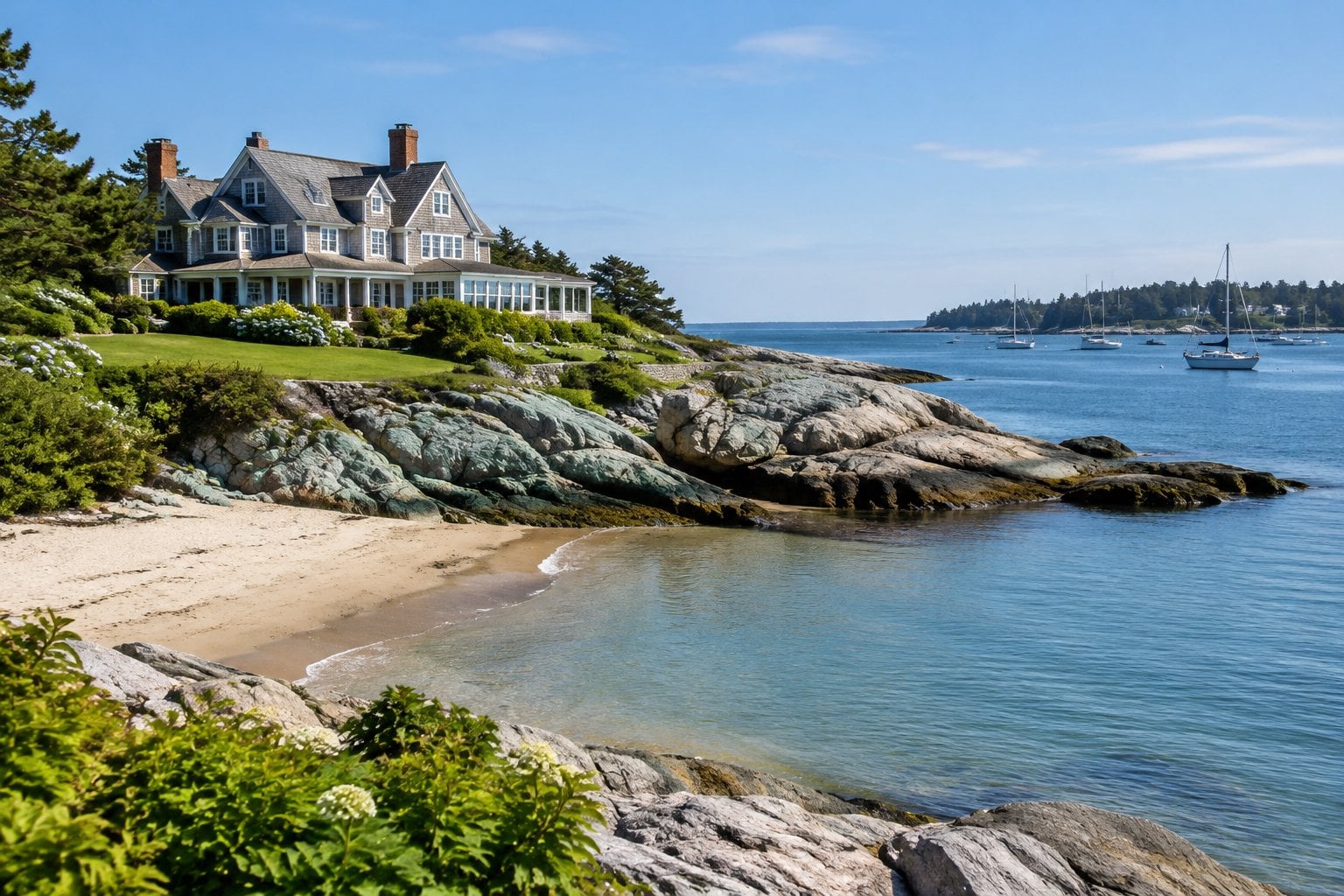
You’ll find Kennebunkport perched on Maine’s southern coast, known for rocky shoreline, tidal rivers, and a harbor lined with historic homes. The town includes Walker’s Point, the Bush family’s summer property, which draws visitors year-round.
Home prices here rank among the highest in Maine. Median values have climbed past $1 million, with some compounds and waterfront estates selling well above that figure.
Daily costs reflect the town’s seasonal tourism economy. Restaurants, inns, and shops cater to summer visitors, and prices rise accordingly during peak months from June through September.
Dock Square serves as the commercial center, with boutiques, galleries, and seafood restaurants within walking distance of the harbor. Goose Rocks Beach offers a quieter alternative to the busier town center.
You can expect a mix of architectural styles, from Greek Revival mansions like White Columns to shingle-style cottages built during the late 1800s. The town’s coastal real estate market has grown steadily over the past decade, driven by demand from buyers in Boston and New York seeking second homes within driving distance of major cities.
29. Rehoboth Beach, Delaware
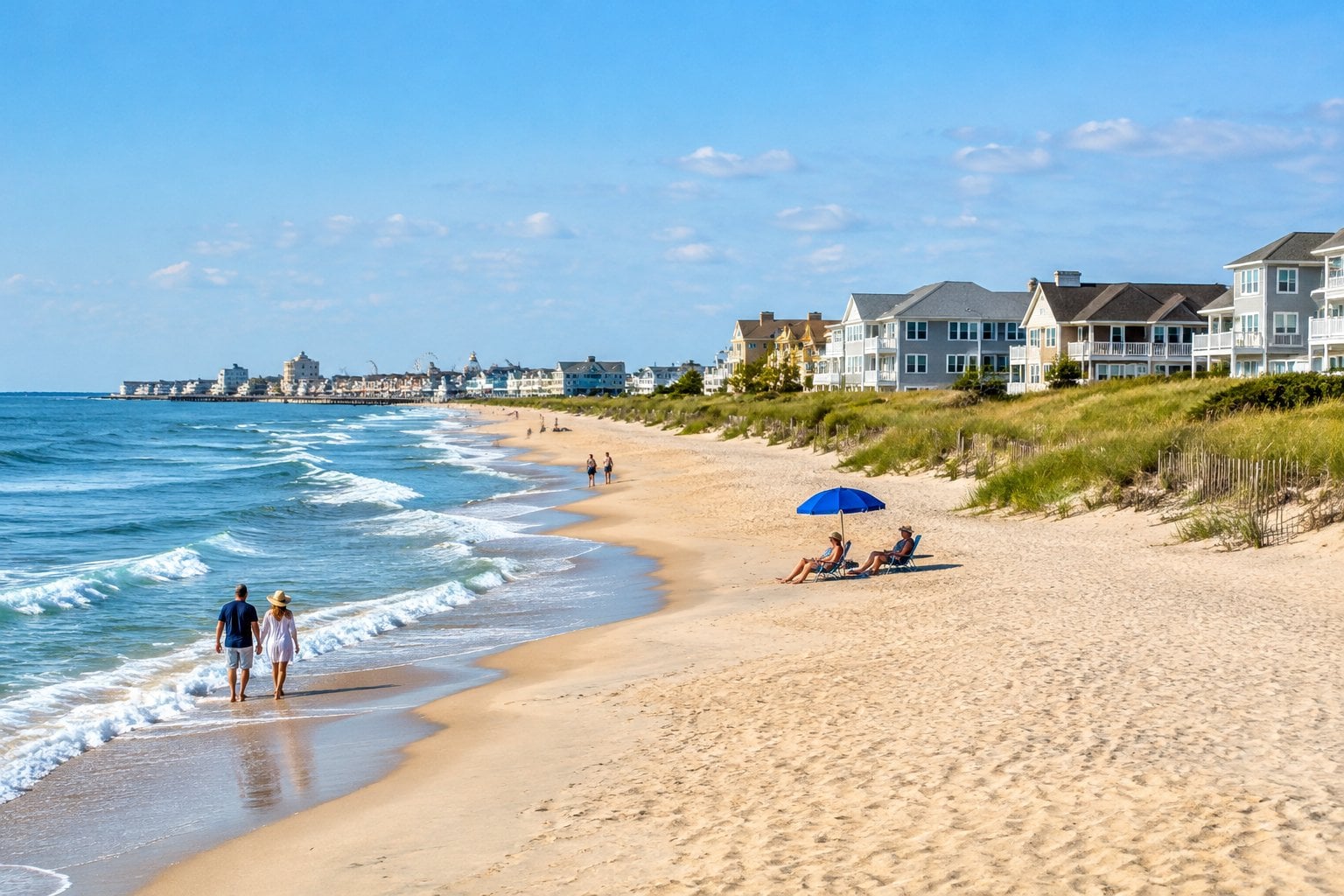
You’ll find Rehoboth Beach along Delaware’s Atlantic coastline, in the state’s Cape Region near Lewes. It carries the nickname “The Nation’s Summer Capital” due to its long history as a vacation destination for visitors from Washington, D.C., Philadelphia, and New York.
Median home values here reach well over $1 million in many reports, placing Rehoboth Beach among the priciest markets in Delaware and on the East Coast. Properties closer to the boardwalk and ocean command the steepest prices, while homes farther inland offer somewhat more accessible entry points.
Your daily cost of living in Rehoboth Beach tends to track close to national averages for utilities and transportation. Groceries and dining can run higher, especially during peak summer months when the seasonal population swells past 25,000.
You’ll notice the town’s appeal comes from its walkable boardwalk, varied restaurant scene, and active nightlife compared to quieter neighboring towns. If you’re considering nearby alternatives, Lewes and Bethany Beach sometimes offer relatively lower housing costs while still providing coastal access.
30. Hilton Head Island, South Carolina
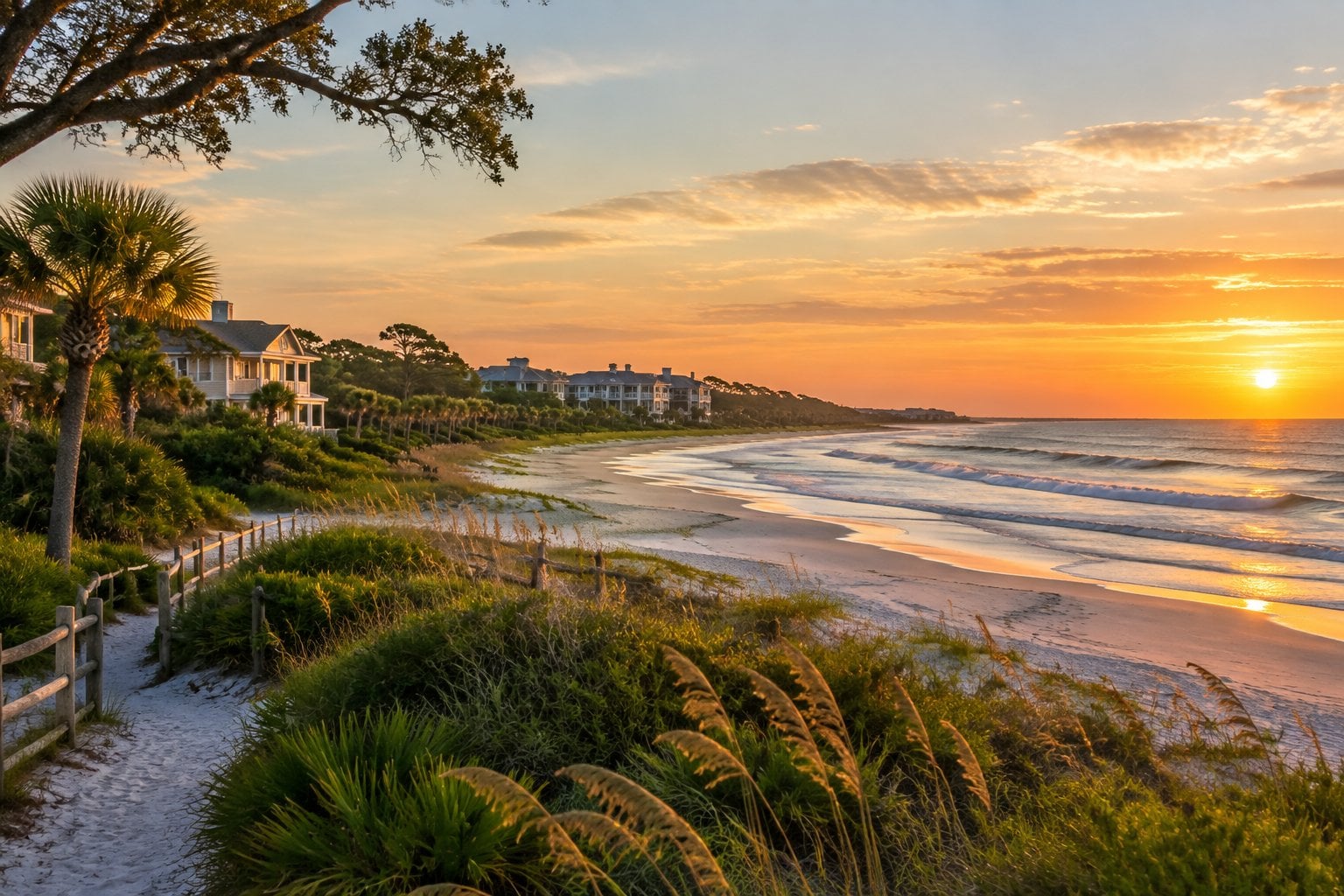
You’ll find Hilton Head ranked among South Carolina’s most expensive coastal destinations, and the numbers back that up. Median home prices on the island sit well above $600,000, with some reports placing the average closer to $1 million depending on the neighborhood and proximity to the water.
The island’s appeal comes from its wide, flat beaches, championship golf courses, and gated resort communities. If you’re drawn to upscale amenities like marinas, tennis clubs, and manicured landscaping, you’ll see why buyers pay a premium here.
Cost of living extends beyond housing. Dining, groceries, and services tend to run higher than the state average, reflecting the resort-driven economy.
You should know that Hilton Head attracts both full-time residents and seasonal homeowners, which keeps demand steady throughout the year. Its mix of natural scenery and planned development sets it apart from more rustic beach towns, giving you a polished, resort-style coastal experience rather than a laid-back fishing village atmosphere.
What Drives Coastal Housing Prices
Several factors push coastal real estate into the millions, from geographic scarcity to buyer demand patterns that differ from inland markets. You’ll find that supply constraints and lifestyle demand work together to create sustained price pressure in these areas.
Limited Waterfront Land and Development Restrictions
Coastlines have fixed boundaries, and you can’t manufacture more oceanfront acreage. This basic scarcity sets a hard ceiling on supply while demand keeps climbing.
Many coastal towns also enforce strict zoning laws and environmental protections that limit new construction. You’ll encounter setback requirements, height restrictions, and conservation easements designed to protect dunes, wetlands, and public beach access.
These rules serve important purposes, but they also reduce the number of buildable lots. In towns like Solana Beach, California, the compact 3.5-square-mile footprint leaves little room for expansion, which keeps existing properties in high demand.
Flood zone regulations add another layer of cost and complexity for builders, further slowing new housing supply.
Luxury Amenities and Second-Home Demand
Coastal towns often attract buyers who aren’t looking for a primary residence. You’ll see a significant share of these markets driven by vacation homes and investment properties, which changes how prices behave compared to typical suburban areas.
Proximity to amenities like private beach access, marinas, and high-end dining raises property values substantially. Buyers are often willing to pay a premium for:
- Direct beach frontage or short walking distance to the shore
- Panoramic ocean or bay views
- Access to exclusive clubs, golf courses, or marinas
- Historic charm or architectural distinction
In places like Nantucket Town, this combination of scarcity and lifestyle appeal has pushed median home prices past $3 million. Second-home buyers typically have higher purchasing power and are less sensitive to local wage data, which detaches home prices from the income levels of year-round residents.
Ownership Costs Beyond the Purchase Price
A beach town purchase price is only the starting figure. Your annual carrying costs will include property taxes, specialized insurance, routine upkeep, and storm-related expenses that inland homeowners rarely face.
Property Taxes and Coastal Insurance Coverage
Your property tax bill will scale directly with assessed coastal values, and in towns with multimillion-dollar medians, that tax burden can reach five figures annually.
Insurance is where coastal ownership diverges most sharply from inland ownership. You’ll typically need separate policies for:
- Windstorm or hurricane coverage, often excluded from standard homeowners policies in hurricane-prone states
- Flood insurance, required if your property sits in a FEMA-designated flood zone
- Standard homeowners coverage for fire, theft, and liability
In high-risk markets, combined premiums can run several thousand dollars higher per year than comparable inland properties. You should also expect higher deductibles tied specifically to named storms.
Maintenance, Storm Protection, and Association Fees
Salt air accelerates corrosion on roofing, windows, siding, and HVAC systems, so you’ll likely replace these components more frequently than you would inland.
Storm protection adds further expense. Impact-resistant windows, reinforced roofing, and elevated foundations carry higher upfront installation costs, but many insurers require them or offer premium discounts in return.
If your property sits within a homeowners association or beachfront community, monthly or annual fees often cover:
- Beach access maintenance and dune restoration
- Private road upkeep
- Shared amenities like pools or clubhouses
These fees vary widely by town, but in higher-end coastal communities, they can add several hundred dollars monthly to your fixed costs.