The 30 Most Expensive Places to Live on the East Coast: Where Costs Run Highest
The East Coast has some of the most expensive places to live in the country, and they are not only the big cities. Many of the priciest addresses are small towns and suburbs within commuting distance of New York, Boston, Miami and Washington, D.C., where good schools, waterfront land and strict zoning keep home prices high year after year.
This list ranks 30 places from Maine to Florida by Zillow’s typical home value as of October 2026. To keep it to real year-round communities, it only includes places with at least 5,000 residents in the 2020 Census, so tiny seasonal enclaves like Sagaponack or Jupiter Island are left out. Number 1 is the most expensive.
1. Nantucket, Massachusetts
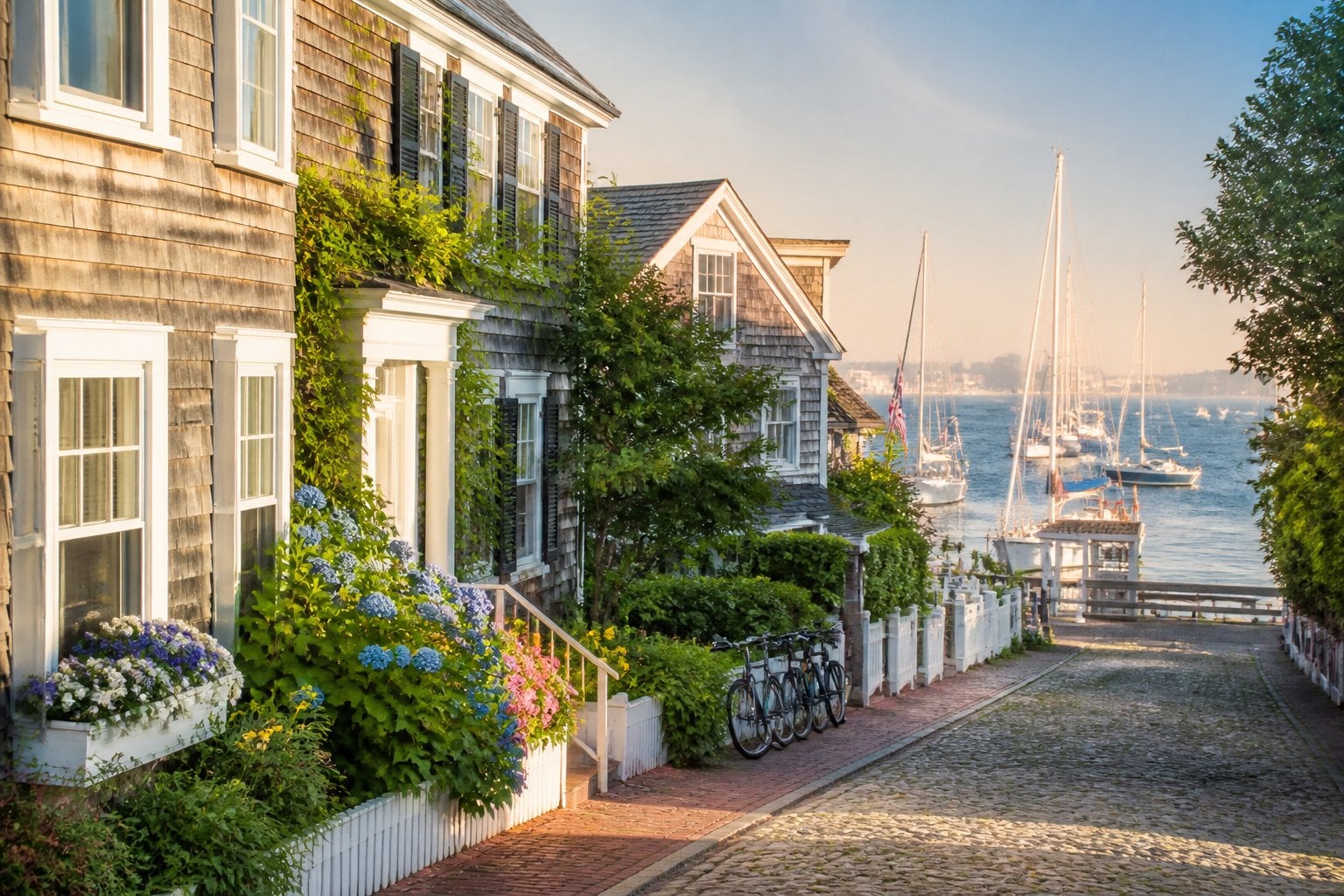
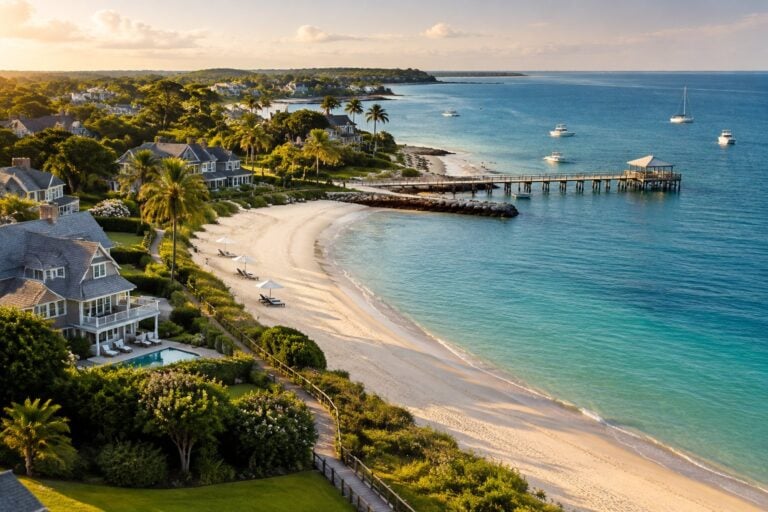
Nantucket is an island about 30 miles south of Cape Cod, and it tops this list with a typical home value of about $3.3 million, up roughly 10% in a year. The island is a single town and county, home to about 14,250 people in 2020, and it is reached only by ferry or plane.
Land is the main reason prices are so high. Conservation groups protect a large share of the island from development, and the historic district around the old whaling port has strict rules on what can be built or changed. Buyers compete for a fixed number of homes, many of which are used as summer houses.
Year-round residents feel the squeeze most. Teachers, nurses and other workers often struggle to find housing they can afford, and the town has spent years working on programs to keep year-round housing on the island.
2. Darien, Connecticut
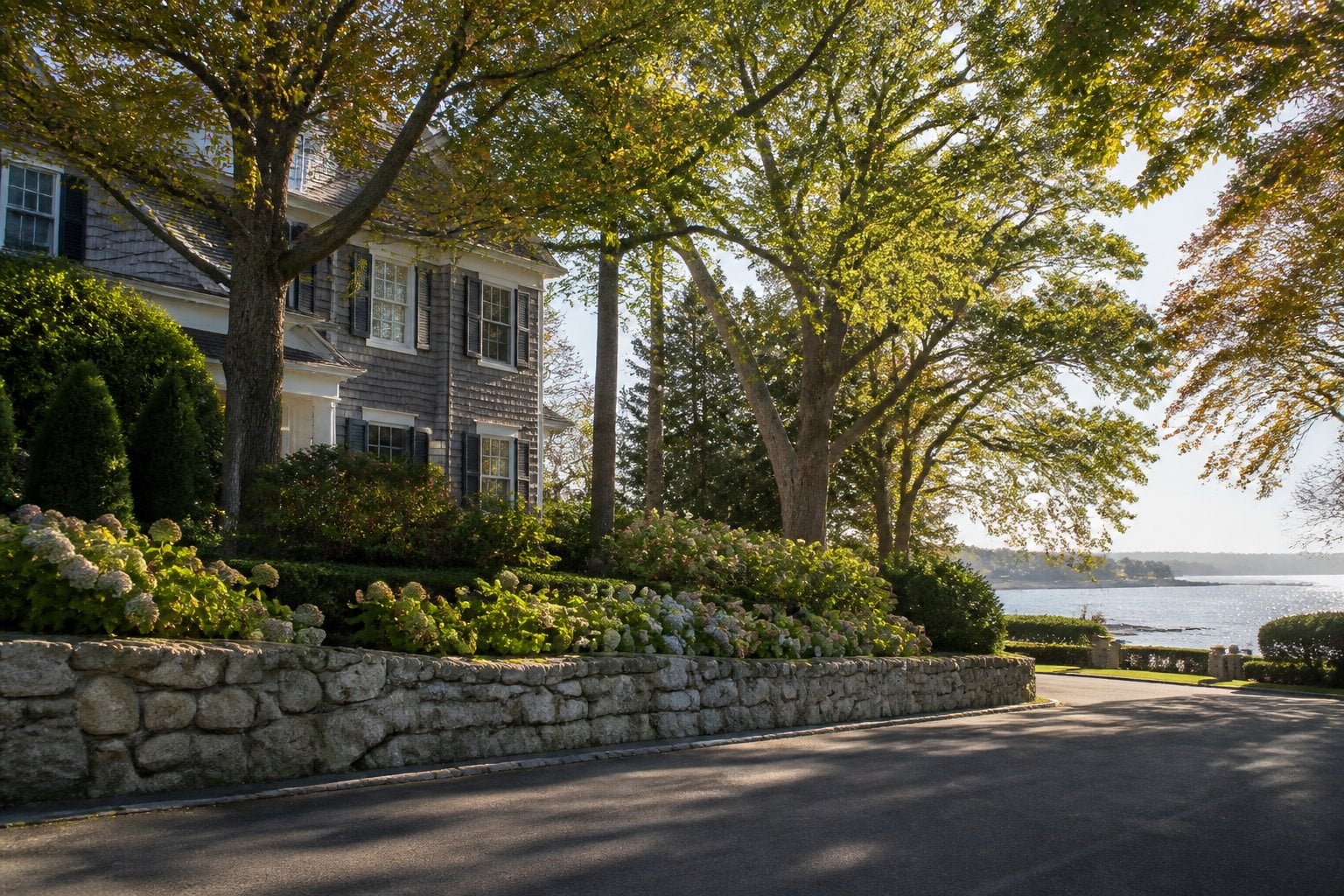
Darien sits on Long Island Sound in Fairfield County, between Stamford and Norwalk, and its typical home value is about $2.5 million, up about 15% in a year. The town had about 21,500 residents in 2020.
Much of the appeal is the commute. Darien has two Metro-North stations on the New Haven Line, Darien and Noroton Heights, and trains reach Grand Central in about an hour. That puts Manhattan jobs within reach of a quiet town with large lots and shoreline neighborhoods.
The town’s beaches, Weed Beach and Pear Tree Point Beach, are mostly for residents with permits, which adds to the private, small-town feel buyers pay for. Strong public schools are another big draw, and they keep demand high from families moving out of New York City.
3. Rumson, New Jersey
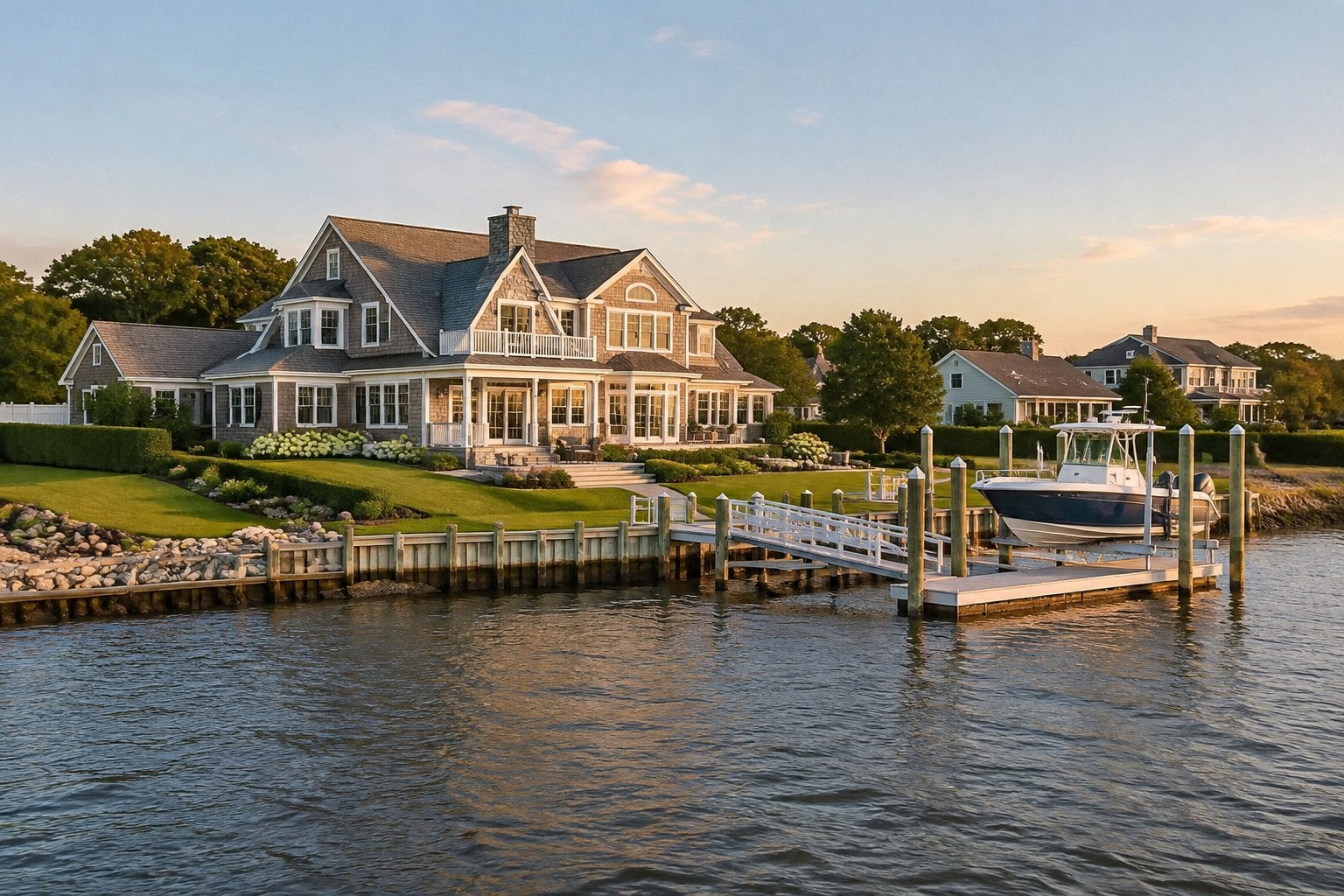
Rumson is a small borough in Monmouth County on a peninsula between the Navesink and Shrewsbury rivers, a few minutes from the Jersey Shore. Its typical home value is about $2.45 million, up about 15% in a year, the biggest jump among the top five. About 7,300 people lived here in 2020.
The town is known for large estates along the rivers, many with private docks, and tree-lined streets with older homes. With the ocean beaches of Sea Bright just across the bridge, buyers get both river and beach living in one place.
Rumson is also popular with Manhattan commuters. The Seastreak ferry from nearby Highlands and Atlantic Highlands runs to Manhattan, a faster trip for many than the drive. Rumson shares a regional high school with neighboring Fair Haven, which also makes this list.
4. Rye, New York
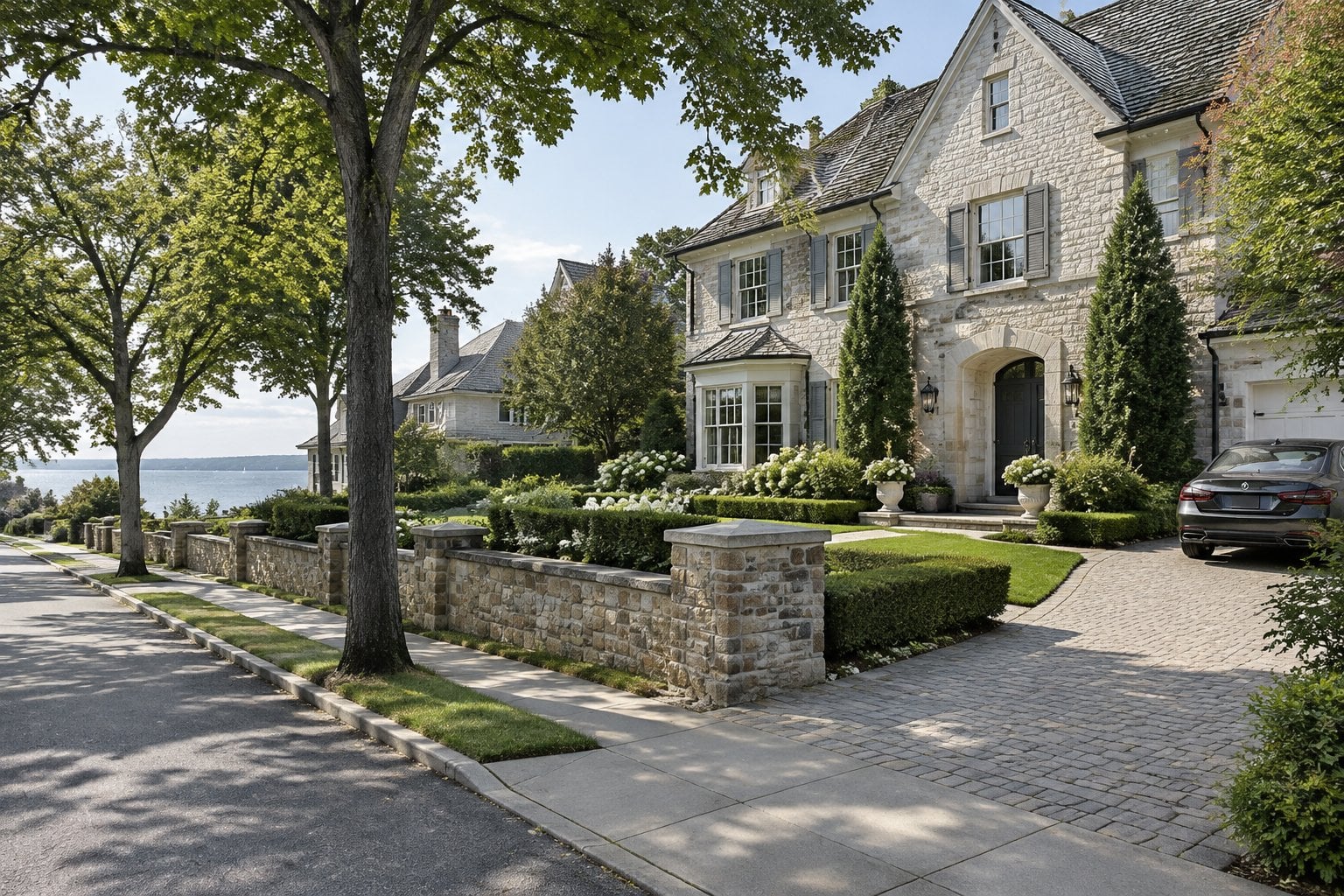
Rye is a small city in Westchester County on Long Island Sound, with about 16,600 residents in 2020 and a typical home value of about $2.4 million, up about 12% in a year.
Rye sits on the Metro-North New Haven Line, and express trains reach Grand Central in about 40 minutes. Its downtown, along Purchase Street, is walkable and full of small shops, and many homes are close to the water, with some of the most expensive ones directly on the Sound.
One of the city’s best-known sights is Rye Playland, a county-owned amusement park that opened in 1928 and is a National Historic Landmark. Beyond the park, Rye is mostly quiet residential streets, yacht clubs and beaches, and its public schools are a major reason families pay so much to live here.
5. Greenwich, Connecticut
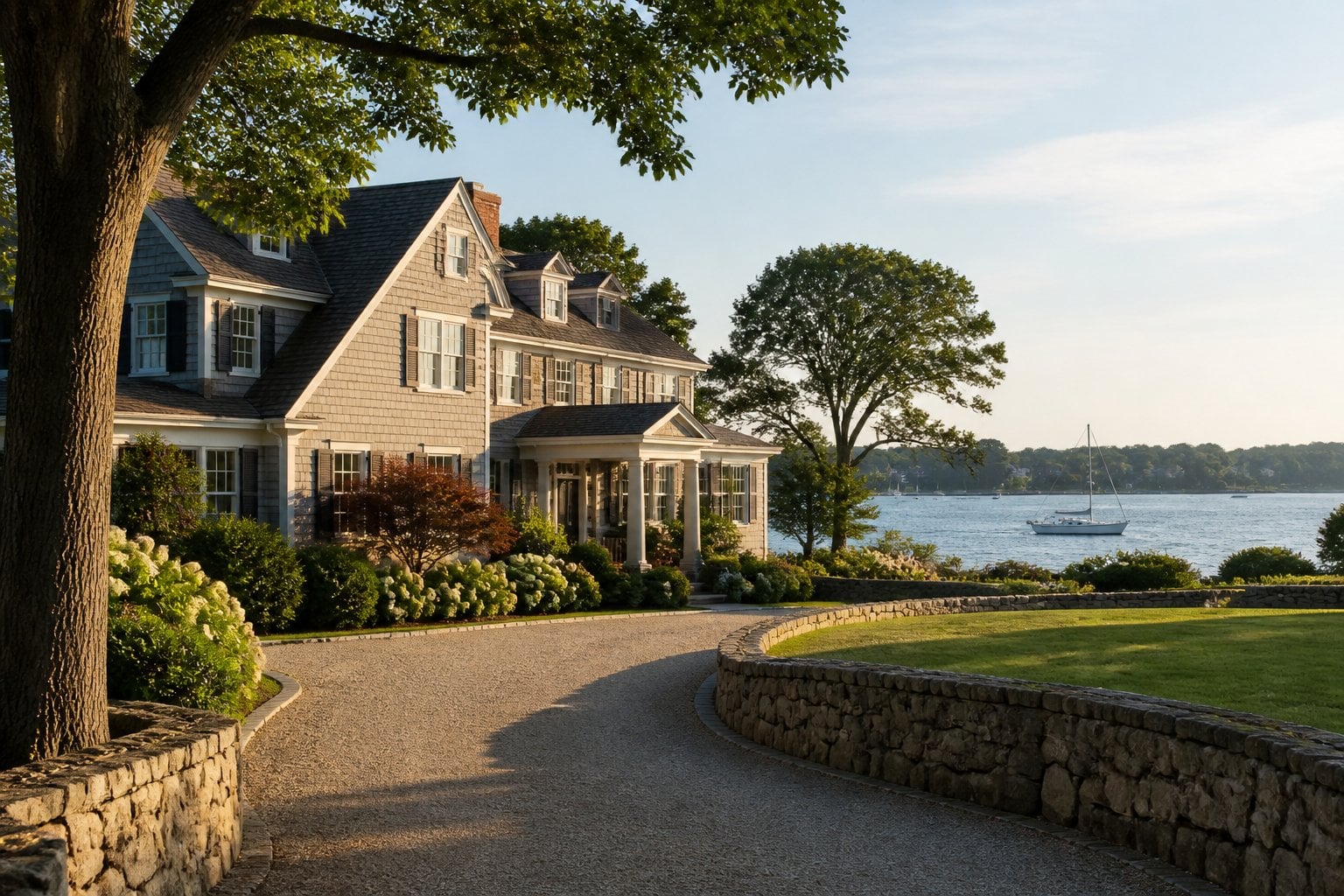
Greenwich is the first town over the New York border in Connecticut, and with about 63,500 residents in 2020 it is the largest place in the top 10. Its typical home value is about $2.4 million, up about 14% in a year.
The town is known as a home base for the finance industry, with many investment firms and hedge funds based there. Metro-North stops at several stations in town, and trains reach Grand Central in under an hour.
Greenwich covers a wide range of neighborhoods, from the village feel of Old Greenwich and Riverside to the large estates of Round Hill and the gated Belle Haven peninsula on the Sound. Greenwich Avenue is its main shopping street, lined with high-end stores and restaurants. Because Greenwich is big, its typical value mixes modest condos with some of the most expensive homes in New England.
6. Short Hills, New Jersey
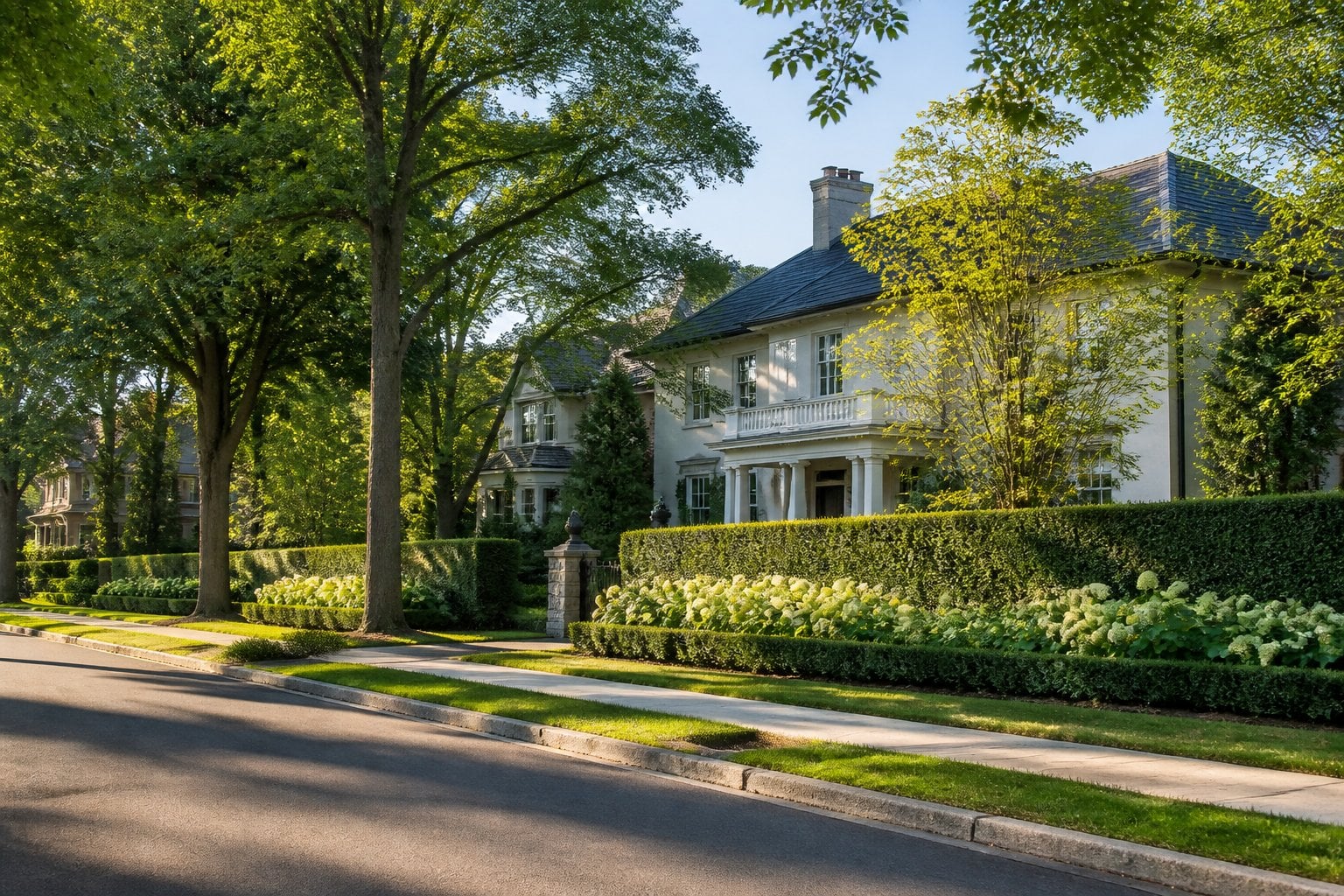
Short Hills is an unincorporated community within Millburn Township in Essex County, about 20 miles west of Manhattan. It has about 14,000 residents and a typical home value of about $2.4 million, up about 9% in a year.
Its main selling point is a direct train to the city. NJ Transit’s Midtown Direct service on the Morris and Essex Line runs from the Short Hills station straight to New York Penn Station without changing trains. The Millburn public schools are among the most sought after in New Jersey, and many buyers move here for them.
Short Hills is also home to The Mall at Short Hills, one of the best-known luxury malls in the Northeast. The area’s homes range from classic colonials to large newer houses on wooded lots, and the nearby Paper Mill Playhouse in Millburn adds a well-known regional theater.
7. Manhasset, New York
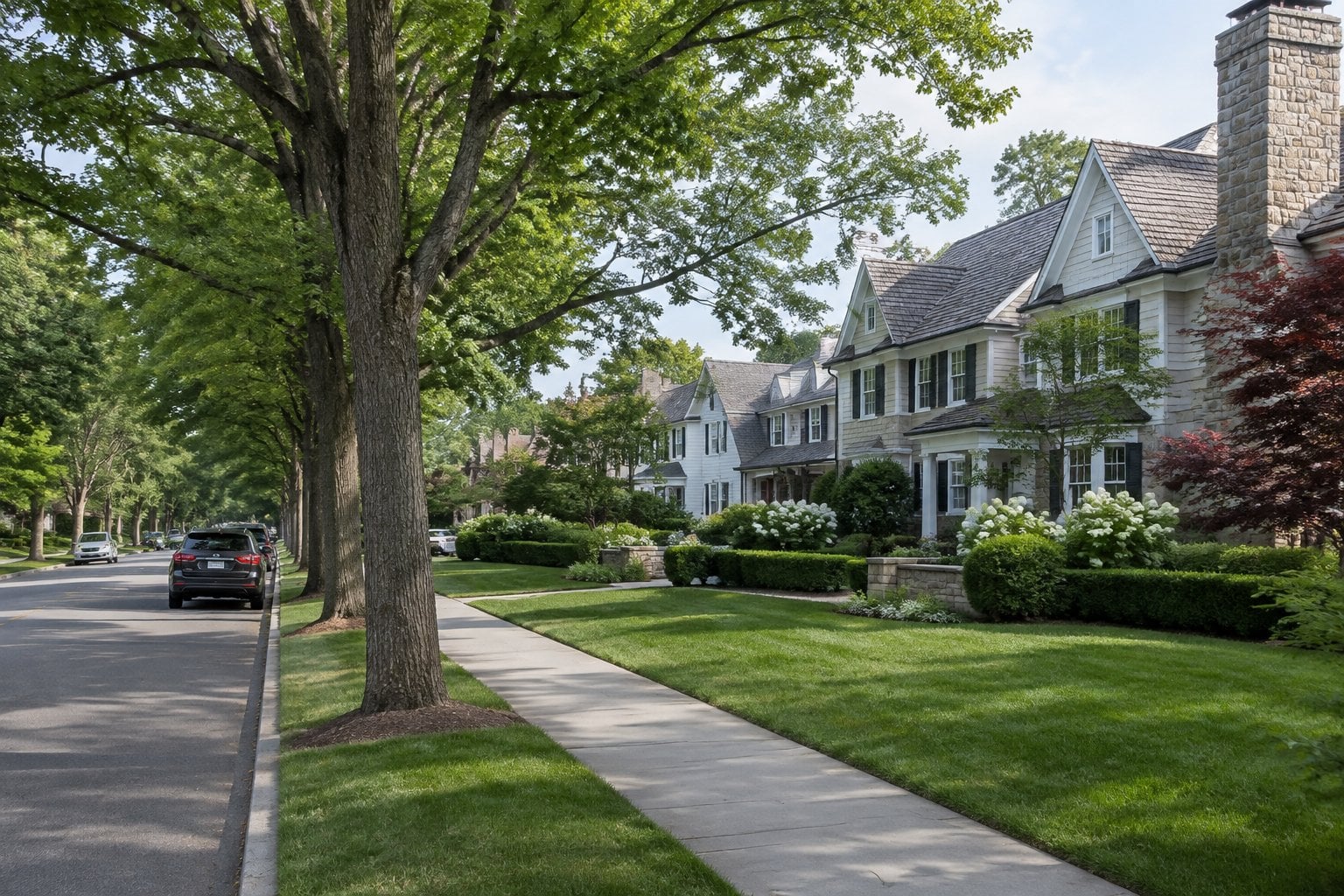
Manhasset is a hamlet on Long Island’s North Shore in Nassau County, on Manhasset Bay. It has about 8,000 residents and a typical home value of about $2.35 million, up about 11% in a year.
The Long Island Rail Road’s Port Washington Branch stops in Manhasset, and trains reach Manhattan in roughly half an hour, one of the quickest suburban commutes into the city. That short trip, along with highly rated public schools, keeps demand steady.
Northern Boulevard through Manhasset is known as the Miracle Mile, a stretch of luxury stores anchored by the Americana Manhasset shopping center. Away from the boulevard, the area has quiet residential streets, and the most expensive homes are on the Manhasset Neck peninsula near the water.
8. Lawrence, New York
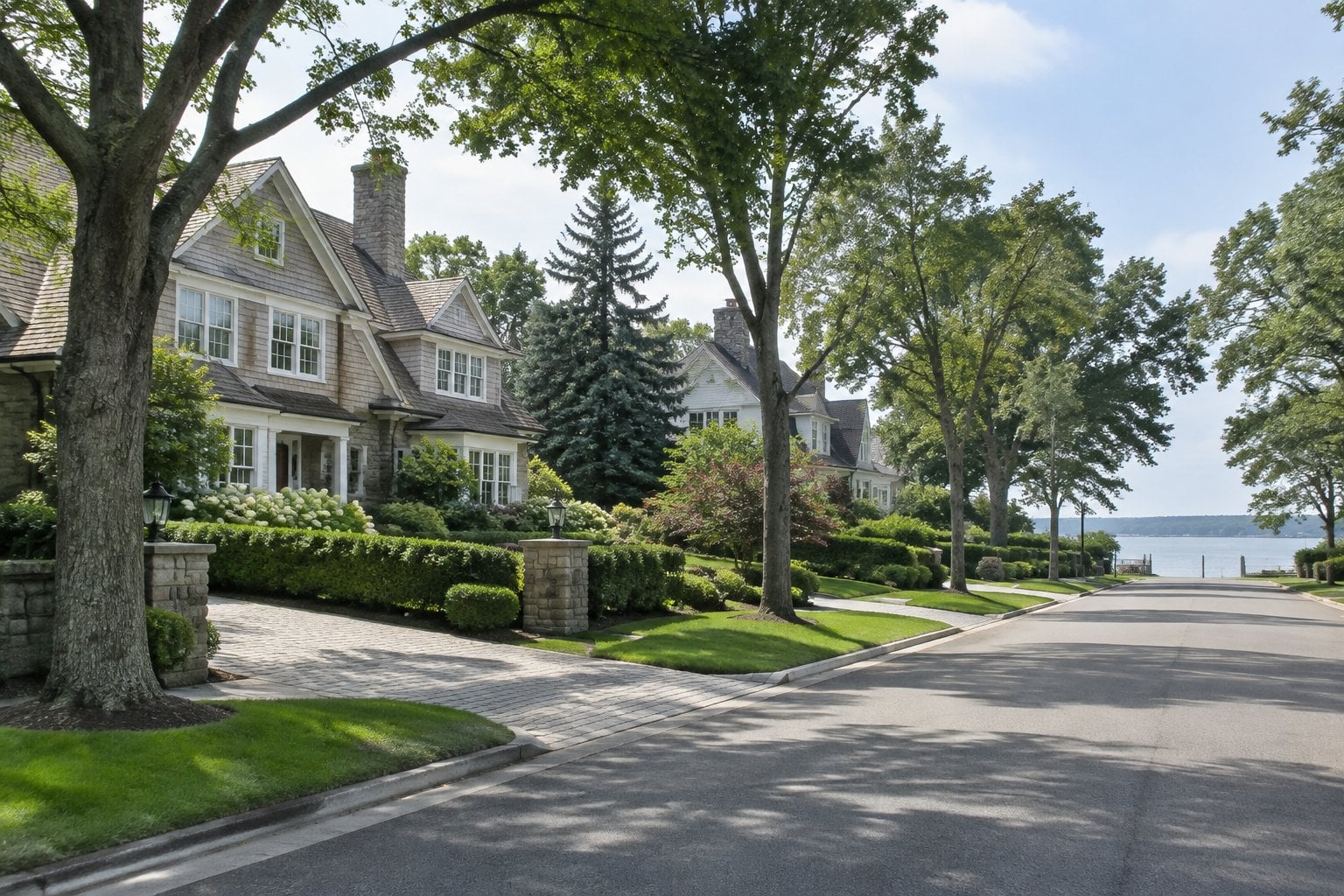
Lawrence is a village on Long Island’s South Shore in Nassau County, close to the border with Queens and a short drive from JFK Airport. It had about 6,800 residents in 2020, and its typical home value is about $2.3 million, up about 13% in a year.
Lawrence is one of the communities known together as the Five Towns. Its streets are lined with large homes, many on big lots, and some of the most expensive properties sit along the bay and the village’s golf course.
The Long Island Rail Road’s Far Rockaway Branch has a stop in Lawrence, giving residents a rail link into the city. With limited land and steady demand from families who want to stay close to New York City, homes in Lawrence often sell for well above the Long Island average.
9. Pinecrest, Florida
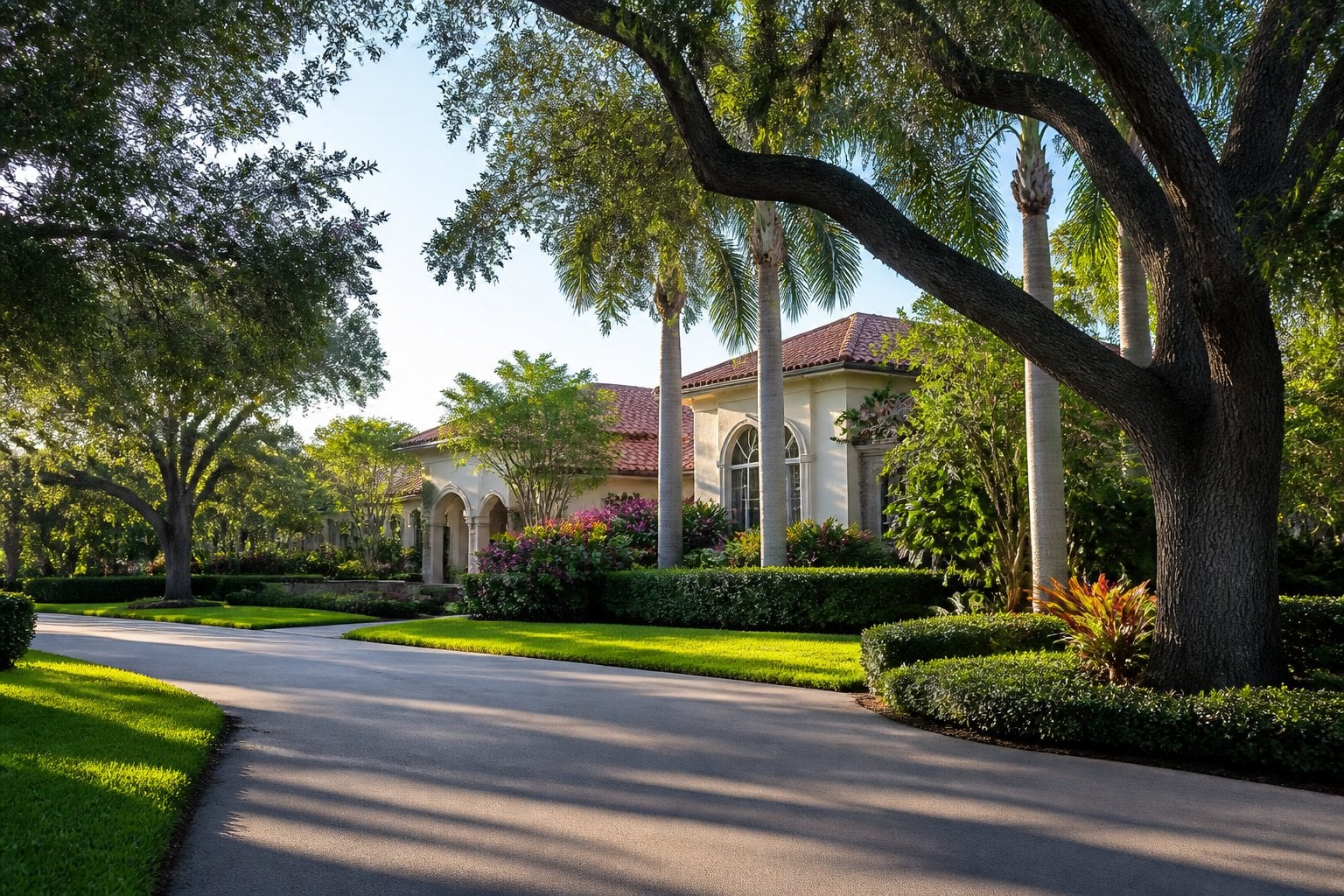
Pinecrest is a village in Miami-Dade County, just south of Coral Gables, and it is the most expensive Florida place on this list. Its typical home value is about $2.3 million, up about 8% in a year and nearly 70% over five years. About 18,400 people lived here in 2020.
Pinecrest only became its own village in 1996. It is known for large, leafy lots with single-family homes, a big contrast with the high-rise condos found in much of Miami. Families are drawn by the space, the quiet streets and the area’s schools.
One of the village’s best-known spots is Pinecrest Gardens, a public park on the former site of the Parrot Jungle attraction. Florida has no state income tax, which adds to the pull for buyers moving from high-tax states in the Northeast.
10. New Canaan, Connecticut
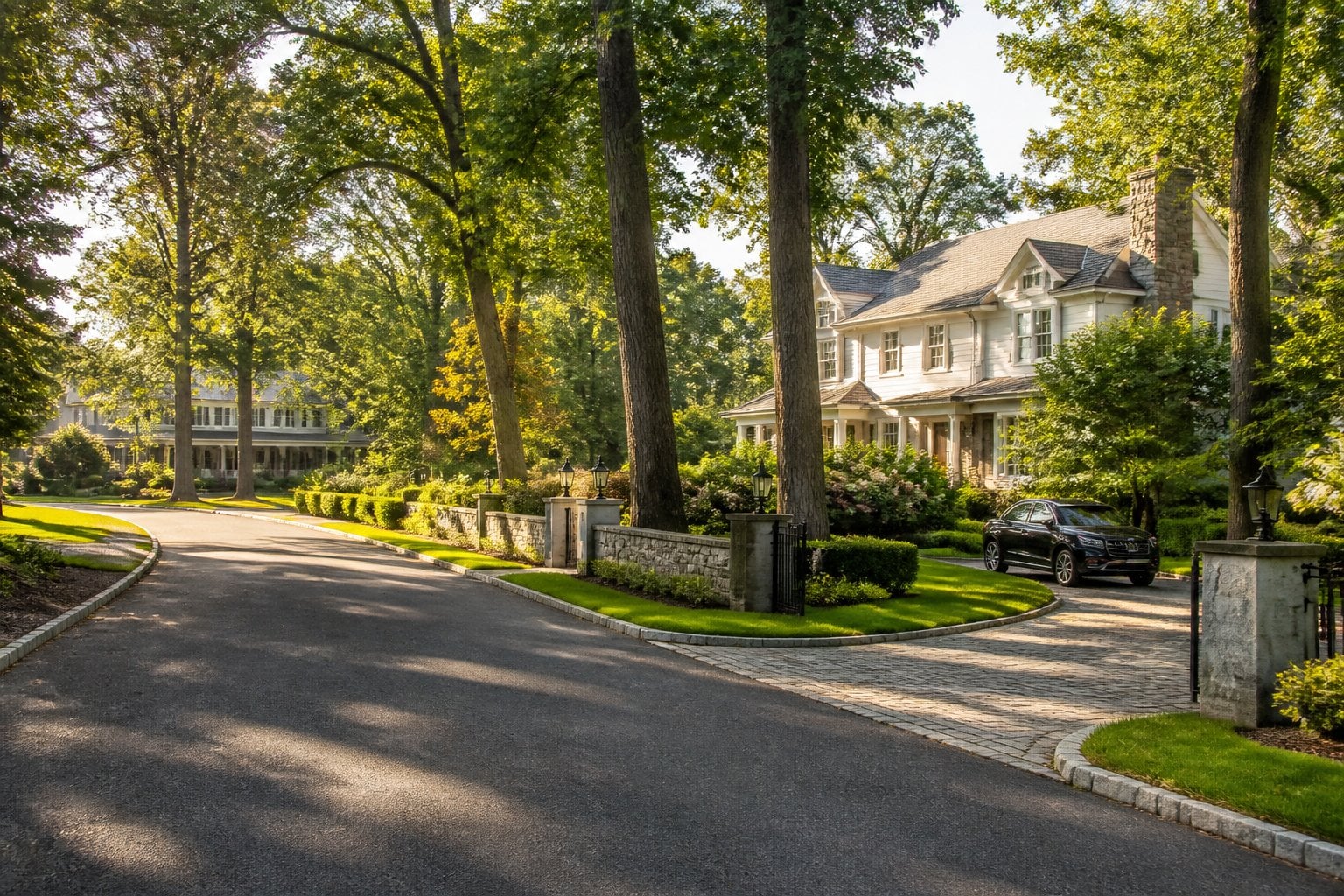
New Canaan is a Fairfield County town of about 20,600 people with a typical home value of about $2.25 million, up about 14% in a year.
The town has its own Metro-North branch line, which ends at New Canaan station near the walkable downtown, so commuters can ride into Grand Central. Large lots, stone walls and winding wooded roads give the town a rural feel even though Manhattan is less than 50 miles away.
New Canaan is famous among architecture fans. Philip Johnson’s Glass House, finished in 1949, is open for tours, and Grace Farms, with its long, curving River building, draws visitors from across the region. Waveny Park and the Silvermine Arts Center add to the town’s appeal for families and art lovers.
11. Weston, Massachusetts
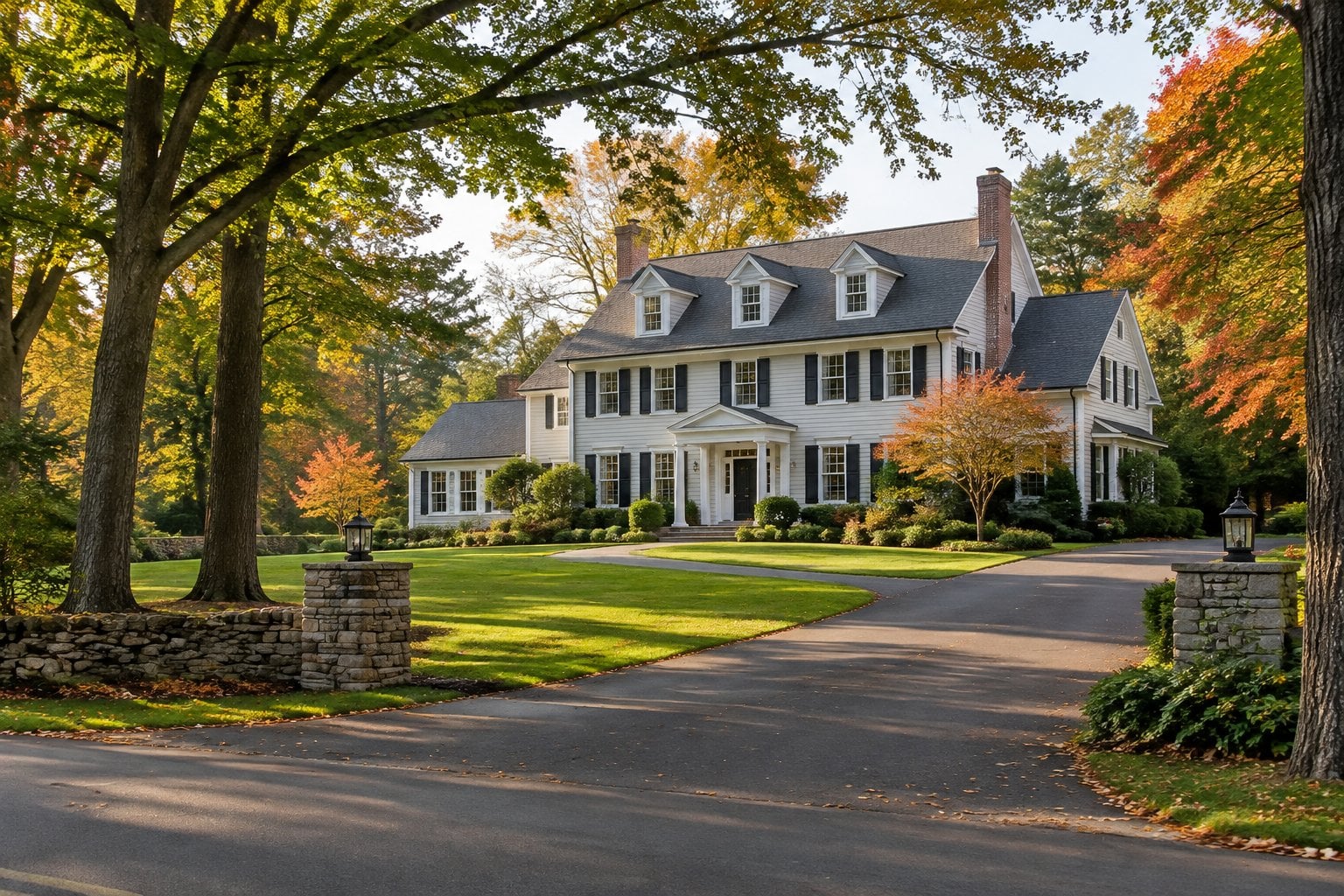
Weston is a town about 15 miles west of Boston, and it is the most expensive place in Massachusetts outside of the islands. Its typical home value is about $2.2 million, up about 4% in a year. The town had about 11,850 residents in 2020.
Weston is almost entirely residential, with large lots, woods and conservation land and very little commercial development. Its households regularly have some of the highest incomes in the state, and its public schools are a major reason buyers choose it.
The town is bordered by the Massachusetts Turnpike and Route 128, which makes the drive to Boston and to the office parks around the highway fairly easy. Regis College is located in Weston, and the town center is small, with a few shops, a library and a town green.
12. Palm Beach, Florida
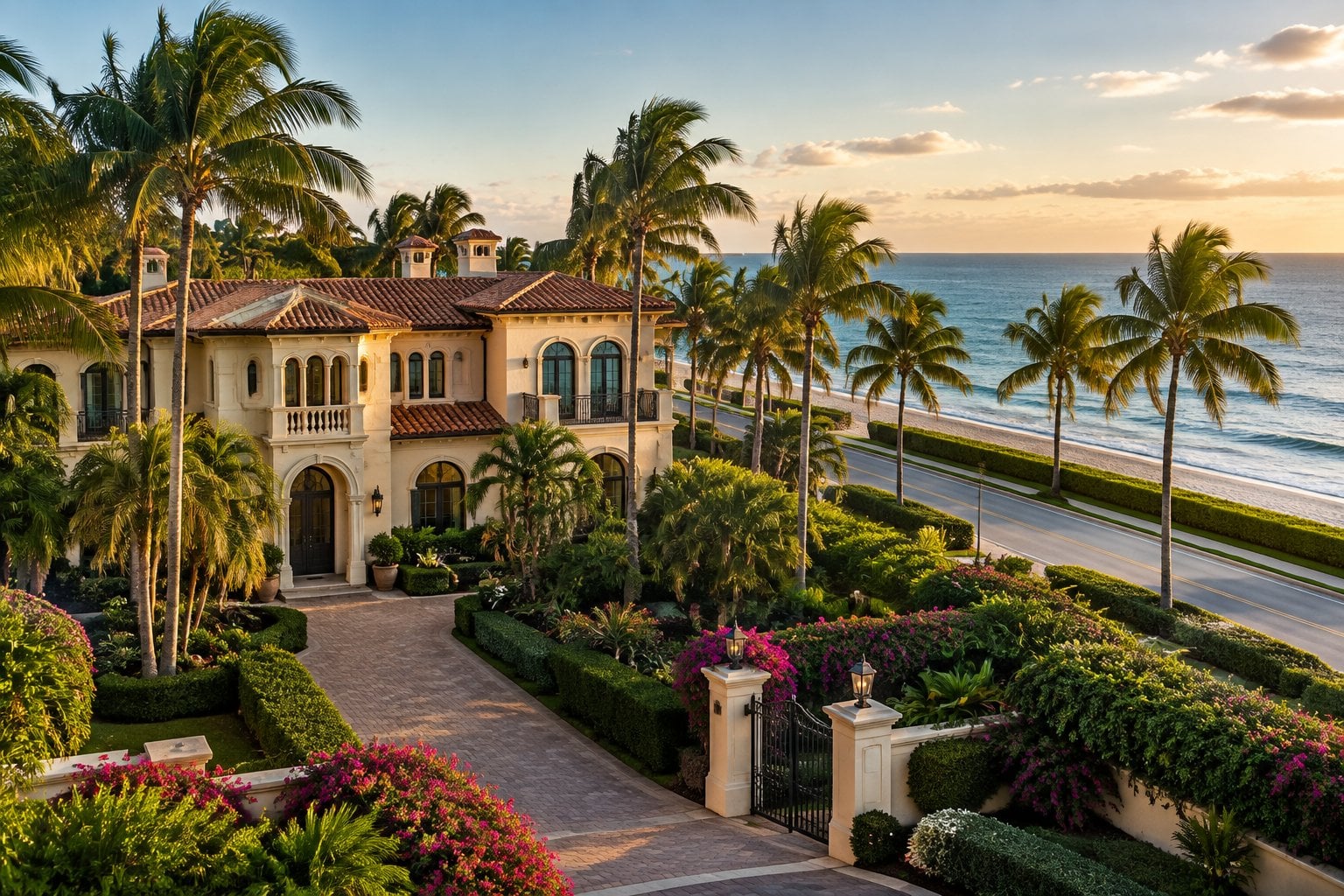
Palm Beach is a town on a barrier island in Palm Beach County, separated from West Palm Beach by the Lake Worth Lagoon. It had about 9,250 year-round residents in 2020, and its typical home value is about $2.2 million, up about 5% in a year.
Palm Beach was built up as a winter resort by railroad tycoon Henry Flagler around the turn of the 20th century. His mansion, Whitehall, is now the Flagler Museum, and The Breakers hotel still anchors the oceanfront.
The typical value includes many condos and apartments, while the oceanfront estates sell for far more, often tens of millions of dollars. Worth Avenue is the island’s famous luxury shopping street. The town’s population grows sharply in the winter season, when many owners come down from the Northeast.
13. Westport, Connecticut
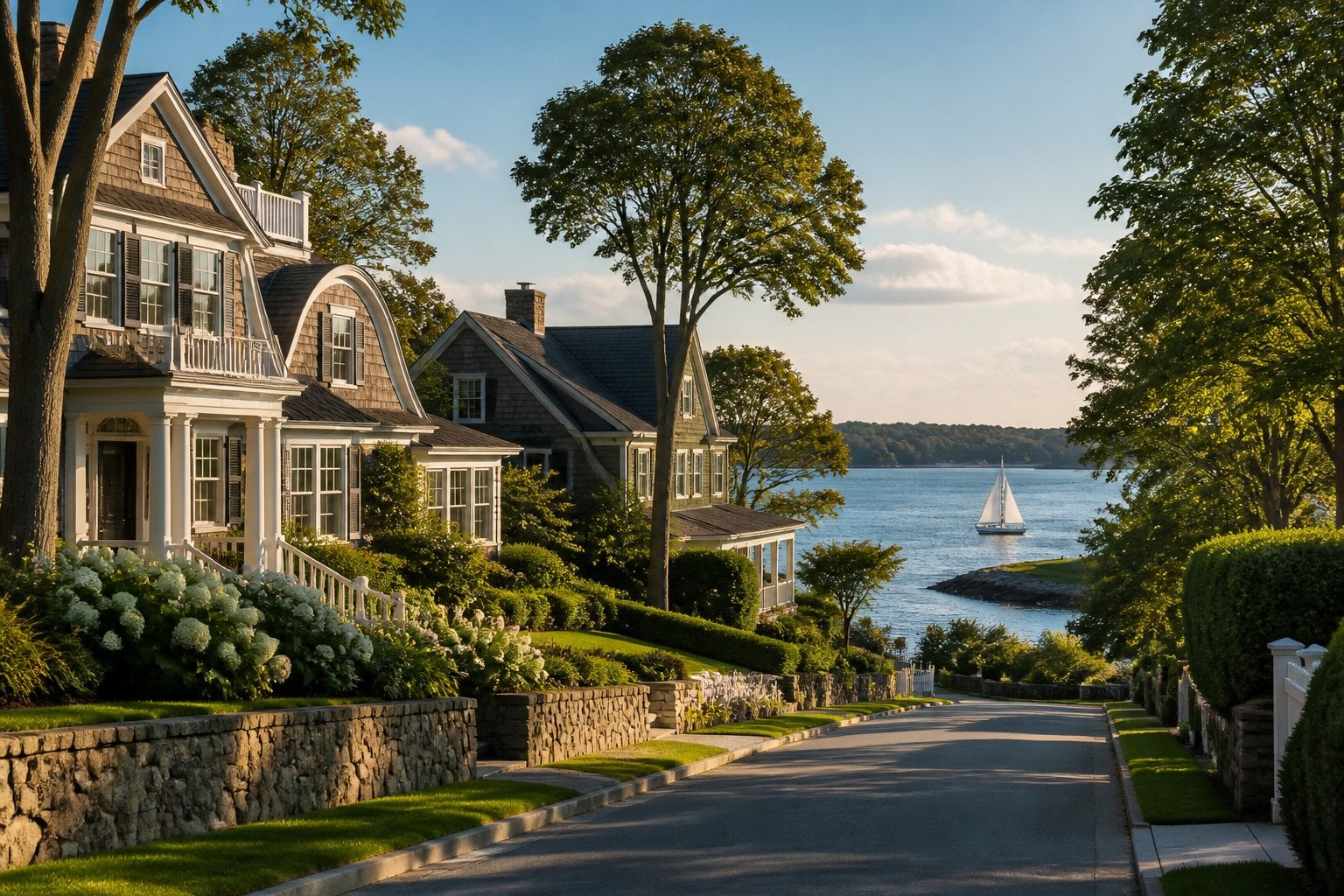
Westport is a Fairfield County town on Long Island Sound with about 27,100 residents in 2020 and a typical home value of about $2.1 million, up about 11% in a year.
The town has two Metro-North stations, Westport (Saugatuck) and Greens Farms, so many residents commute into Manhattan. The Saugatuck River runs through the center of town, and Compo Beach is one of the most popular beaches on the Connecticut shore.
Westport has a long arts history. The Westport Country Playhouse opened in 1931, and actors Paul Newman and Joanne Woodward lived in town for decades; the Newman’s Own food company was started here. Waterfront homes along the Sound and the river are among the most expensive in the state.
14. Wellesley, Massachusetts
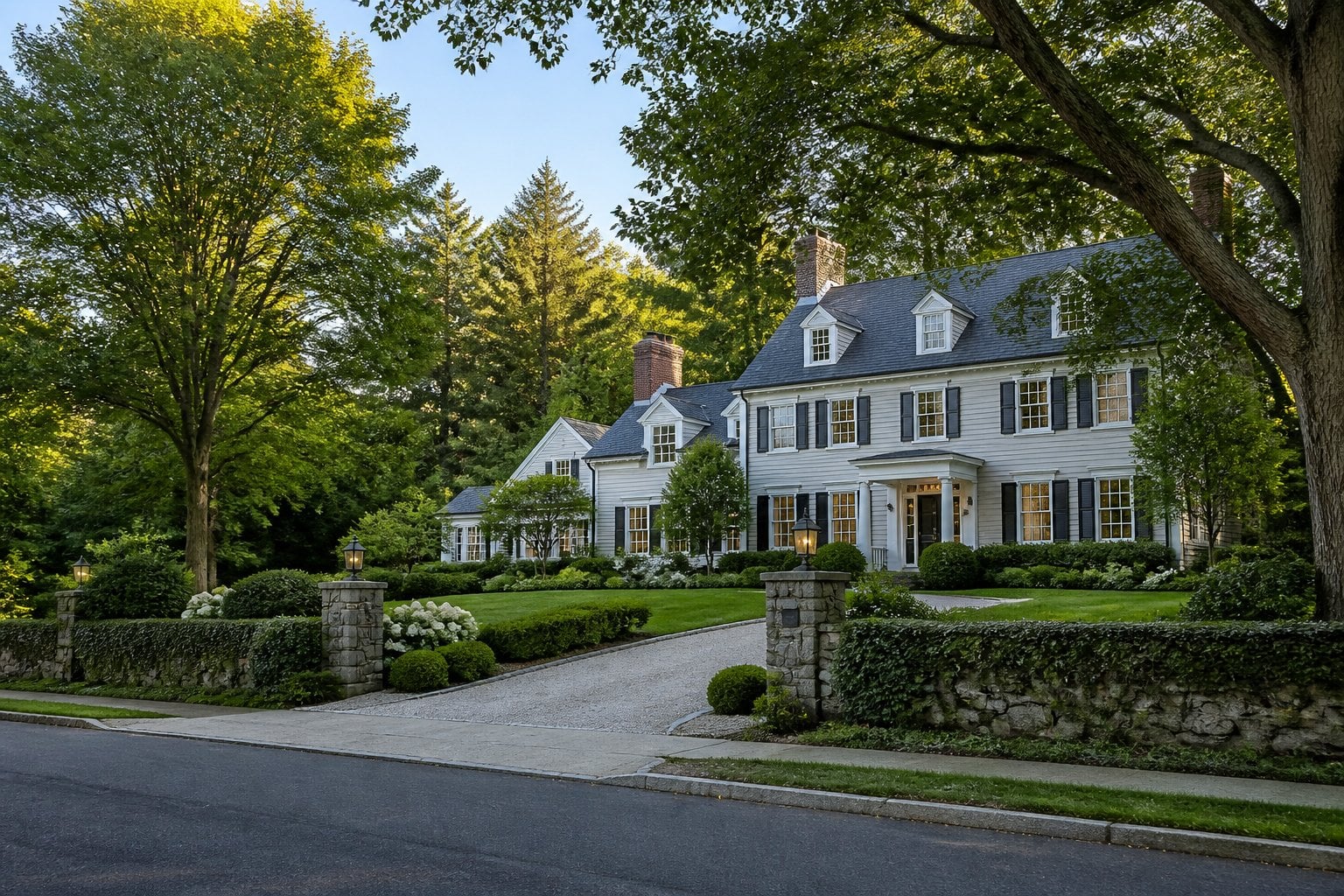
Wellesley is a town about 13 miles west of Boston, with about 29,400 residents in 2020 and a typical home value of about $2 million, up about 5% in a year.
The town is home to two colleges, Wellesley College and Babson College, and its public schools have a strong reputation. Three MBTA Commuter Rail stations on the Worcester Line, Wellesley Farms, Wellesley Hills and Wellesley Square, connect residents to downtown Boston.
Wellesley is also a well-known stop on the Boston Marathon route, where Wellesley College students cheer runners at the halfway point. Most homes are single-family houses on quiet streets, and older homes are often torn down and replaced by larger new ones, which pushes prices up further.
15. Edgartown, Massachusetts
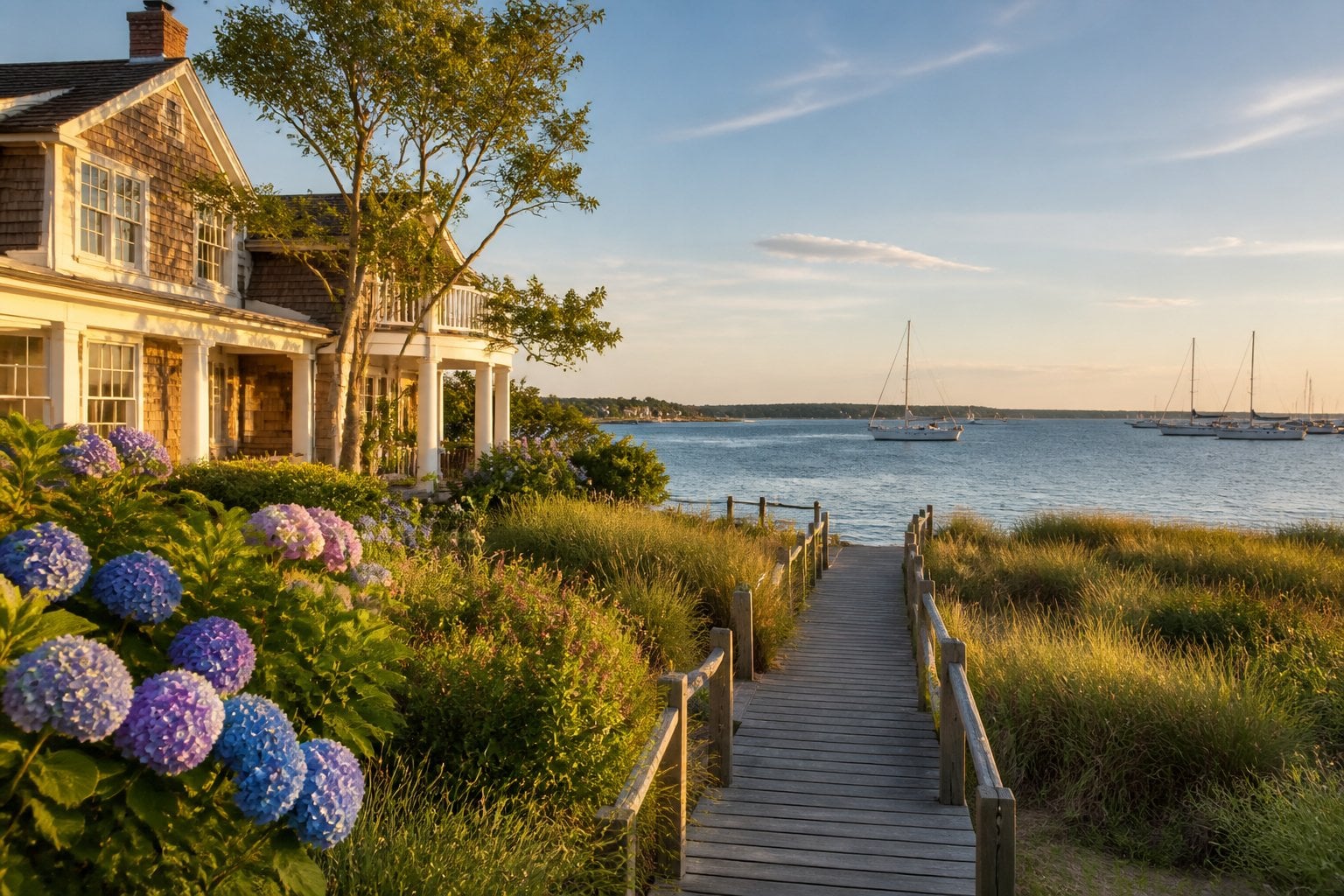
Edgartown is a town on Martha’s Vineyard and the seat of Dukes County. It had about 5,200 residents in 2020, and its typical home value is about $1.9 million, up about 7% in a year.
The town grew as a whaling port, and its harbor is still lined with white clapboard captains’ houses from that era. The Edgartown Harbor Lighthouse stands at the entrance to the harbor, and the town also includes Chappaquiddick Island, reached by a short ferry ride.
Like Nantucket, Martha’s Vineyard is reached by ferry or plane, and much of the housing is used as summer homes, which keeps prices far above the rest of Massachusetts. Much of the 1975 film Jaws was shot on Martha’s Vineyard, including in Edgartown.
16. Englewood Cliffs, New Jersey
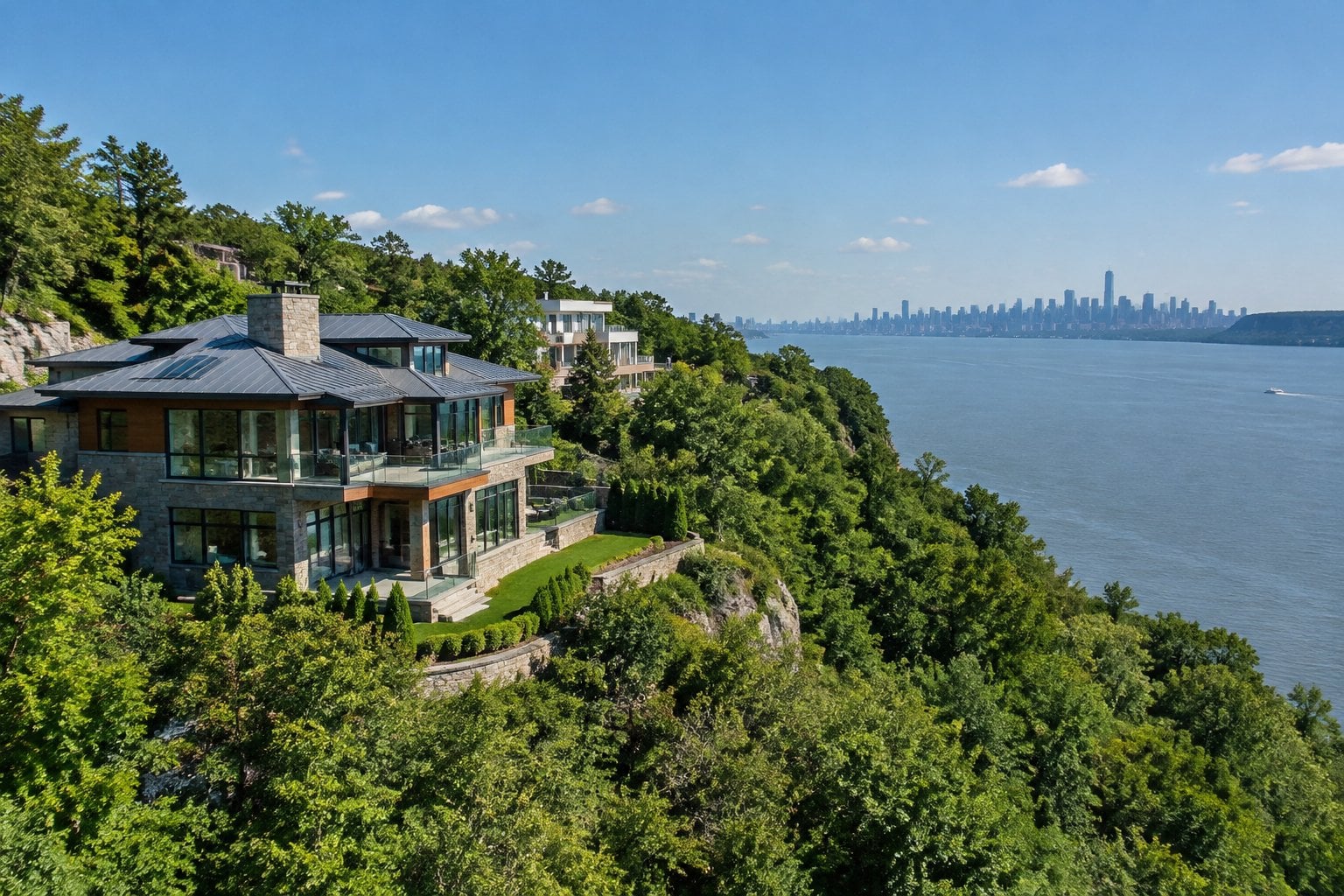
Englewood Cliffs is a Bergen County borough on top of the Palisades, the tall cliffs along the west bank of the Hudson River. It had about 5,300 residents in 2020, and its typical home value is about $1.8 million, up about 9% in a year.
Its biggest advantage is location. The borough is next to Fort Lee and the George Washington Bridge, so Manhattan is only a few miles away. Some homes along the cliffs have views across the river to the city.
Englewood Cliffs is also a business hub, with large corporate campuses along Sylvan Avenue, including the North American headquarters of LG Electronics. Its residential streets are known for large, newer homes on generous lots, and New Jersey’s high property taxes add to the cost of living here.
17. Larchmont, New York
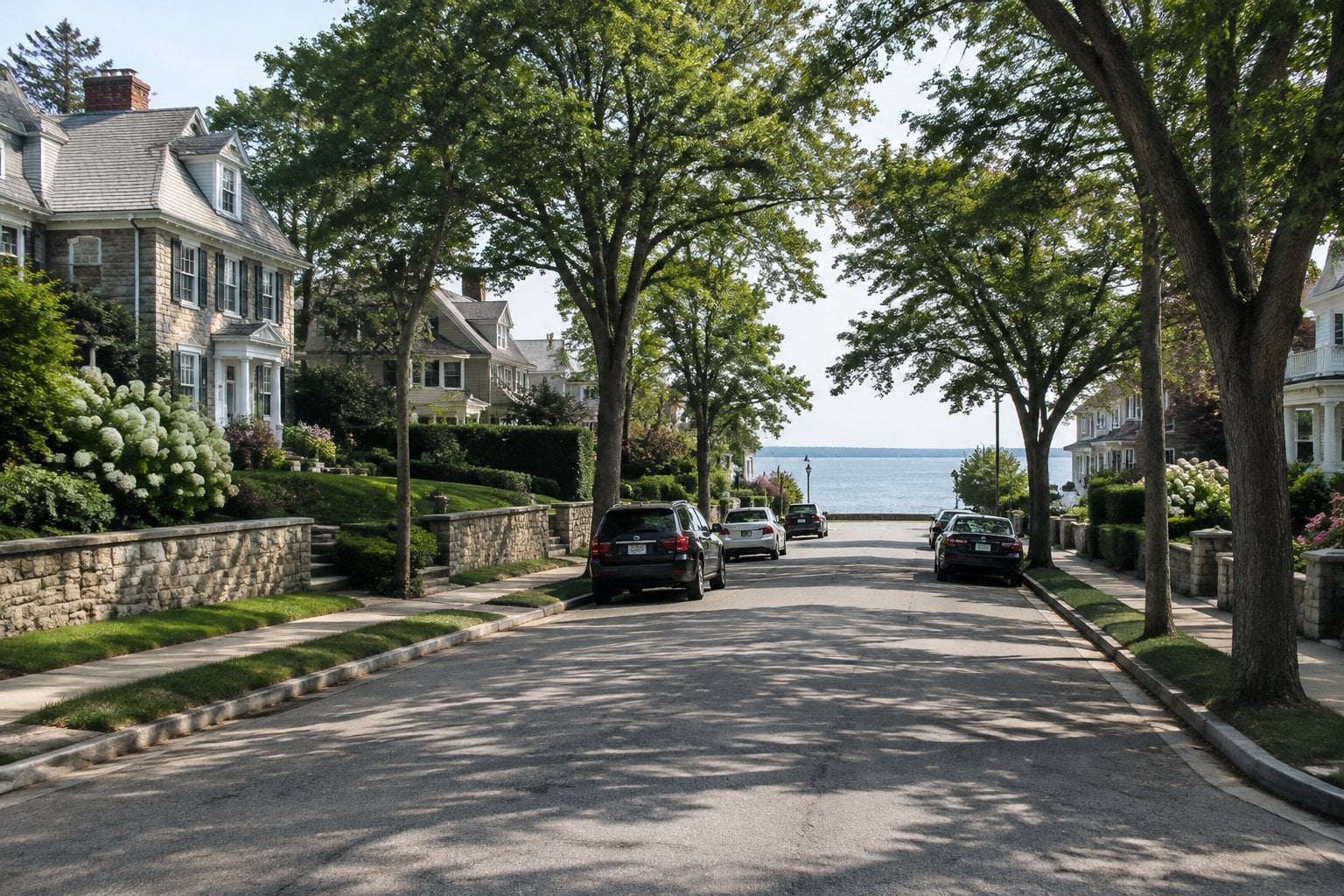
Larchmont is a small village in Westchester County on Long Island Sound, covering only about one square mile. It had about 6,600 residents in 2020, and its typical home value is about $1.8 million, up about 13% in a year.
The village sits on the Metro-North New Haven Line, and trains reach Grand Central in about 35 minutes, which makes it popular with Manhattan commuters. Its compact downtown along Chatsworth Avenue and the Boston Post Road is easy to walk.
Larchmont is known for its sailing. The Larchmont Yacht Club, founded in 1880, is one of the best-known yacht clubs on the East Coast. Larchmont shares the Mamaroneck school district with neighboring communities, and homes close to the water command the highest prices.
18. Dover, Massachusetts
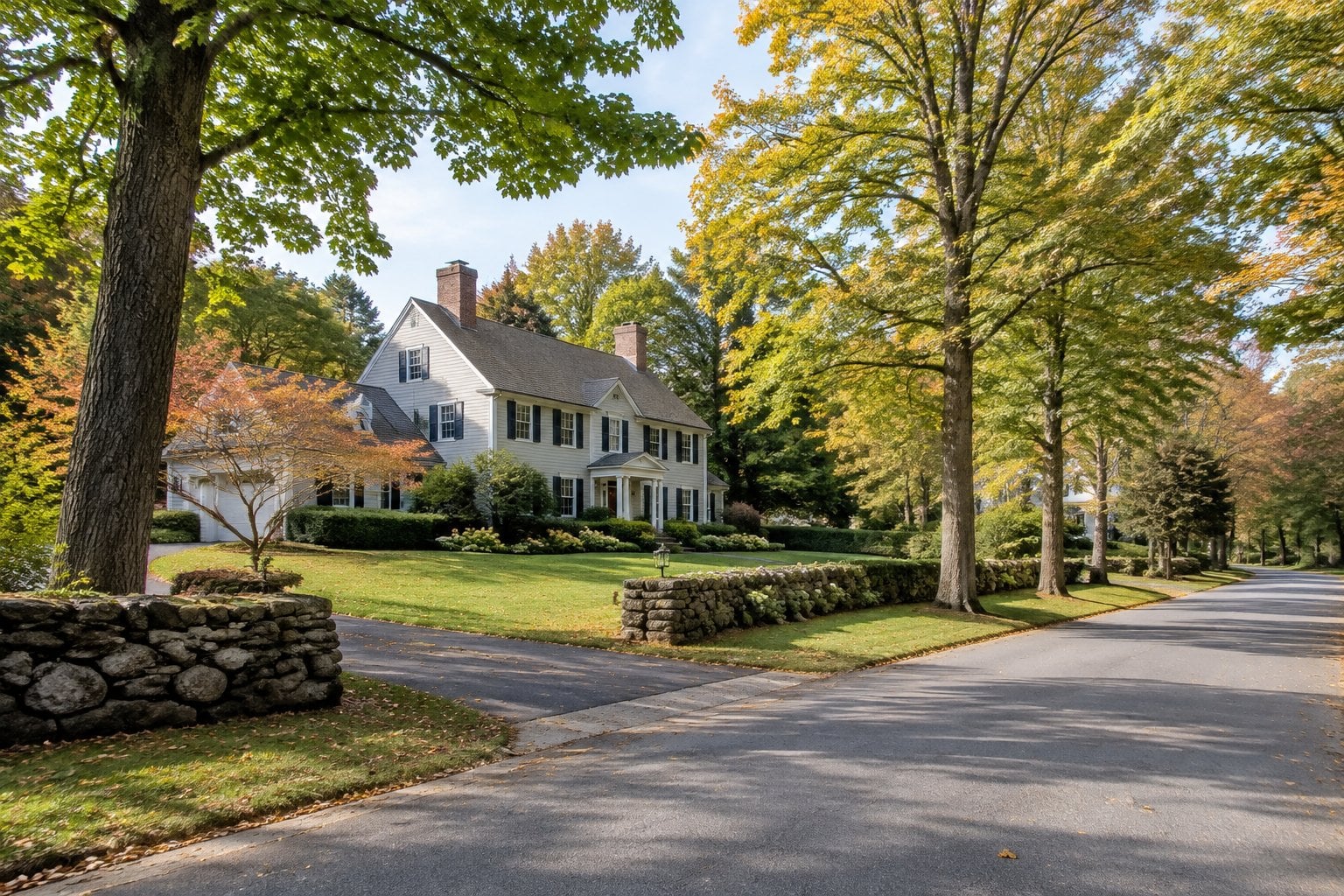
Dover is a rural town about 15 miles southwest of Boston, with about 5,900 residents in 2020 and a typical home value of about $1.7 million, up about 2% in a year.
Dover feels more like the countryside than a suburb. Homes sit on large wooded lots, and the town has horse farms, winding roads and very little commercial development. The Charles River forms part of its border.
Open space is a big part of the appeal. Noanet Woodlands, a large reservation run by The Trustees, has hiking trails and a hilltop view of the Boston skyline. Dover’s schools are highly rated, and the town’s small size and limited housing keep competition high whenever a home comes up for sale.
19. Key Biscayne, Florida
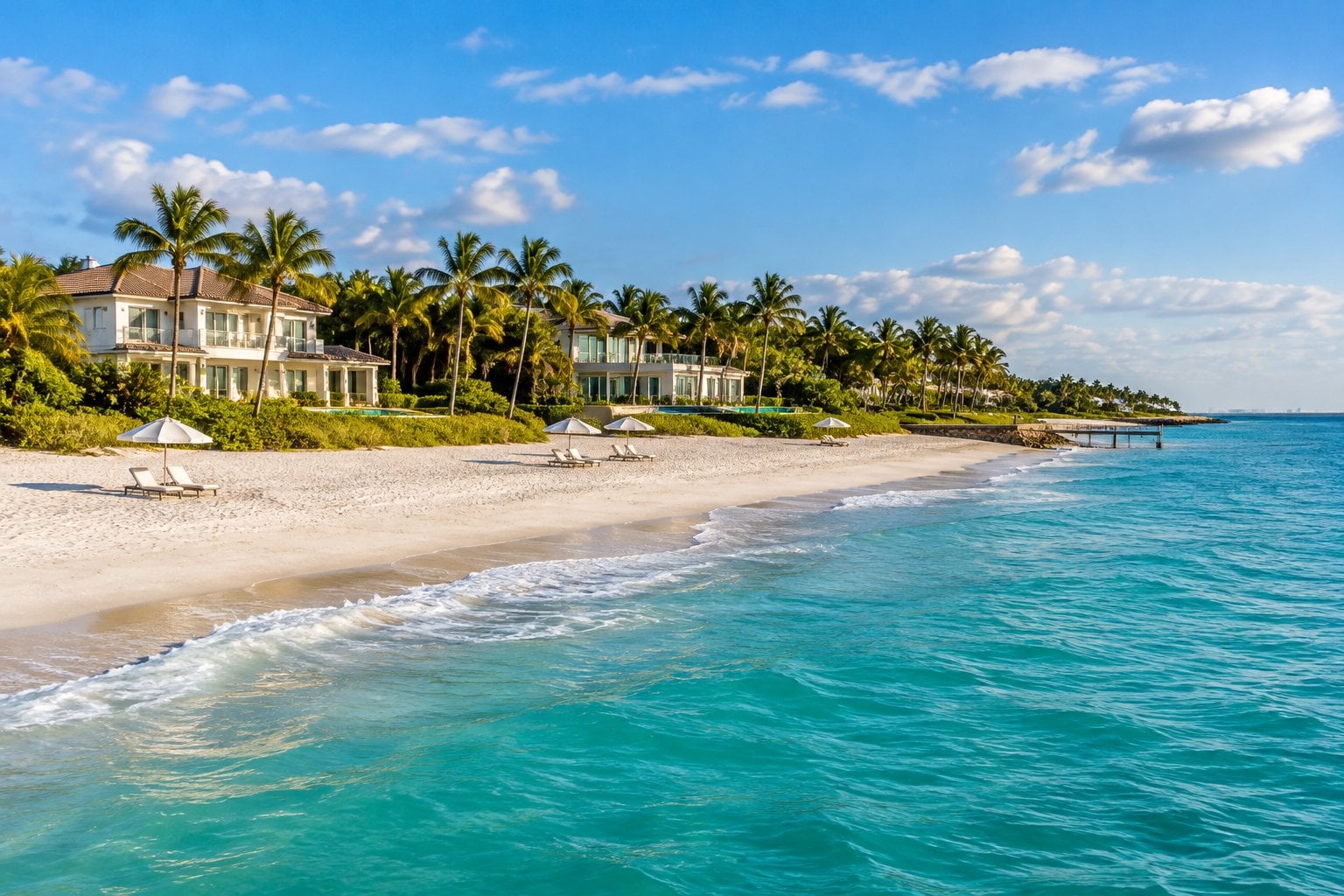
Key Biscayne is an island village south of Miami Beach, reached from the mainland by the Rickenbacker Causeway. It had about 14,800 residents in 2020, and its typical home value is about $1.7 million, up about 8% in a year.
The village became its own municipality in 1991. Much of the island is parkland: Crandon Park on the north end and Bill Baggs Cape Florida State Park on the south end, home to the Cape Florida Lighthouse, first built in 1825.
Housing is a mix of oceanfront condo towers and single-family homes, many on canals with boat docks. With downtown Miami about 15 minutes away across the causeway and beaches on its doorstep, Key Biscayne draws families and second-home buyers from around the world.
20. Great Falls, Virginia
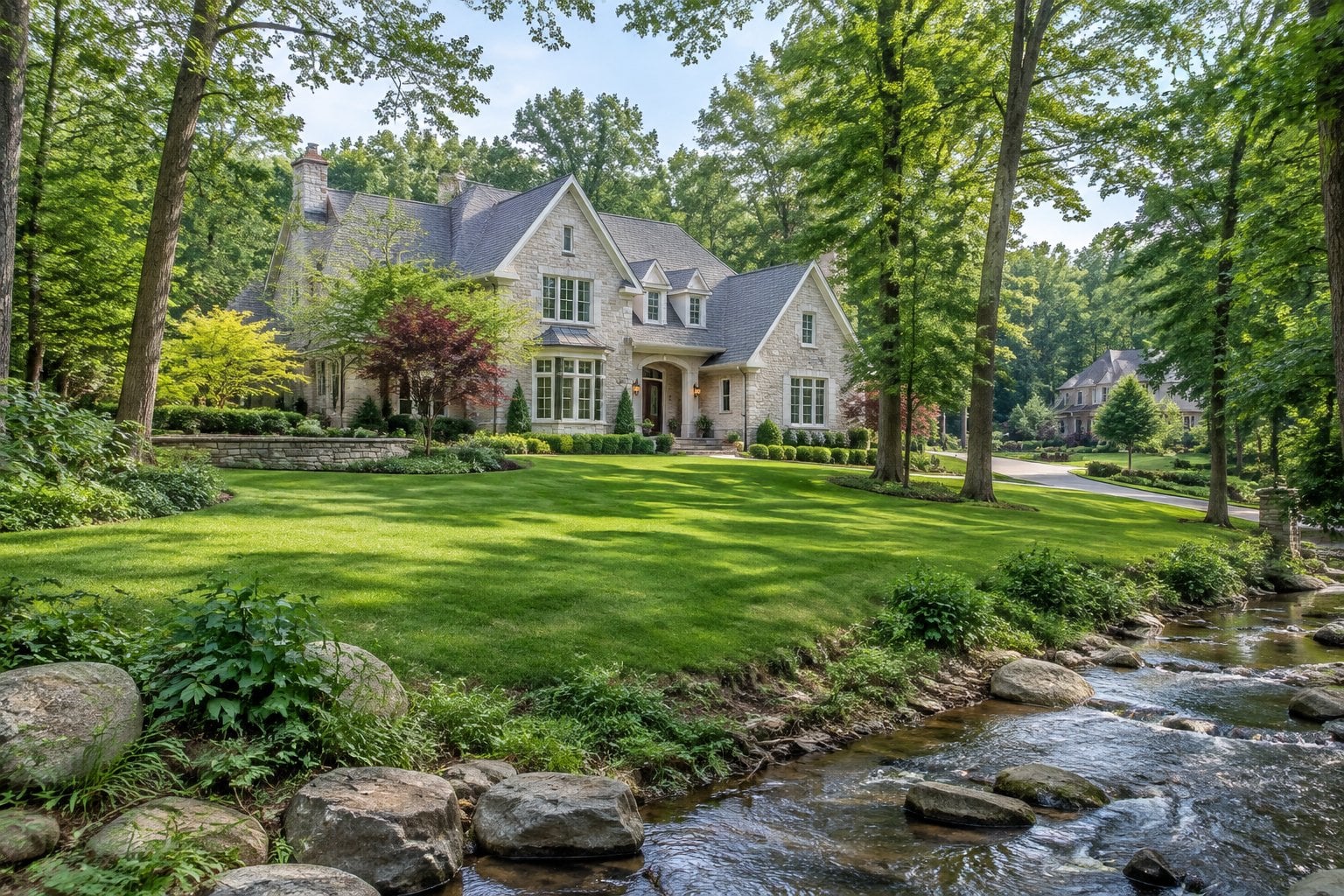
Great Falls is a community in Fairfax County along the Potomac River, about 15 miles northwest of Washington, D.C. It has about 16,000 residents and a typical home value of about $1.7 million, up about 4% in a year. It is the only place in the D.C. area to make this list.
The area is named after the Great Falls of the Potomac, where the river drops over jagged rocks. Great Falls Park, run by the National Park Service, is one of the most popular parks in the region.
Great Falls has no town government of its own and very little commercial development. Most homes sit on lots of an acre or more, many with long driveways and wooded grounds. Buyers are drawn by the space and privacy, while still being within driving distance of D.C. and the Tysons business district.
21. Fair Haven, New Jersey
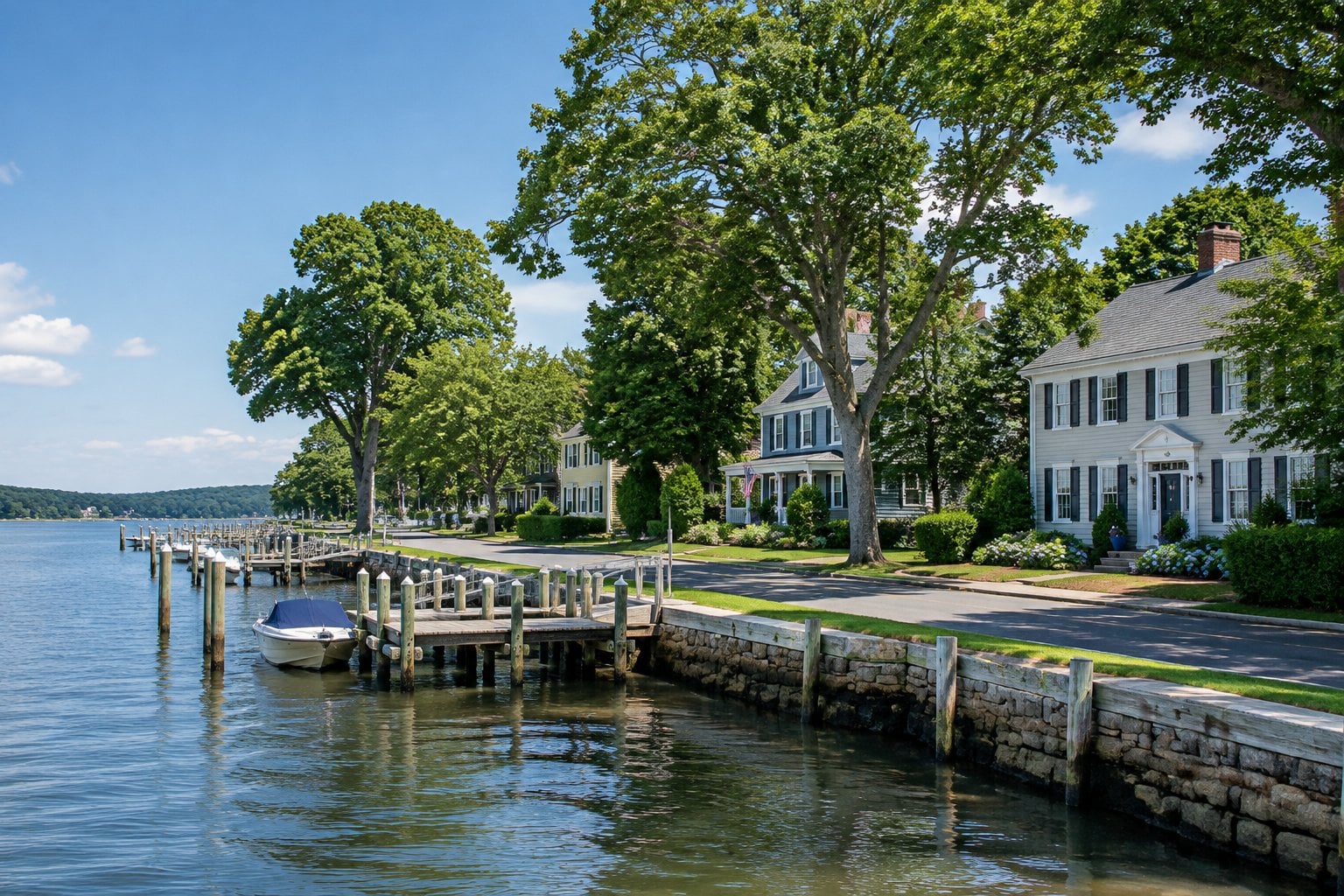
Fair Haven is a small Monmouth County borough on the Navesink River, right next to Rumson. It had about 6,300 residents in 2020, and its typical home value is about $1.7 million, up about 15% in a year, one of the biggest one-year gains on this list.
The borough covers only about two square miles, mostly of single-family homes on tree-lined streets, with a riverfront park and a small downtown along River Road.
Fair Haven shares Rumson-Fair Haven Regional High School with Rumson, and the schools are a major draw for families. Red Bank, next door, has an NJ Transit station on the North Jersey Coast Line, and the Seastreak ferry to Manhattan leaves from nearby Highlands and Atlantic Highlands.
22. Scarsdale, New York
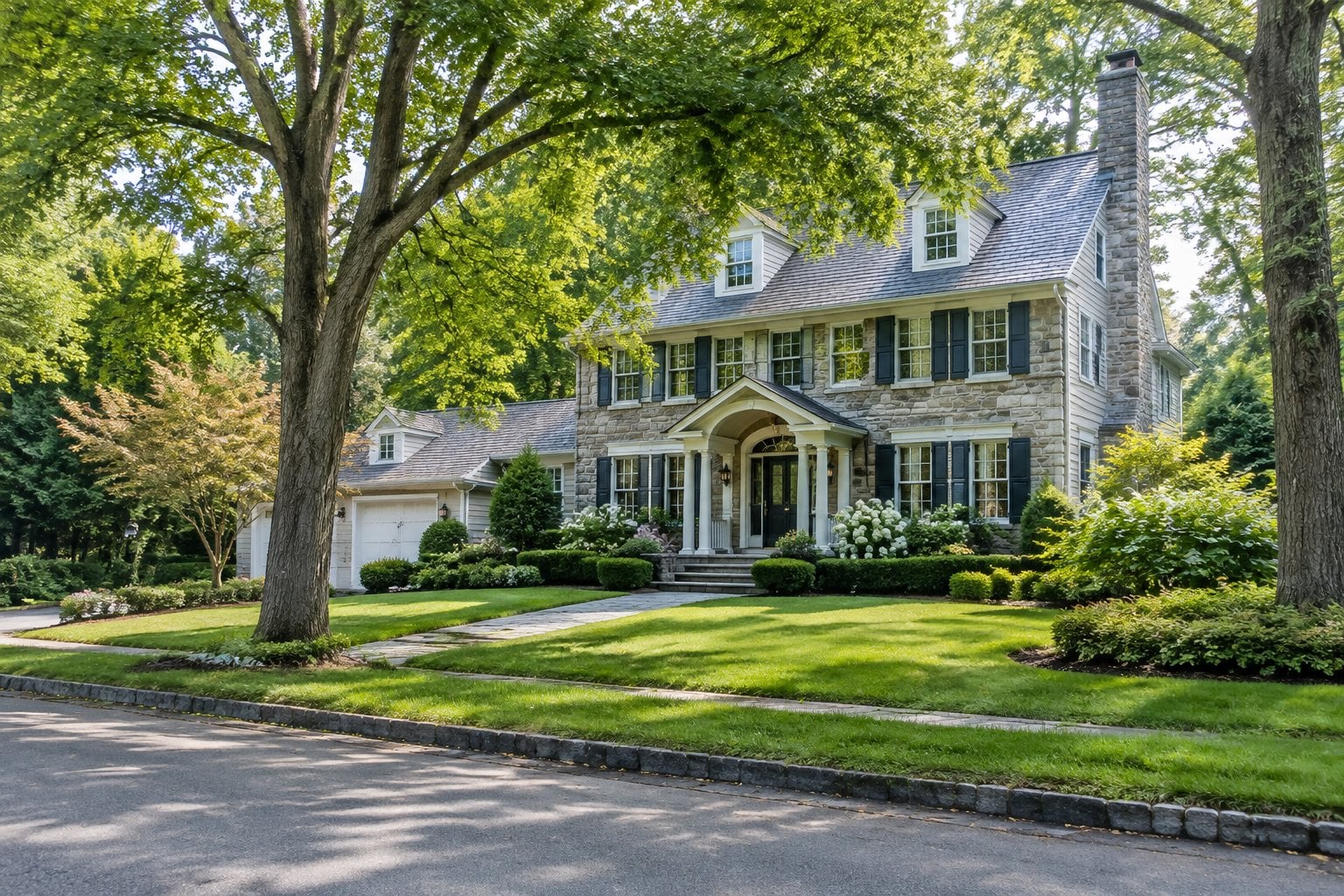
Scarsdale is a Westchester County community of about 18,300 people with a typical home value of about $1.65 million, up about 11% in a year. The village and town of Scarsdale share the same borders.
Scarsdale’s public schools are known across the country, and they are the main reason many families move here. The Metro-North Harlem Line stops in the village, and trains reach Grand Central in about 35 minutes.
The village center is known for its Tudor-style buildings, and the residential streets are lined with large colonials and Tudors on landscaped lots. Property taxes in Westchester County are among the highest in the United States, which adds a large yearly cost on top of the purchase price.
23. Franklin Lakes, New Jersey
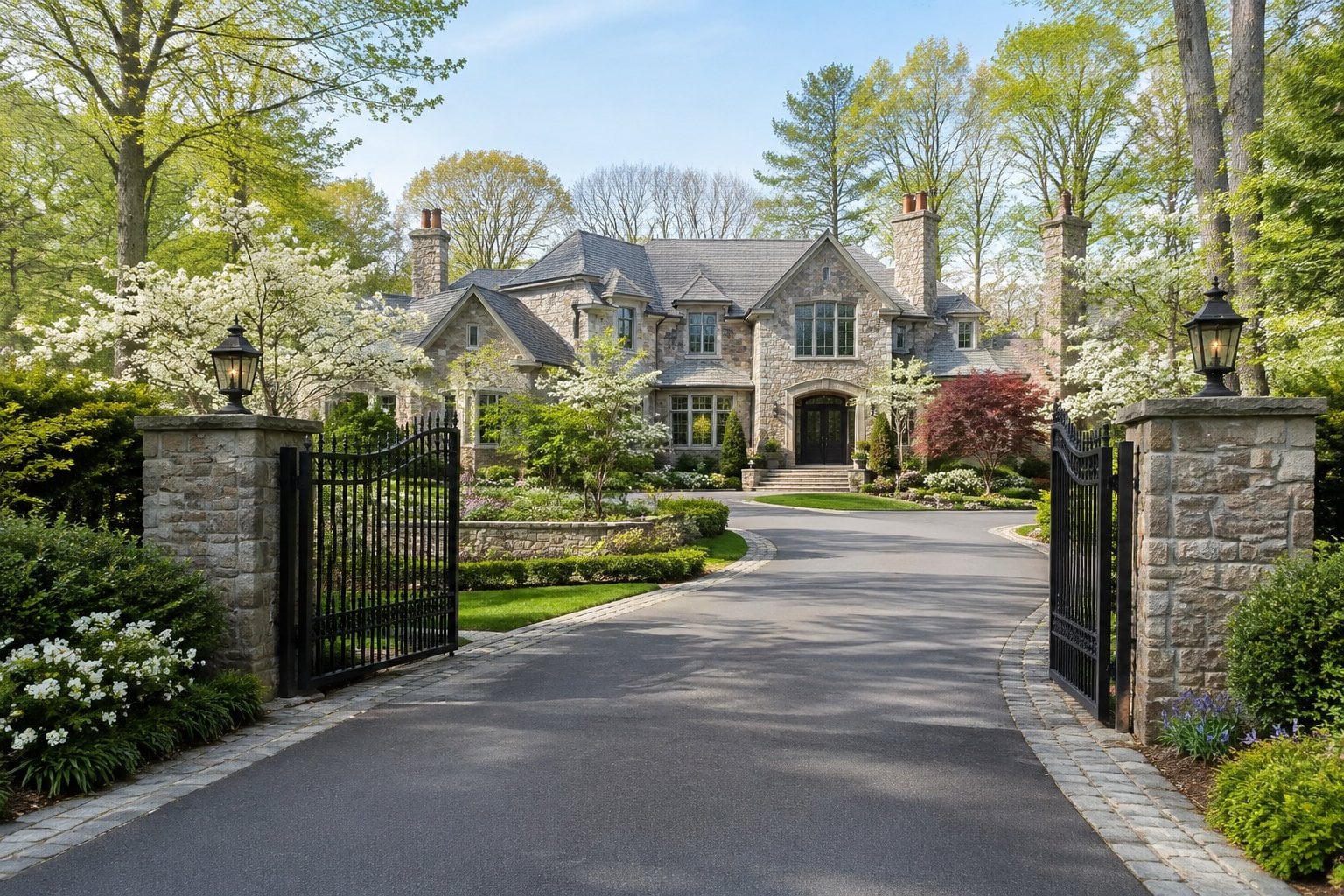
Franklin Lakes is a borough in northwestern Bergen County with about 11,100 residents in 2020 and a typical home value of about $1.6 million, up about 11% in a year.
The borough is known for large estates and newer custom-built homes, many on lots of an acre or more, along with several lakes that give the town its name. It has a quieter, more suburban-rural feel than the Bergen County towns closer to the George Washington Bridge.
Franklin Lakes is home to the headquarters of medical technology company BD (Becton, Dickinson and Company). Its high school students attend Ramapo High School in the Ramapo Indian Hills district. Manhattan is about 25 miles away, and the area has long attracted executives and professional athletes.
24. Coral Gables, Florida
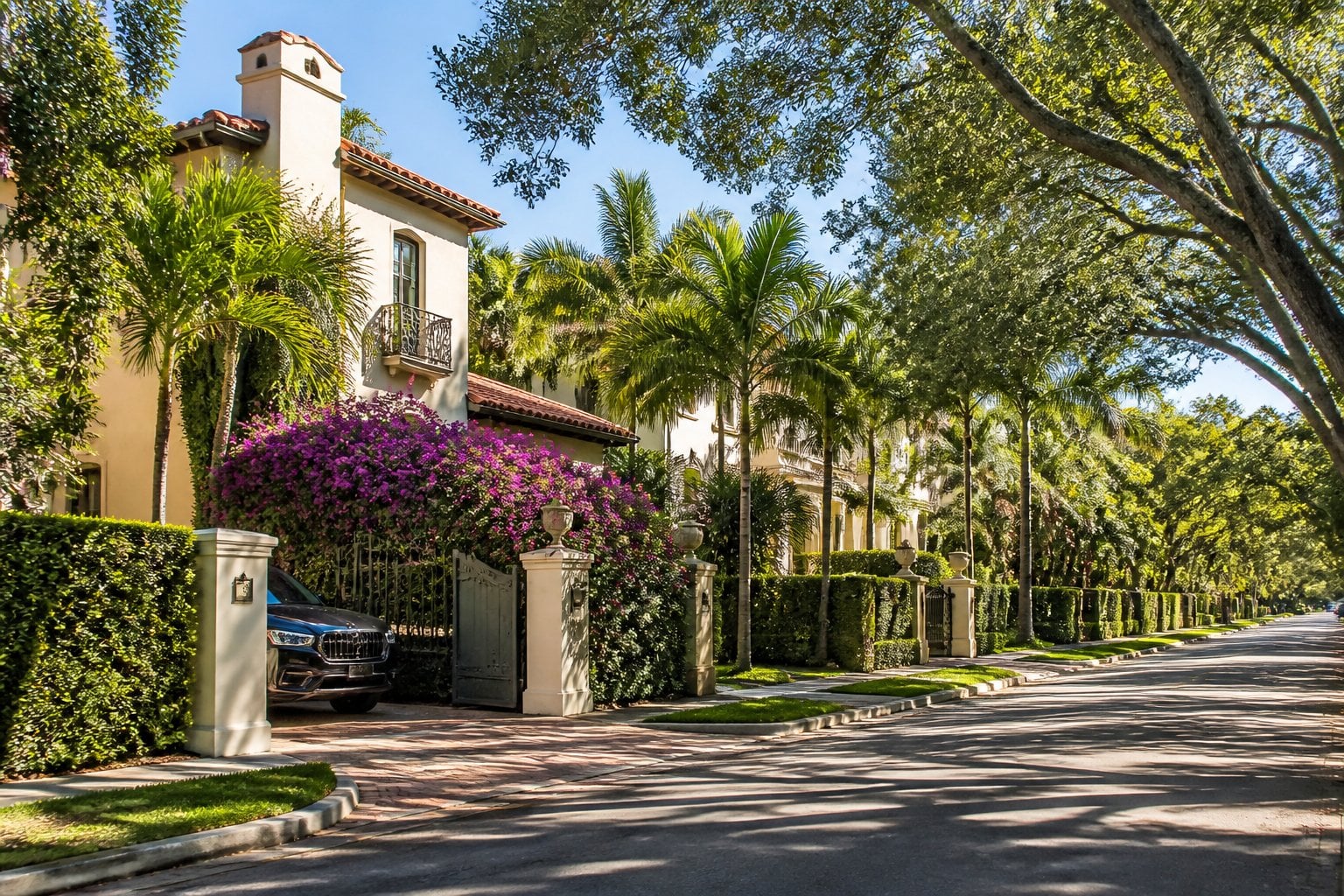
Coral Gables is a city of about 49,200 people next to Miami, with a typical home value of about $1.6 million, up about 9% in a year and about 63% over five years.
Developer George Merrick planned Coral Gables in the 1920s as a Mediterranean-style garden city, and the city still enforces strict design rules. Its landmarks include the Biltmore Hotel, opened in 1926, and the Venetian Pool, a public pool built in an old coral rock quarry.
The city is home to the University of Miami’s main campus and many corporate offices. Neighborhoods range from historic homes on banyan-shaded streets to waterfront estates with ocean access. Like the rest of Florida, there is no state income tax, which adds to the city’s appeal for buyers from the Northeast.
25. Needham, Massachusetts
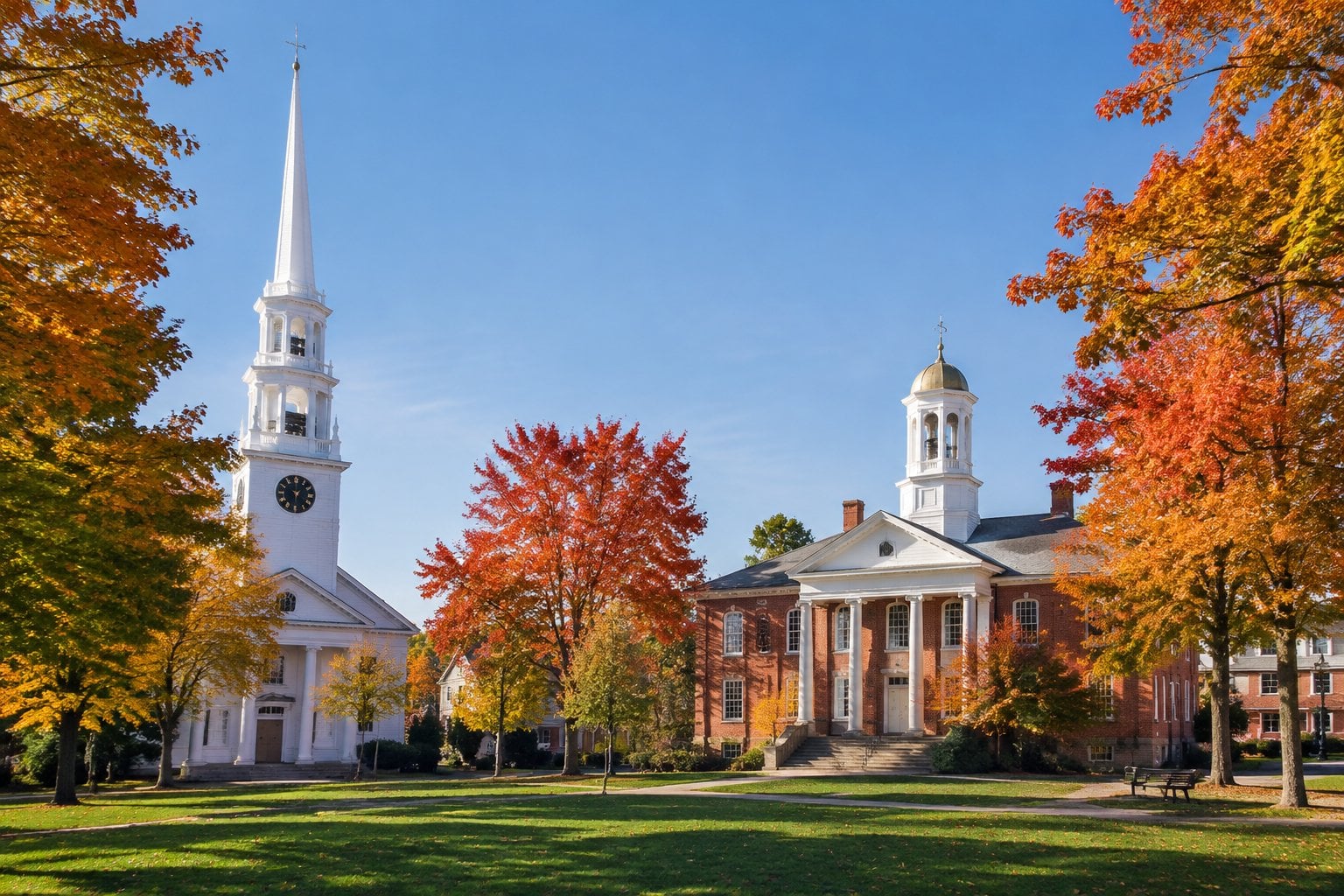
Needham is a town about 10 miles southwest of Boston, with about 32,200 residents in 2020 and a typical home value of about $1.56 million, up about 6% in a year.
Needham is served by the MBTA Commuter Rail’s Needham Line, with four stations in town, so many residents commute into Boston by train. Office parks along Route 128 on the edge of town bring jobs closer to home too.
The town has a busy center with shops and restaurants around the town common, and its public schools are highly rated. Olin College of Engineering is located in Needham. As in Wellesley next door, older homes are often replaced by larger new ones, which keeps raising the typical home value.
26. Lexington, Massachusetts
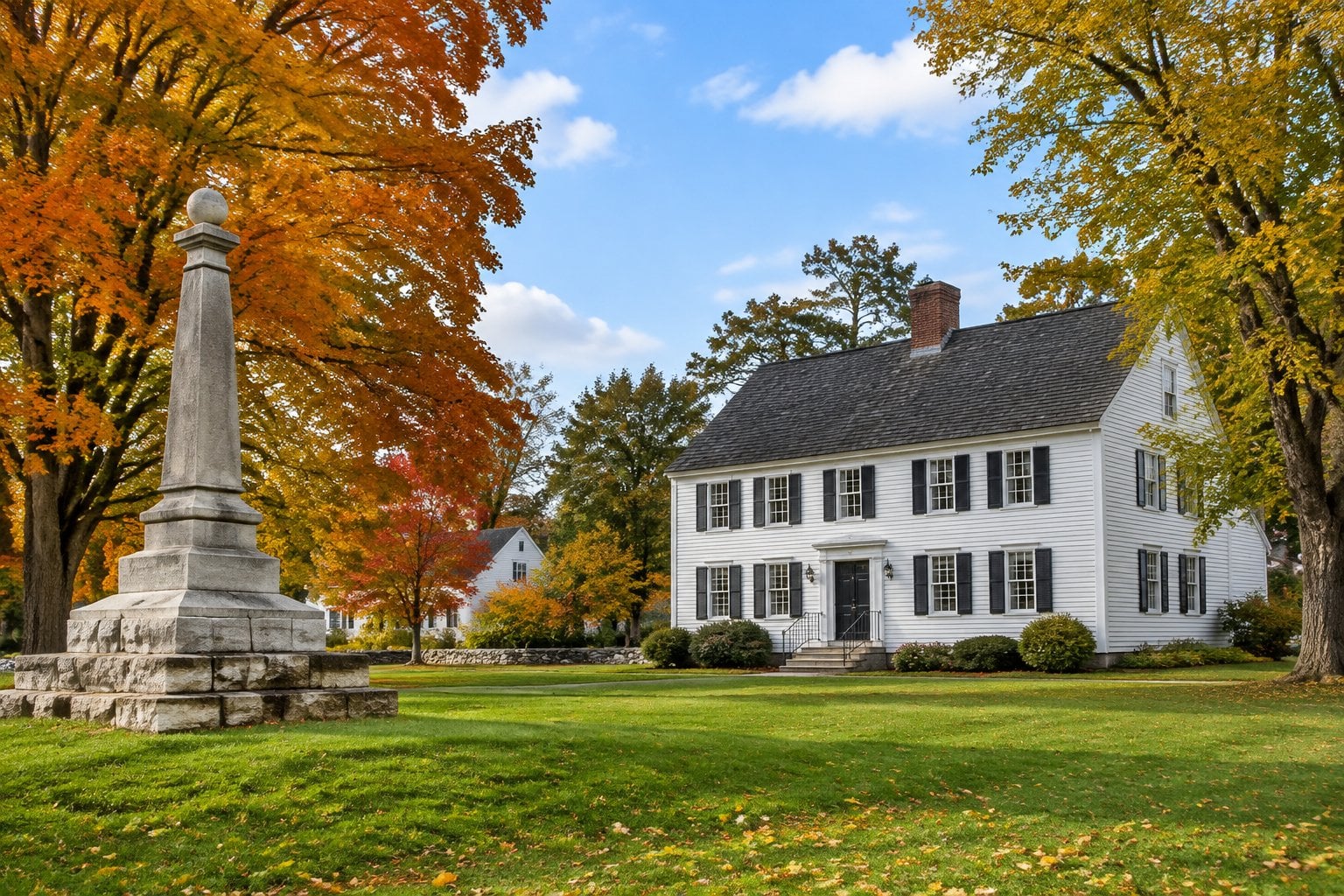
Lexington is a town about 12 miles northwest of Boston, with about 34,500 residents in 2020 and a typical home value of about $1.55 million, up about 2% in a year.
Lexington is famous as the site of the first battle of the American Revolution on April 19, 1775. The Battle Green, the Minuteman statue and the historic Buckman Tavern still sit at the center of town and draw visitors all year.
Today the town is also close to the Route 128 technology corridor, and MIT Lincoln Laboratory is located nearby. Lexington’s public schools are among the most highly rated in the state, and the Minuteman Bikeway runs through town toward Cambridge. Those factors keep demand high for its single-family homes.
27. Winchester, Massachusetts
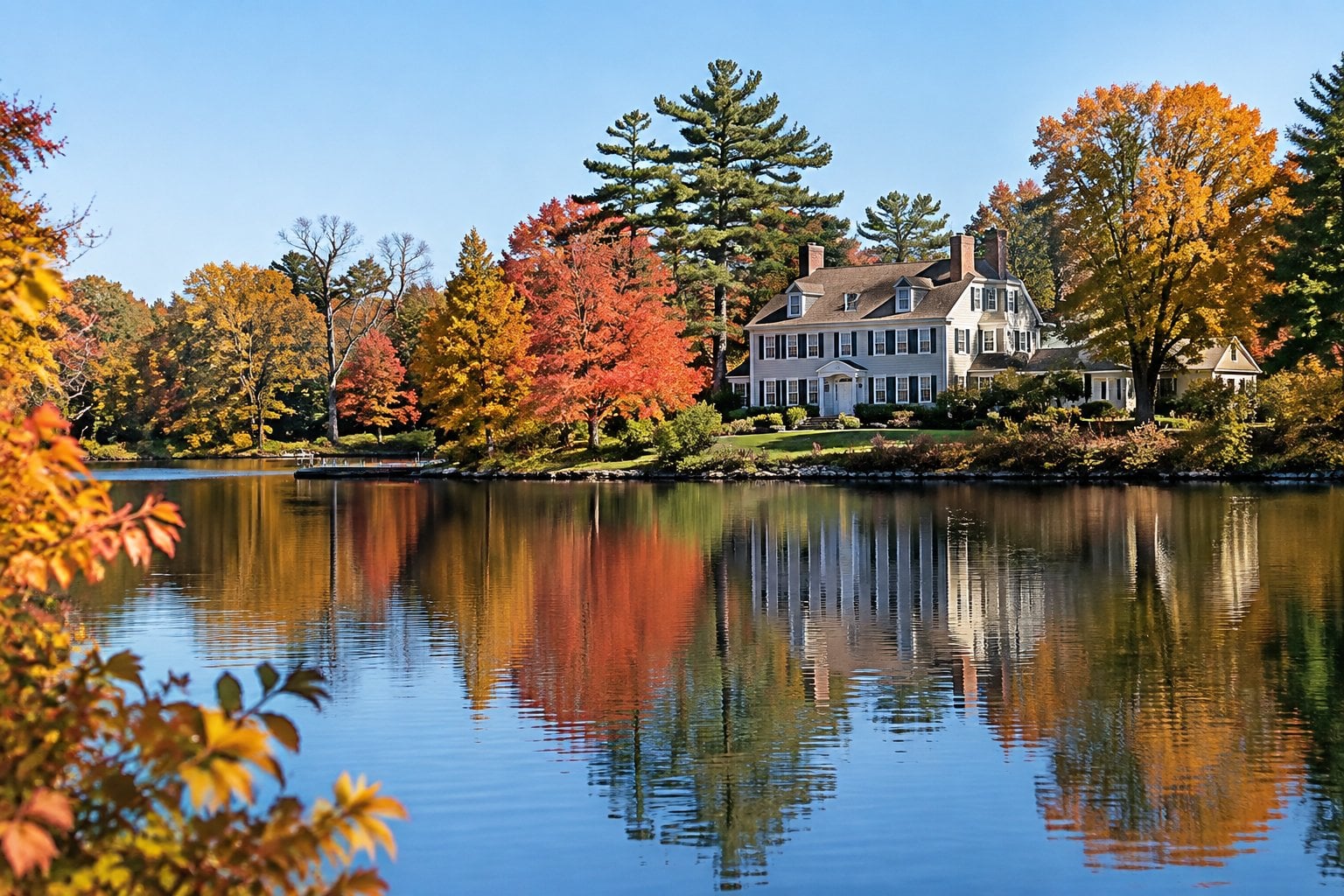
Winchester is a town about 8 miles north of Boston, with about 23,000 residents in 2020 and a typical home value of about $1.53 million, up about 2.5% in a year.
The town has two MBTA Commuter Rail stations on the Lowell Line, Winchester Center and Wedgemere, so the trip into Boston’s North Station is short. Its town center is walkable, with shops, restaurants and the town hall.
Winchester is known for its water and green space. The Mystic Lakes sit along its eastern edge, and part of the Middlesex Fells Reservation lies within the town. Large older homes, many from the late 1800s and early 1900s, line its hilly streets, and the public schools are a major draw for families.
28. Great Neck, New York
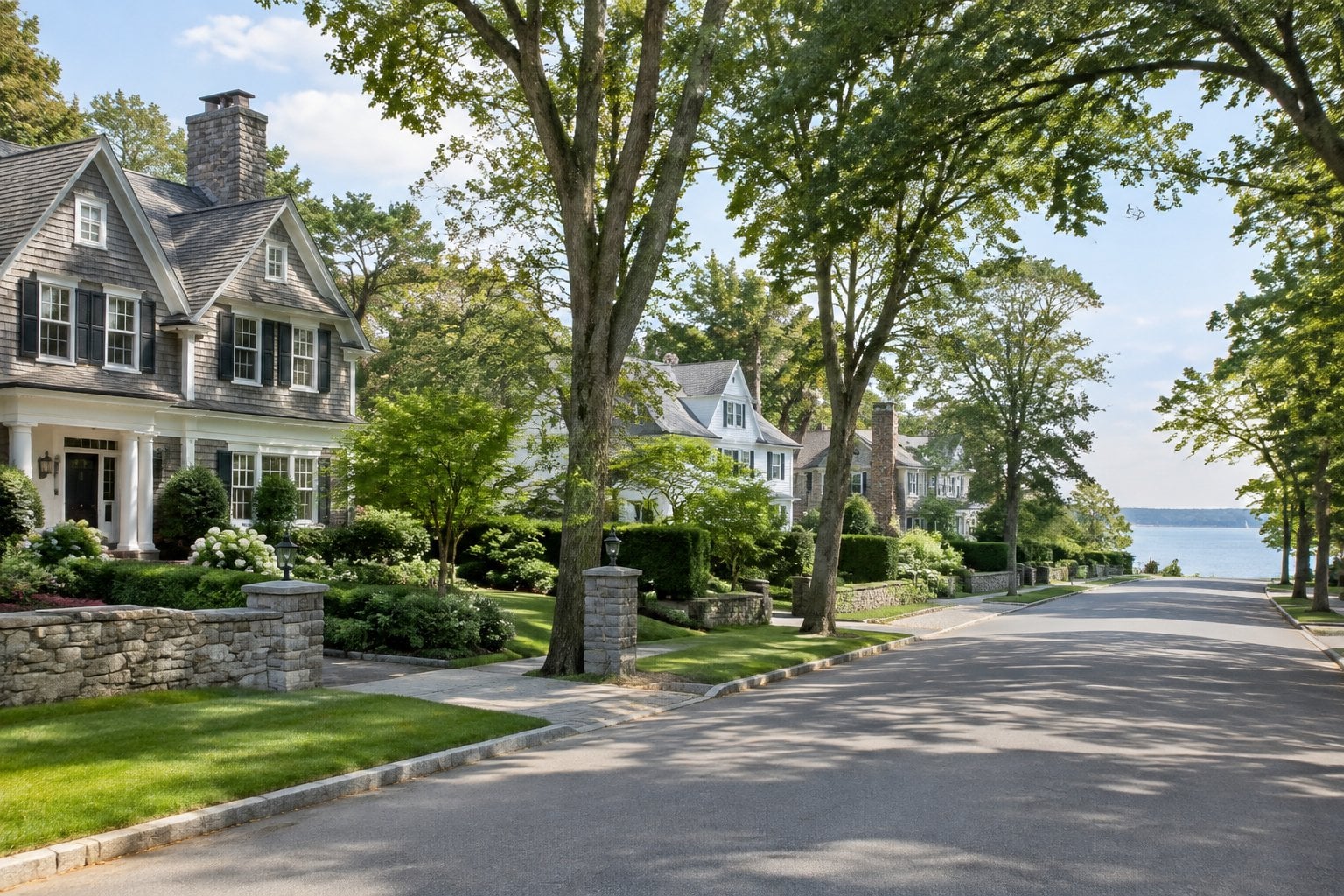
Great Neck is a village on the Great Neck peninsula on Long Island’s North Shore, one of several small villages that share the name. The village had about 11,100 residents in 2020, and its typical home value is about $1.5 million, up about 6% in a year.
The Long Island Rail Road’s Port Washington Branch stops at Great Neck station, and trains reach Manhattan in under 30 minutes, which makes it one of the closest suburbs to the city.
Great Neck has a long literary connection. F. Scott Fitzgerald lived on the peninsula in the early 1920s, and the peninsula inspired West Egg in The Great Gatsby. Today the area is known for its schools, its shopping along Middle Neck Road and its homes near Long Island Sound.
29. Lincoln, Massachusetts
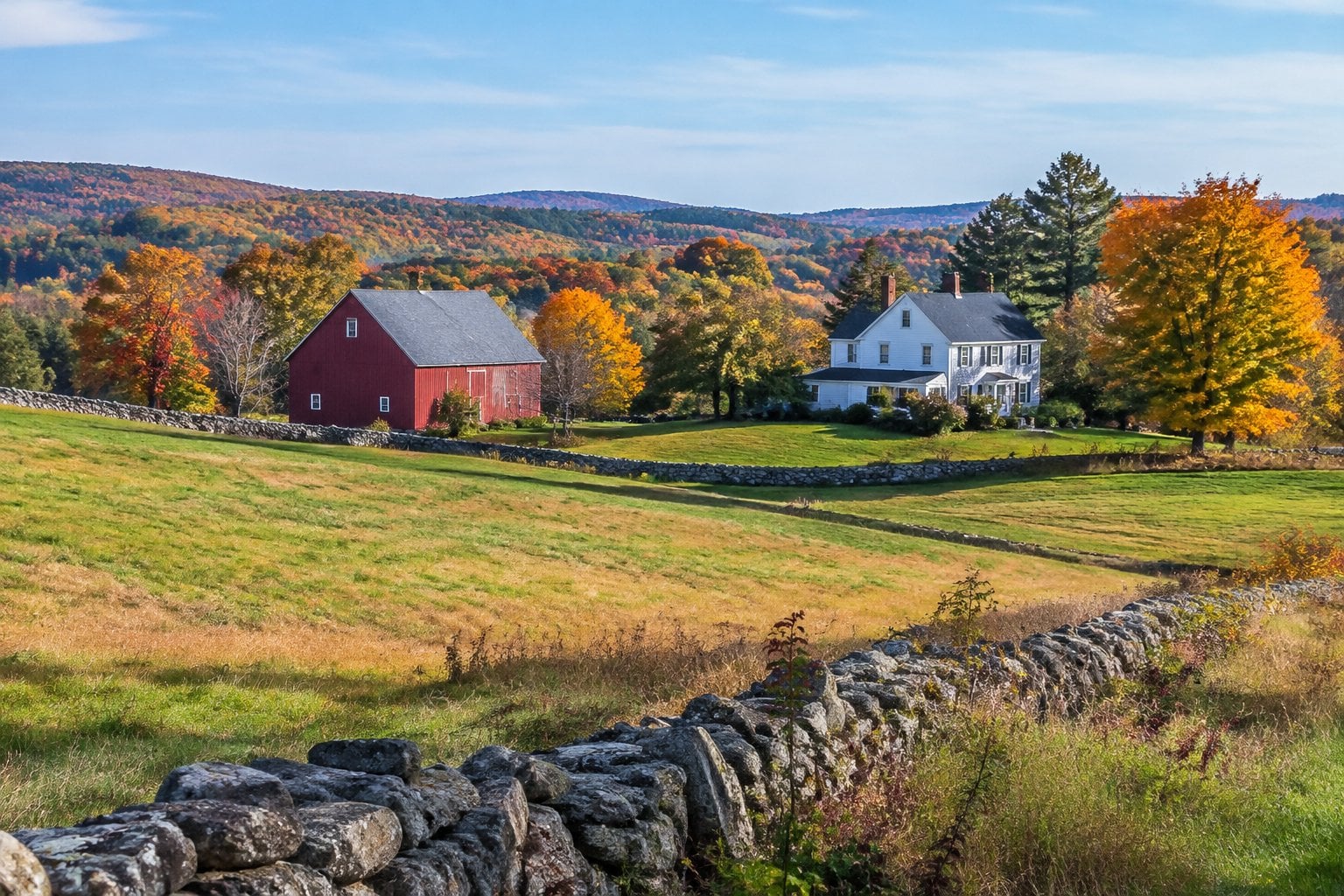
Lincoln is a small town about 15 miles northwest of Boston, with about 7,000 residents in 2020 and a typical home value of about $1.5 million, up about 2% in a year.
A large share of Lincoln is protected open space, including farmland, woods and trails. Drumlin Farm, a working farm and wildlife sanctuary run by Mass Audubon, is in town, and Walden Pond State Reservation extends into Lincoln from Concord.
Lincoln is also known for art and architecture. The deCordova Sculpture Park and Museum is here, and so is the Gropius House, the home architect Walter Gropius built in 1938. An MBTA Commuter Rail station on the Fitchburg Line links the town to Boston.
30. Pound Ridge, New York
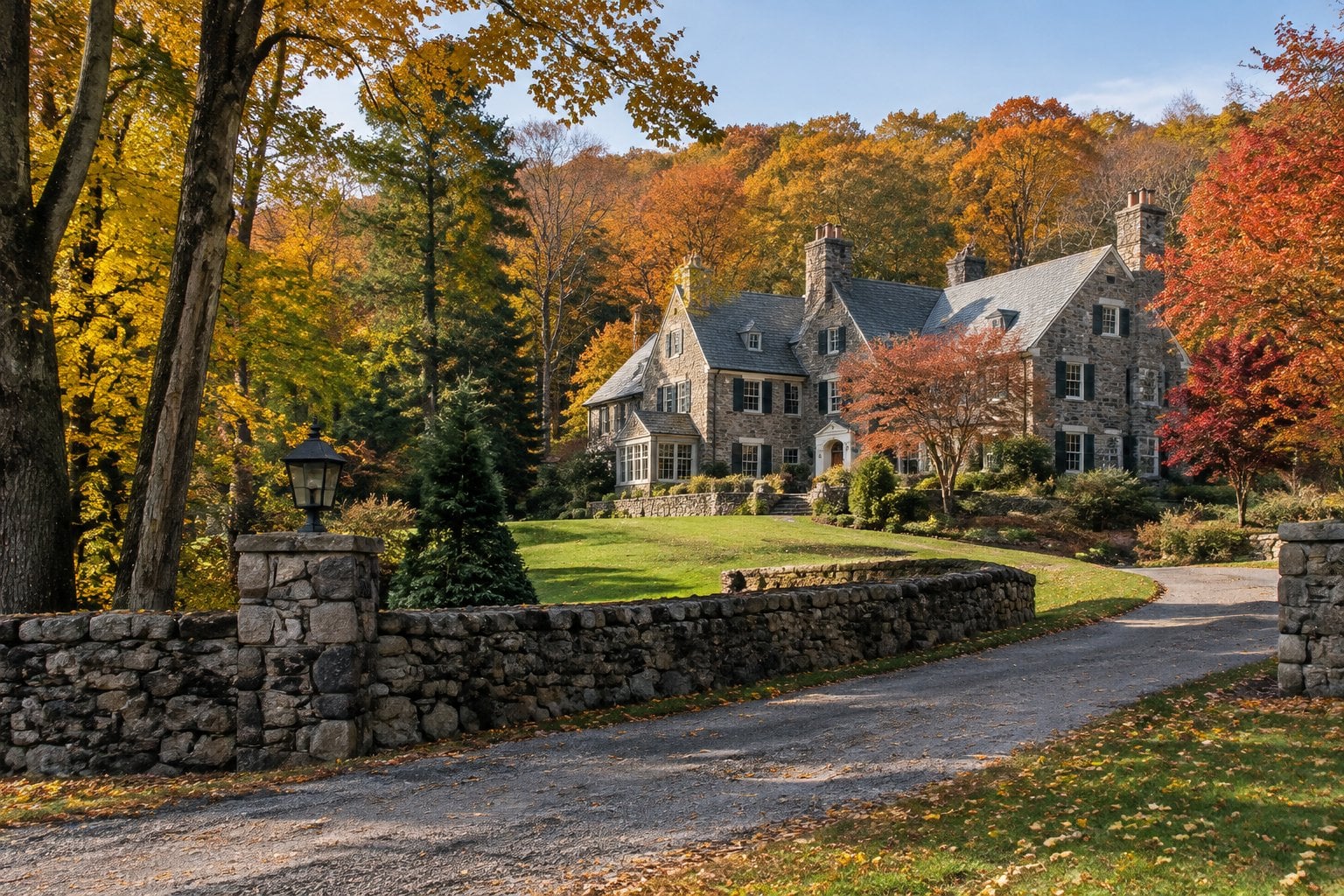
Pound Ridge is a town in northeastern Westchester County on the Connecticut border, with about 5,100 residents in 2020 and a typical home value of about $1.5 million, up about 10% in a year. It rounds out the list at number 30.
The town is rural and wooded, with large lots, stone walls and country roads. It has no train station of its own, so commuters drive to Metro-North stations in nearby towns.
Part of the Ward Pound Ridge Reservation, Westchester County’s largest park, lies in the town, with miles of hiking trails. Buyers come for privacy and space within about an hour of Manhattan, and many homes are set far back from the road on several acres.
How This List Was Ranked
The ranking uses Zillow’s Home Value Index for October 2026, which estimates the typical value of homes in the middle of each local market, single-family homes and condos combined. It is not the price of the most expensive homes in town, so places with famous mansions can rank lower than their reputation suggests.
Only places in East Coast states, from Maine to Florida, with at least 5,000 residents in the 2020 Census were counted. That leaves out small seasonal enclaves, such as the Hamptons hamlets, Jupiter Island and Fisher Island, where only a few hundred people live year-round. Big cities like New York, Boston and Washington, D.C. are expensive to live in, but their typical home values, spread across many neighborhoods, are well below the places on this list.
What Keeps Prices So High
Most places on this list share the same ingredients: a short commute to New York, Boston, Miami or Washington, D.C., highly rated public schools, and very little land left to build on. Waterfront towns add another layer, since homes on the ocean, a bay or a river are limited and in high demand.
Taxes also shape the real cost of living. New Jersey regularly has the highest average property tax bills in the country, and Connecticut and New York are not far behind, so owners in those states pay a large yearly bill on top of the purchase price. Florida has no state income tax, one reason buyers from the Northeast have pushed up prices in places like Palm Beach, Pinecrest and Coral Gables. Massachusetts adds a 4% surtax on income above about $1 million.
If you are thinking of moving to one of these places, look beyond the purchase price: property taxes, insurance, commuting costs and the higher price of everyday services all add up.