The 30 Most Expensive Suburbs in the U.S.: Where Home Prices Hit Millions
Wealth in America is not spread evenly across the map. It clusters in specific towns and neighborhoods where home prices, household incomes, and property values far exceed national averages.
If you want to understand where the country’s most expensive residential areas are located, looking at these suburbs gives you a clear picture of how geography, proximity to major cities, and local economies shape real estate markets. You will find these communities scattered across different states, each with its own characteristics that contribute to high property values.
These suburbs often share certain traits, including strong school systems, low crime rates, and convenient access to urban job centers. Your understanding of these patterns can help explain broader trends in housing costs and regional wealth distribution across the country.
1. Atherton, California
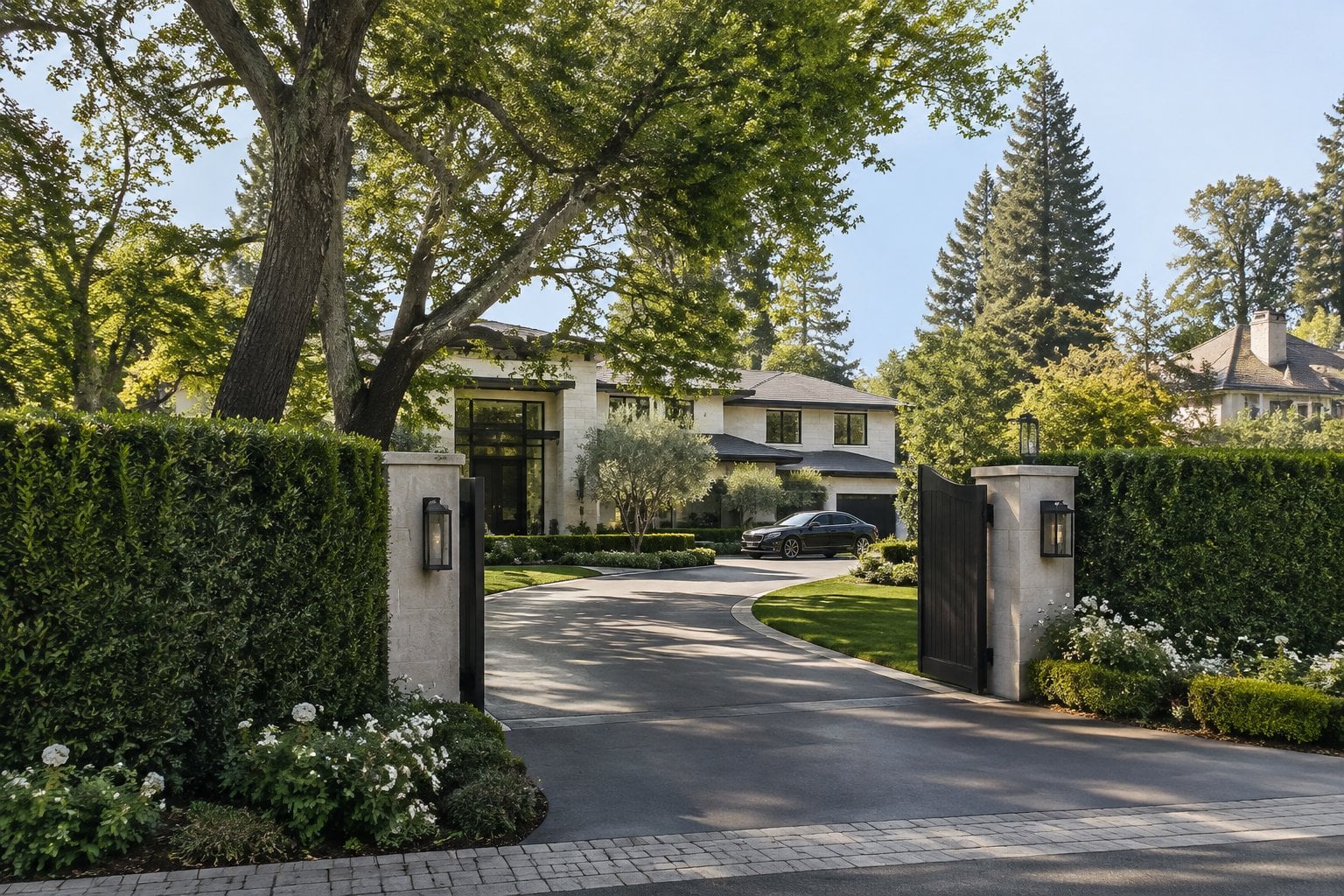
Atherton holds the title of the most expensive ZIP code in the United States. Typical home values here sit around $8 million, among the highest of any community in the country.
You’ll find this town tucked into the San Francisco Peninsula, close to Silicon Valley’s core business centers. Its location near Sand Hill Road, Stanford University, and major tech headquarters makes it a magnet for venture capitalists, founders, and executives.
Zoning rules require one-acre minimum lots for residential property, which limits supply and keeps prices high. You won’t find commercial development or high-density housing here, since the town has deliberately avoided it for decades.
Privacy is a defining feature of life in Atherton. Properties sit behind hedges and gates, and the community has a reputation for discretion rather than visible displays of status.
If you’re considering a move here, expect entry-level lots alone to cost millions, before construction. The population stays small, just over 7,000 residents, which preserves the area’s quiet, low-density character despite its proximity to major employment hubs.
2. Los Altos Hills, California
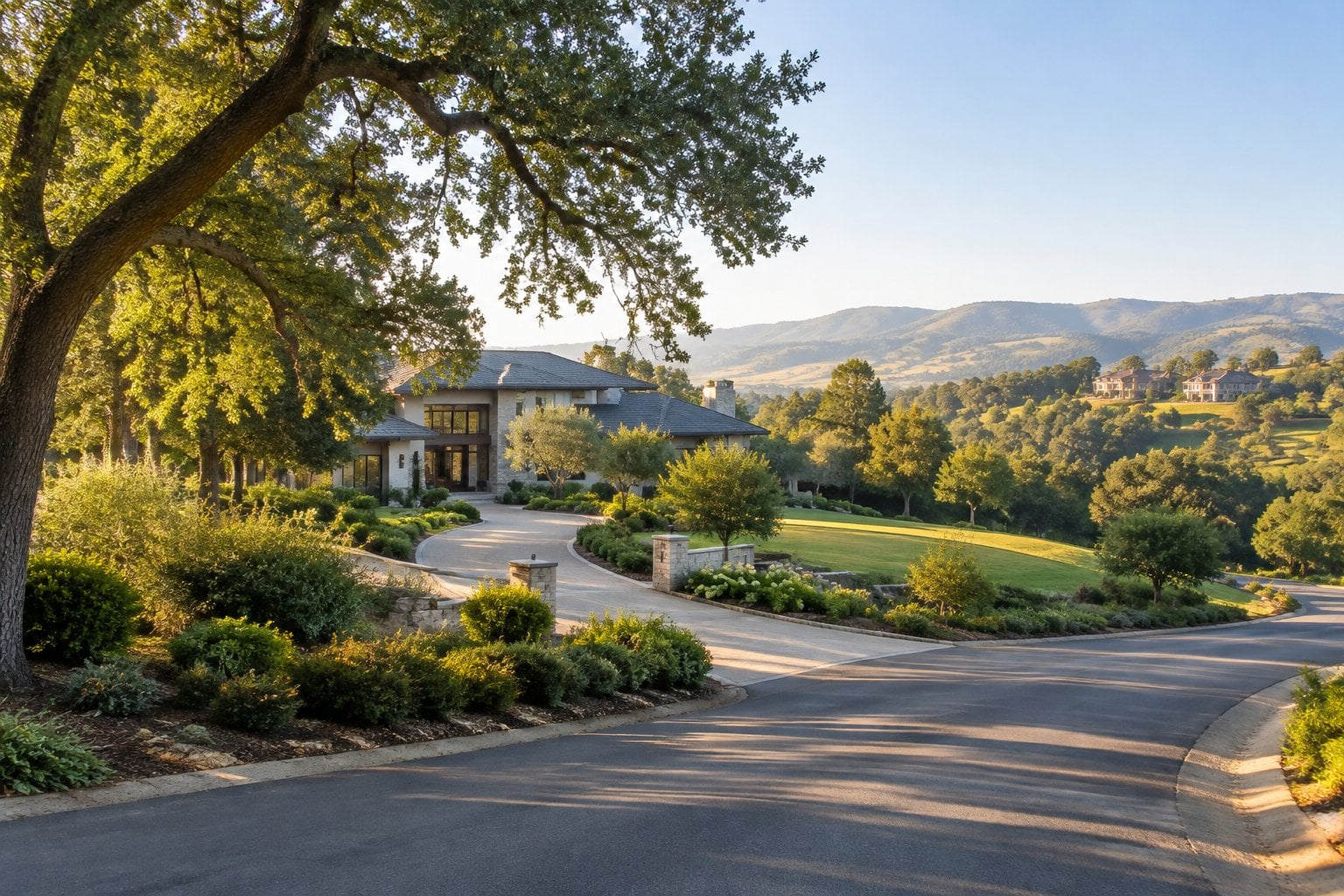
You’ll find Los Altos Hills tucked into the hills above Silicon Valley, close to San Jose and Palo Alto. It’s one of the wealthiest towns in the country, with a median household income well above $200,000.
Home prices here reflect that wealth. Median sale prices run into the millions, and larger estates on multi-acre lots can sell for $20 million or more.
Much of this cost comes from scarcity. Lots are large, zoning favors single-family estates, and new construction is limited, so supply stays tight while demand from tech executives remains constant.
Living here means privacy and space rather than walkable commercial strips. You won’t find much retail or dining within town limits; instead, you get rural-style roads, horse properties, and sweeping views of the valley below.
Your neighbors are likely to include founders, venture capitalists, and senior tech executives. Education levels run high, with the vast majority of adults holding a bachelor’s degree or higher.
For buyers, this is a market defined by exclusivity rather than convenience.
3. Hillsborough, California
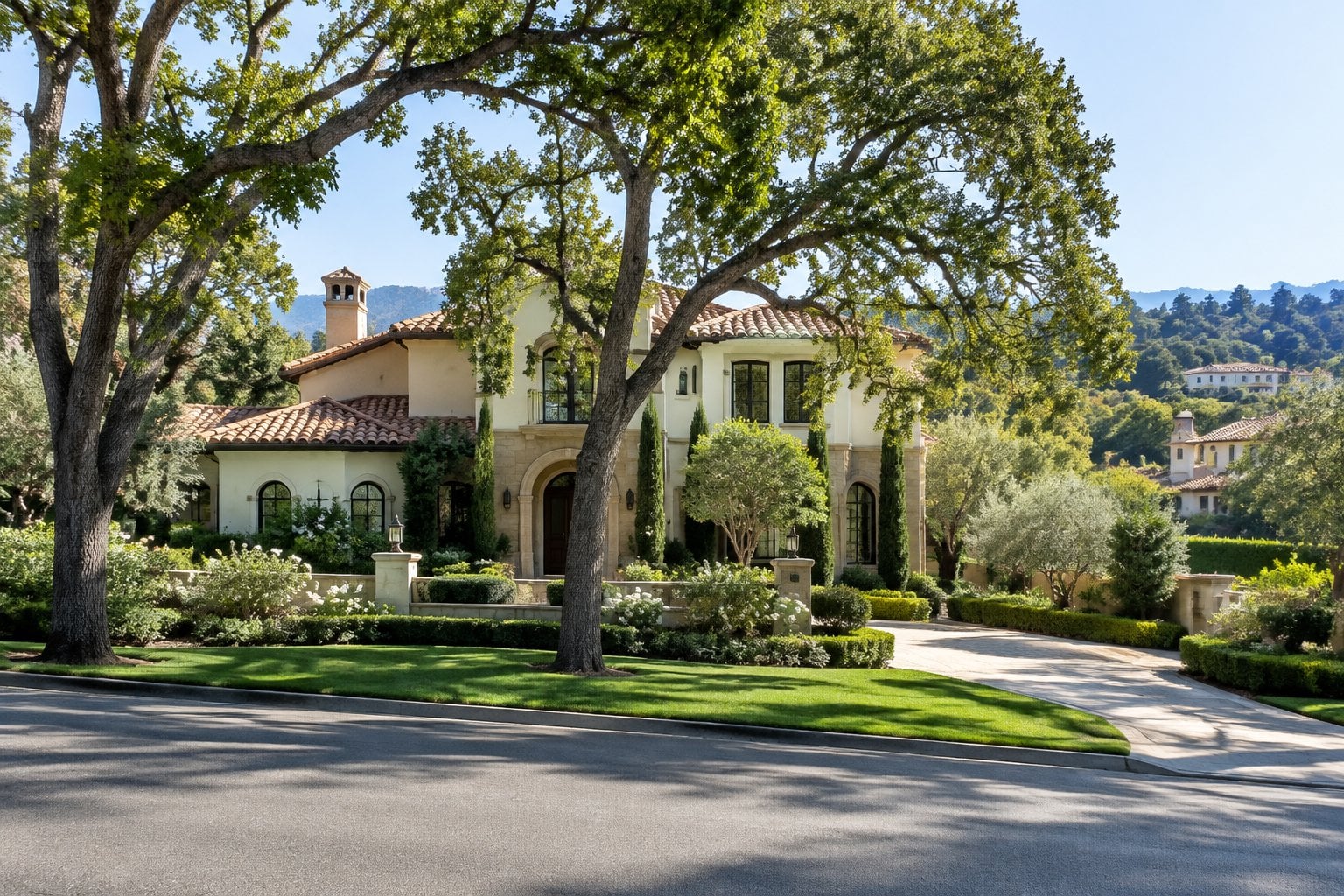
Hillsborough sits on the San Francisco Peninsula, a short drive from both San Francisco and Silicon Valley. You’ll find it consistently ranked as one of the most expensive places to live in the country, with a median home value exceeding $5.5 million.
The town has no commercial zoning. There are no shops, restaurants, or office buildings within its borders, only residential properties set on large lots.
This exclusivity is by design. Hillsborough was established in the early 1900s as a refuge for wealthy San Francisco families, and it has maintained strict zoning laws ever since to preserve privacy and low density.
You can expect sprawling estates, mature landscaping, and a strong sense of seclusion if you live here. Many residents work in tech or finance, given the proximity to major employers in San Francisco and the South Bay.
Median household income in Hillsborough runs well into six figures, and the public schools are known for their strong academic performance. Living here means paying a premium for space, privacy, and access to some of the wealthiest social circles in California.
4. Beverly Hills, California
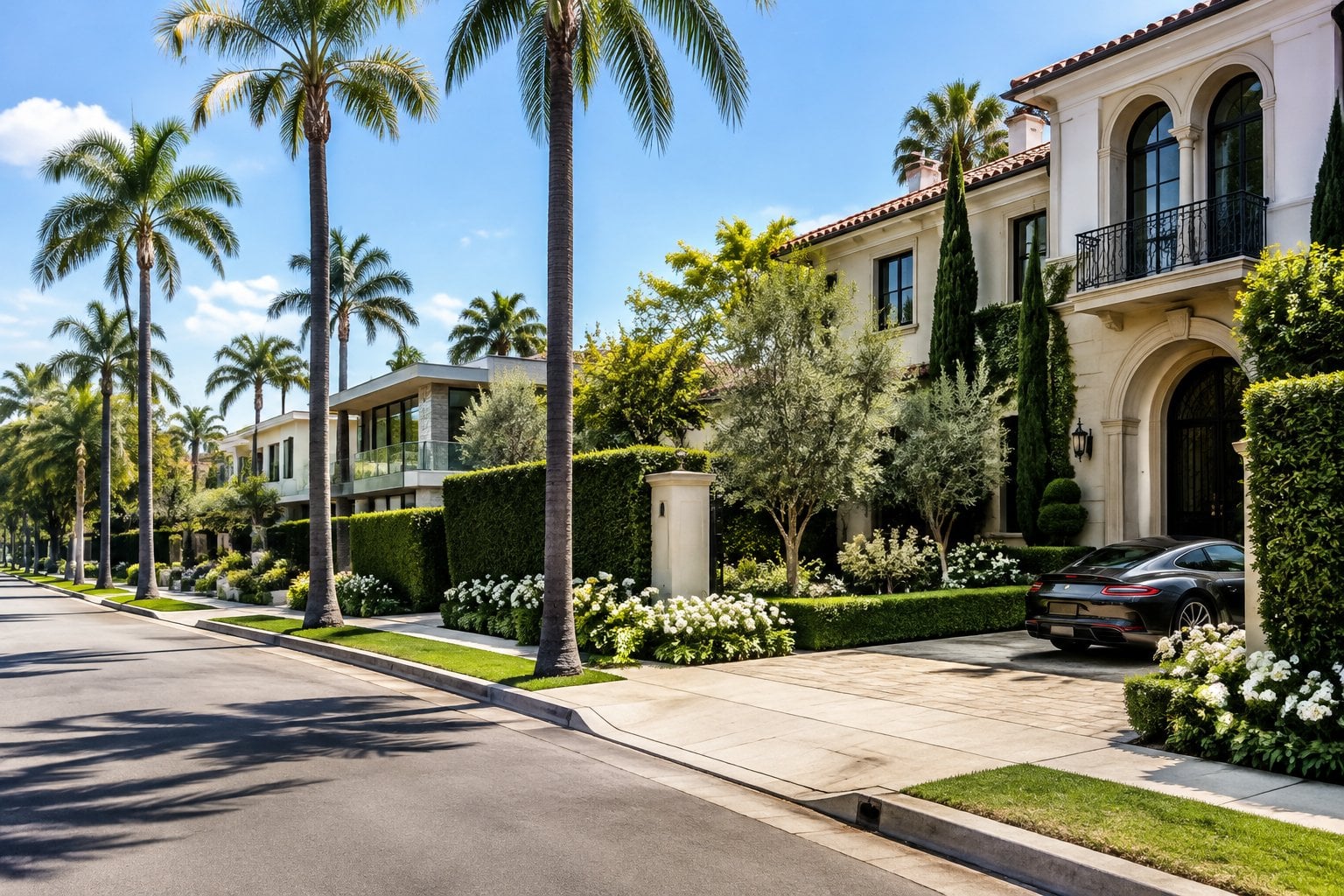
You know Beverly Hills as a suburb of Los Angeles, sitting within Los Angeles County and bordered by West Hollywood and Bel Air. The famous 90210 zip code places median home prices around $4.75 million, though homes in prestige pockets like Trousdale Estates can reach $8.5 million or more.
Your neighbors here include celebrities, entertainment executives, and other high-net-worth residents drawn to the area’s privacy and status. The city’s reputation stems from decades of association with wealth, dating back to the early film industry’s expansion into the area.
Living in Beverly Hills means access to Rodeo Drive’s luxury retail, highly rated public schools, and a dedicated police department known for responsiveness. Your property taxes and insurance costs will reflect the high assessed values, and maintenance on larger estates adds further expense.
You’ll find the city compact, roughly 5.7 square miles, which keeps inventory limited and competition for homes intense. That scarcity, combined with sustained demand from affluent buyers, keeps prices elevated year after year.
5. Medina, Washington
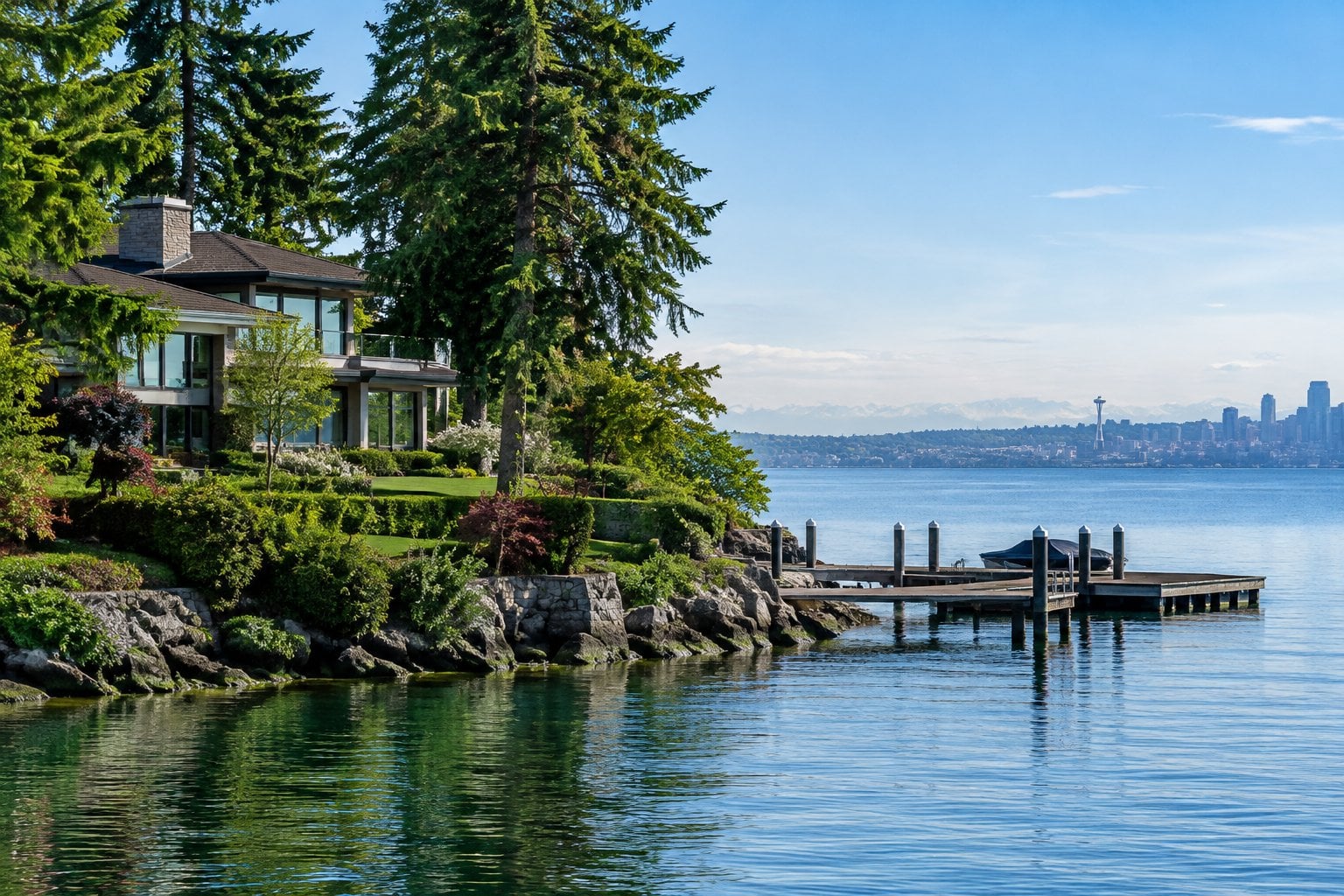
Medina sits on the eastern shore of Lake Washington, a short drive from Seattle and Bellevue. You’ll find a small, quiet city of around 3,200 residents, many of whom hold significant wealth, including several well-known tech executives.
Home values here are among the highest in the country, with typical prices well above $4 million. Waterfront lots with private docks push costs even higher, and strict zoning rules limit new construction.
If you move to Medina, expect large lots, mature trees, and minimal commercial development. There are no major retail strips or restaurants within the city itself; you’ll head to Bellevue or Seattle for most errands and dining.
Property taxes reflect the high home values, and privacy is a priority for many residents. Security gates and long driveways are common sights.
Medina’s appeal comes from its combination of lakefront access, proximity to major employers, and low housing density. You’re paying for space, seclusion, and a direct line to some of the region’s most powerful business circles.
6. Palm Beach, Florida
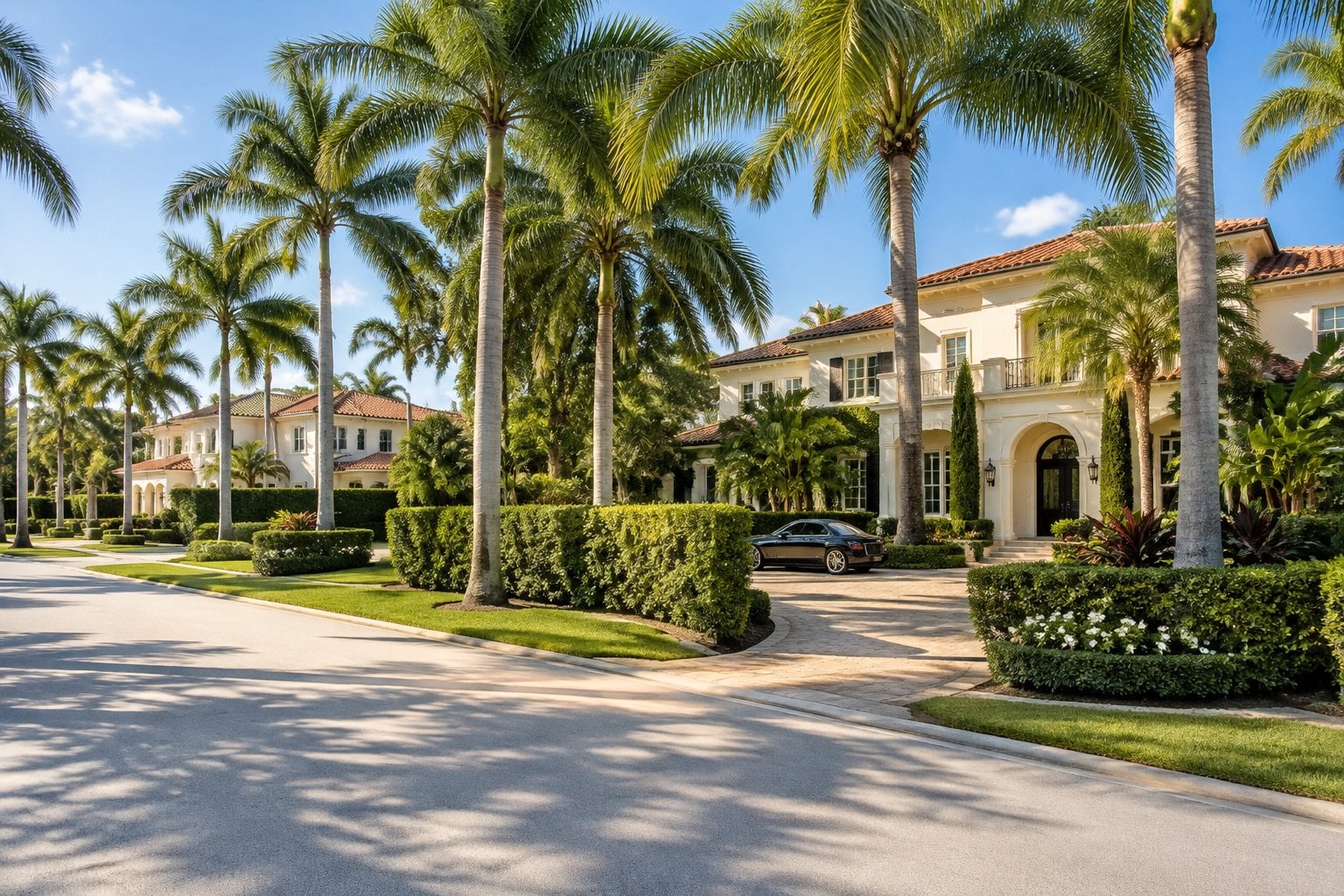
Palm Beach ranks among the wealthiest suburbs in the entire country, landing at thirteenth place nationally in recent household income analyses. It also holds the top spot among Florida’s wealthiest suburbs, outranking other notable communities near Miami and Orlando.
You’ll find this island town just east of West Palm Beach, separated from the mainland by the Intracoastal Waterway. That geography alone limits available land and keeps housing supply tight, which pushes prices well above typical Florida markets.
Mar-a-Lago, the estate owned by President Donald Trump, sits here and draws ongoing attention to the area. Beyond that single property, you’ll encounter a dense concentration of country clubs, private schools, and oceanfront estates that define the town’s character.
Living in Palm Beach means access to high-end shopping along Worth Avenue and a social calendar built around exclusive clubs. Florida’s lack of state income tax adds another incentive for high earners who choose to settle here rather than in comparable Northeastern suburbs.
7. Alpine, New Jersey
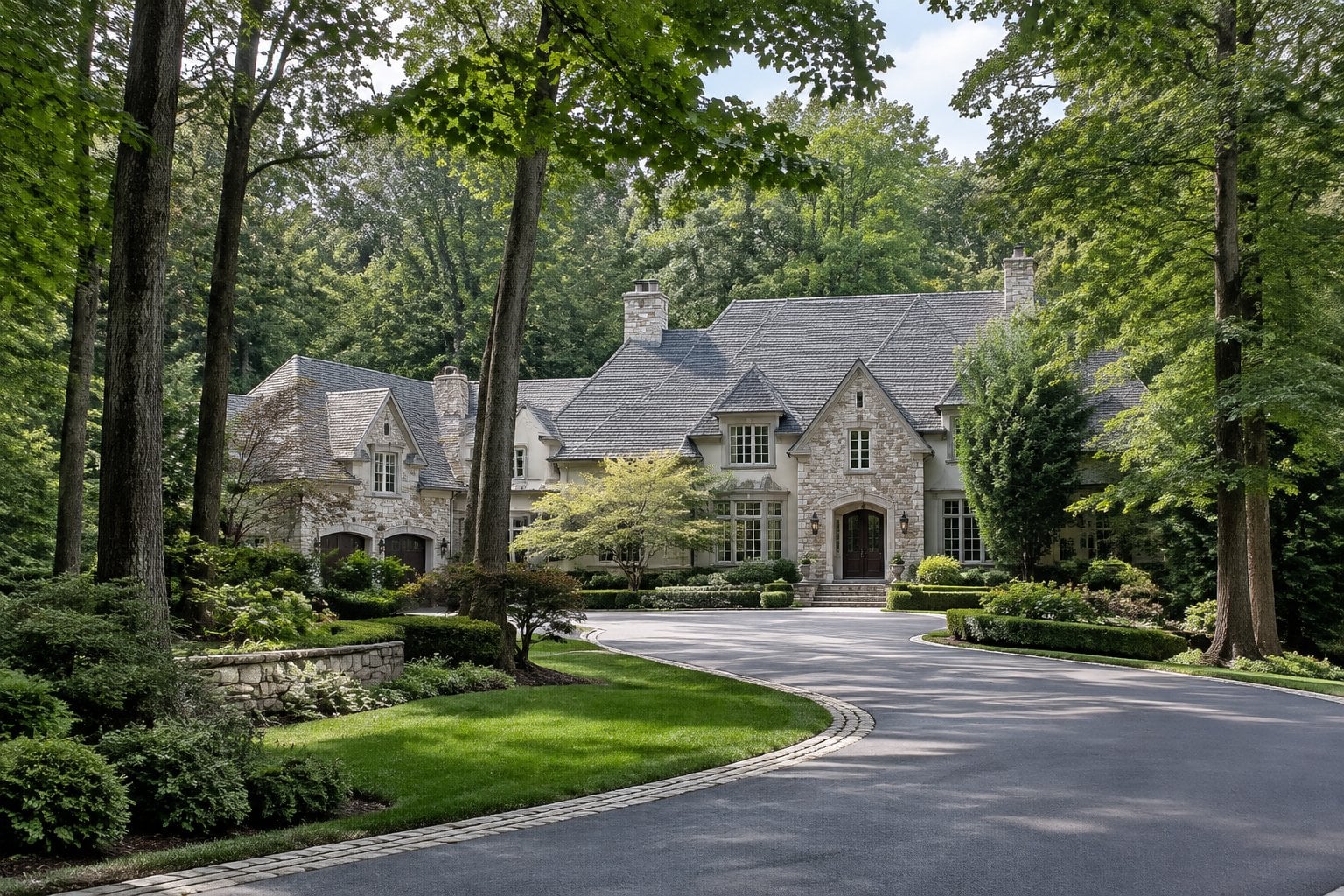
Alpine sits in Bergen County, about 15 miles from Manhattan, and it holds the distinction of being New Jersey’s most expensive ZIP code. Home prices here average over $4 million, placing Alpine among the priciest areas in the entire country.
You’ll find a small, tight-knit population of roughly 2,000 residents, many of whom value the privacy that large wooded lots provide. Properties often sit on multiple acres, giving you space and seclusion rarely found this close to New York City.
The proximity to Manhattan is a major draw if you work in the city but want distance from urban density. Many residents commute across the George Washington Bridge or use private transportation.
Alpine has long attracted executives, entertainers, and professional athletes seeking discretion. Public amenities are limited by design, since the town prioritizes low density over commercial development. Property taxes here run high, reflecting both the home values and the exclusive character of the community you’d be joining.
8. Clyde Hill, Washington
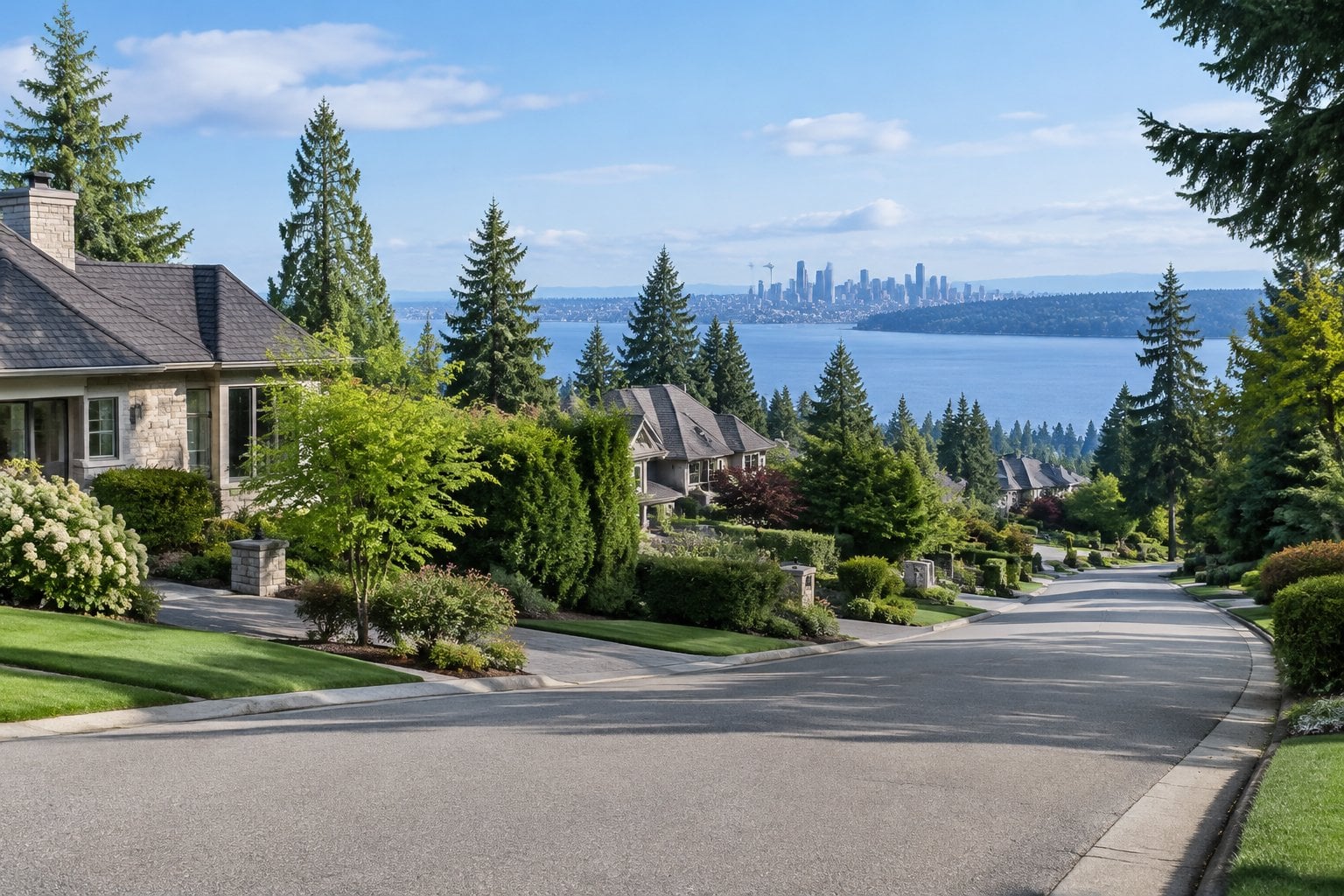
You’ll find Clyde Hill tucked just east of Seattle, a small city of roughly 3,200 residents in King County. It sits near Bellevue and Medina, giving you easy access to the Eastside’s tech corridor while keeping a quiet, residential distance from it.
Home values here average close to $3.9 million, among the highest in the state. Median household income exceeds $400,000, placing Clyde Hill at the top of Washington’s wealth rankings.
What drives these prices is simple: limited housing stock, large lots, and proximity to Seattle and Bellevue’s job centers. You won’t find apartment buildings or commercial strips—zoning keeps the city almost entirely single-family residential.
Daily life in Clyde Hill is low-key. You get tree-lined streets, mature landscaping, and minimal traffic. There’s no downtown or retail district within city limits, so you’ll drive to neighboring Bellevue or Kirkland for shopping and dining.
Privacy is part of the appeal. Many homes sit behind hedges or gates, and the community draws executives and professionals who want distance from the city without sacrificing the commute.
9. Rolling Hills, California
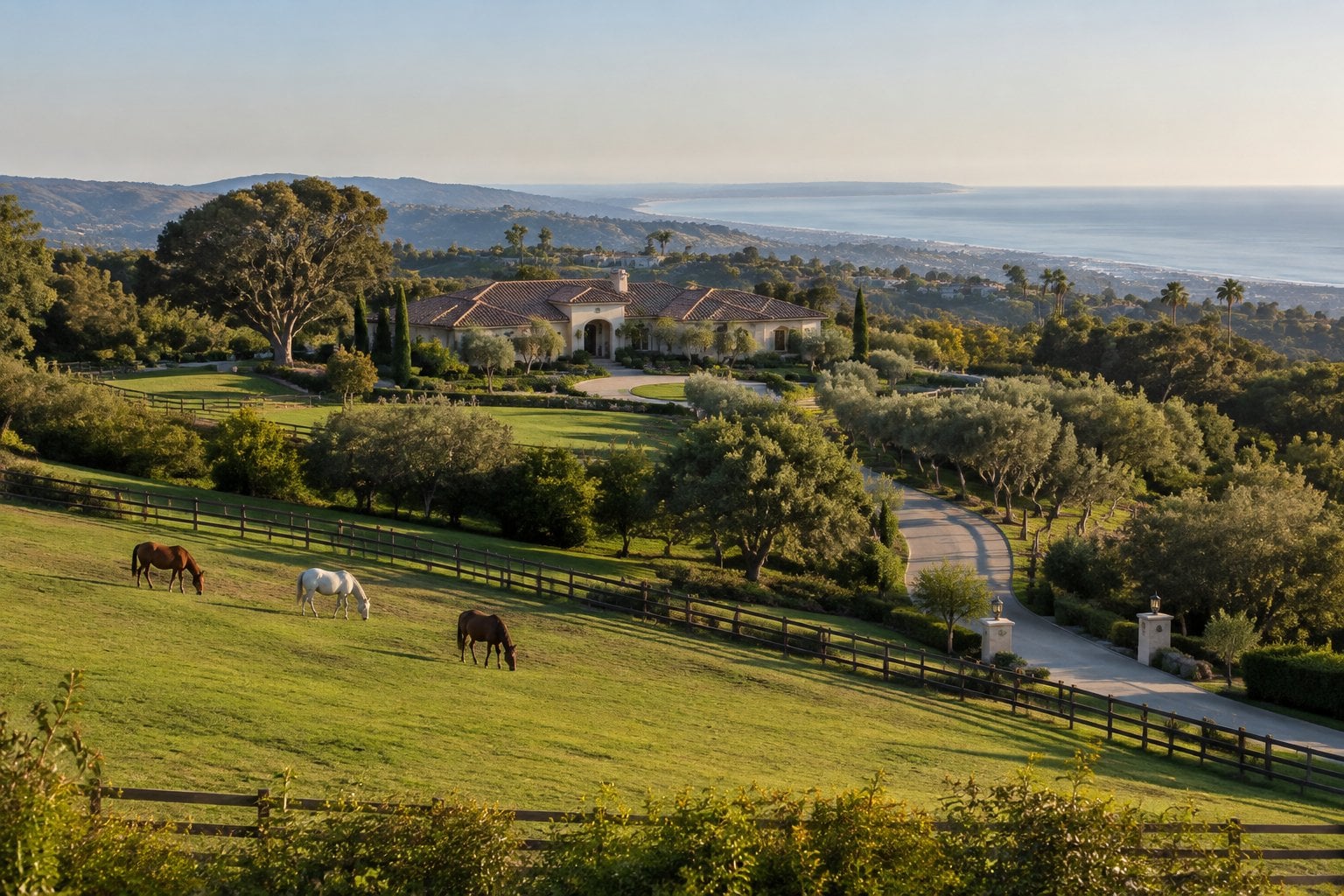
Rolling Hills sits on the Palos Verdes Peninsula, a short drive from Los Angeles. You’ll find it listed among the most exclusive communities in the country, with median home prices well into the multi-million dollar range.
The city is gated and private, and every home here sits on at least one acre of land. You won’t find sidewalks, streetlights, or curbs in this community, since residents have maintained a rural, equestrian character by design.
Many properties include horse facilities and extensive trails connect the neighborhood. If you value privacy and space, this setup gives you both in a way that few suburbs near a major city can match.
Your cost of living here reflects the scarcity of available homes and the strict zoning that limits development. The population stays small, numbering only in the low thousands, which keeps the community tight-knit.
Ocean views and canyon scenery surround many properties. You’re paying for exclusivity, land, and a level of seclusion that’s rare this close to Los Angeles.
10. Palo Alto, California
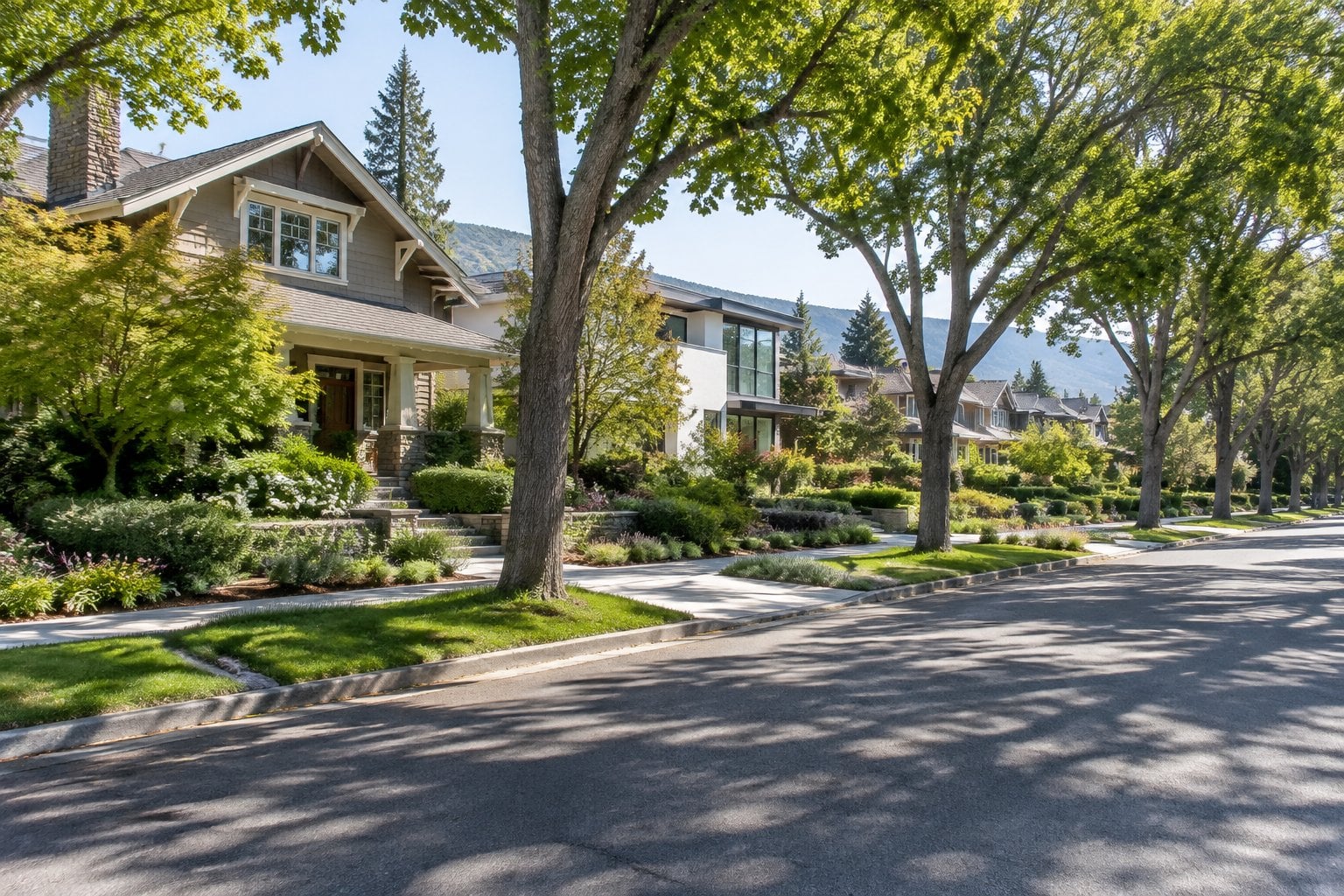
You’ll find Palo Alto just south of San Francisco, anchoring the northern edge of Silicon Valley. Median household income here tops $195,000, and home prices regularly climb past $3 million.
Proximity to Stanford University and major tech employers drives much of the demand. Companies and professionals alike want to be close to this talent pipeline, and that pressure keeps real estate values high.
Housing stock tends toward smaller homes on compact lots, yet prices stay elevated regardless of square footage. You’re paying for location and access as much as the structure itself.
Daily expenses reflect the same premium. Groceries, services, and general cost of living run well above state and national averages.
Life in Palo Alto suits those working in tech or academia who value walkable neighborhoods and strong public schools. You’ll notice a mix of historic bungalows and modern renovations throughout residential streets, all commanding significant prices in one of the most competitive housing markets in the country.
11. Sands Point, New York
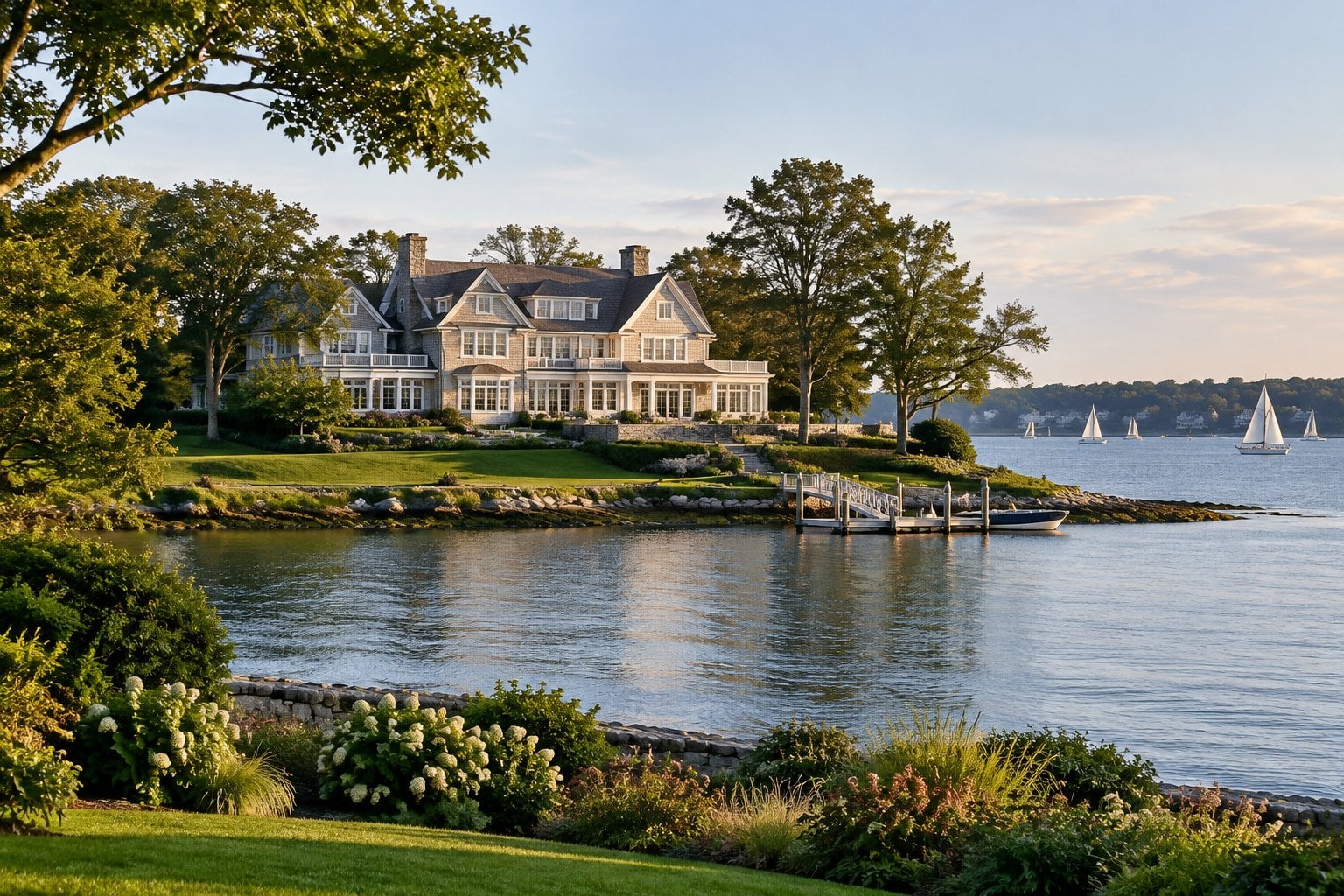
You’re looking at one of the most exclusive addresses on Long Island’s North Shore, part of the area historically known as the Gold Coast. Sands Point sits roughly 25 miles from Manhattan, making it a viable commute for those working in the city while living in a secluded, waterfront setting.
Home prices here reflect that exclusivity. The median sale price exceeds $3 million, and with a mortgage, utilities, and other essentials factored in, your monthly cost of living can top $17,000.
What drives the price tag is a combination of large waterfront lots, historic estates, and strict zoning that limits development. You’ll find properties inspired by the same Gilded Age wealth that once defined this stretch of coastline, including grand homes reminiscent of Castle Gould.
Life in Sands Point means privacy and space. You won’t find commercial strips or dense housing, just quiet, tree-lined roads and direct access to Long Island Sound. Your neighbors are likely to be highly educated professionals, with a majority holding at least a bachelor’s degree.
12. Cherry Hills Village, Colorado
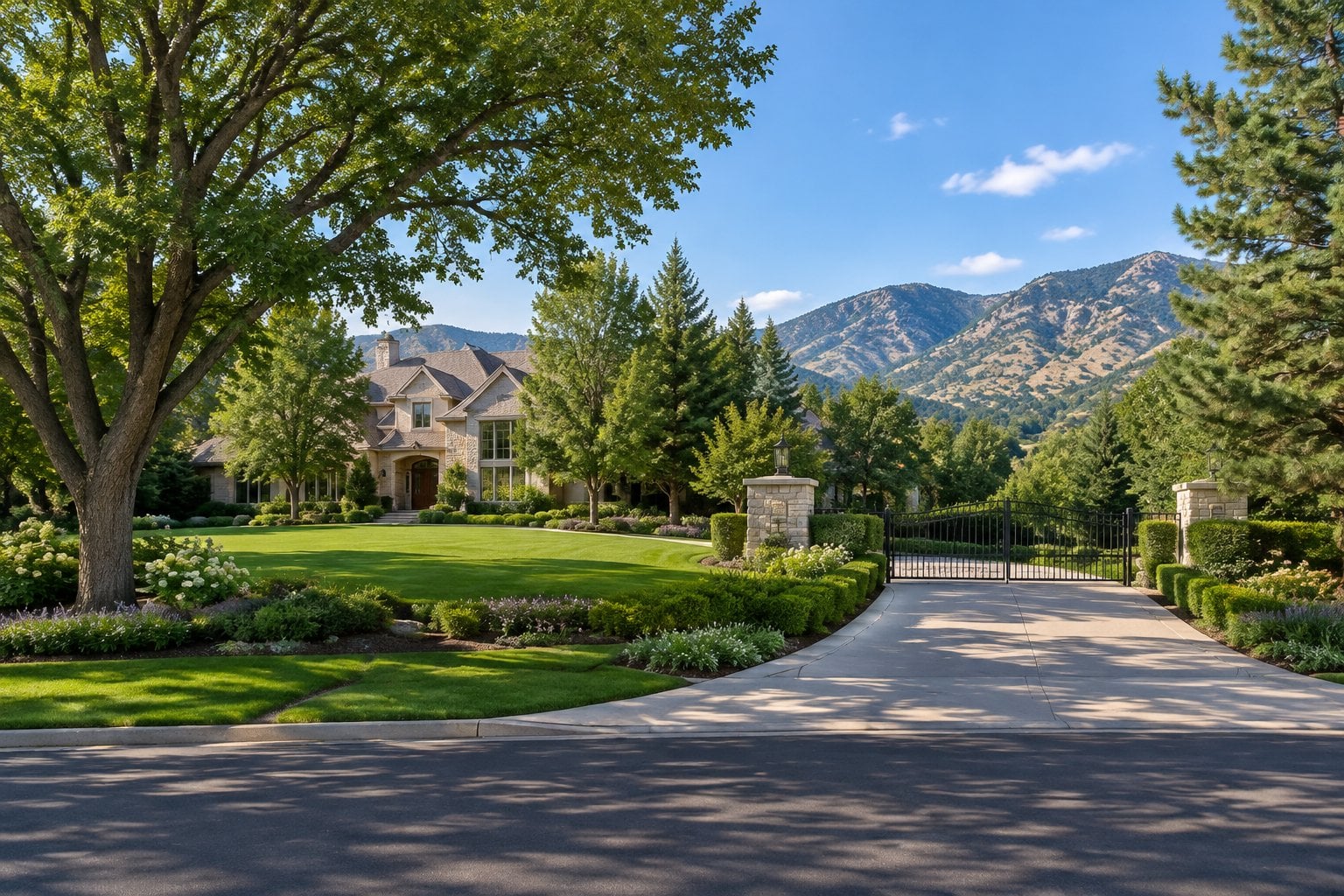
If you’re looking at Cherry Hills Village, you’re looking at the wealthiest community in Colorado. This Denver suburb has a median home value above $3 million, and its exclusivity shows in nearly every direction you look.
You won’t find dense subdivisions here. Instead, you’ll see properties spread across lots of two to five acres, giving residents space and privacy that’s hard to come by closer to Denver’s center.
Your neighbors would likely be high earners, since median household income in the area runs around $250,000, and a large share of households bring in more than $200,000 annually. This concentration of wealth supports a market where luxury estates routinely sell for $3 million to $25 million.
Commuting from Cherry Hills Village keeps you close to Denver while still giving you access to respected schools like the University of Denver and Colorado School of Mines. If you value land, seclusion, and proximity to a major metro area, this suburb delivers all three at a steep price.
13. Belle Meade, Tennessee
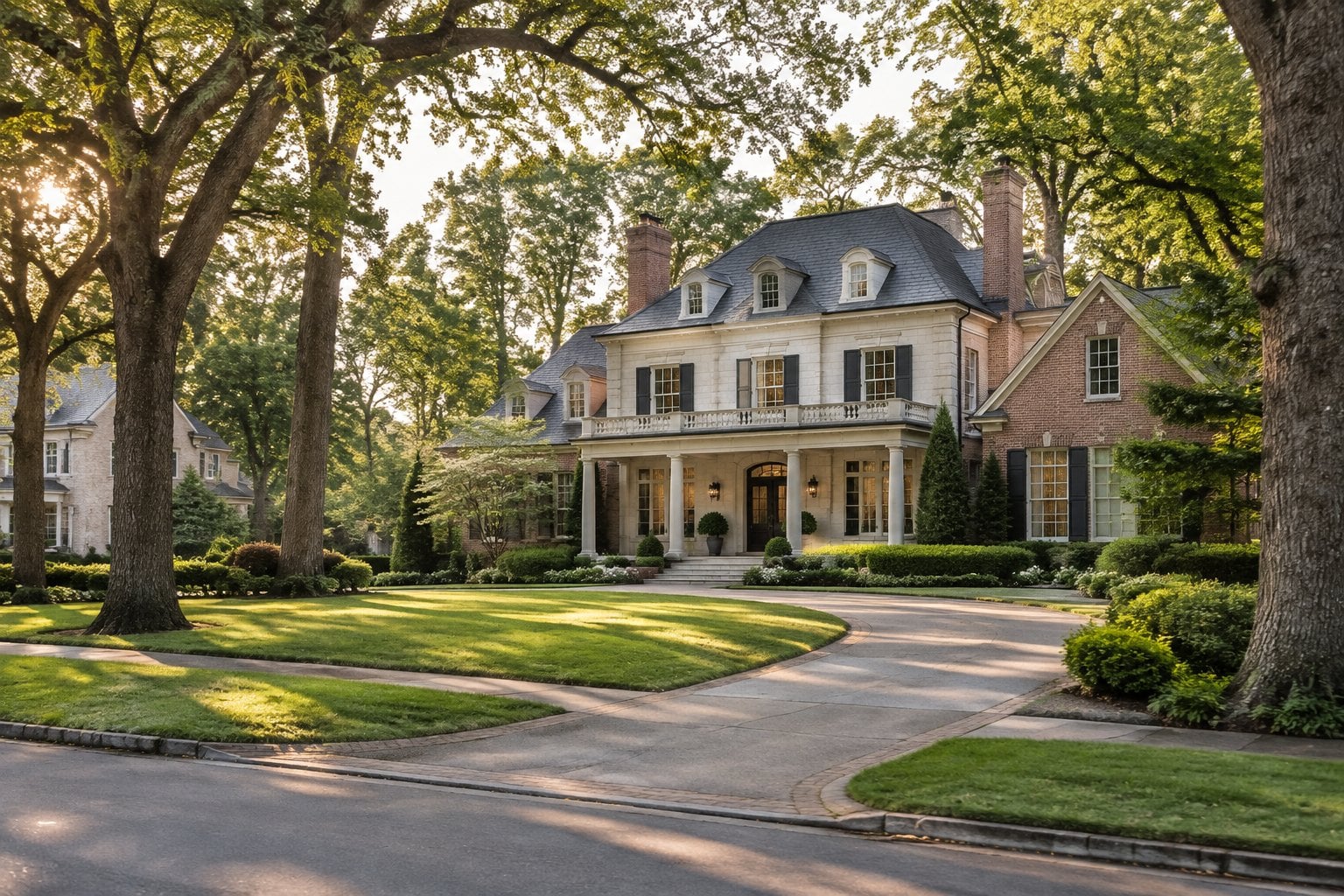
You’ll find Belle Meade just outside downtown Nashville, and it holds the title of the most expensive place to buy a home in Tennessee. Median home prices here run above $3 million, and the mean household income tops $430,000, figures that set this community apart from nearly every other suburb in the state.
If you live here, you’re surrounded by large estate lots, historic mansions, and a strong equestrian tradition that dates back to the area’s horse-breeding roots. Most homeowners own their property outright or hold significant equity, and you’ll notice the privacy that comes with winding, tree-lined streets and minimal commercial development.
Your social calendar might include events like the Swan Ball at Cheekwood Estate, a gathering that draws many of the state’s most prominent residents. Living in Belle Meade means proximity to Nashville’s business and cultural centers without sacrificing the quiet, low-density feel of a historic residential enclave built for long-term, generational wealth.
14. Highland Park, Texas
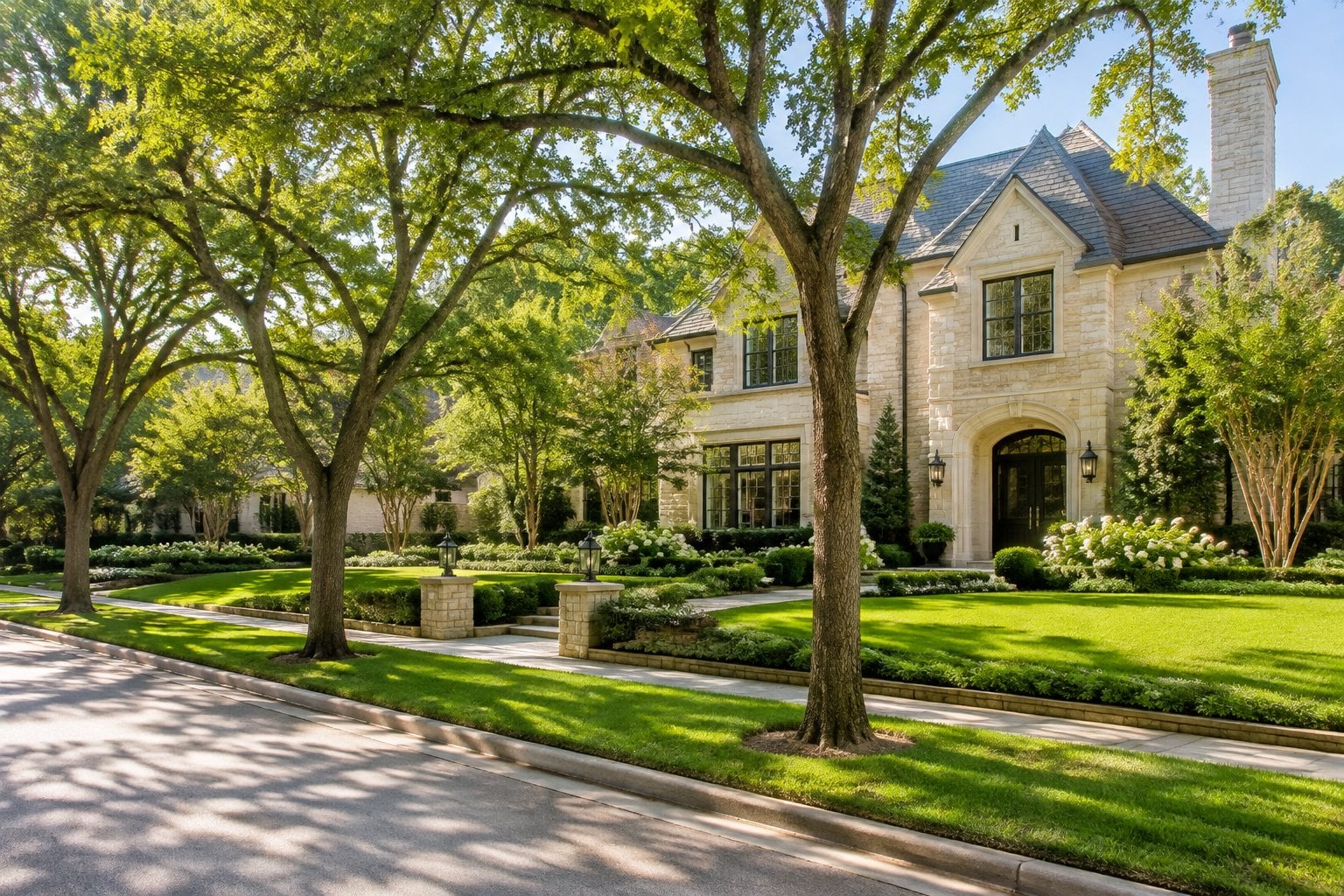
Highland Park sits just four miles north of downtown Dallas, and it’s widely considered the wealthiest suburb in Texas. Median home prices here run well into the millions, with some estates reaching into the tens of millions.
You’ll find a tight grid of tree-lined streets filled with historic mansions, many built in the early 1900s in Georgian and Tudor styles. The famous “French Streets” area and homes along Lexington Avenue represent some of the priciest real estate in the entire state.
Your cost of living extends beyond housing. Property taxes are substantial given the home values, and daily expenses reflect the concentration of wealth in the area.
Living in Highland Park means access to one of the top-rated public school districts in Texas, along with walkable access to Highland Park Village, an upscale shopping center with luxury retailers. The suburb maintains its own police and fire departments, separate from Dallas.
Despite its small size, Highland Park’s combination of historic architecture, elite schooling, and proximity to downtown Dallas keeps demand—and prices—consistently high.
15. Piedmont, California
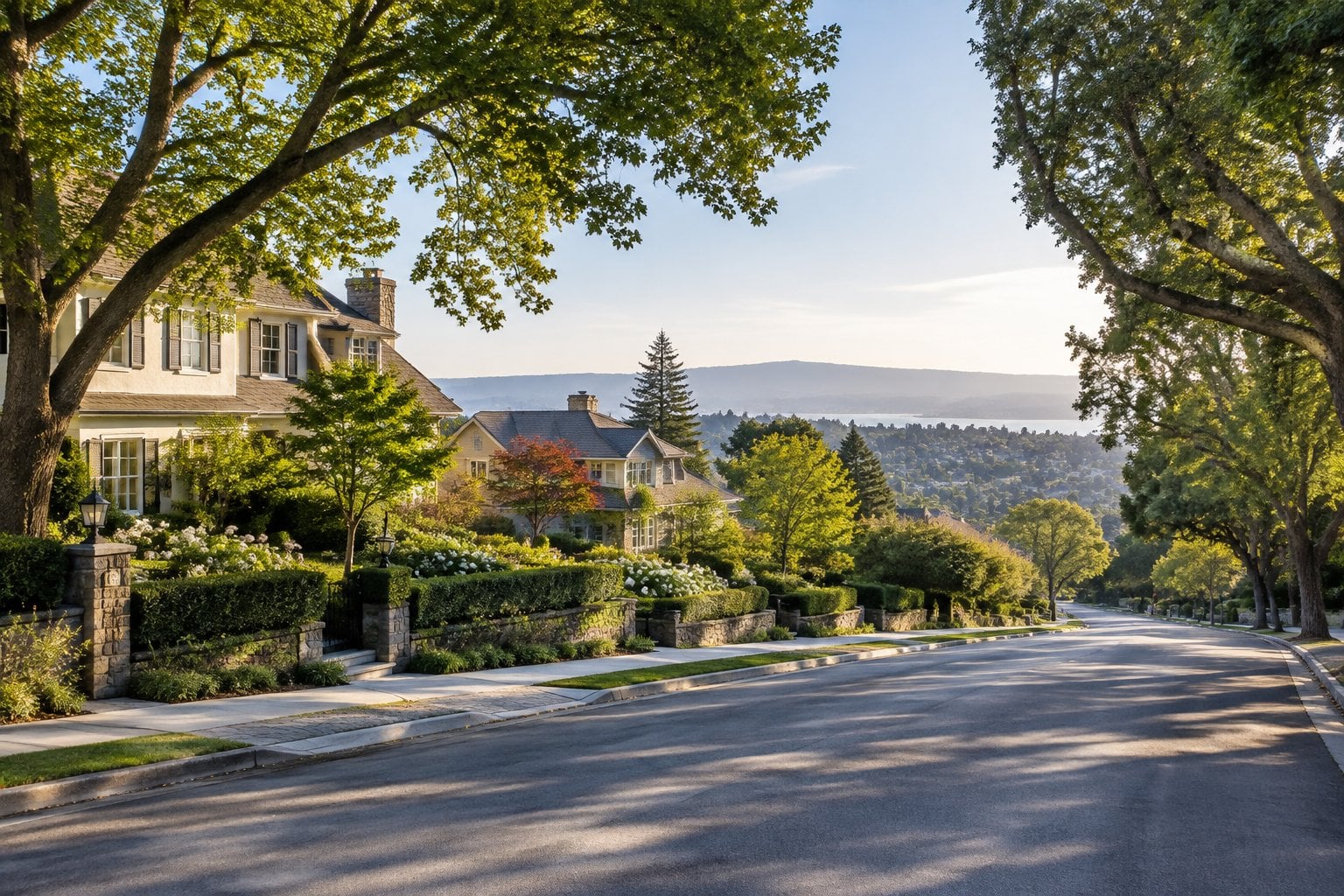
Piedmont sits as a small, fully enclosed city within Oakland, giving you easy access to the San Francisco Bay Area while maintaining a distinct identity. Median home values here regularly exceed $2.4 million, placing it among the priciest places to live in the state.
You’ll notice the city’s housing stock leans heavily toward early 20th-century homes, many built in Tudor, Colonial Revival, or Mediterranean styles. Lot sizes tend to be generous for an urban-adjacent community, and tree-lined streets contribute to a quiet, residential feel.
Piedmont’s schools are a major draw if you’re considering a move here. The district consistently ranks among California’s best, which helps support the high property values and attracts families willing to pay a premium.
Your daily life would include a short commute into Oakland or San Francisco, along with access to a compact downtown offering local shops and restaurants. Property taxes and overall cost of living run well above state and national averages, reflecting the city’s small size, limited housing supply, and consistent demand from affluent buyers.
16. Short Hills, New Jersey
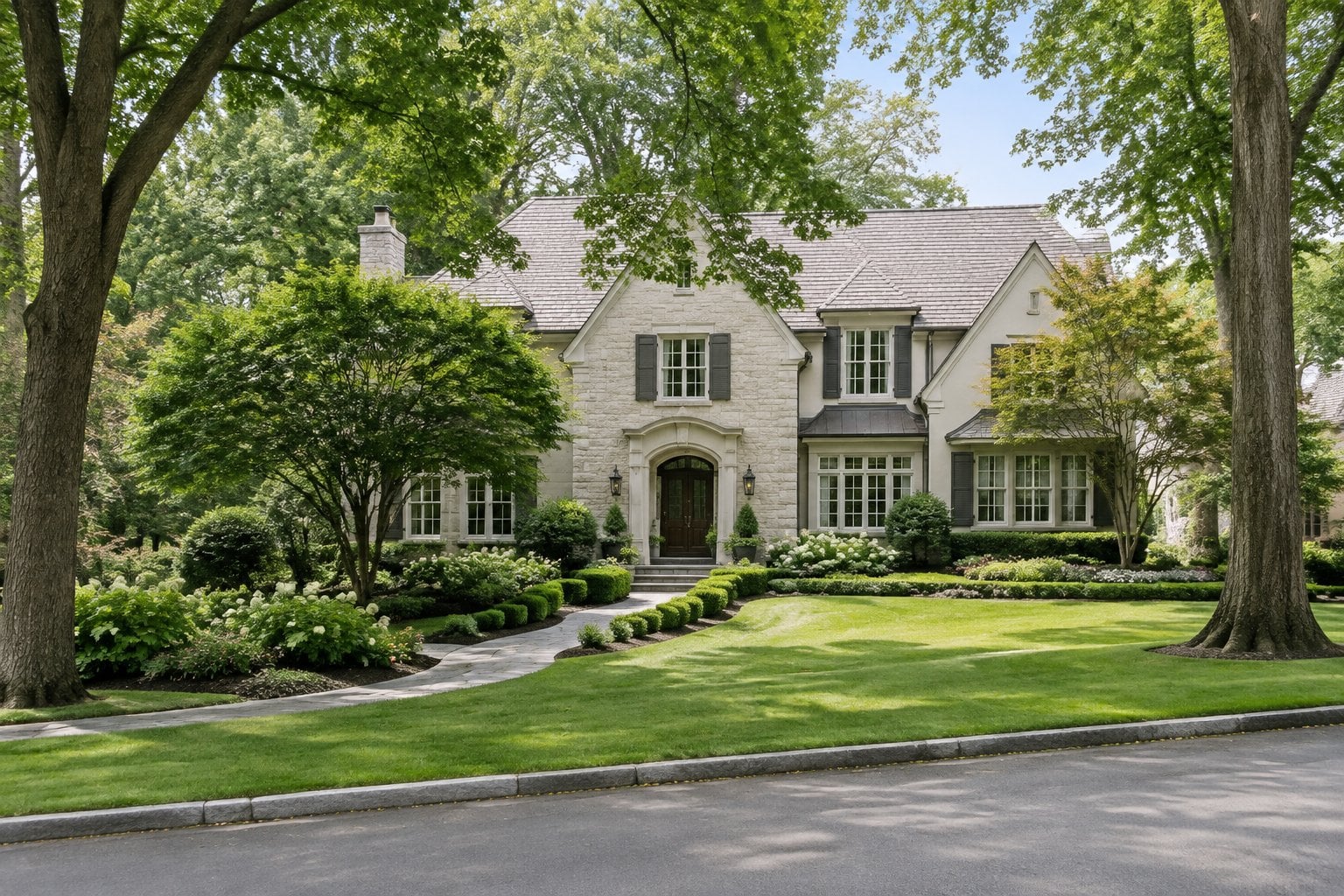
Short Hills sits within Millburn Township in Essex County, about 20 miles west of New York City. You’ll find a median home value exceeding $2.3 million here, making it one of the most expensive ZIP codes in the entire country.
Easy rail access into Manhattan drives much of the demand. Many residents commute to finance, law, or corporate jobs in the city, and you’re paying a premium for that convenience paired with suburban space.
The housing stock leans toward large single-family homes on wooded, hilly lots. Expect colonial and tudor-style architecture, mature landscaping, and lot sizes that give you more privacy than you’d get closer to the city.
Short Hills also has the Mall at Short Hills, an upscale retail center with luxury brands you won’t find in most suburban shopping centers. Schools in Millburn Township rank among the strongest in New Jersey, which adds to the appeal for families willing to pay for both education quality and proximity to the city.
17. Greenwich, Connecticut
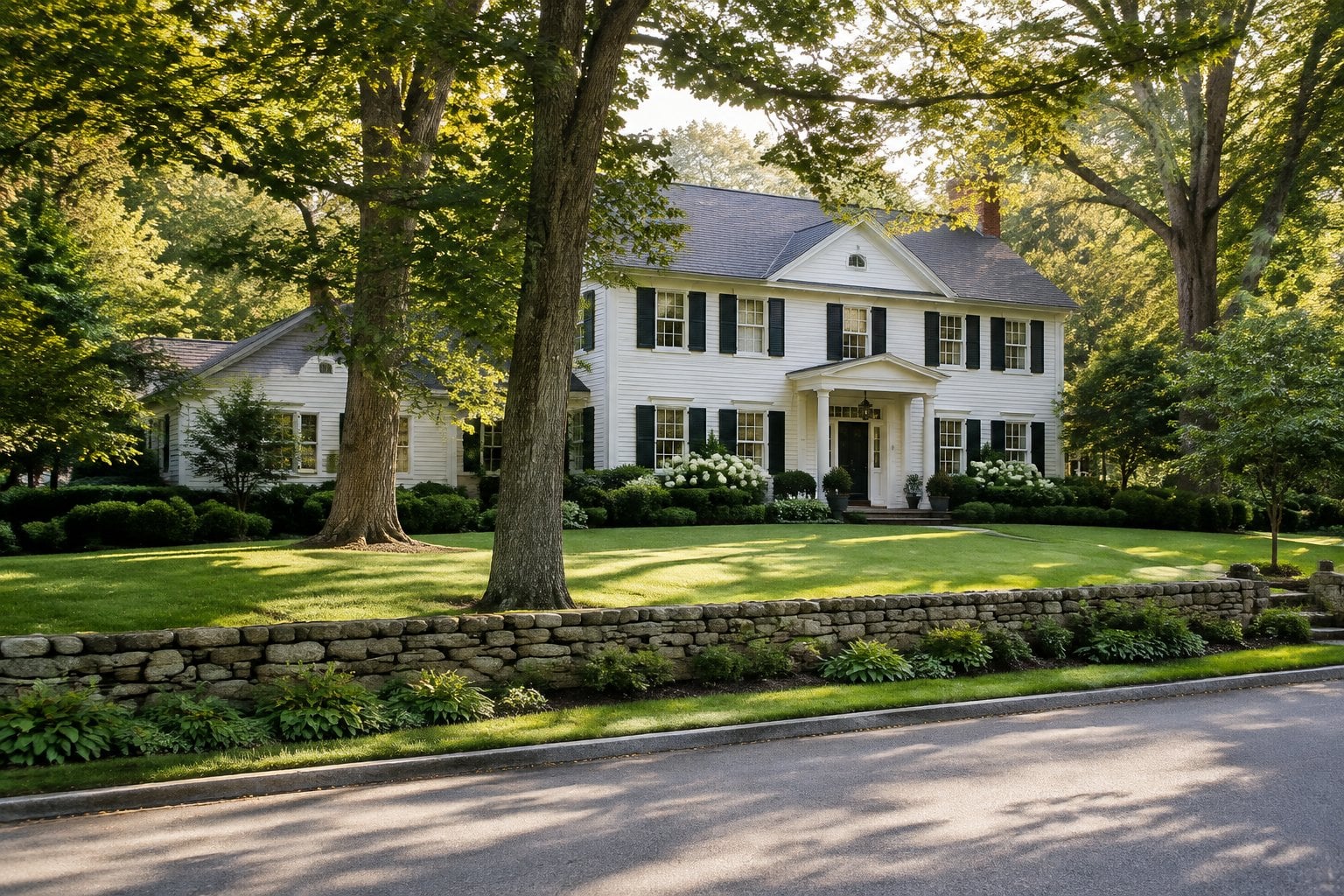
You’ll find Greenwich about 30 miles northeast of Manhattan, making it one of the most desirable suburbs for New York commuters who want space without giving up easy access to the city. Median household income here sits around $136,000, nearly double the statewide figure.
Home prices reflect that wealth. Across neighborhoods like Belle Haven, Old Greenwich, and Riverside, you’re looking at properties that often reach into the millions, with the backcountry estates commanding even higher prices.
Your cost of living will extend well beyond housing. Property taxes, private school tuition, and country club memberships all factor into daily life here, since many residents work in finance or hold executive positions at nearby firms.
Living in Greenwich means access to a well-regarded school system, private beaches along Long Island Sound, and a downtown area filled with upscale shopping and dining. You’ll also notice the emphasis on privacy, especially in the estate neighborhoods where properties sit behind long driveways and mature trees. This combination of proximity to Manhattan and established wealth keeps Greenwich among the priciest suburbs in the country.
18. New Canaan, Connecticut
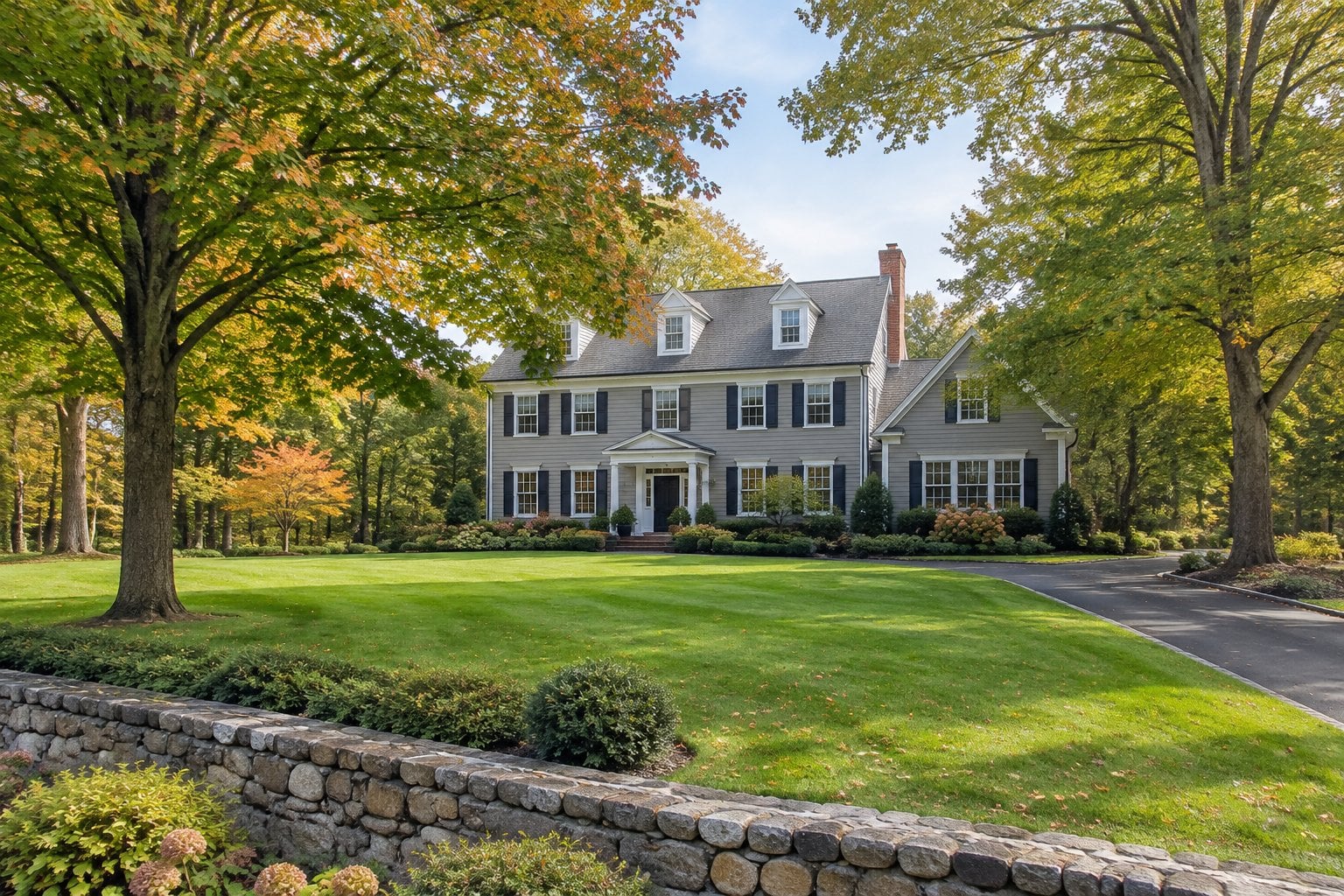
You’ll find New Canaan about an hour from Manhattan by train, making it a practical choice if you work in New York but want distance from the city. This Fairfield County town has a population of roughly 21,000 people.
Home prices here reflect that demand. The median sales price sits near $1.98 million, and average home values have climbed above $2.2 million, up over 13% in the past year alone.
Your money buys access to one of the state’s top-performing school districts, a factor that consistently drives buyer interest. Local property taxes stay relatively moderate for the area, with a mill rate around 16.144.
Life in New Canaan centers on a walkable downtown, historic homes, and quiet residential streets. You can expect a mix of colonial-style properties and newer luxury builds, many set on wooded lots.
The combination of strong schools, commuter rail access, and low housing inventory keeps competition high among buyers. If you’re considering a move here, be prepared for a market where well-maintained properties sell quickly.
19. Mercer Island, Washington
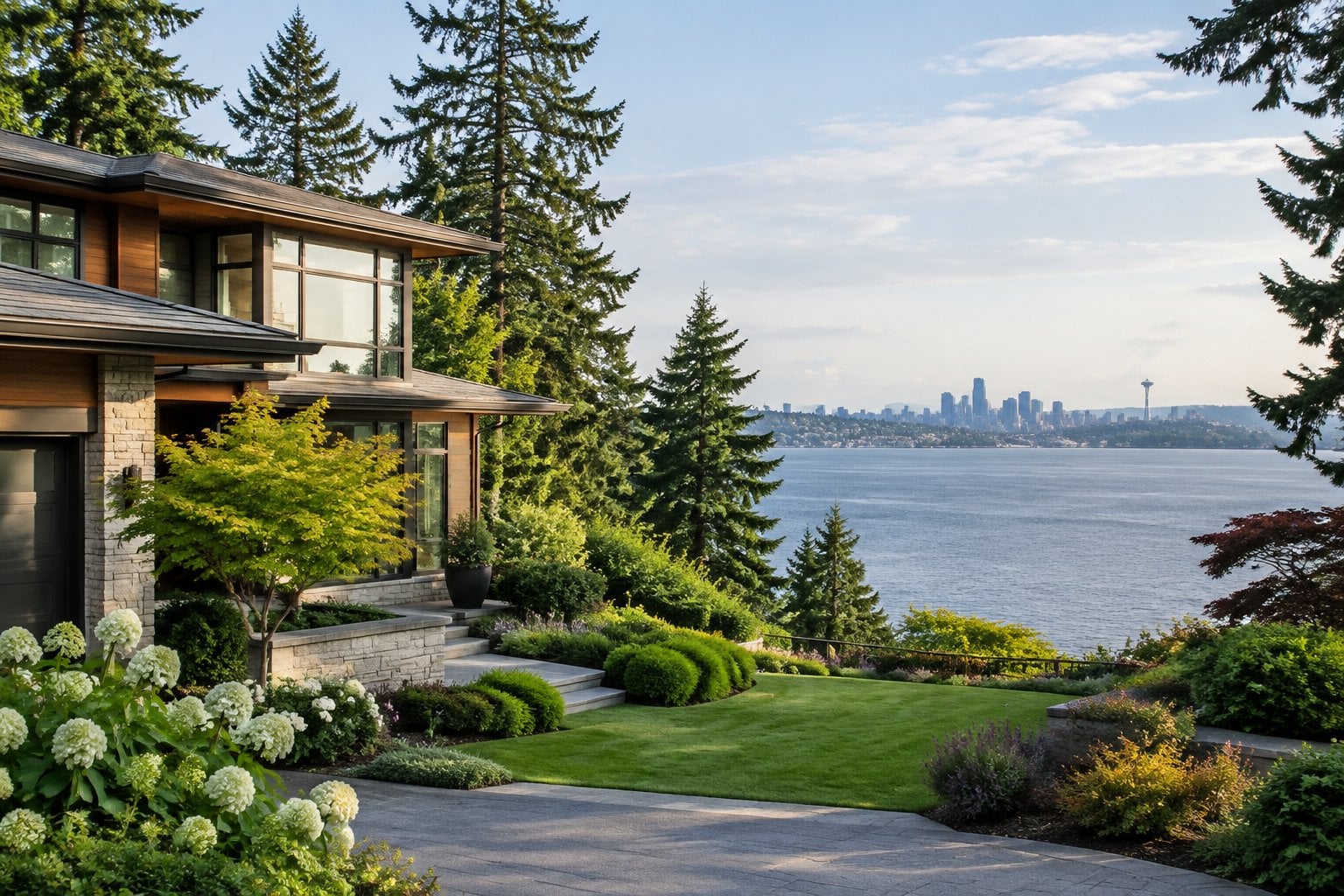
Mercer Island sits in Lake Washington between Seattle and Bellevue, connected to both by bridge. You get a rare combination here: a small-town residential feel with quick access to two major job centers.
Median household income on the island runs well above $300,000, placing it among the wealthiest communities in the state. Home prices reflect that wealth, with waterfront and view properties often reaching into the millions.
Your cost of living extends beyond housing. Property taxes are high, and daily expenses like groceries and services run above the national average, consistent with the broader Seattle metro area.
What draws people here is the setting. You get lake access, wooded residential streets, and a slower pace than downtown Seattle, without giving up proximity to tech industry employers.
Schools are a major factor too. Mercer Island’s public schools rank among the best in Washington, which helps sustain demand from families who can afford the entry price and keeps turnover in the housing market relatively low.
20. Weston, Massachusetts
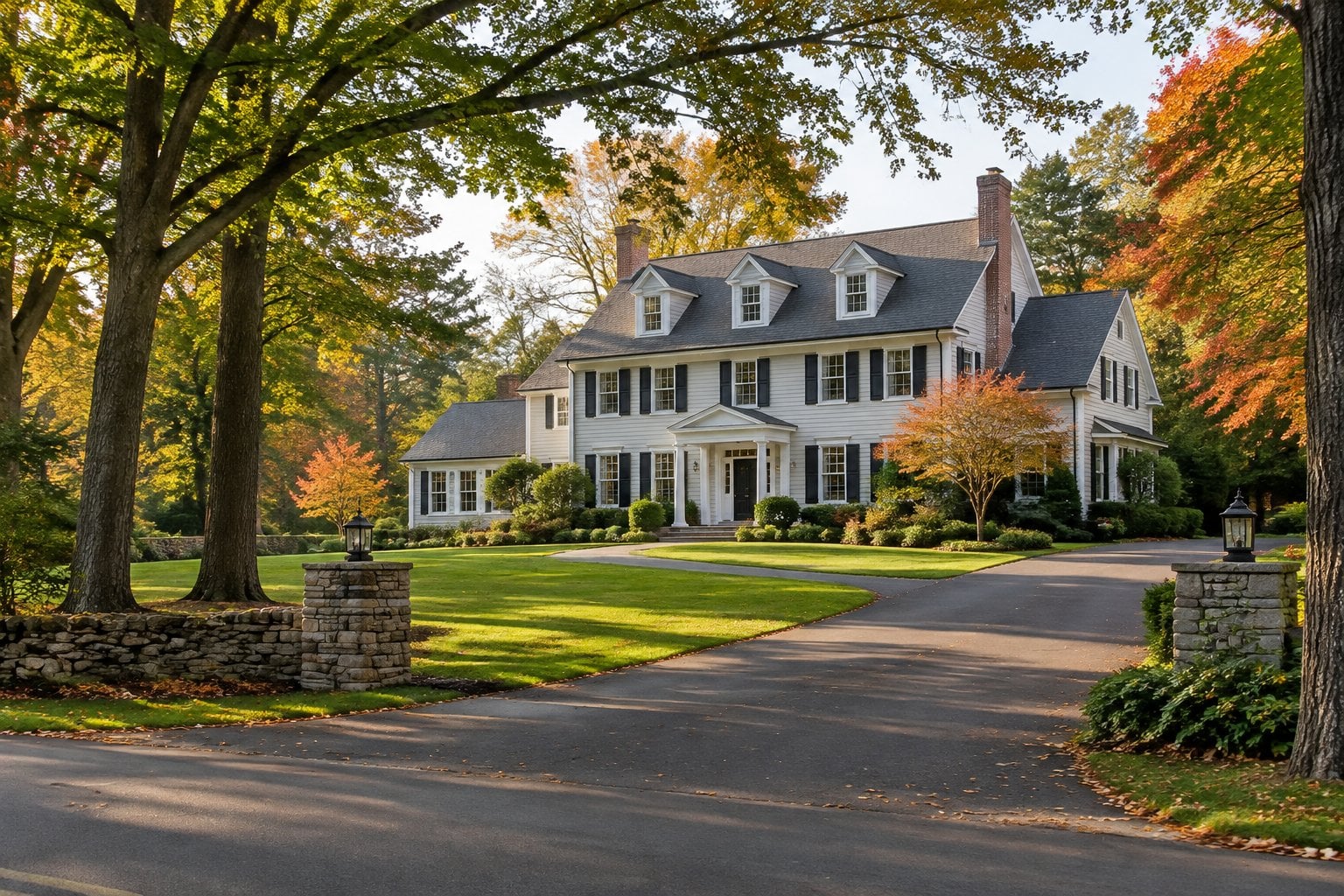
Weston sits about 15 miles west of Boston, and you’ll find it consistently ranked among the most expensive suburbs in the country. The median home price here passed $2 million in recent years, with many properties on wooded, multi-acre lots.
You’re paying for space and privacy in Weston. Large estates, private roads, and significant distance between neighbors define the town’s character rather than dense residential streets.
The school system is a major draw if you have a family. Weston’s public schools consistently rank among the top in Massachusetts, which helps sustain high demand and elevated property values.
Daily life here leans quiet and low-key compared to urban Boston. You won’t find much commercial development, since zoning favors residential use and conservation land over retail or dense housing.
Your commute into Boston is manageable, usually under 30 minutes by car, which makes Weston practical for professionals working downtown while still offering a secluded, rural-feeling setting at home.
21. Darien, Connecticut
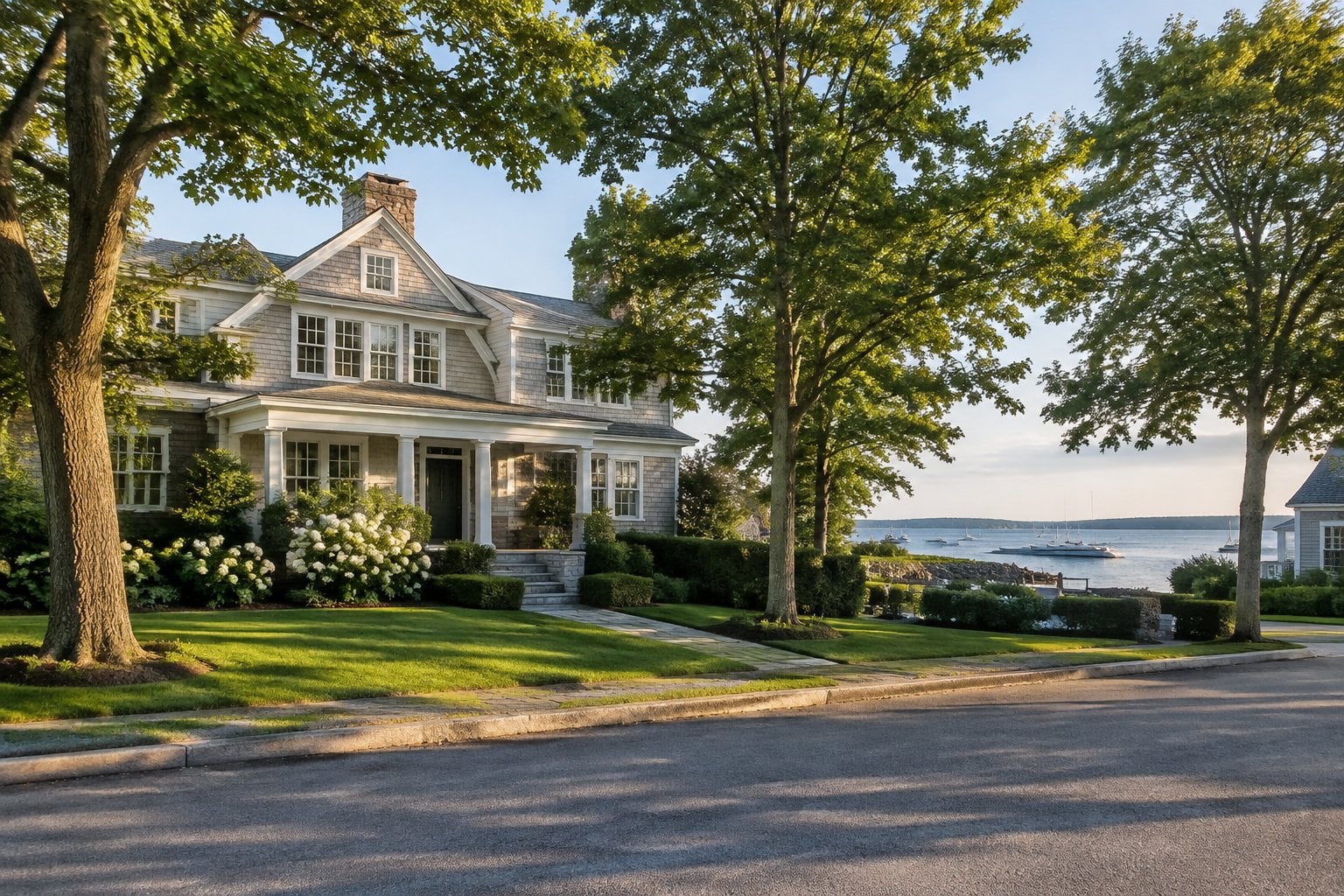
You’ll find Darien along the Connecticut shoreline in Fairfield County, about an hour outside New York City by Metro-North. This commute makes it a practical choice if you work in Manhattan but want distance from the city.
Darien consistently ranks as one of Connecticut’s wealthiest towns. Typical home values run in the range of $2 million, placing it among the state’s most expensive housing markets.
Your money goes toward more than square footage here. Waterfront properties, private yacht and country clubs, and generous lot sizes define much of the local real estate.
The town’s population sits around 21,000 to 22,000 residents, and you’ll notice a significant share are families with children. Schools are a major draw, with per-student spending among the highest in the state and strong academic outcomes.
Daily life in Darien centers on a walkable downtown, easy beach access at spots like Weed Beach, and a slower pace than nearby urban centers. You’re paying for privacy, coastline, and proximity to New York, all at once.
22. Bronxville, New York
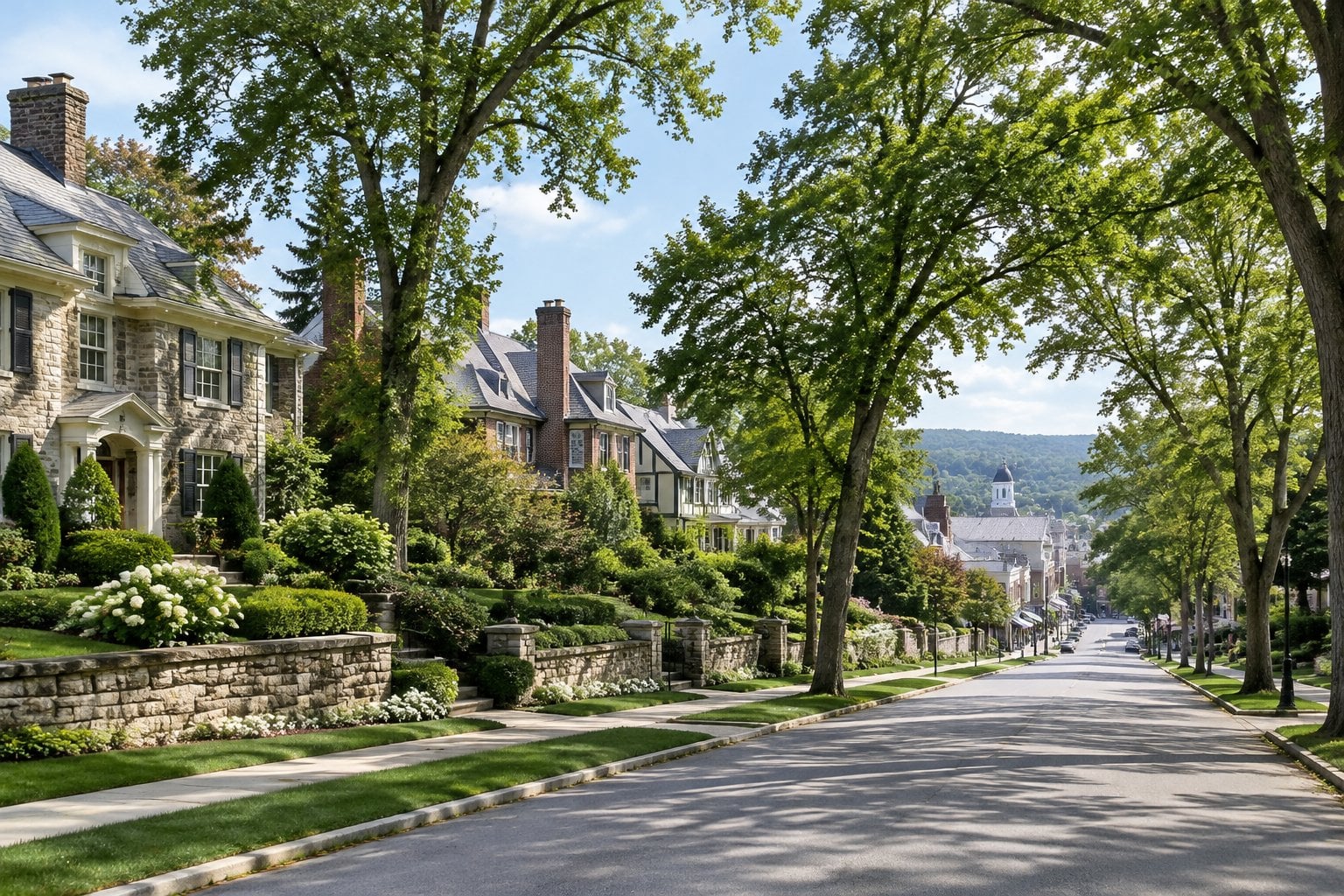
Bronxville sits just 15 miles north of Manhattan in Westchester County, and you’ll find it consistently ranked among the most expensive suburbs in the country. Median home values here exceed $2 million, and some reports have placed Bronxville as the priciest suburb of any major U.S. city on a per capita basis.
You’re paying for proximity as much as prestige. A direct Metro-North line gets you into Grand Central in about 30 minutes, which makes Bronxville a popular choice if you work in the city but want distance from it at night.
The village itself covers less than a square mile, giving it a dense, walkable layout that’s unusual for suburban Westchester. You’ll notice Tudor-style homes, a compact downtown, and a population hovering around 6,000.
Property taxes here run high, matching the home values. Schools are a major draw, with the local district frequently cited as one of the state’s strongest. Living in Bronxville means accepting a small-town footprint with a big-city price tag attached to nearly everything.
23. University Park, Texas
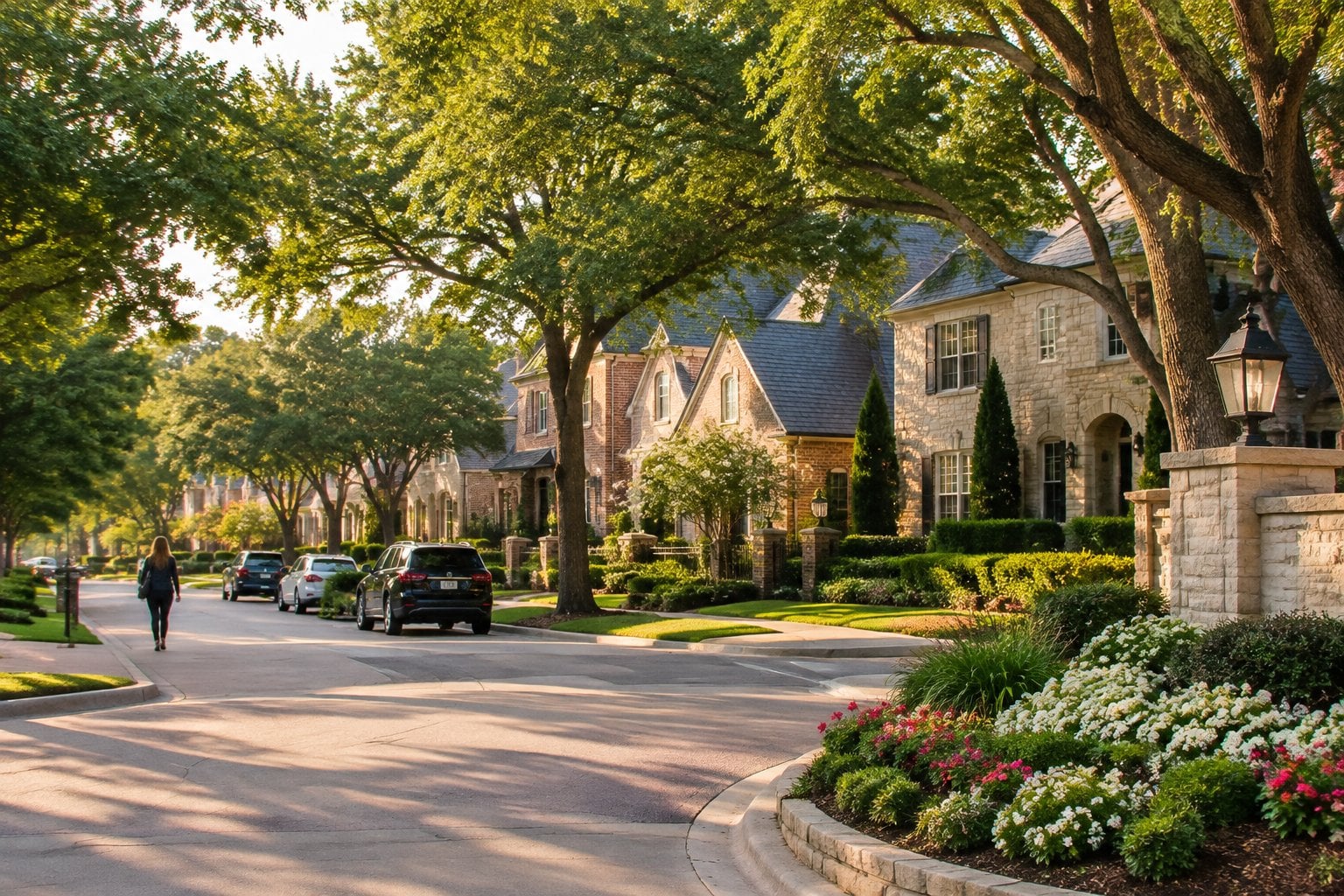
University Park sits just north of downtown Dallas, bordered by the city on nearly all sides. You’ll find a small, tightly packed suburb with a median household income exceeding $200,000, among the highest in Texas.
Home prices here reflect that wealth. The average home value runs well above $2 million, with many properties priced even higher depending on lot size and proximity to Southern Methodist University.
Living in University Park means access to Highland Park Independent School District, consistently rated one of the best public school systems in the state. You’ll also notice the architecture leans toward large, custom-built homes on manicured lots, many dating back to the 1920s and 1930s but extensively renovated.
Your daily life benefits from walkability to SMU’s campus, local shops along Lovers Lane, and quick access to downtown Dallas for work. Property taxes run high, matching the home values, but residents cite the schools and location as worth the cost. Few rental options exist, since most residents own their homes long-term.
24. Wellesley, Massachusetts
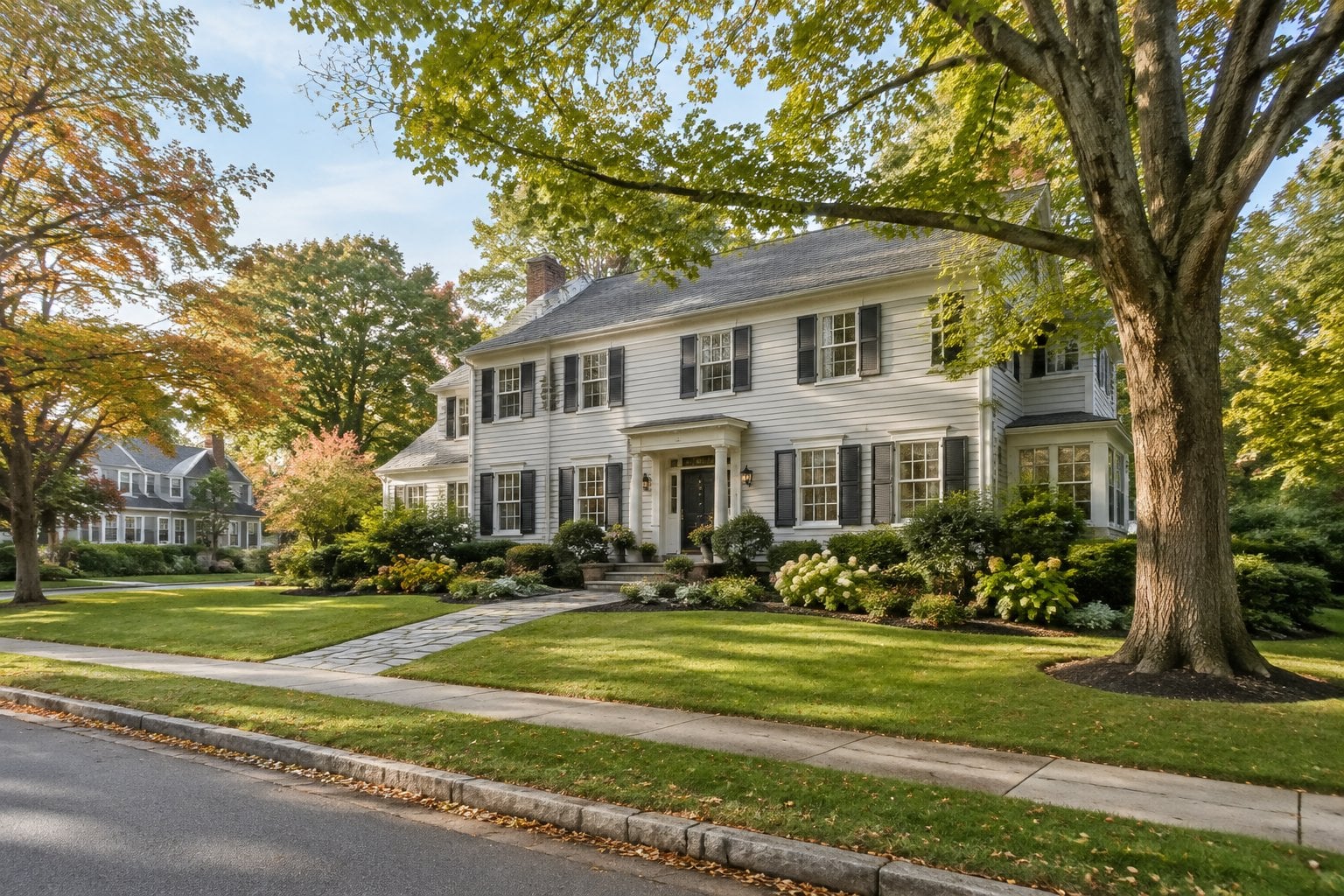
Wellesley sits about 15 miles west of Boston in Norfolk County, and you’ll find it consistently ranked among the wealthiest suburbs in the country. The average household income here reaches well over $360,000, which places it far above most communities nationwide.
Home prices reflect that wealth. Median sale prices in Wellesley often exceed $1.8 million, and you’d typically need an income of at least $300,000 to live comfortably in the area.
Part of what drives these costs is Wellesley’s reputation for top-rated public schools, tree-lined streets, and a traditional New England town character. You’ll also notice its proximity to Wellesley College, which adds to the town’s academic and cultural identity.
Daily life here includes access to upscale shopping, well-maintained parks, and a commuter rail line that connects you directly to downtown Boston. The combination of strong schools, low crime rates, and historic charm keeps demand high, which continues to push home values upward year after year.
25. West University Place, Texas
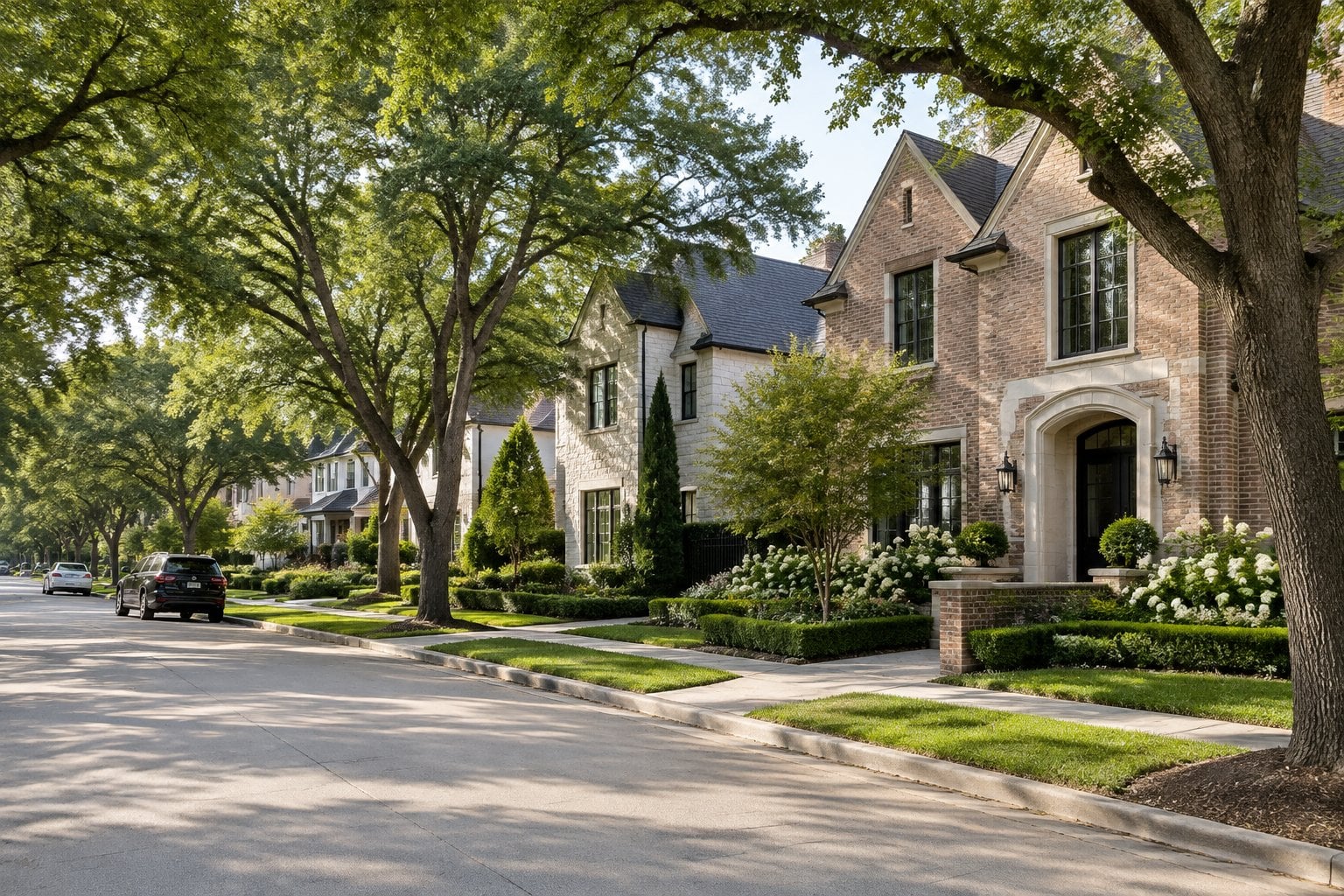
You’ll find this community tucked inside Houston’s inner loop, just minutes from downtown and the Texas Medical Center. It’s a small, tightly bounded suburb, and that limited supply of land helps keep home values high.
Home prices here commonly exceed $1.6 million, and household incomes rank among the highest of any suburb in the country. You’re looking at one of the wealthiest communities in Texas, with some national rankings placing it second only to Scarsdale, New York.
Much of the appeal comes from the schools. You’ll find the local district consistently rated among the best in the Houston area, which draws families willing to pay a premium for access.
Life here centers on walkable streets, mature trees, and a quiet residential feel despite the proximity to a major city. You get easy access to Rice University, the Museum District, and Houston’s job centers without living in the urban core itself.
Property taxes and upkeep costs run high, matching the elevated home values throughout the area.
26. Rye, New York
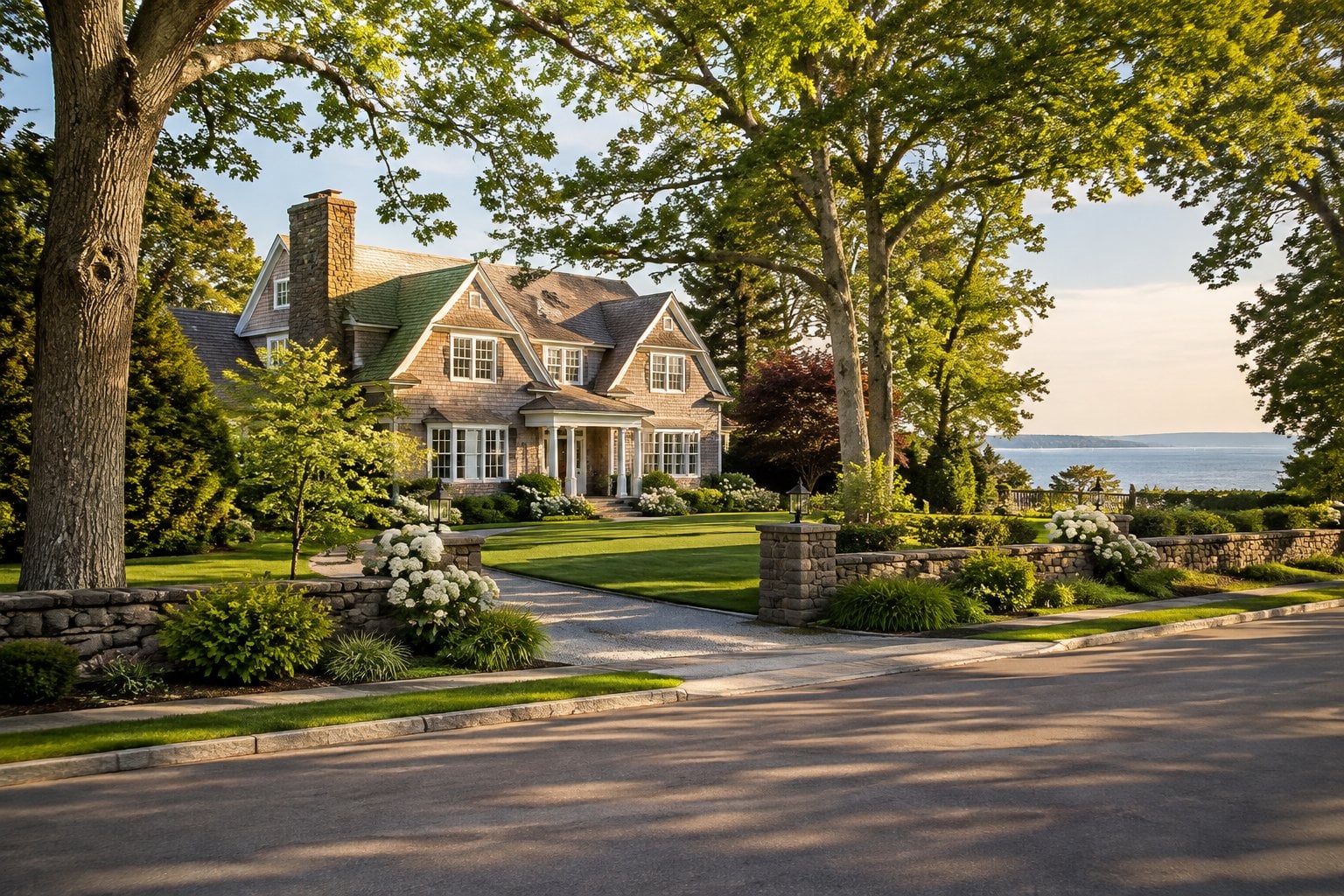
Rye sits along the Long Island Sound, about 25 miles northeast of Manhattan in Westchester County. You’ll find a small-town atmosphere here, with a walkable downtown and a harbor that gives the area a coastal feel rare for suburbs this close to New York City.
Home prices in Rye are high, with median values often exceeding $1.5 million. Waterfront properties and homes near Rye’s private beach clubs command even steeper prices.
Your cost of living extends beyond housing. Property taxes in Westchester County rank among the highest in the nation, and Rye is no exception.
If you move here, you can expect excellent public schools, which is part of what draws families willing to pay a premium. The commute into Manhattan takes under an hour by train, making it practical for professionals who work in the city but want distance from it.
Rye’s combination of strong schools, water access, and proximity to New York City keeps demand—and prices—elevated year after year.
27. Scarsdale, New York
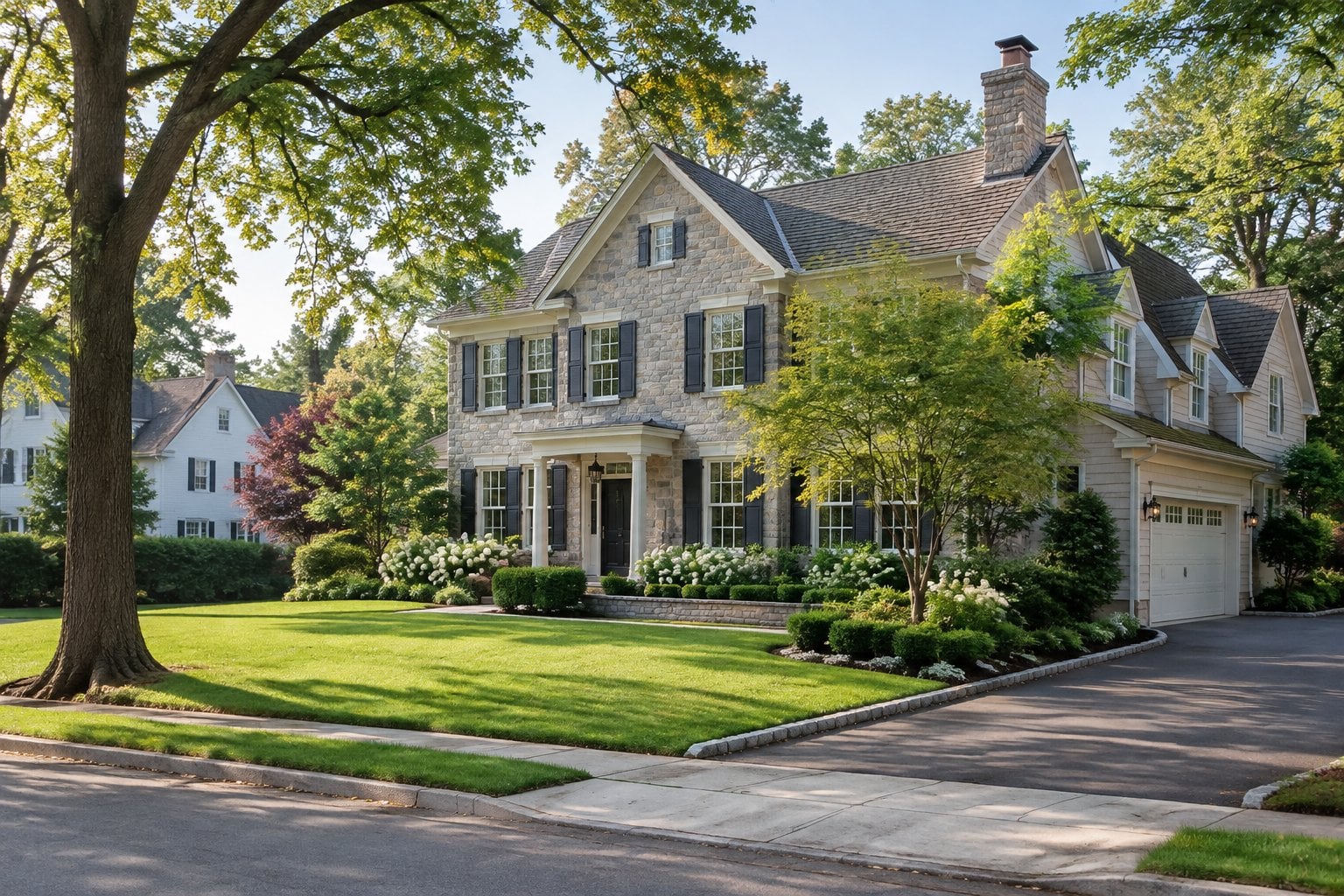
For three consecutive years, Scarsdale has ranked as the wealthiest suburb in the United States. Average household income there has climbed above $600,000, and home values average around $1.2 million.
You’ll find Scarsdale in Westchester County, less than an hour from Manhattan by car or train. That proximity to New York City, combined with highly rated public schools, is a major reason property values stay so high.
The town is known for its Tudor-style homes and tree-lined streets. If you’re considering a move here, expect a quiet, residential atmosphere rather than dense urban development.
With roughly 17,700 residents, Scarsdale remains small, but its wealth concentration is significant. Many residents commute into the city for work while raising families in a suburban setting.
Property taxes run high, reflecting both home values and the quality of local services and schools. You’re paying a premium for location, education, and a particular standard of living that has defined Scarsdale for decades.
28. Southlake, Texas
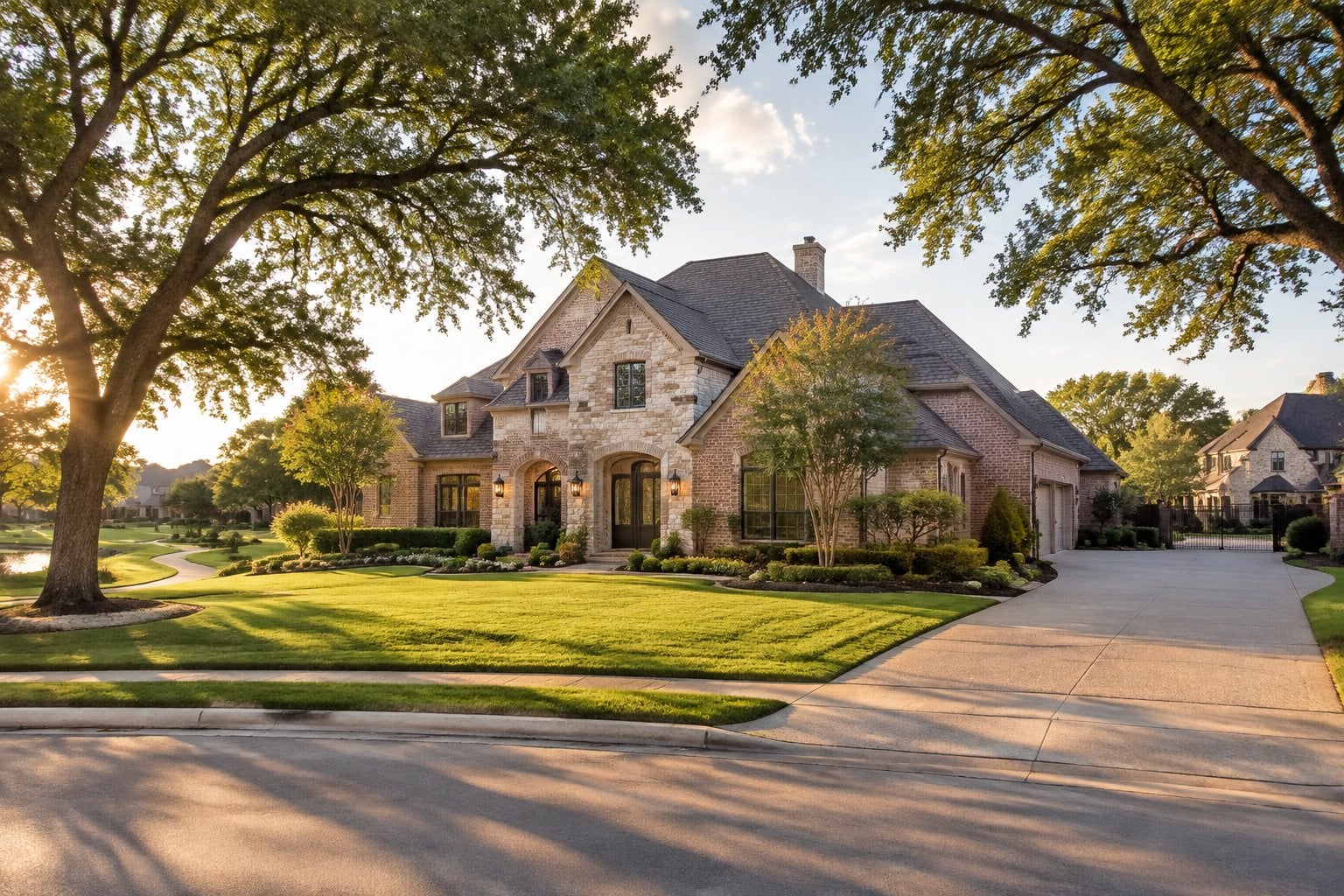
You’ll find Southlake northeast of Fort Worth, among the Dallas-Fort Worth metro’s most affluent suburbs. The median home price here tops $1.2 million, and the mean household income exceeds $325,000.
Southlake’s reputation rests on a combination of factors. The schools consistently rank among the state’s best, drawing families willing to pay a premium for the district. Southlake Town Square adds another layer of appeal, offering upscale shopping and dining within a walkable setting.
Living here means custom-built homes on generous lots, many with four or more bedrooms and high-end finishes. You’ll notice the town keeps strict building standards, which helps maintain property values but also limits more affordable housing options.
Property taxes run higher than the state average, a trade-off for the services and school quality residents expect. Commuting to Fort Worth or Dallas takes 30 to 45 minutes depending on traffic, though many residents work locally given the area’s growing corporate presence.
29. Great Neck, New York
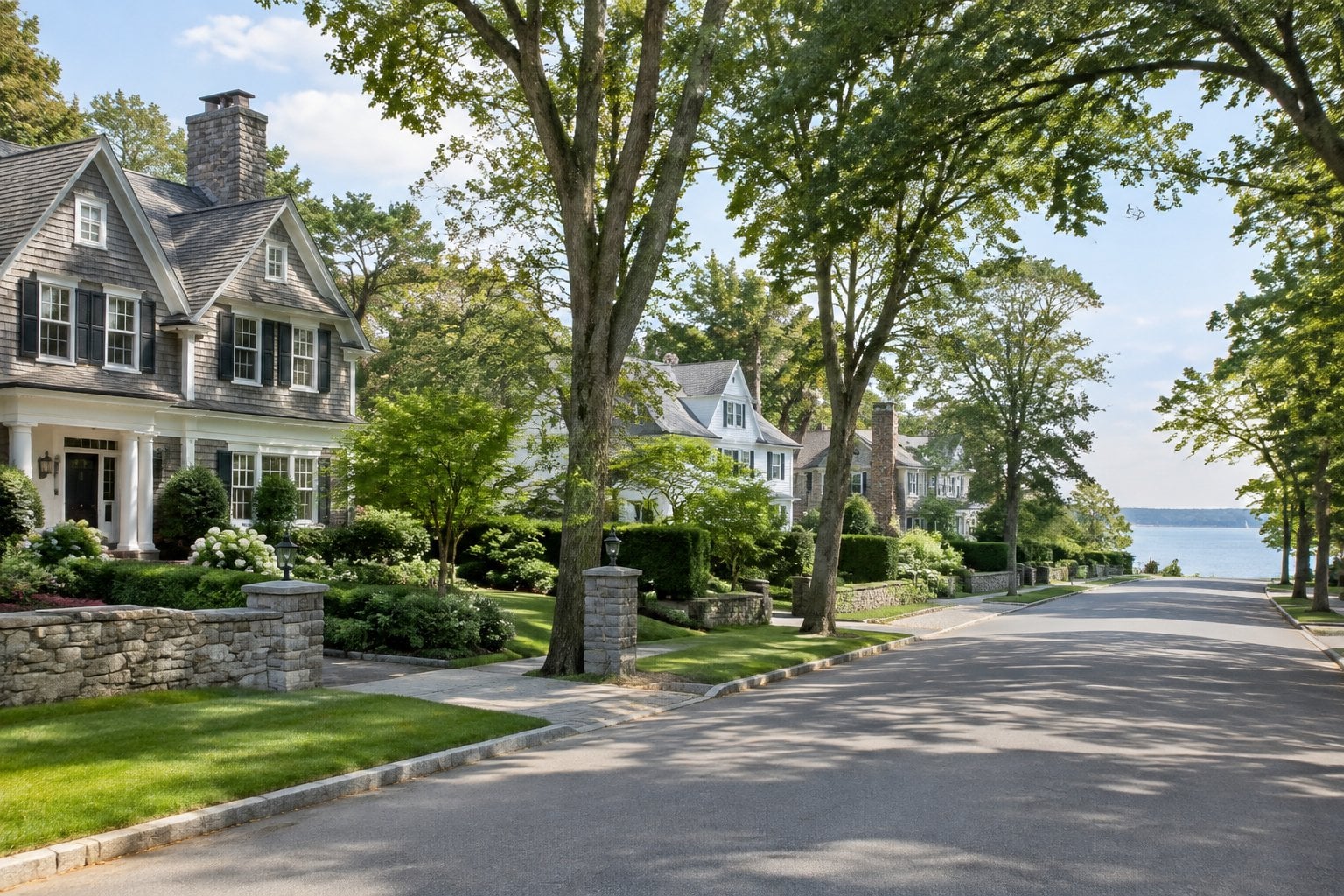
You’ll find Great Neck on the North Shore of Long Island, about 20 miles from Manhattan. It functions as a commuter suburb for New York City, with a Long Island Rail Road station that gets you into Penn Station in roughly 30 minutes.
Median home prices here often exceed $1 million, and many properties sit well above that mark. The area includes several distinct villages, each with its own character, but all sharing a reputation for large lots and well-maintained older homes.
Your cost of living extends beyond housing. Property taxes in Nassau County rank among the highest in the country, and that burden falls directly on homeowners in Great Neck.
The school district draws many buyers to the area. Great Neck Public Schools consistently earn strong academic ratings, which supports both demand and prices.
You’ll also notice a mix of architectural styles, from colonial homes to more modern construction, reflecting decades of steady investment in the community.
30. Brentwood, Tennessee
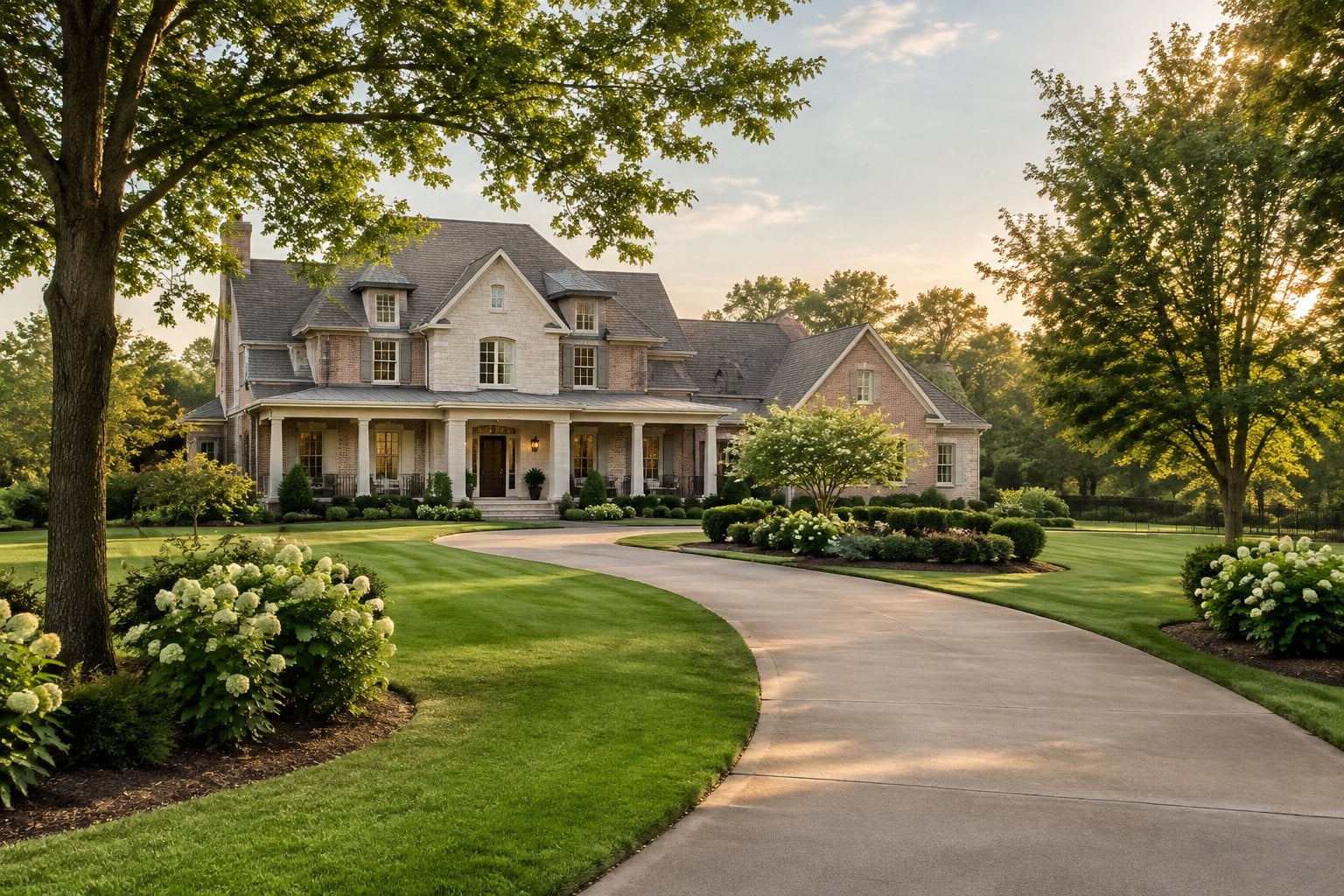
You’ll find Brentwood just south of Nashville, tucked into Williamson County, one of the wealthiest counties in the country. The median home price here sits well above $1 million, and many properties sit on large lots with privacy and space built in.
If you move here, you can expect rolling hills, mature trees, and a mix of custom-built homes and gated communities. Neighborhoods like Governors Club and Cielo represent the upper tier of what’s available, with estate-sized lots and architectural details you won’t find in standard subdivisions.
Schools rank among the best in Tennessee, which draws families willing to pay a premium for the district alone. You’ll also notice a slower pace despite the proximity to Nashville’s job market and entertainment scene.
Property taxes in Tennessee remain relatively low compared to other states, which helps offset some of the cost burden. Still, the price of entry into Brentwood’s housing market puts it out of reach for most buyers, making it a suburb defined by exclusivity and comfort.
How Suburb Costs Are Measured
Suburb rankings typically rely on median home sale prices, though some studies incorporate household income, property taxes, and broader living expenses. Understanding these methodologies helps you interpret why a list might rank one suburb above another.
Home Prices Versus Overall Cost of Living
When you look at suburb rankings, you’ll notice most rely heavily on median home sale prices from sources like Redfin and Zillow. This metric is straightforward: it tells you what a typical buyer pays for a home in that area.
But home prices don’t capture your full financial picture. Property taxes, insurance, utilities, and everyday expenses vary widely between suburbs, even those with similar home values.
A suburb with a $1.2 million median home price might have lower taxes than one at $900,000, depending on the state. Some rankings factor in household income alongside home values to show you affordability relative to local earnings, while others focus strictly on price tags.
How Boundaries and Data Sources Affect Rankings
The way you define a “suburb” affects which areas make the list. Some studies use official census-designated places, while others rely on zip codes or informal neighborhood boundaries set by real estate platforms.
This distinction matters because a small, wealthy enclave might rank differently depending on whether it’s measured alone or grouped with a larger surrounding area.
Data sources also shape outcomes:
- Redfin and Zillow provide median sale prices based on recent transactions
- Census Bureau data offers income and demographic figures tied to specific geographic boundaries
- Local MLS listings can reflect more granular, hyperlocal pricing trends
You should expect some variation between rankings, since no single methodology captures every suburb identically.
What Drives High Prices in Suburbs
Several factors determine why some suburbs command million-dollar price tags while others remain affordable. The two biggest drivers are how much land is available to build on and how close you are to the economic centers that generate wealth.
Housing Supply and Local Zoning
Your housing costs are shaped directly by how much new construction a town allows. Many of the wealthiest suburbs, including Scarsdale and Short Hills, restrict development through single-family zoning laws that limit density.
These rules keep the housing stock small and largely unchanged for decades. When demand rises but supply stays flat, prices climb.
Lot size minimums play a role too. Some towns require a full acre or more per home, which naturally caps how many houses can exist within town limits.
You’ll also find that historic preservation codes and strict architectural review boards slow down renovations and new builds. This protects the character of a neighborhood, but it also keeps inventory scarce and values high.
Proximity to Jobs and Amenities
Your commute time to a major city often correlates directly with home values in surrounding suburbs. Scarsdale’s draw, for example, comes largely from its Metro-North access and the fact that it sits less than an hour from Manhattan’s financial district.
Tech hubs create similar patterns on the West Coast. Suburbs near Silicon Valley campuses see inflated prices because executives and engineers want short commutes to employers like Google or Apple.
Local amenities add another layer of value. You’ll pay more in towns with top-rated public schools, since these districts attract families willing to spend heavily for education access.
Walkable downtowns, private country clubs, and well-maintained parks also raise desirability. These features signal a certain standard of living that buyers are willing to pay a premium for.