The 30 Most Expensive Neighborhoods in California: Where Luxury Living Costs the Most
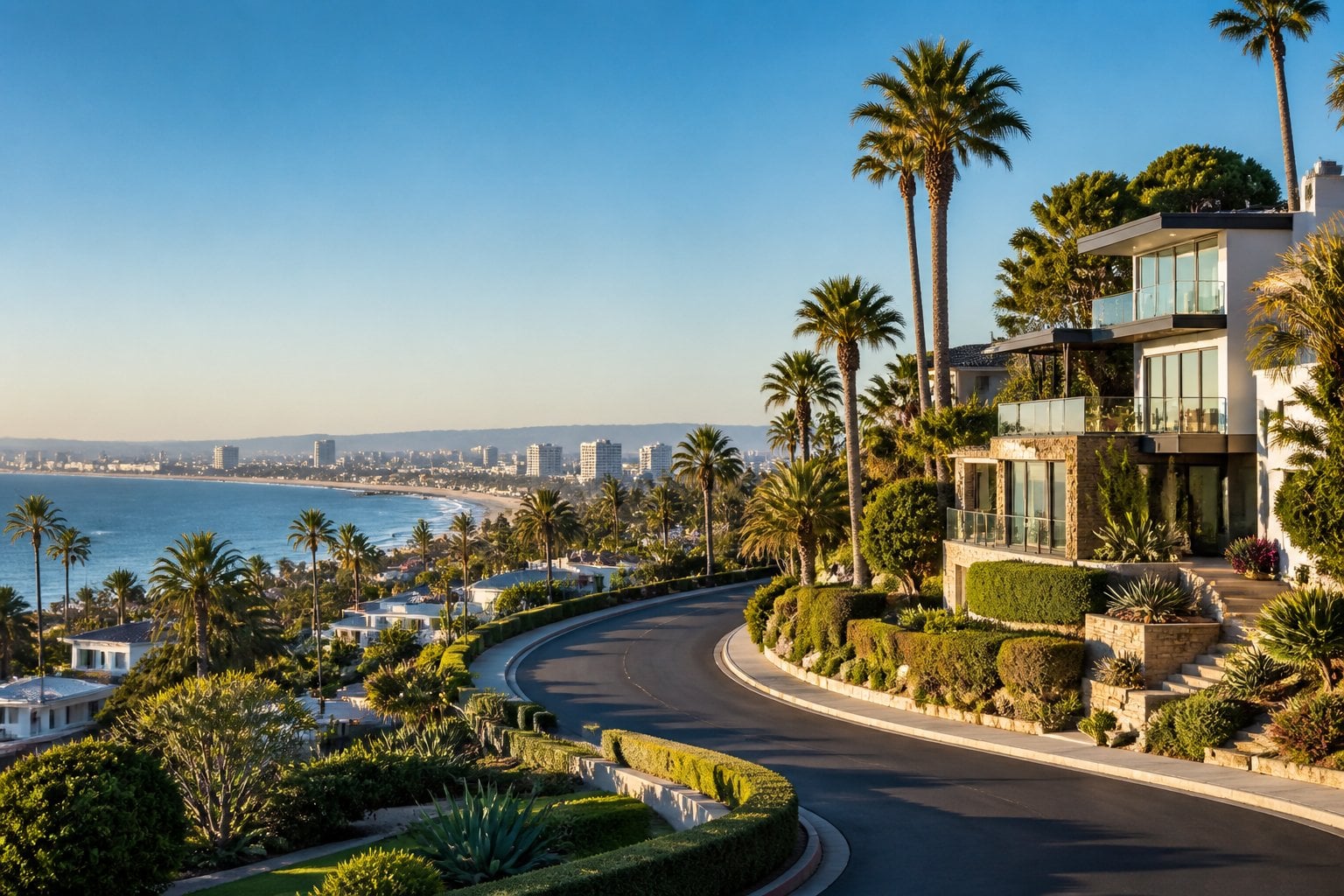
California is home to some of the most exclusive residential areas in the country. These neighborhoods stand out for their high property values, limited housing supply, and desirable locations near coastlines, major cities, or private hillside settings.
If you are curious about where the wealthiest Californians live, this list breaks down the state’s priciest neighborhoods. You will find that these areas share common traits, including strong school districts, gated privacy, and proximity to economic hubs like Silicon Valley and Los Angeles.
Understanding what drives these high valuations can give you a clearer picture of California’s luxury real estate market.
1. Atherton
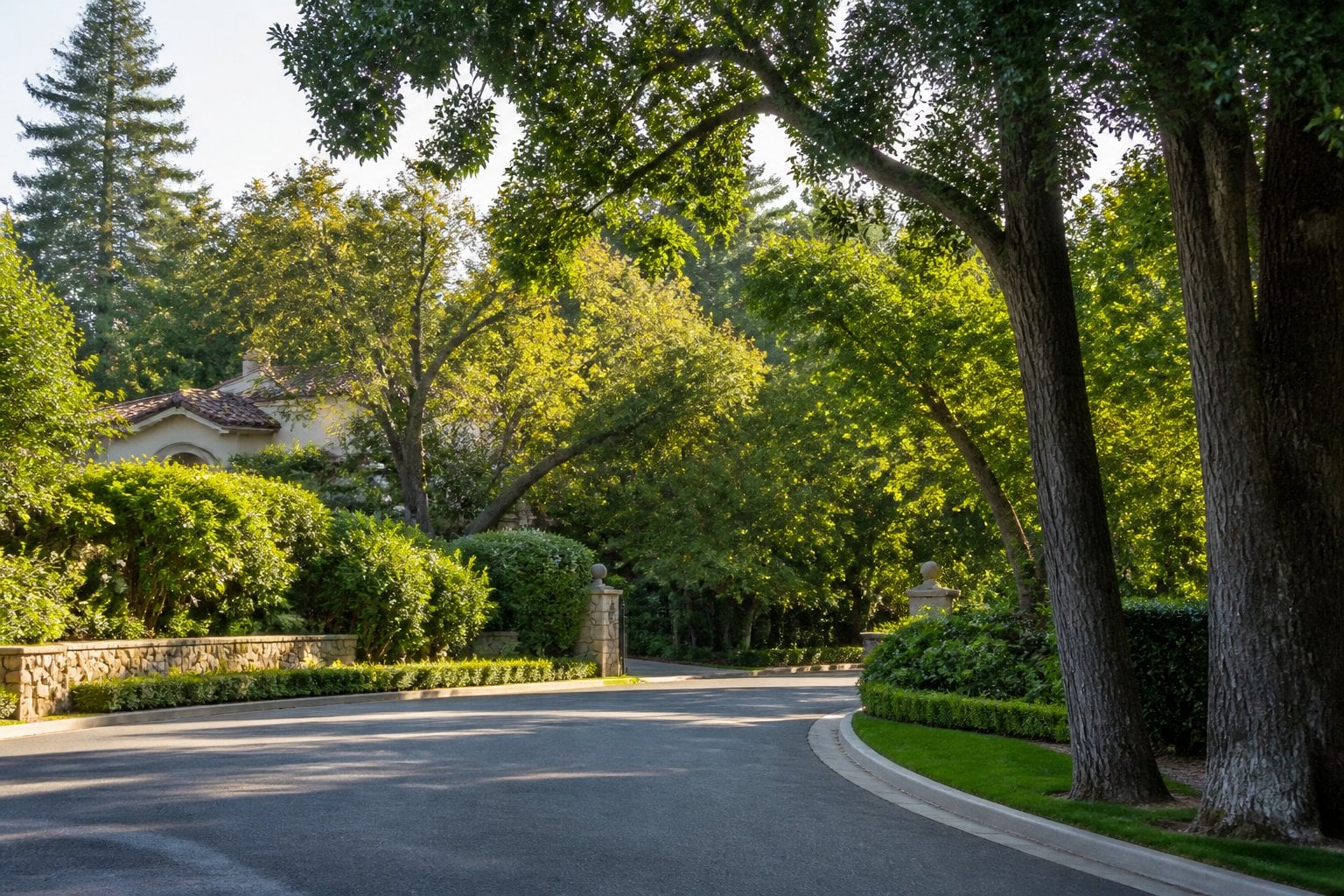
You’ll find Atherton at the top of every list of expensive California neighborhoods, and for good reason. Located in San Mateo County with the zip code 94027, it has repeatedly ranked as the most expensive zip code in the entire United States.
The town has a population of roughly 7,100 residents. Its exclusivity comes from strict zoning rules that require a minimum one-acre lot size for every property.
You won’t see condos or dense housing here. Instead, you’ll find gated estates, custom architecture, and homes with amenities like guesthouses and private pools.
Atherton sits close to Palo Alto and other Silicon Valley hubs, which explains its appeal to tech executives and entrepreneurs. Your access to top-rated schools and a dedicated local police department adds to the town’s reputation for safety and privacy.
Inventory stays limited, keeping competition and prices high.
2. Hillsborough
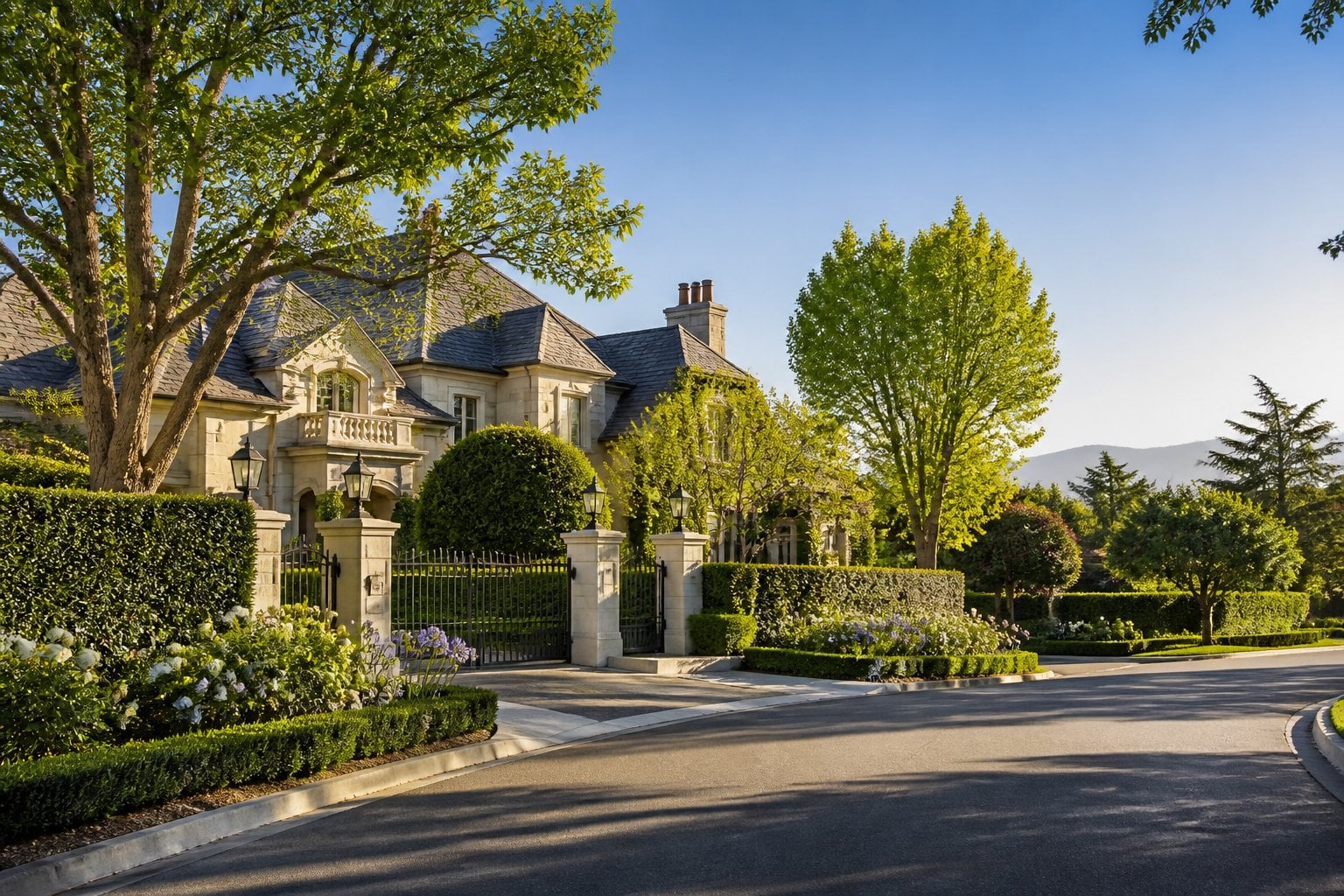
You will find Hillsborough on the San Mateo County peninsula, and it consistently ranks as one of the most expensive towns in California. The median home value sits above $5 million, with average sale prices reported near $5.14 million in 2026.
Your options here span several distinct areas. Lower Hillsborough commands the highest prices, while Mid North, Mid South, and Carolands also include eight-figure estates. The Ryan Tract stands out for its historic character combined with modern luxury construction.
With just over 11,000 residents, Hillsborough remains small and intentionally low-density. Homes typically sit on large lots, and the town has no commercial zoning.
You’ll notice strong buyer demand, too. Listings often receive over 20 offers and sell within about six weeks, reflecting the limited inventory in this exclusive market.
3. Los Altos Hills
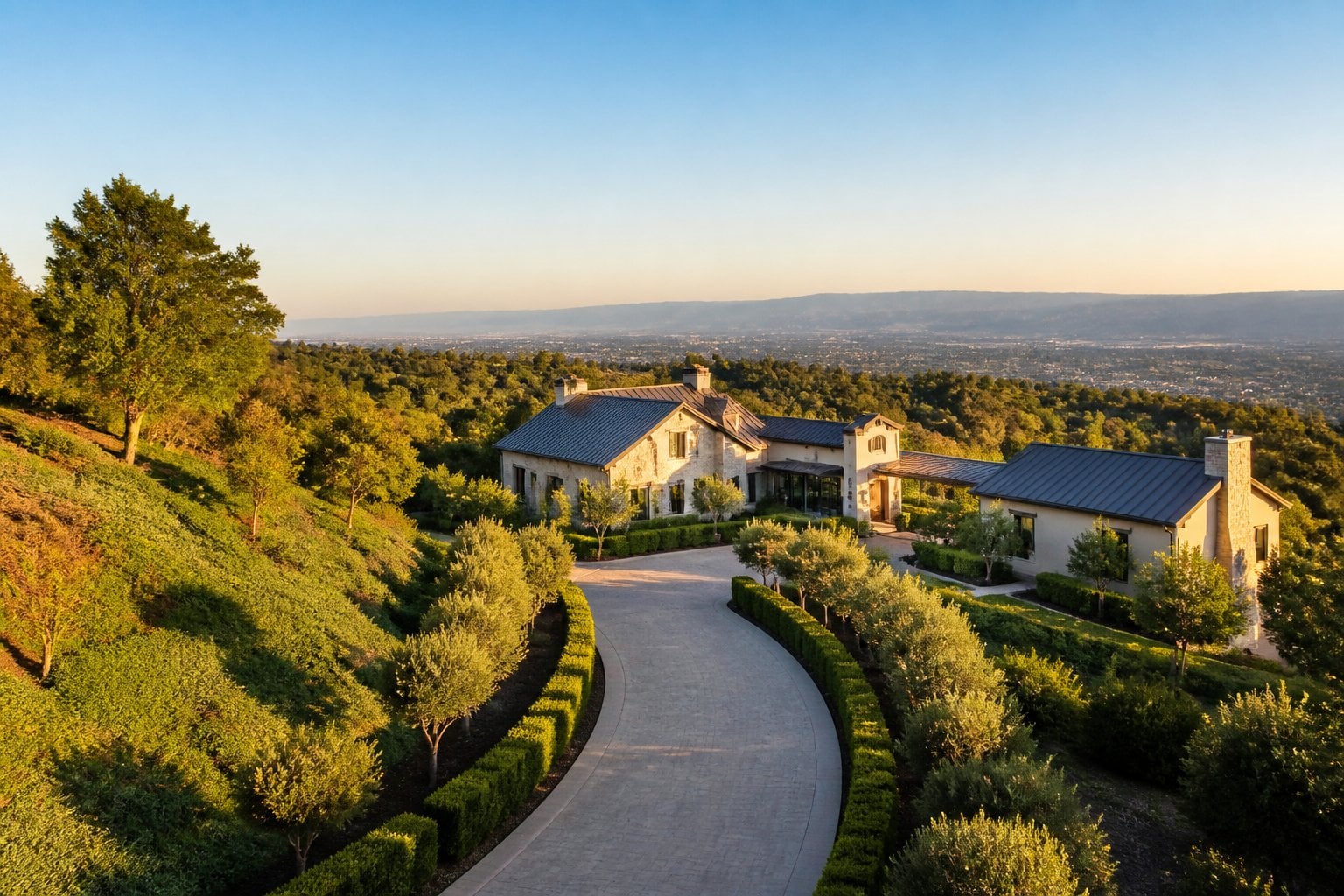
You’ll find one of California’s wealthiest towns tucked into the hills above Silicon Valley. Median household income here runs into the hundreds of thousands, placing Los Altos Hills among the top-earning communities in the state.
Home prices reflect that wealth. The average home value sits above $6 million, and the median house value across the town exceeds $5.4 million.
With about 8,400 residents and roughly 3,000 housing units, you’re looking at a low-density community built around large single-family homes. Many lots run a full acre or more, giving you space and privacy that’s rare elsewhere in Santa Clara County.
Its location works in your favor, too. You’re close to major tech employers while still living in a rural-feeling setting, which helps explain why prices here have stayed so high for so long.
4. Portola Valley
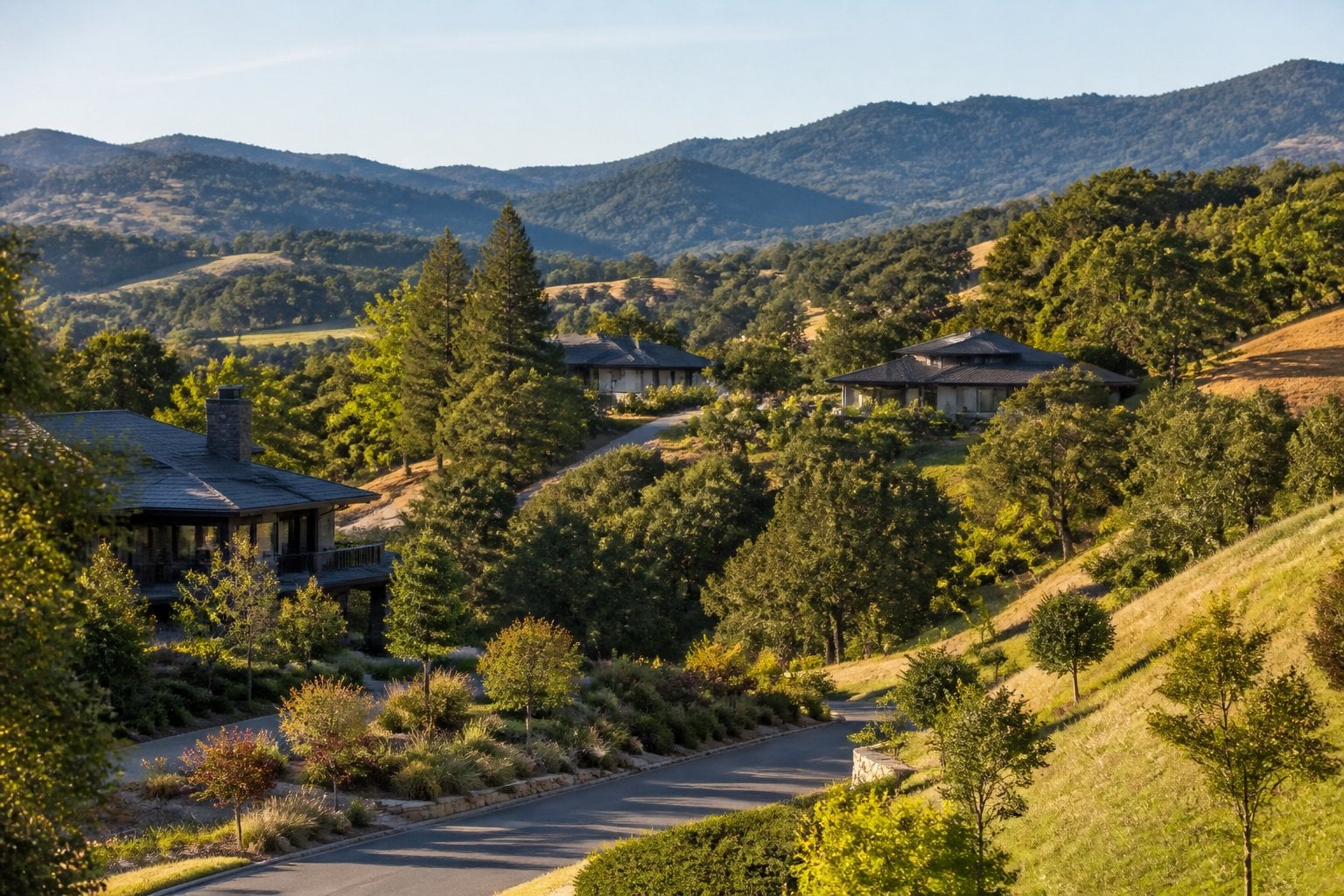
Portola Valley sits in the hills west of Silicon Valley, offering you easy access to major tech employment centers. The median household income here is $219,571, one of the highest in Northern California.
You’ll find a mix of housing styles across the town’s neighborhoods. Grand estates on flat lots sit alongside rustic hillside cabins, giving you options within the same exclusive market.
Popular neighborhoods include Sky Londa, Central Portola Valley, Skywood-Skylonda, Old Bethesda, and Los Trancos Woods-Vista Verde. Homes typically stay on the market for about 22 days and receive one offer, reflecting steady demand.
If you’re drawn to Portola Valley, you’re choosing a community valued for privacy and a quiet, wooded setting. Many residents work in tech, and the town’s proximity to Silicon Valley makes it practical for professionals who still want distance from urban density.
5. Woodside
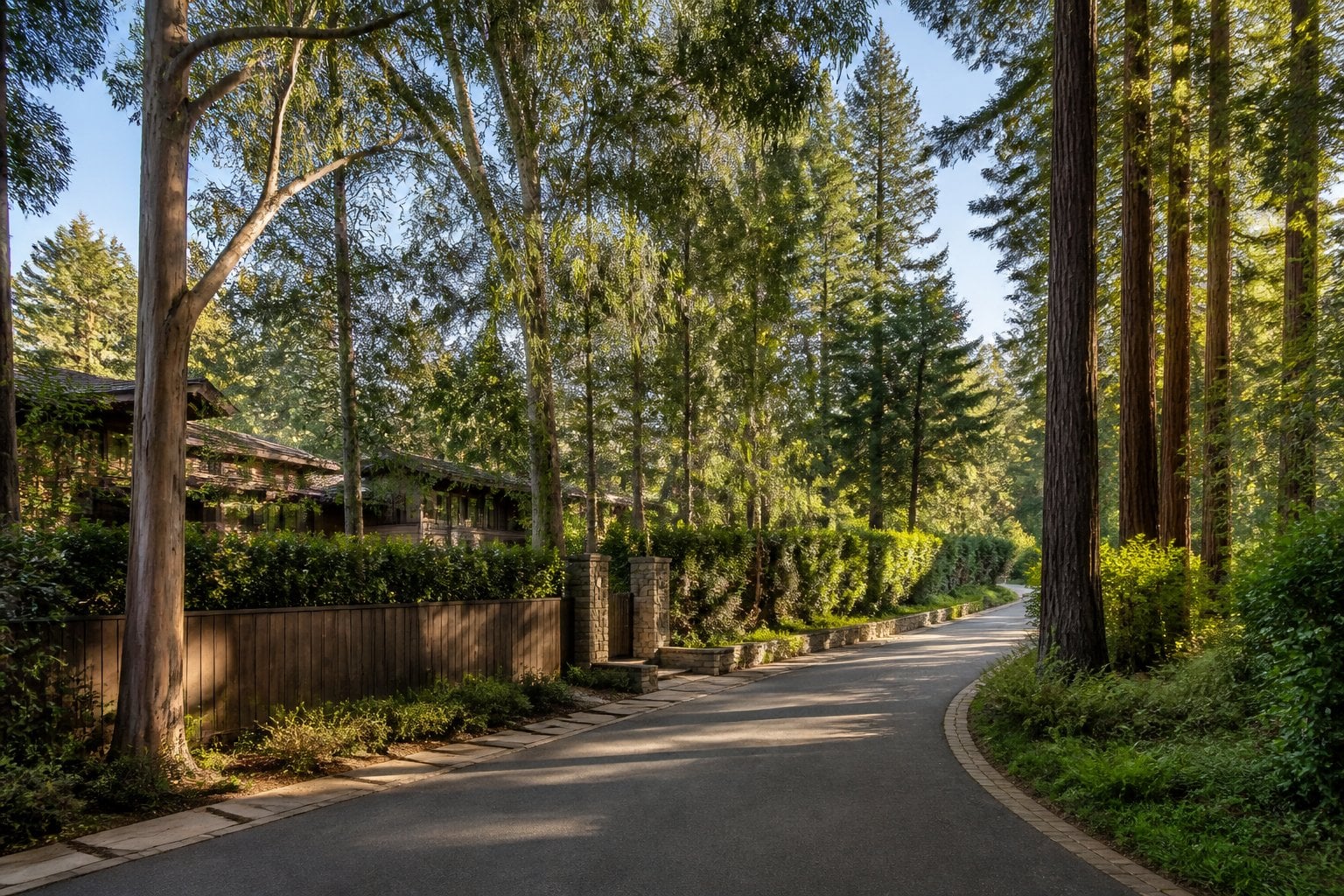
Woodside sits about 45 minutes south of San Francisco, tucked into the hills above Silicon Valley. You’ll find this town attracts tech executives and entrepreneurs who want privacy along with luxury.
With a population of roughly 5,123 people, Woodside stays small on purpose. Large lots and single-family estates dominate the landscape here, giving you space that’s hard to find elsewhere in the Bay Area.
The median home value in Woodside runs into the millions, far above California’s statewide average. If you’re comparing this town to other affluent Bay Area communities, you’ll notice Woodside consistently ranks among the priciest in the country.
Zoning rules favor low-density development, which keeps the rural character intact. You get rolling hills, mature trees, and a sense of seclusion that’s rare this close to Silicon Valley’s tech hubs.
6. Palo Alto’s Crescent Park
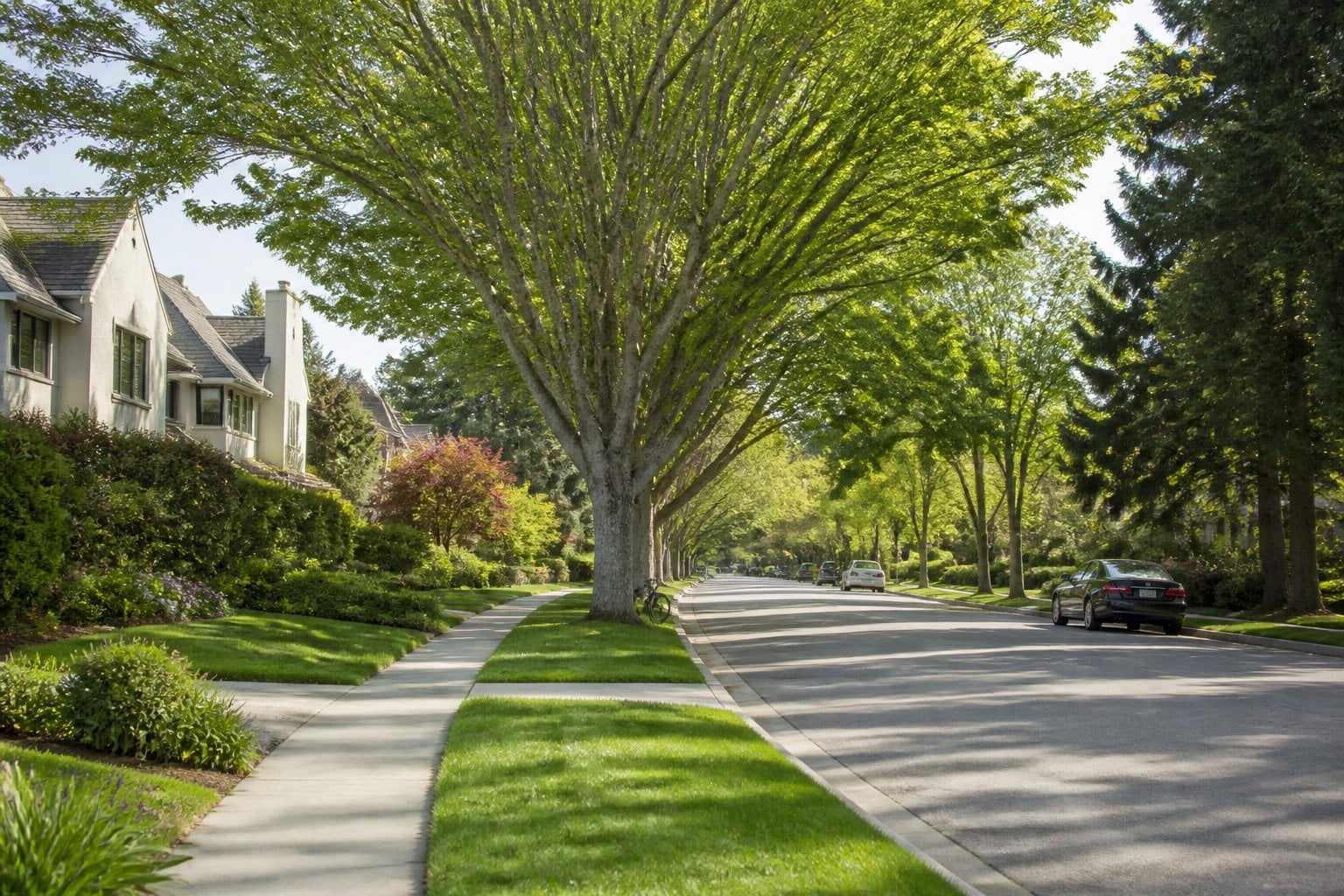
You’ll find Crescent Park in North Palo Alto, known for its tree-lined streets and larger lots than nearby Old Palo Alto. The neighborhood’s setbacks and quieter residential character set it apart from other high-end areas in the city.
Median sale prices for single-family homes here reach into the millions, with recent figures around $5.8 million to $6.2 million depending on the data source and time period. Home values have shown some volatility, with year-over-year changes ranging from modest gains to double-digit declines depending on market conditions.
If you’re considering this neighborhood, you should know it spans three ZIP codes and offers a range of property types. Rental prices remain high as well, reflecting the overall cost of living in this part of Palo Alto.
Your budget for Crescent Park will need to account for its position among the most expensive neighborhoods in the Silicon Valley region.
7. Menlo Park’s Lindenwood
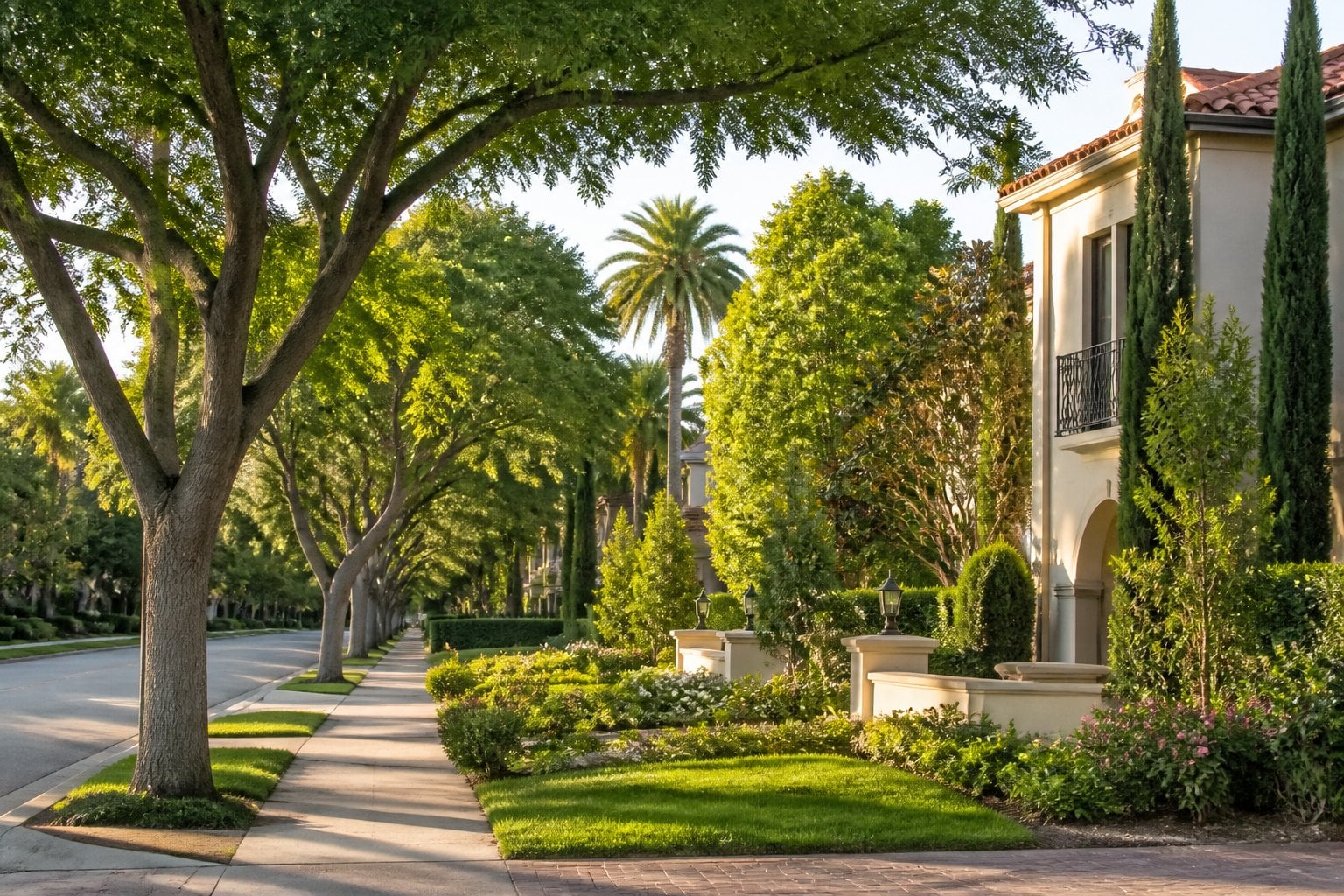
Lindenwood sits within Atherton, though its name and identity are closely tied to Menlo Park’s borders. You’ll find gated estates, expansive lots, and quiet, tree-lined streets throughout the neighborhood.
Privacy defines Lindenwood. Homes here sit on large parcels, often behind gates, giving you distance from neighbors and the road.
The location works in your favor if you value proximity to Menlo Park, Stanford University, and Silicon Valley’s tech corridor. Top-rated schools serve the area, which adds to its appeal for families.
Prime Lindenwood streets regularly rank among the highest-value areas in Atherton, driven by lot size and seclusion. You’re buying scarcity as much as square footage—few neighborhoods in the state combine this level of privacy with access to major employment centers.
8. Santa Clara’s Old Quad
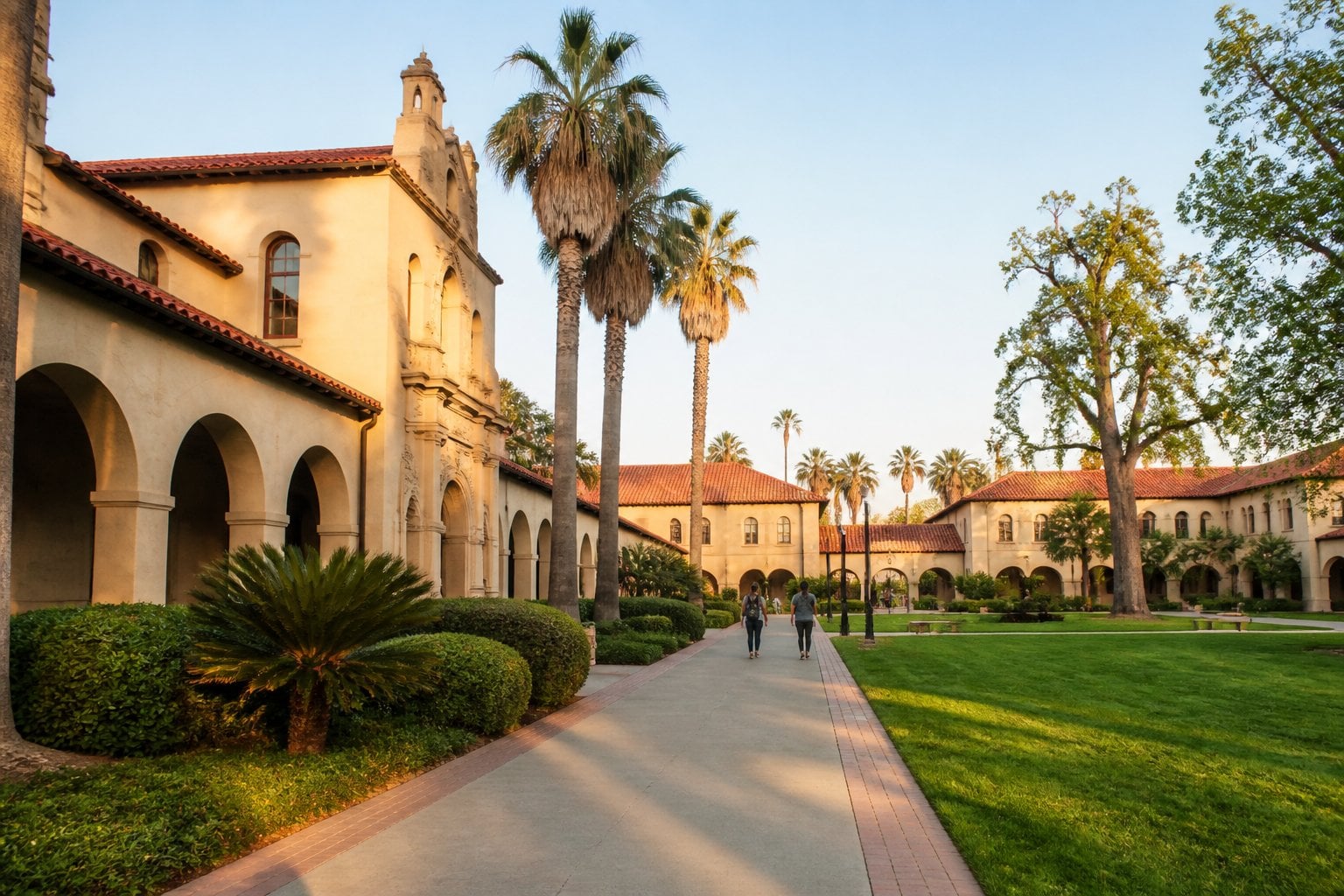
Old Quad sits at the historic center of Santa Clara, just steps from Santa Clara University. You’ll find Victorian, Craftsman, and Spanish Revival homes on deep lots throughout the neighborhood.
The median home price here runs close to $1,980,000, slightly below the citywide Santa Clara median. You’re paying for character and location rather than sheer square footage in most cases.
Walkability sets this neighborhood apart from many Silicon Valley enclaves. You can reach downtown, the university, and Caltrain without needing a car for daily errands.
Housing stock is mixed: expect older homes built before 1940 alongside newer construction from the 2000s. If you’re comparing neighborhoods, know that Old Quad’s inventory is smaller, with roughly 60 homes tracked at any given time.
That limited supply keeps competition steady among buyers who want a historic Silicon Valley address.
9. Los Altos
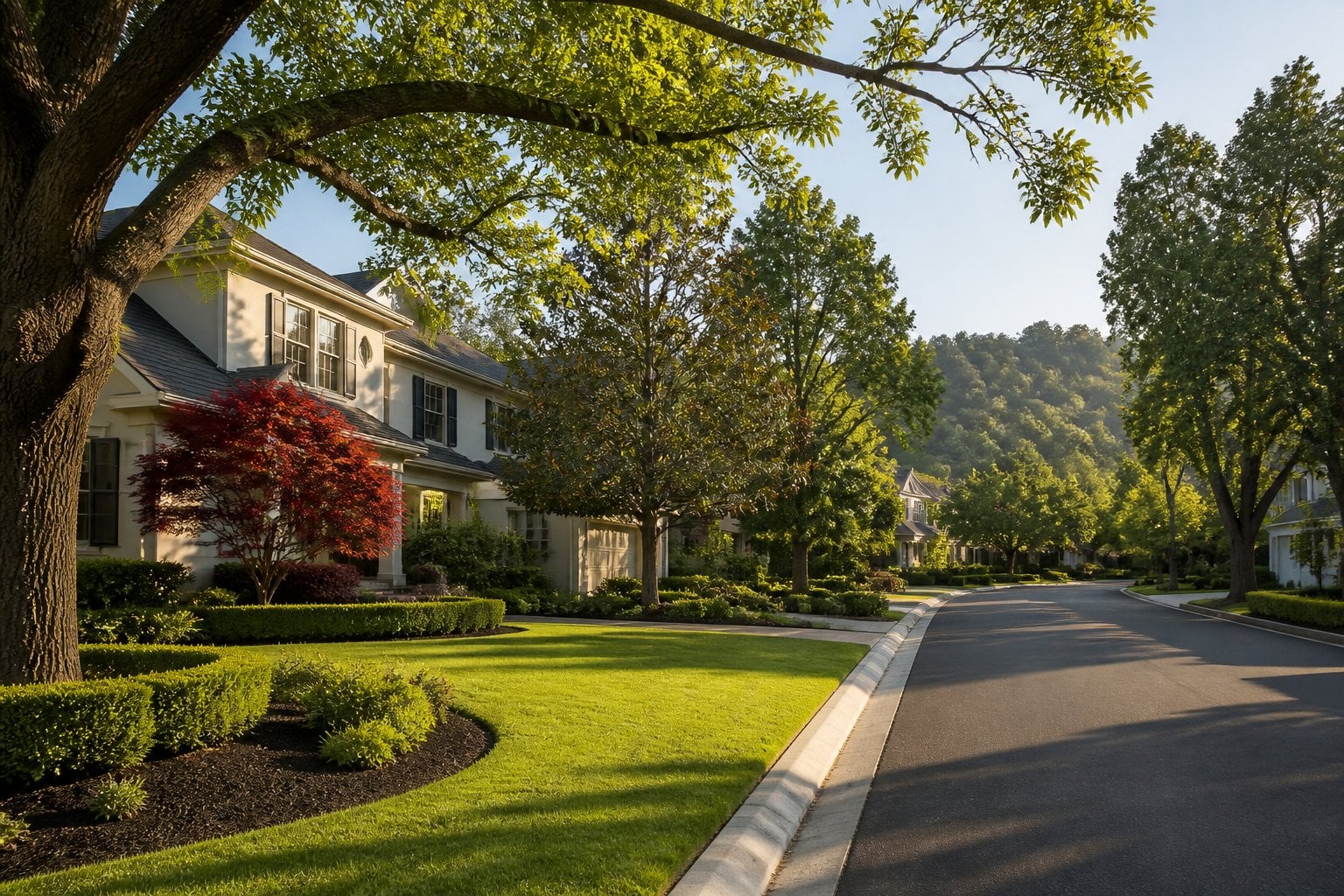
Los Altos sits in Santa Clara County, deep in the heart of Silicon Valley. You’ll find median home values here exceeding $2 million, with monthly rents topping $3,500.
The city’s proximity to Mountain View and Palo Alto adds to its appeal. If you work in tech, you’re likely drawn to the short commute and access to major employers like Google.
Housing scarcity plays a significant role in pricing. Los Altos maintains a low-density, established character, and available inventory stays limited year after year.
You’ll notice the small commercial district offers restaurants and cafes without overwhelming the town’s residential feel. Los Altos also neighbors Los Altos Hills, one of the wealthiest communities in the country.
With a population of roughly 30,000, the city ranks consistently among California’s most expensive places to live, driven almost entirely by its real estate market.
10. Saratoga
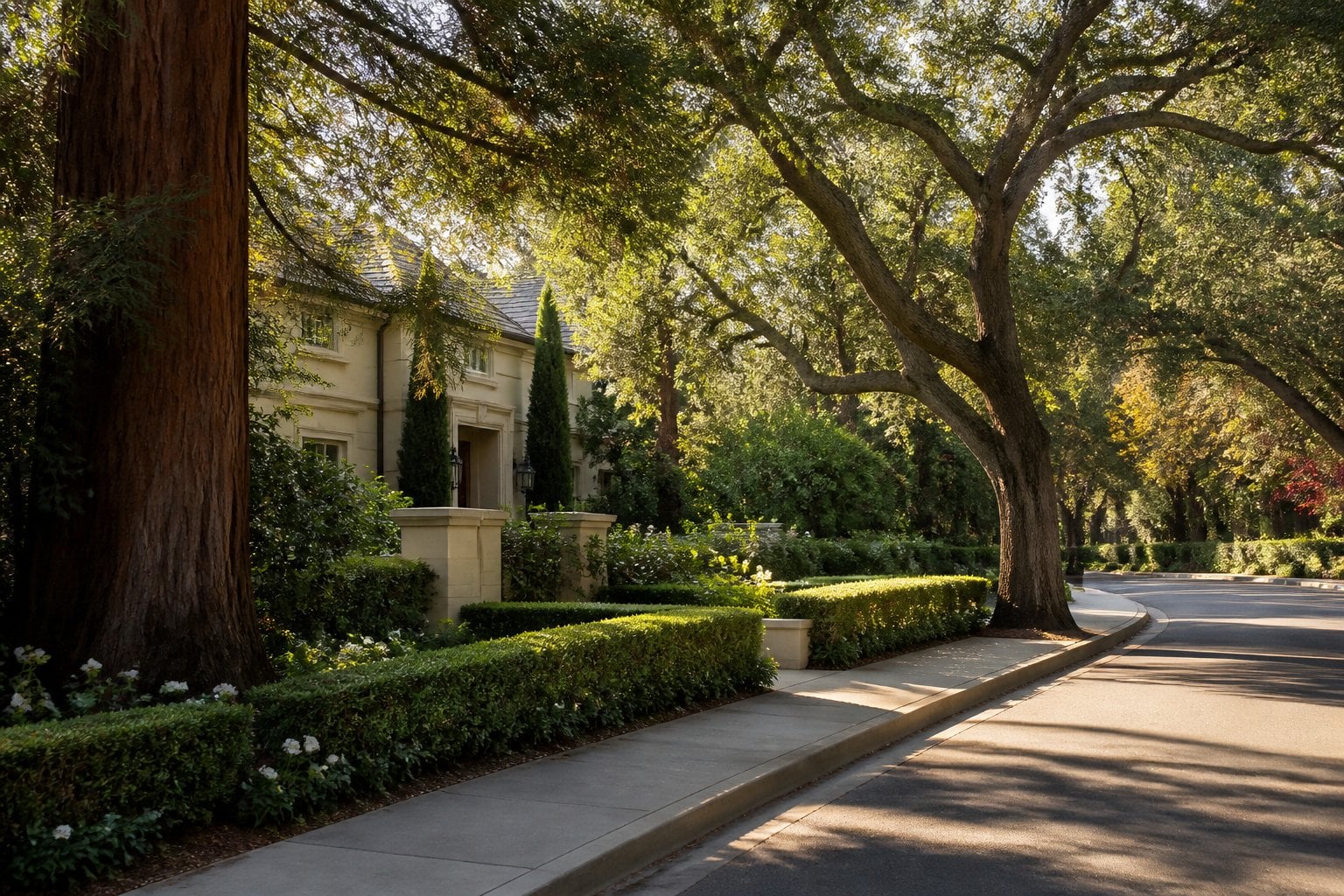
You’ll find Saratoga tucked into the western edge of Santa Clara County, part of the greater Silicon Valley region. With a population of roughly 30,000, this city holds a median home value above $3 million, placing it among the highest in the state.
Your access to major employment centers is a key advantage here. Saratoga sits within easy reach of both San Jose and San Francisco, making it practical for professionals working in tech or finance.
The housing stock reflects the city’s wealth. You’ll see mostly large, single-family homes on generous lots, with fewer condos or multi-family units than in denser parts of the Bay Area.
Saratoga’s schools rank among the best in California, and this reputation directly supports property values. If you’re evaluating California’s wealthiest communities, Saratoga’s combination of income levels, education quality, and real estate prices earns it a firm place on this list.
11. Cupertino’s Monta Vista
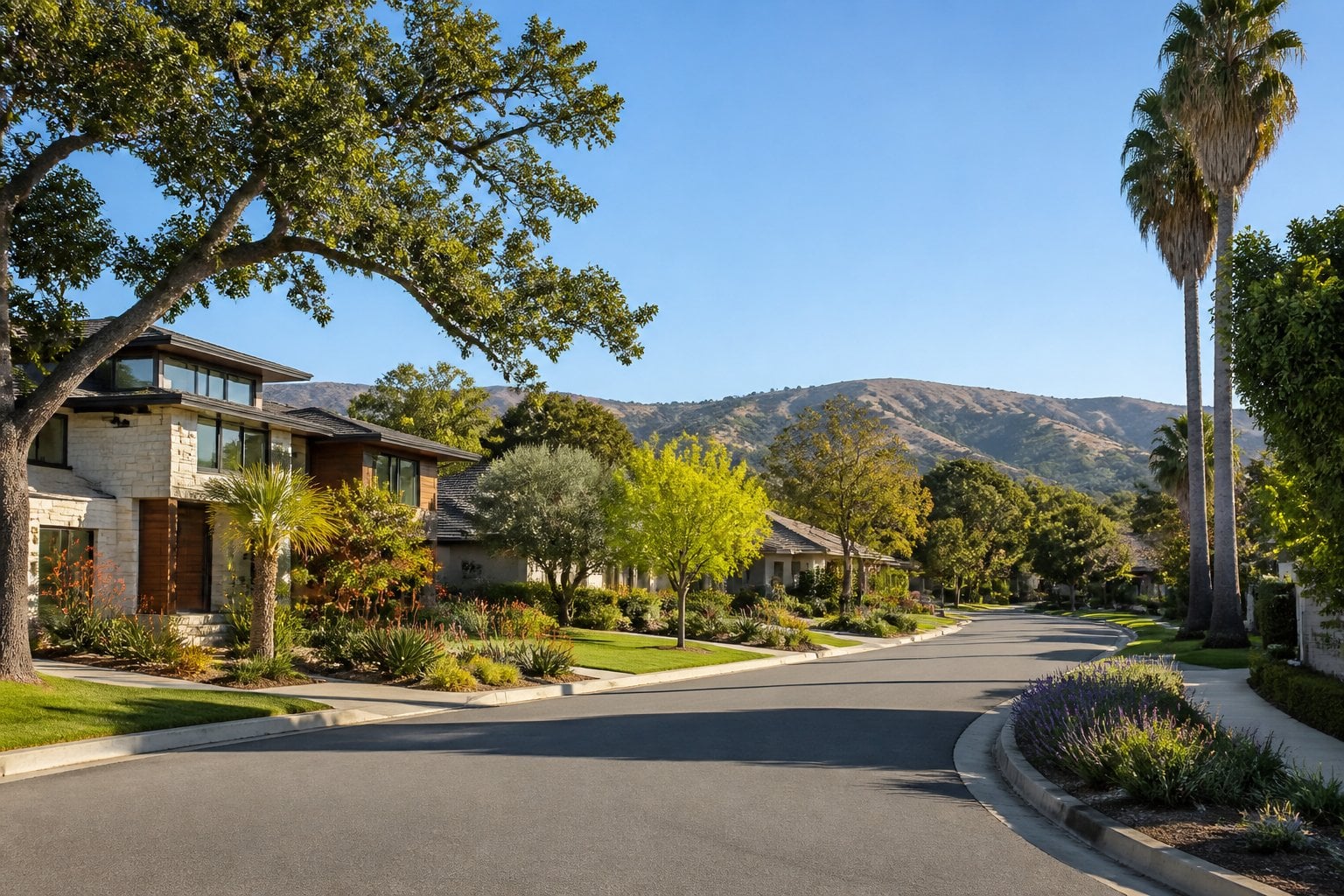
Monta Vista sits on the western side of Cupertino, near the foothills. You’ll find it recognized as one of the city’s flagship neighborhoods, with a long-standing reputation for strong demand.
School access drives much of the value here. Homes fall within walking distance of Monta Vista High, Kennedy Middle, and Lincoln Elementary, all part of the Cupertino school district.
You can walk to Blackberry Farm and Deep Cliff Golf Course from many streets in the neighborhood. De Anza College, the Cupertino Sports Center, and the Apple campus are close enough for a bike ride.
Home sizes vary, with larger properties in certain pockets of the neighborhood. Lot layouts often include private backyards, and some listings feature amenities like swimming pools.
Given its school ratings and foothill location, you’ll find Monta Vista consistently ranks among Cupertino’s most competitive and sought-after residential markets.
12. Piedmont
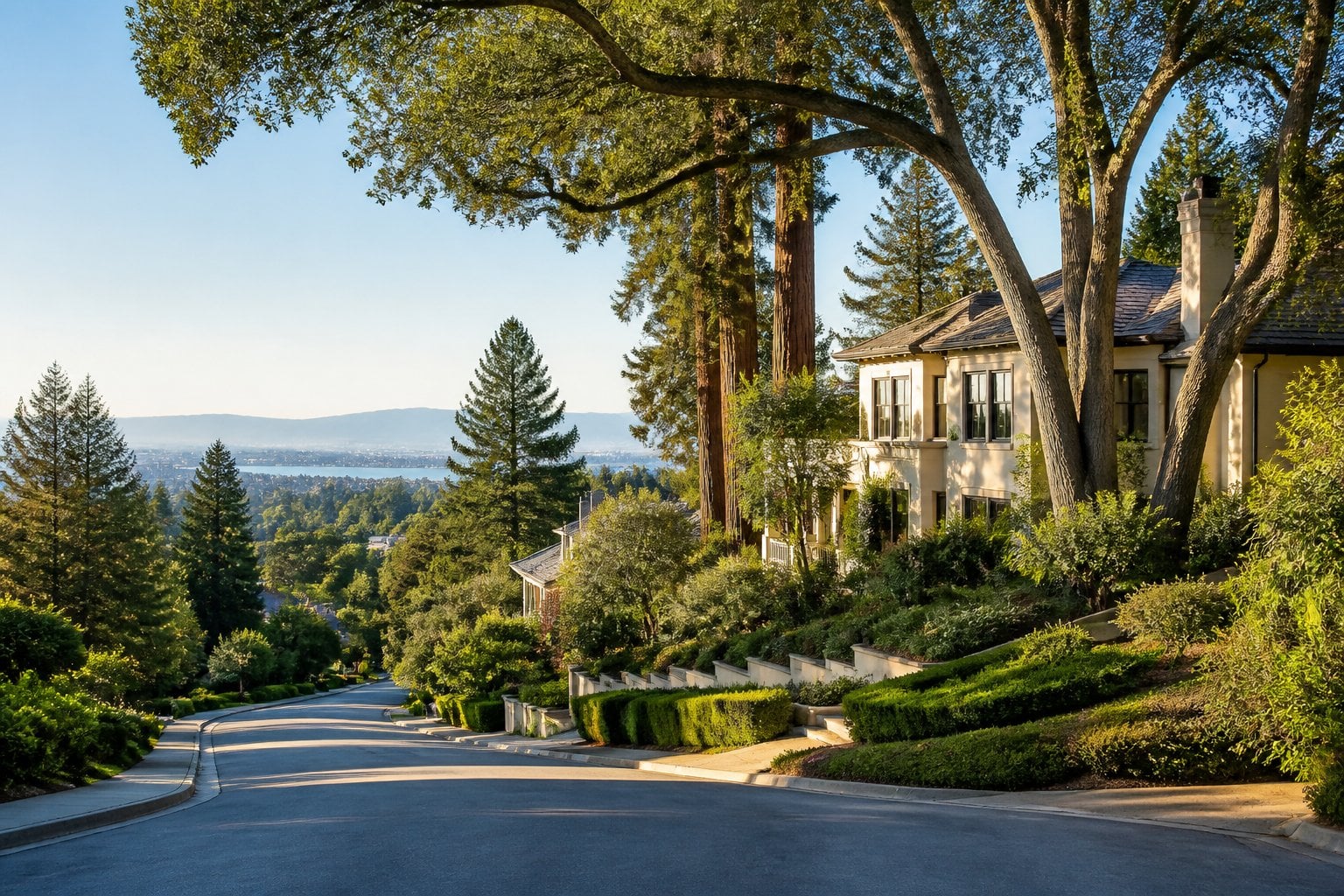
Piedmont sits as one of California’s wealthiest small cities, and you’ll find it entirely surrounded by Oakland in Alameda County.
You’ll notice the town was established in 1907, built around tree-lined streets and stately homes. Its size is compact, just over 1,700 acres, but that hasn’t kept prices down.
Home values here rank among the highest in the state. You can expect most properties to sell well into the millions, with historic architecture playing a major role in the market’s appeal.
Piedmont’s school district draws many buyers to the area. You’ll find it consistently rated among the top public school systems in California.
The city also has a strong creative presence. You’re looking at a community where a notable share of residents work in art, design, and media professions.
13. San Francisco’s Presidio Heights
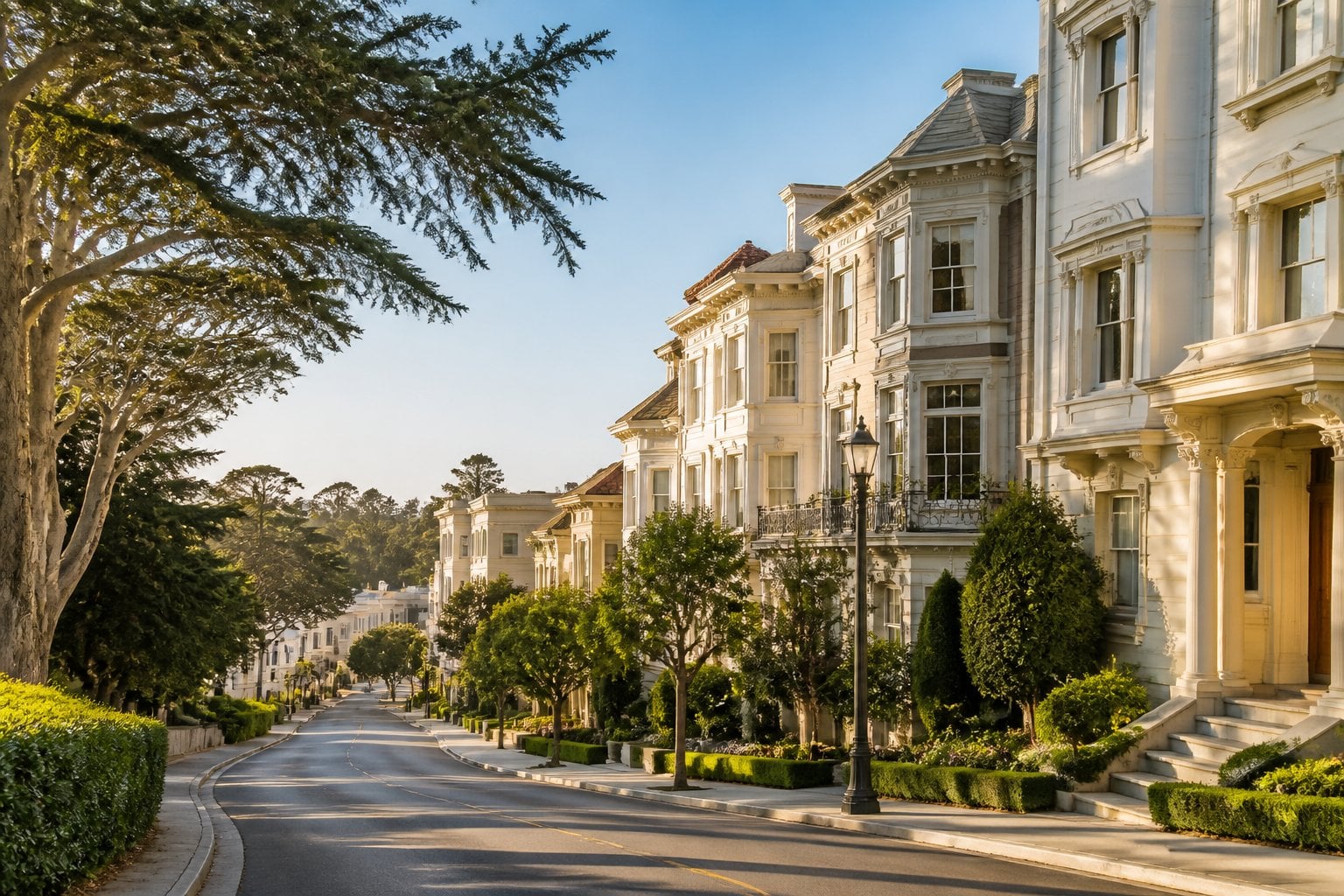
You’ll find Presidio Heights along the city’s northwest edge, bordered by Presidio National Park. This location gives you quick access to green space while keeping you close to the city center.
The neighborhood is quieter and more residential than nearby Pacific Heights. If you value privacy over commercial activity, this distinction matters when you’re comparing your options.
Median sale prices reflect the area’s exclusivity. You’re looking at roughly $2.47 million for condos, while single-family homes run around $7.9 million.
Architecture plays a significant role in the appeal here. You’ll notice many homes carry historical and architectural significance, which draws buyers who prioritize provenance alongside location.
Your investment in Presidio Heights buys more than square footage. It buys proximity to natural surroundings, a quieter residential atmosphere, and a level of exclusivity that few San Francisco neighborhoods can match.
14. San Francisco’s Pacific Heights
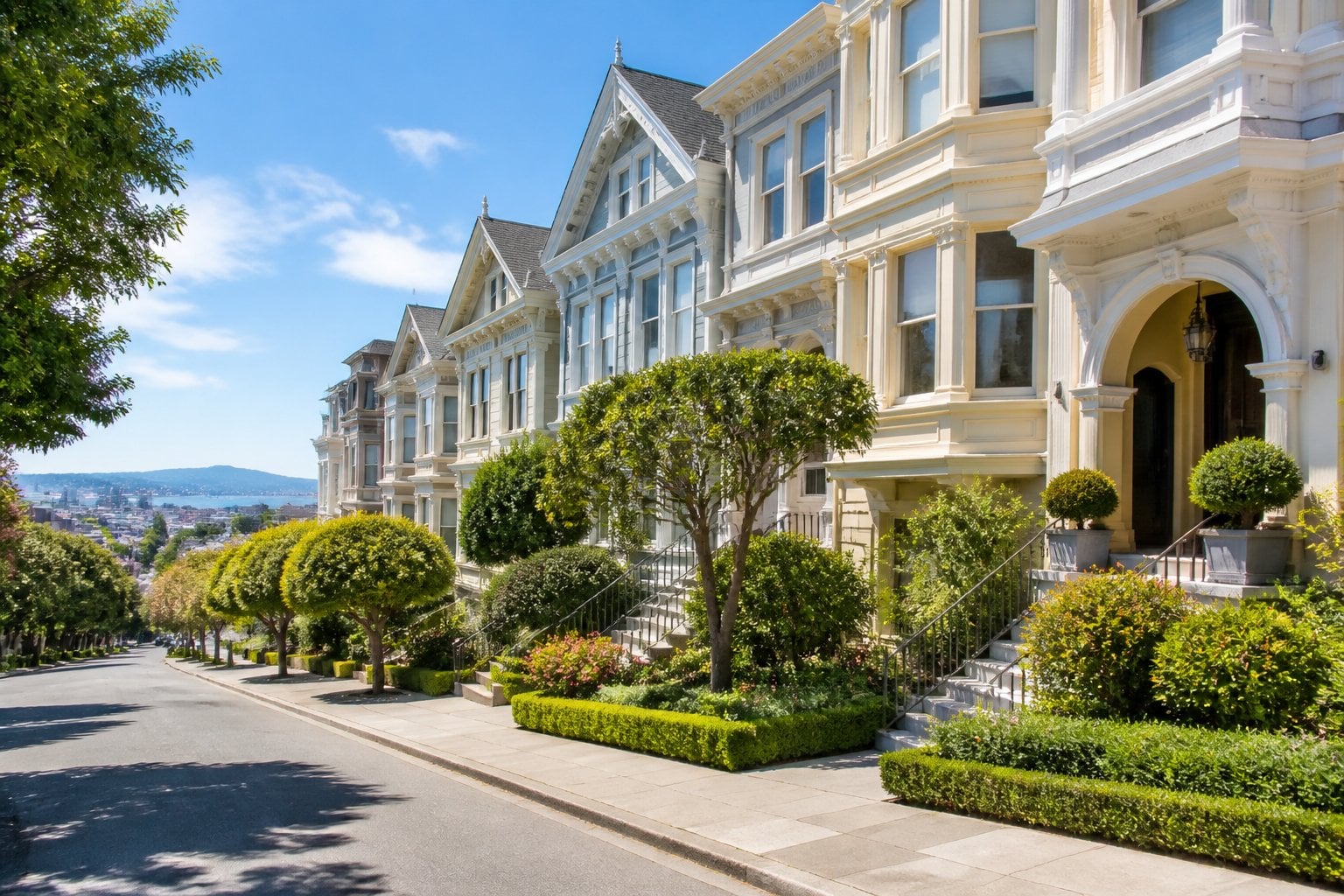
You’ll find Pacific Heights sitting on a hill above the Marina, with views stretching across the Bay to the Golden Gate Bridge. This is one of the oldest wealthy enclaves in the city, and it shows in the architecture. Victorian and Edwardian mansions line the wide streets, alongside more recent estates built for the tech-wealthy.
Median home prices here regularly climb into the millions, with the largest properties selling for tens of millions. You’re paying for the address as much as the square footage.
Two parks anchor the neighborhood: Lafayette Park and Alta Plaza Park. Both offer green space and elevated views, and you’ll notice they’re kept in excellent condition.
Fillmore Street runs through the area, giving you boutique shopping and dining without leaving the neighborhood. If you’re considering a purchase here, expect competition from buyers with significant resources and a limited supply of available homes.
15. San Francisco’s Sea Cliff
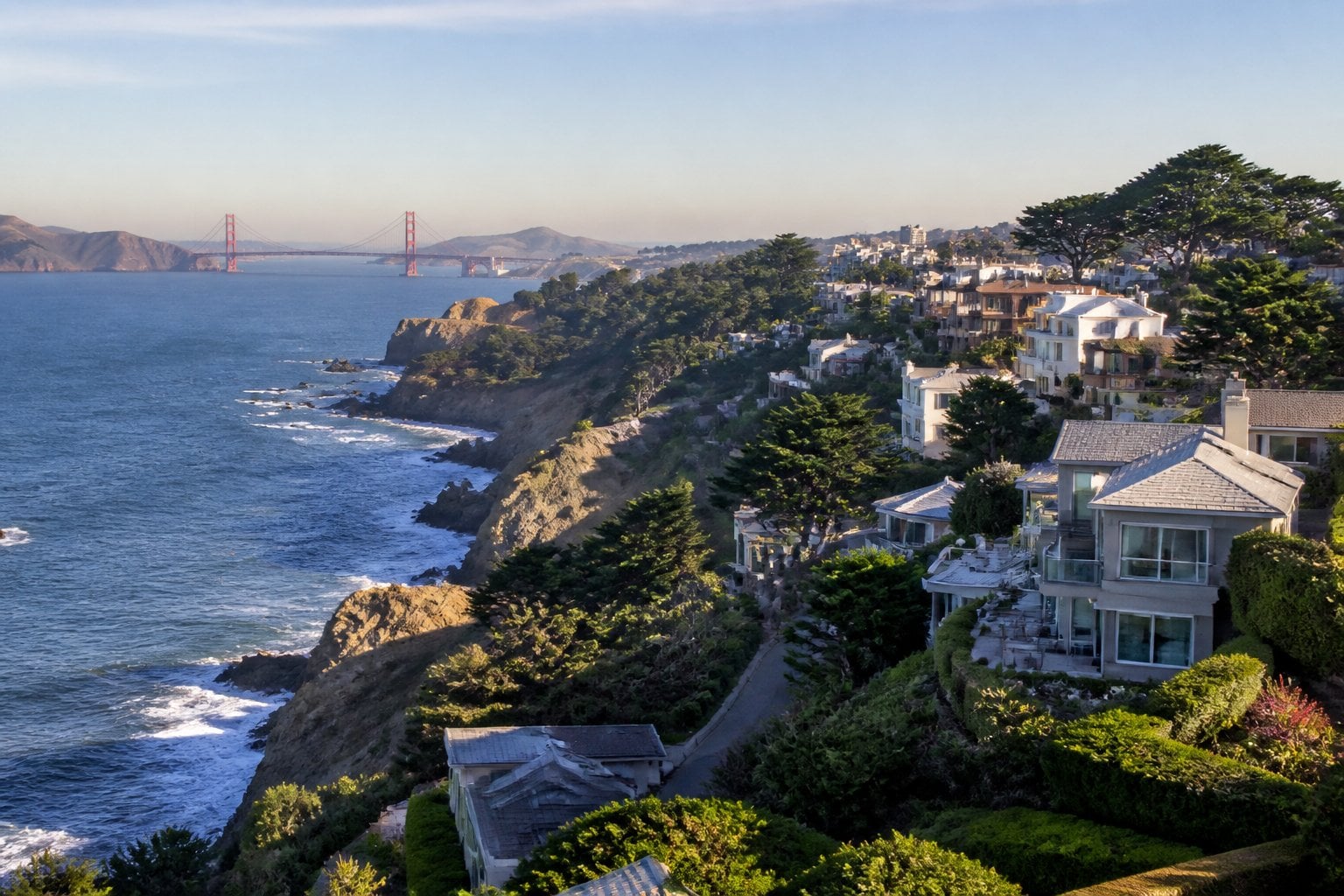
Sea Cliff sits above Baker Beach and China Beach on the city’s northwestern edge, with unobstructed views of the Pacific Ocean and the Golden Gate Bridge. You’ll find it holds fewer than 300 homes, making it one of the smallest and most tightly held neighborhoods in California.
The neighborhood was established in 1913 as one of San Francisco’s nine master-planned residence parks. Landscape architect Mark Daniels designed its curving streets and generous lot sizes, and that layout still defines the area today.
Home prices here typically range from $4 million to $8 million or more, with premier oceanfront estates reaching well into eight figures. You should expect very low turnover and a buyer pool driven largely by referrals rather than open listings.
If you’re evaluating a property here, block-level factors like view exposure and privacy matter more than any neighborhood-wide average.
16. San Francisco’s Cow Hollow
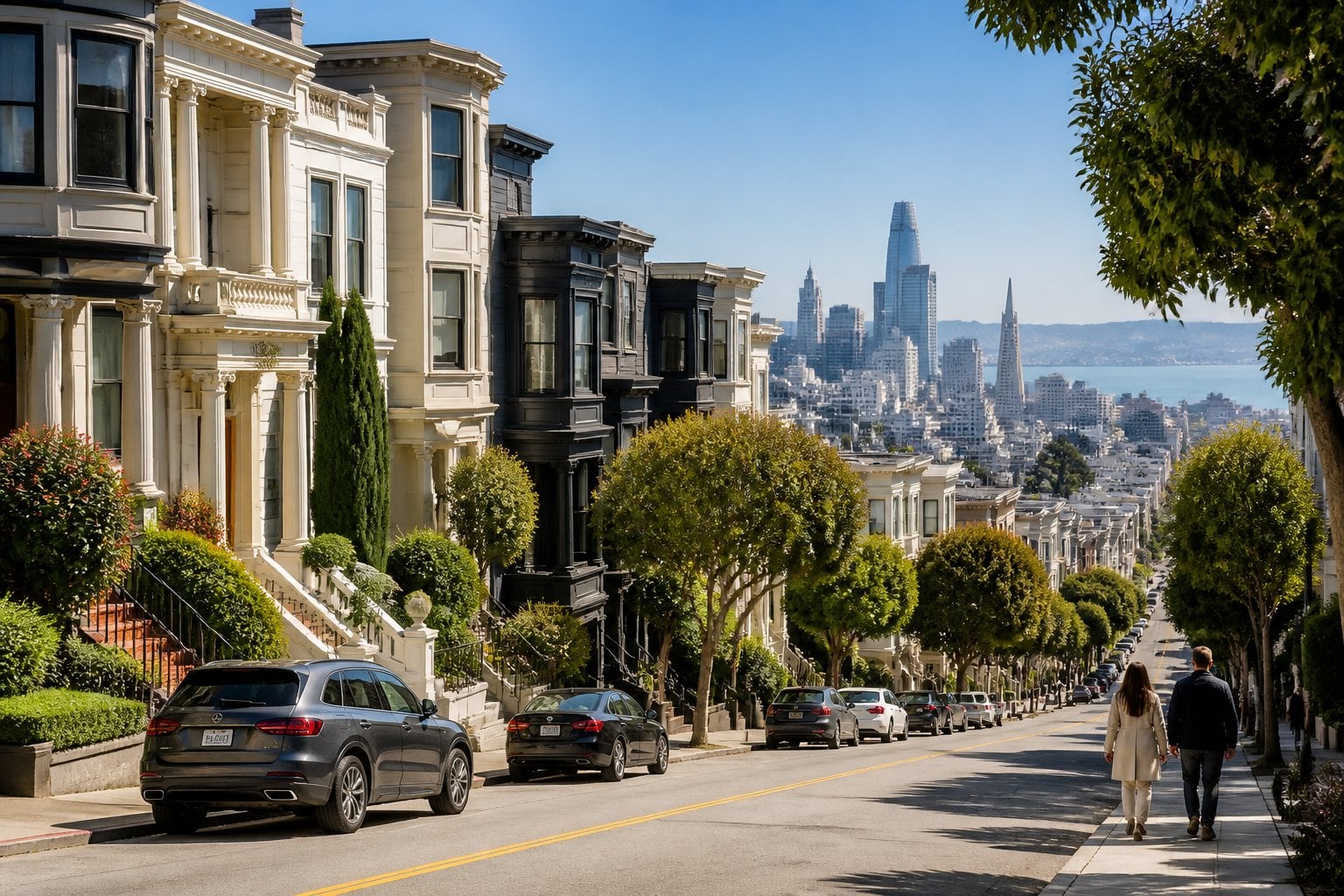
Cow Hollow sits between the Marina and Pacific Heights, and it blends historic character with an upscale, walkable lifestyle. You’ll find Victorian and Edwardian buildings alongside renovated homes, many with distinctive architectural details from the neighborhood’s early development.
Median sale prices for single-family homes here run in the multi-million dollar range, with condos and townhomes also commanding premium prices. Your housing options vary significantly by property type, so it helps to research specific blocks before setting a budget.
Union Street forms the commercial spine of the neighborhood, giving you boutique shopping, dining, and a lively social scene within walking distance of home. Proximity to the waterfront, the Presidio, and Pacific Heights adds to the area’s appeal.
If you’re considering Cow Hollow, expect competition from buyers drawn to its combination of location, architecture, and access to daily conveniences.
17. San Francisco’s Russian Hill
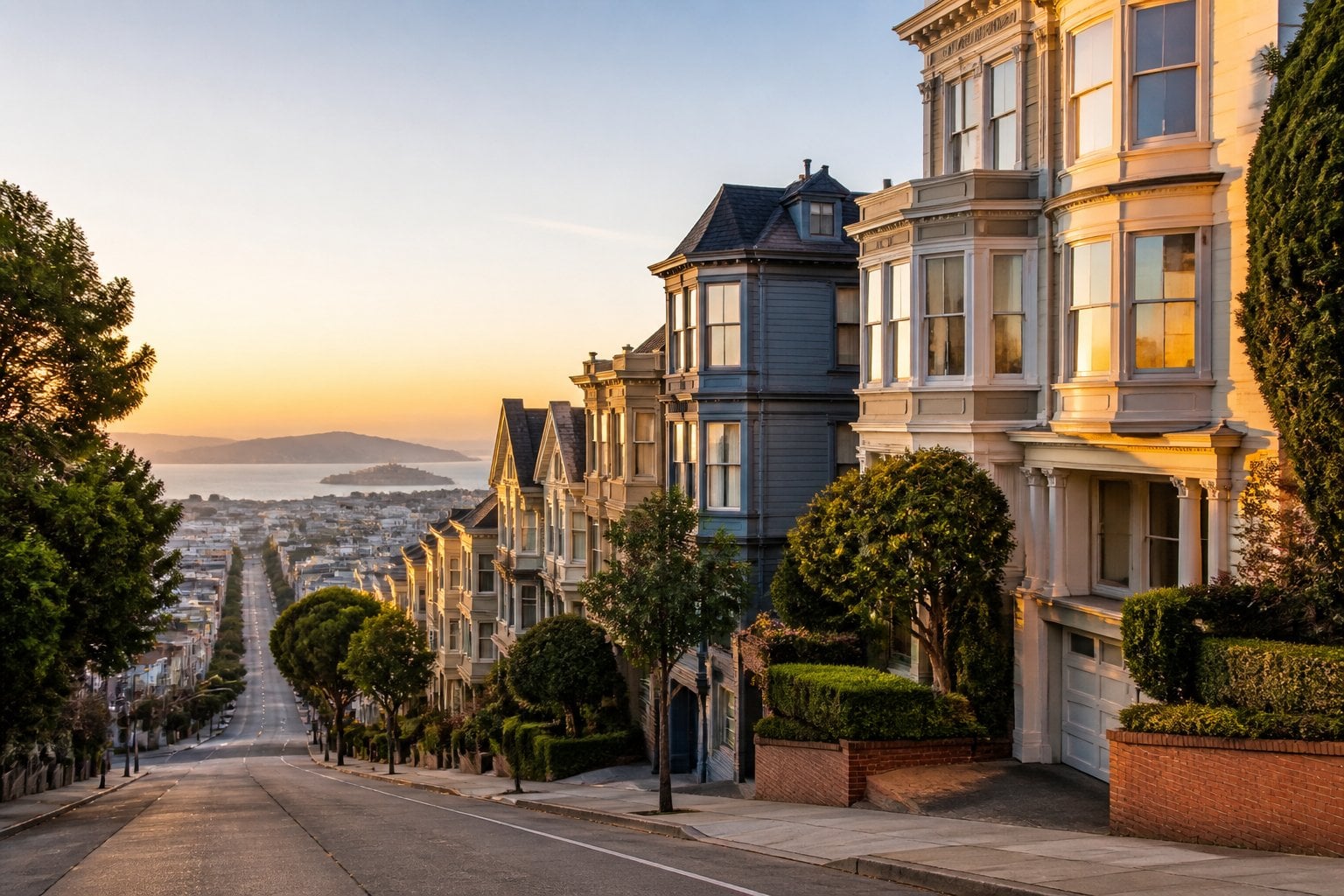
Russian Hill sits among San Francisco’s most competitive housing markets. Limited inventory and steady demand mean you’ll likely face bidding wars if you’re looking to buy here.
Median home prices have climbed to roughly $2.9 million as of early 2026. Single-family homes typically start around $2 million, and luxury properties can reach $9 million or more.
You’re paying for a specific setting. Steep, winding streets, historic architecture, and panoramic bay views define the neighborhood’s character.
Your daily costs extend beyond housing. Groceries, goods, and services here run higher than in most other San Francisco neighborhoods, contributing to the area’s overall cost of living.
If you’re considering Russian Hill, know that the market rewards patience and preparation. Homes move quickly, and buyers who hesitate often lose out to more decisive offers.
18. San Francisco’s Nob Hill
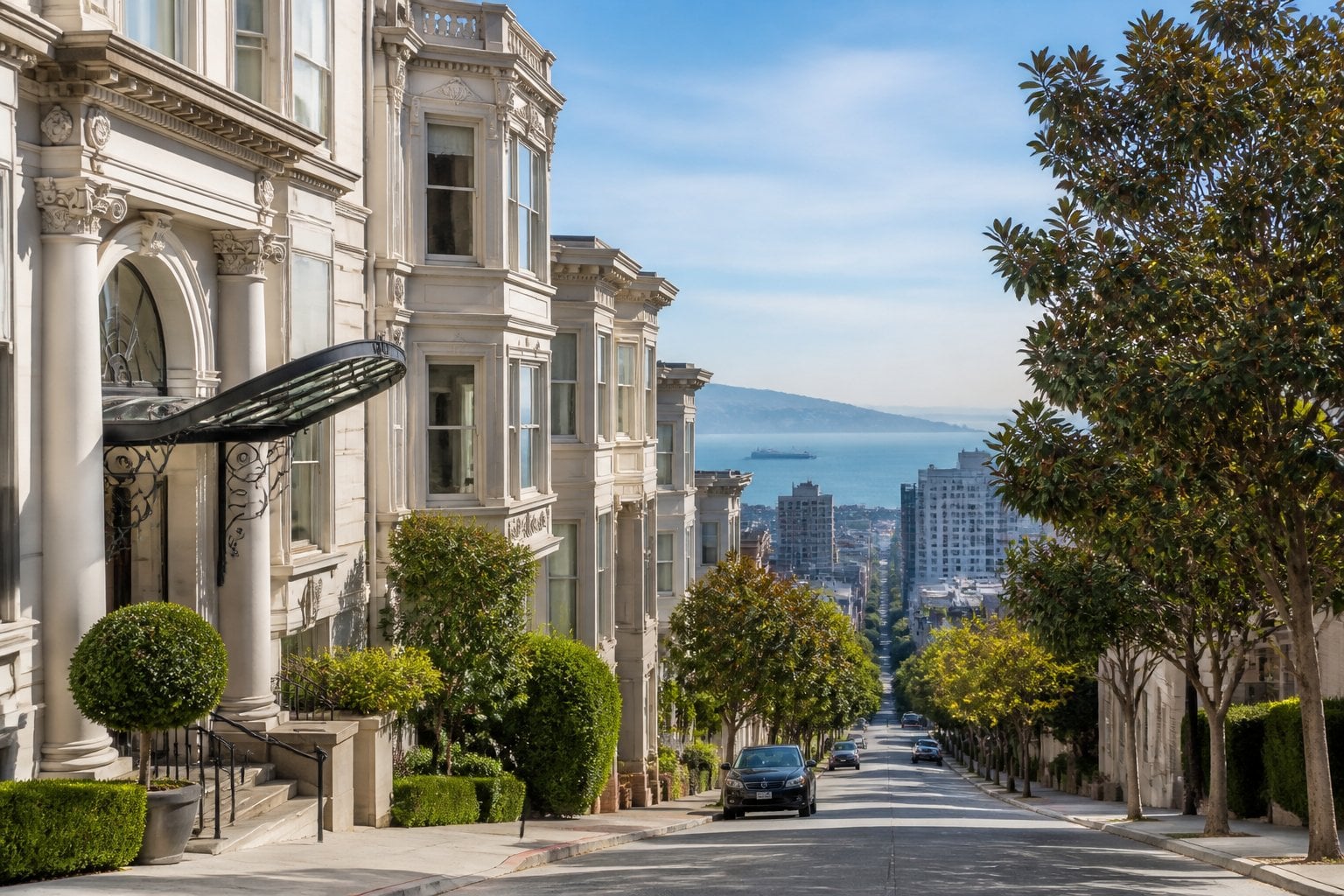
Nob Hill sits among the city’s original Seven Hills, and you’ll find it remains one of the highest-income neighborhoods in the country. The area built its reputation generations ago, when wealthy families established grand estates here.
You’ll notice the architecture still reflects that history. Ornate hotels and classic buildings line the streets, giving the neighborhood a distinct sense of permanence.
The average house price in Nob Hill reached $2.15 million recently, marking a 65.4% increase from the previous year. This growth shows you how much demand persists for property in this part of San Francisco.
Beyond real estate values, you’ll appreciate the sweeping city views available from this elevated location. The neighborhood also offers cultural diversity alongside its upscale reputation, blending historic prestige with a mixed community.
If you’re considering this area, expect a housing market that’s competitive but not overheated, along with costs that reflect its long-standing status among California’s most desirable addresses.
19. San Francisco’s Noe Valley
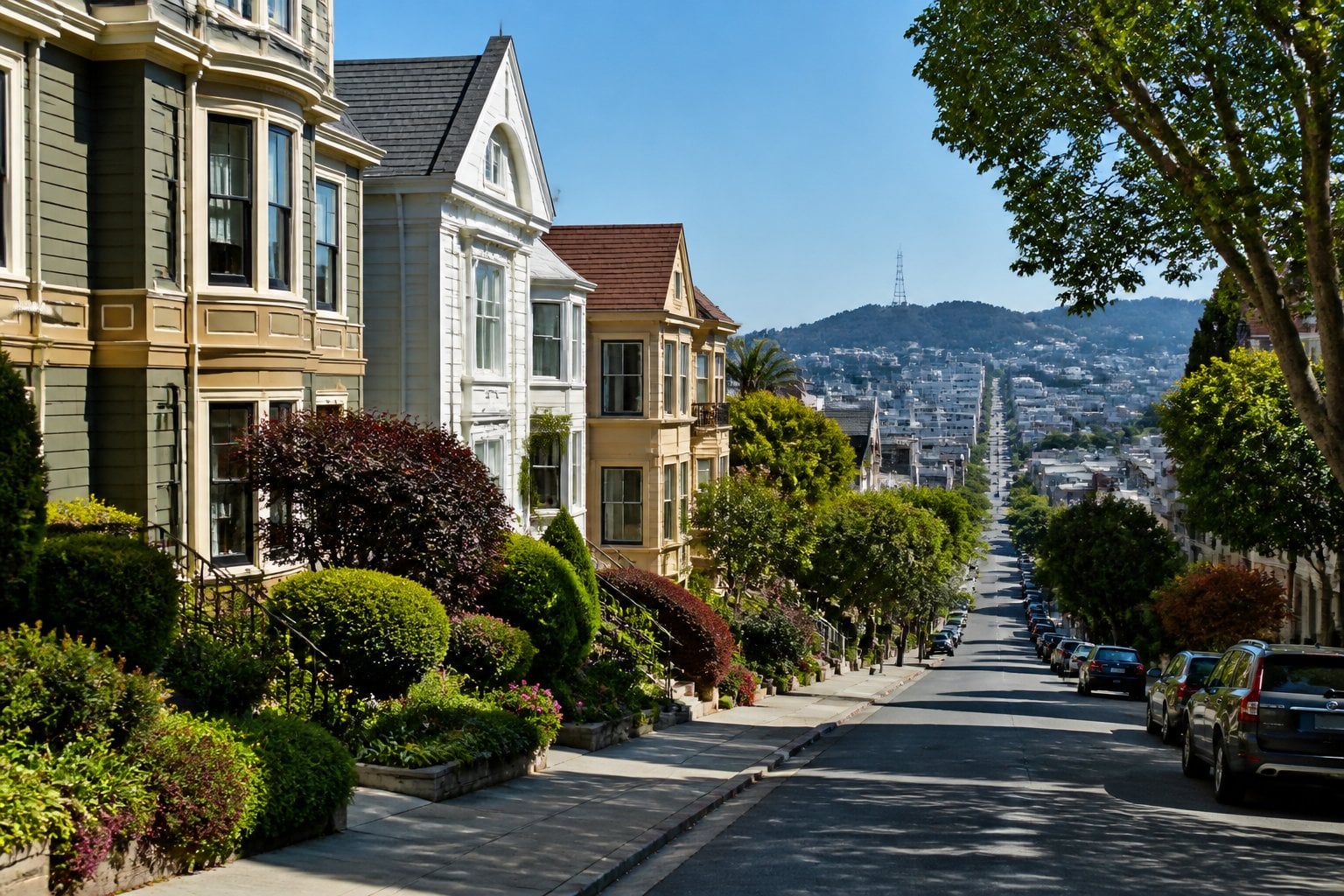
Noe Valley sits in central San Francisco, known for its Victorian and Edwardian homes lining tree-covered streets. You’ll find a sunnier microclimate here than much of the city, which adds to the appeal for buyers.
The neighborhood built its reputation as a family-friendly area, with 24th Street serving as its commercial corridor of shops, cafes, and restaurants. What was once a working-class district has shifted dramatically over the past few decades.
Home prices now regularly reach into the millions, with many single-family properties selling well above $3 million. You’re competing for a limited housing stock, since most of the neighborhood consists of single-family homes rather than condos or high-rises.
Buyers are drawn to the quiet residential feel combined with walkable amenities. If you’re considering Noe Valley, expect strong competition and a market where renovated Victorians command premium prices over original condition properties.
20. San Francisco’s St. Francis Wood
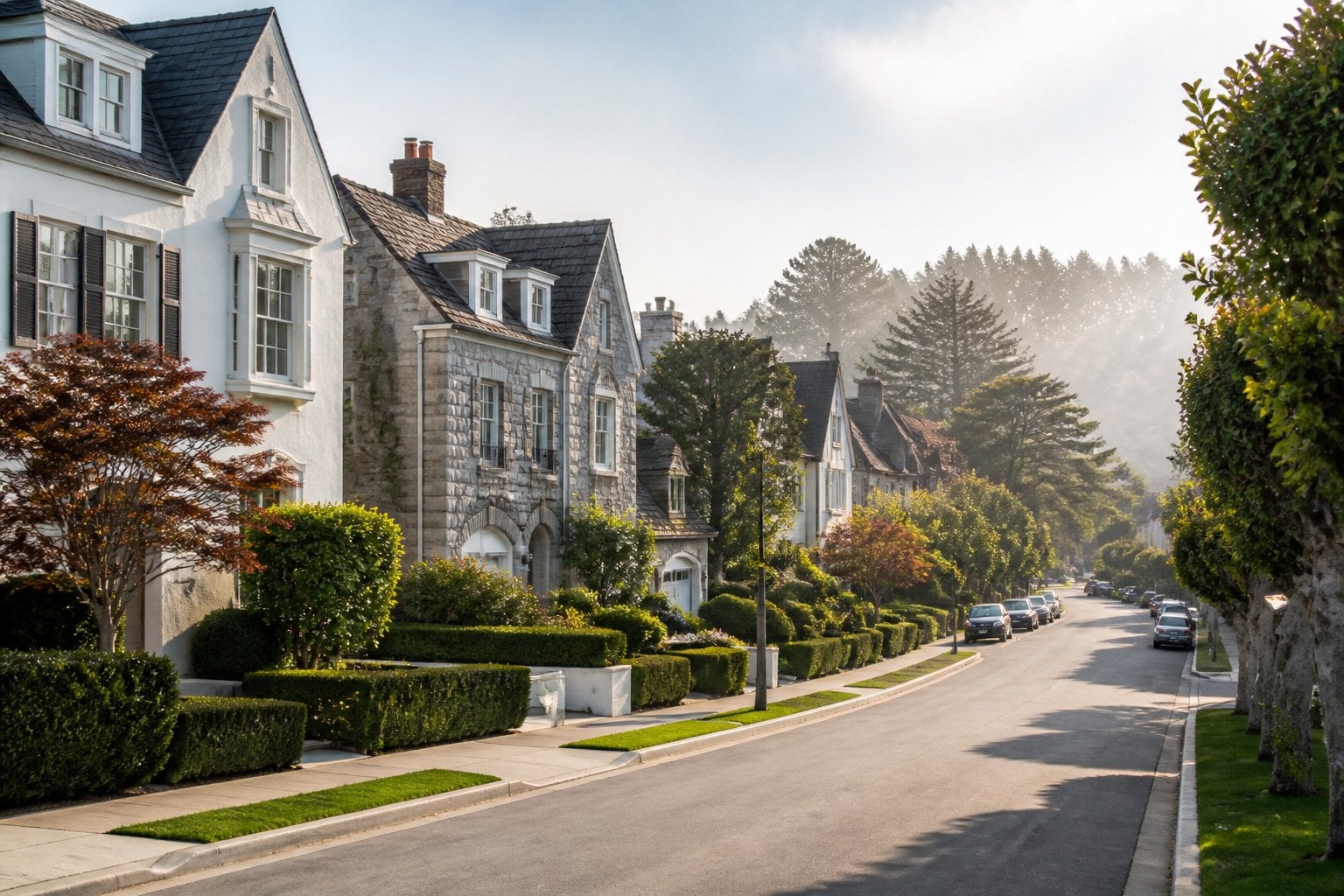
You’ll find St. Francis Wood tucked into San Francisco’s western neighborhoods, near West Portal. This planned community dates back to the early 1900s, and you can still see that legacy in its design.
Homes here sit on generous lots with mature landscaping, a contrast to the narrow row houses common elsewhere in the city. Wide, tree-lined streets and stone entrance gates give the area a distinct character you won’t find in many other San Francisco neighborhoods.
Median home prices in St. Francis Wood rank among the highest in the city. You’re paying for architectural variety here, since homes range from Mediterranean to Craftsman styles, along with lot sizes that exceed typical San Francisco standards.
If you’re considering this neighborhood, expect a quiet, residential atmosphere with easy access to West Portal’s shops and restaurants. Public transit connections keep you linked to downtown without sacrificing the area’s suburban feel.
21. Belvedere
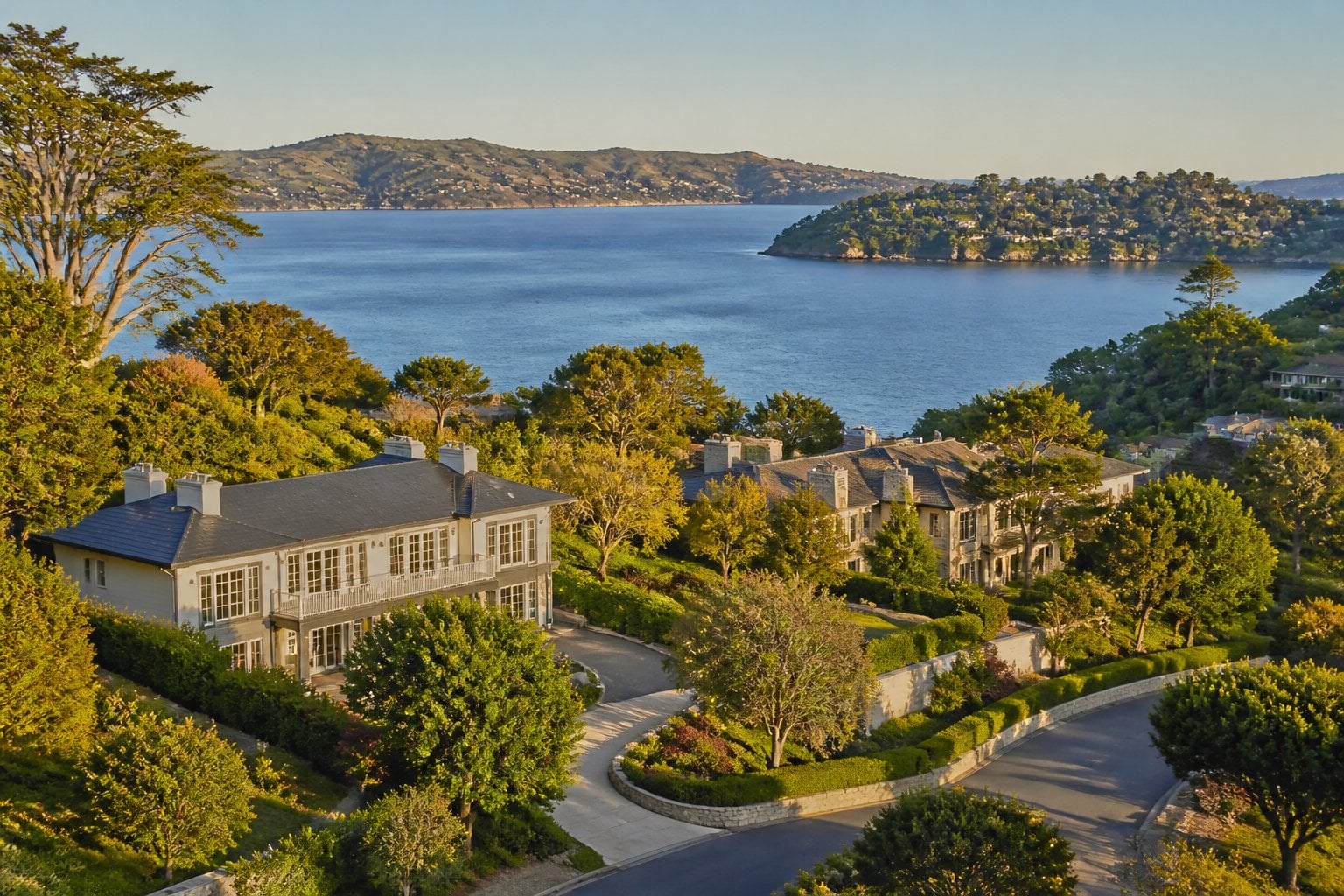
You’ll find Belvedere tucked into Marin County, built across two islands connected to the Tiburon Peninsula. Its ZIP code, 94920, ranks among the most expensive in the country.
Waterfront lots and hillside homes here give you direct views of San Francisco Bay. That combination of scarce land and scenery drives prices well beyond most California markets.
In 2025, homes sold for an average of about $6.3 million, or roughly $1,900 per square foot. Only 29 properties changed hands that year, reflecting how limited turnover keeps this market tight.
You won’t find large-scale development options in Belvedere. The geography restricts new construction, so existing homes carry most of the value.
If you’re considering this neighborhood, expect competition for any listing that reaches the market, since inventory stays low year after year.
22. Tiburon
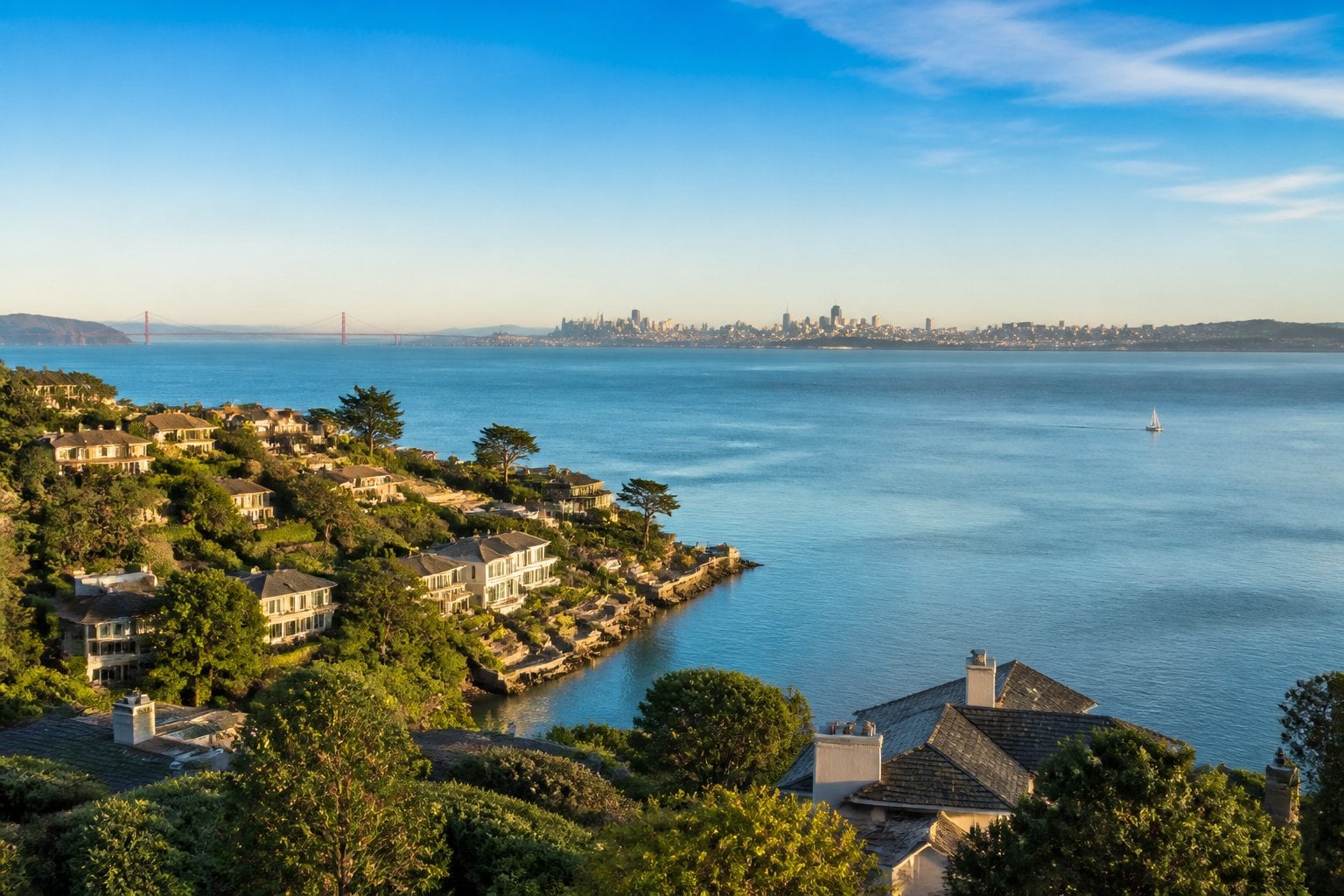
Tiburon sits on a peninsula in Marin County, giving you views of San Francisco Bay and the Golden Gate Bridge from many hillside properties. The town has a population under 9,000, making it one of the smaller communities on this list.
Median home values here reach $2.4 million. Some properties, particularly those in Old Tiburon and on Belvedere Island, sell for well above $10 million.
You’ll find a mix of architectural styles throughout the area. Many homes feature large lots and high-end finishes, reflecting the premium buyers pay for waterfront access and privacy.
Tiburon’s real estate market consistently ranks among the most expensive in both California and the broader United States. If you’re considering a purchase here, expect competition for properties with bay views or direct water access, since these features command the highest prices in the local market.
23. Ross
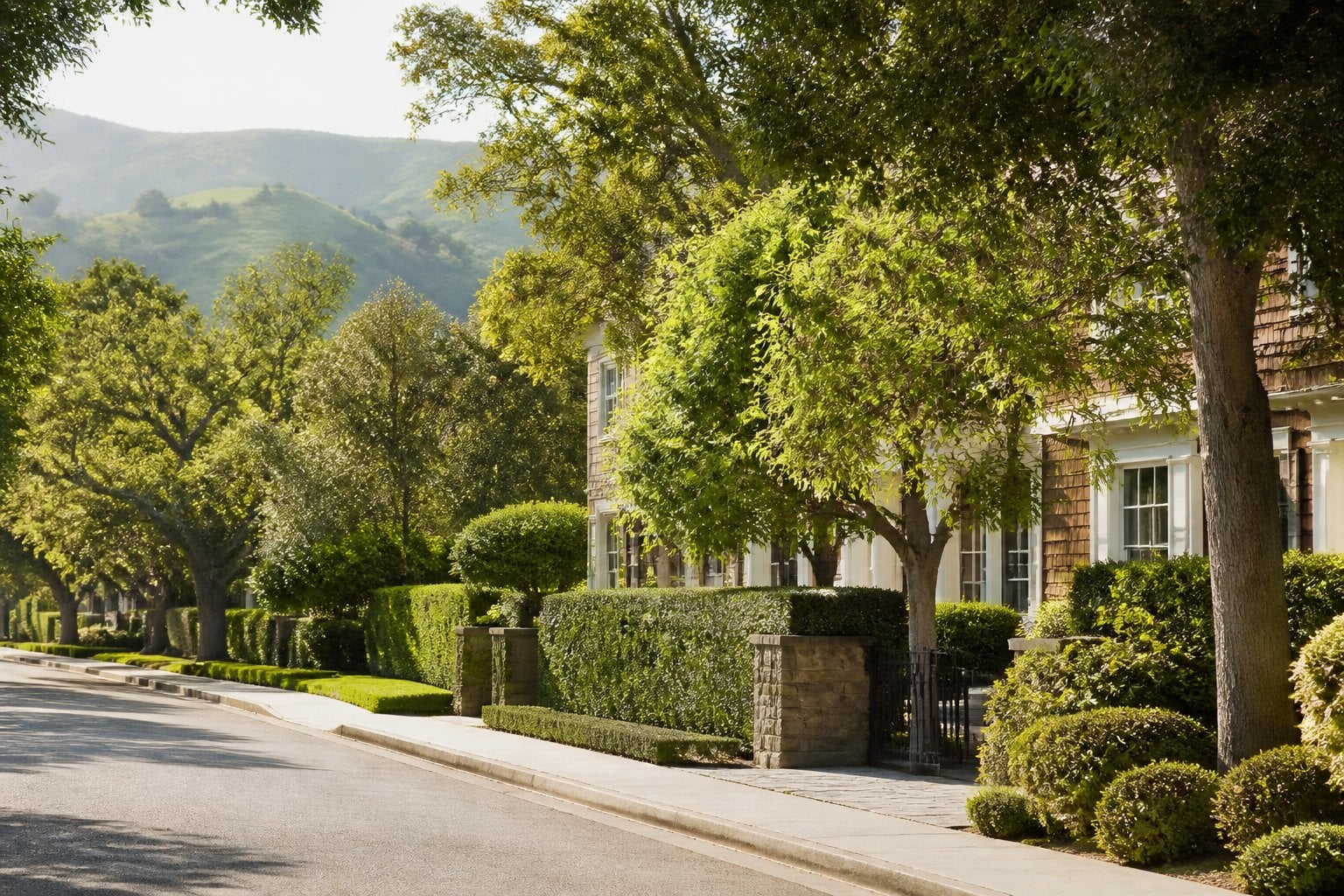
Ross sits in Marin County, just north of San Francisco. With a population of around 2,300, it’s one of the smallest towns in California, yet it consistently ranks among the state’s most expensive places to live.
You’ll notice the town’s older architecture right away. Many homes date back to before World War II, giving Ross a historic character that’s uncommon in newer luxury developments.
The town’s small size works in its favor. Limited housing stock keeps demand high, and property values reflect that scarcity.
Ross also benefits from its location. You get quiet, tree-lined streets and proximity to Mount Tamalpais, while still having reasonable access to San Francisco for work or entertainment.
If you’re considering Ross, expect a tight-knit community where privacy and exclusivity matter. Home prices here remain among the highest in the entire state.
24. Lafayette
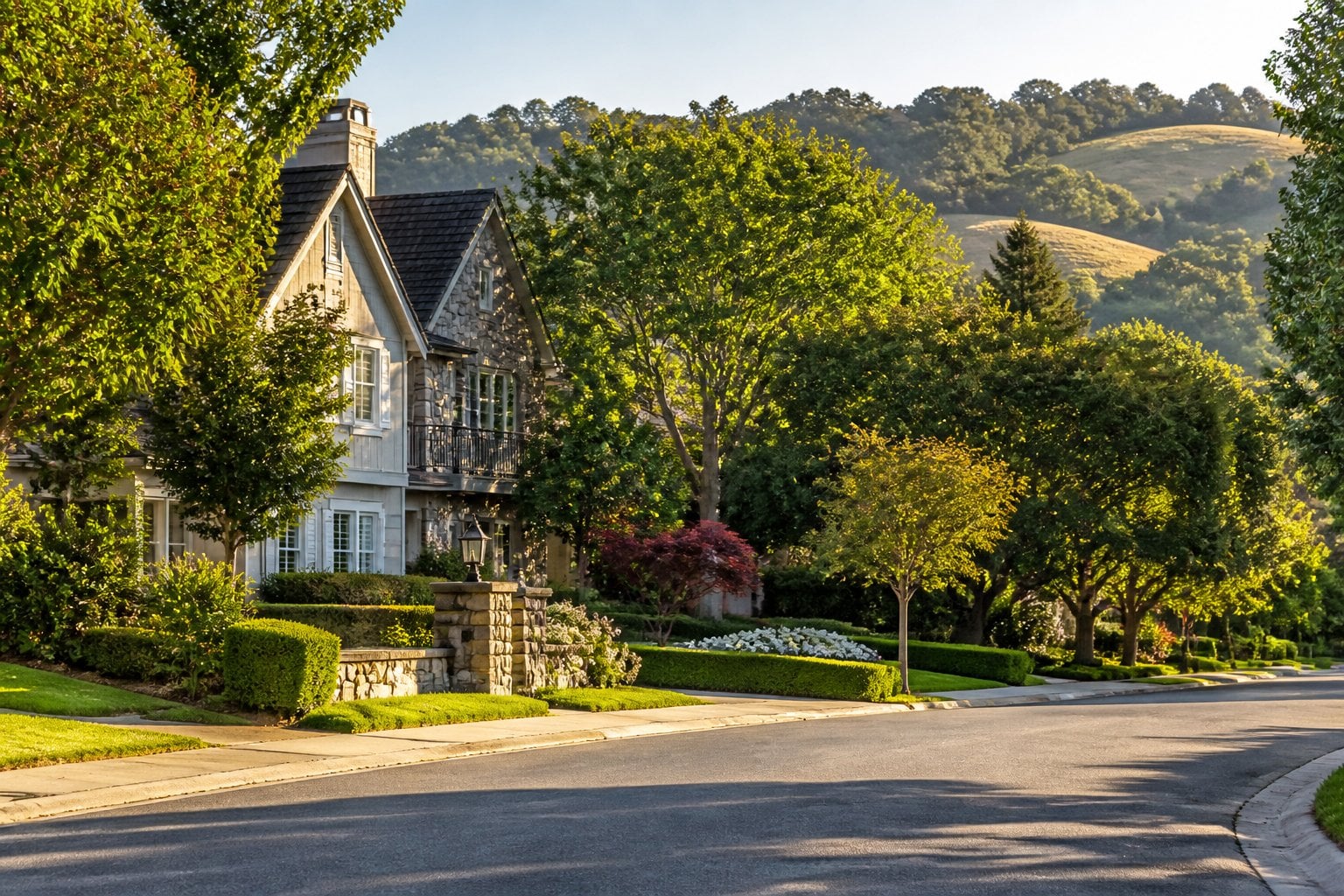
Lafayette sits in Contra Costa County, and you’ll find it among the most expensive places to live in California. The median home price hovers around $1.9 million to $2 million, with some listings pushing well past that mark.
You’ll notice the city’s five neighborhoods each carry their own price tag. Happy Valley stands out as the priciest, with median home values reaching $2.7 to $2.9 million. Glenside Estates isn’t far behind, with reported medians topping $3 million in some assessments.
Your reasons for choosing Lafayette likely include its schools, which rank among the strongest in the state. Add in the low crime rates and easy access to San Francisco, and you understand why demand stays high.
You should expect competition here. Inventory remains tight, and homes in top neighborhoods typically sell within days of listing.
25. Malibu’s Carbon Beach
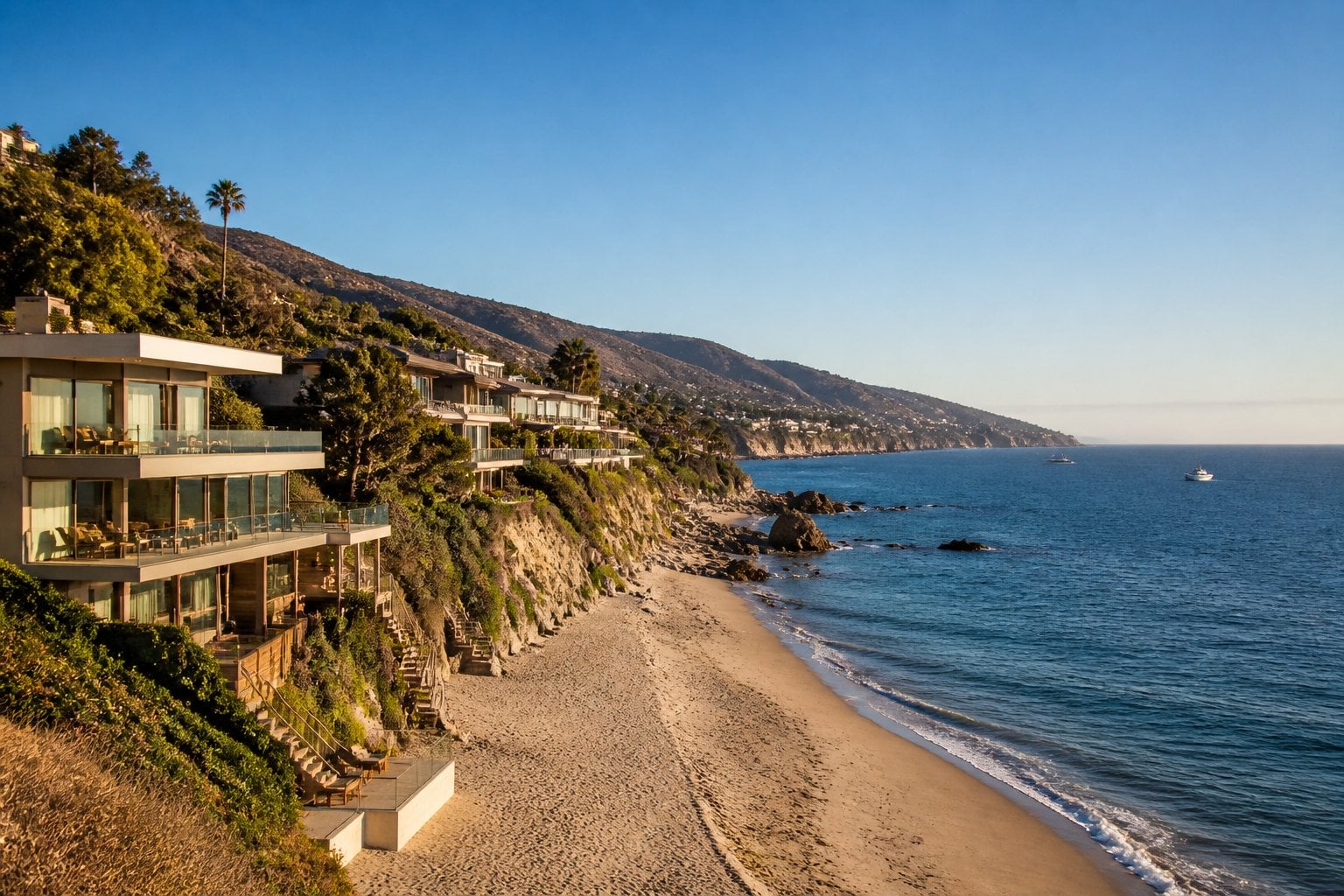
Carbon Beach stretches just over a mile between the Malibu Pier and Carbon Canyon Road. It holds roughly 70 oceanfront lots, and that limited supply keeps demand high.
You may know it by its nickname, Billionaire’s Beach. Larry Ellison owns multiple properties here, and the area has drawn other high-profile buyers over the years.
Homes typically start around $8 million, with many properties reaching $20 million or more. Some transactions have gone well beyond that figure, including a 2019 sale that topped $100 million.
There are no HOA dues attached to these properties. Each home is custom-built, often featuring private beach access and amenities like multi-car garages.
If you’re considering this market, you’re looking at one of the tightest inventories in California. Scarcity, direct beach frontage, and proximity to Malibu’s dining and entertainment options all factor into the pricing here.
26. Malibu’s Point Dume
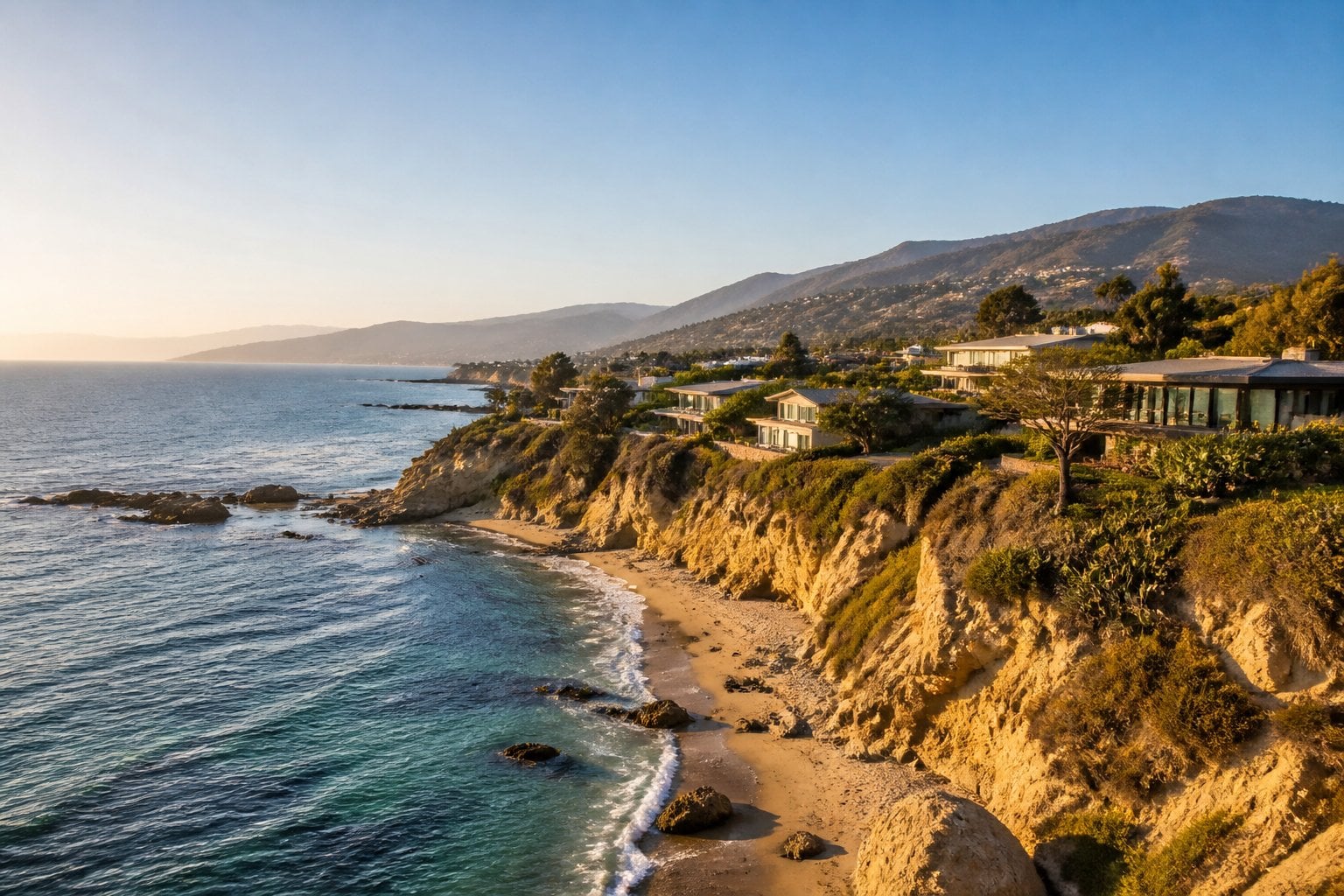
Point Dume sits on a bluff above the Pacific, giving you some of the most dramatic ocean views in Malibu. The median home price here runs around $3.8 million, placing it among the priciest coastal neighborhoods in the state.
You’ll find large lots and privacy in this area, since many properties are set back from public roads and shielded by landscaping. Paradise Cove, part of this same stretch, adds beach access that draws buyers willing to pay a premium for direct proximity to the sand.
Homes here tend toward single-family estates rather than condos or multi-unit buildings. If you’re considering renting instead, average monthly costs sit near $5,300, reflecting the same demand that pushes purchase prices higher.
Equestrian properties also exist in pockets of Point Dume, giving you options beyond standard residential lots if you want land for horses or larger structures.
27. Beverly Hills’ Trousdale Estates
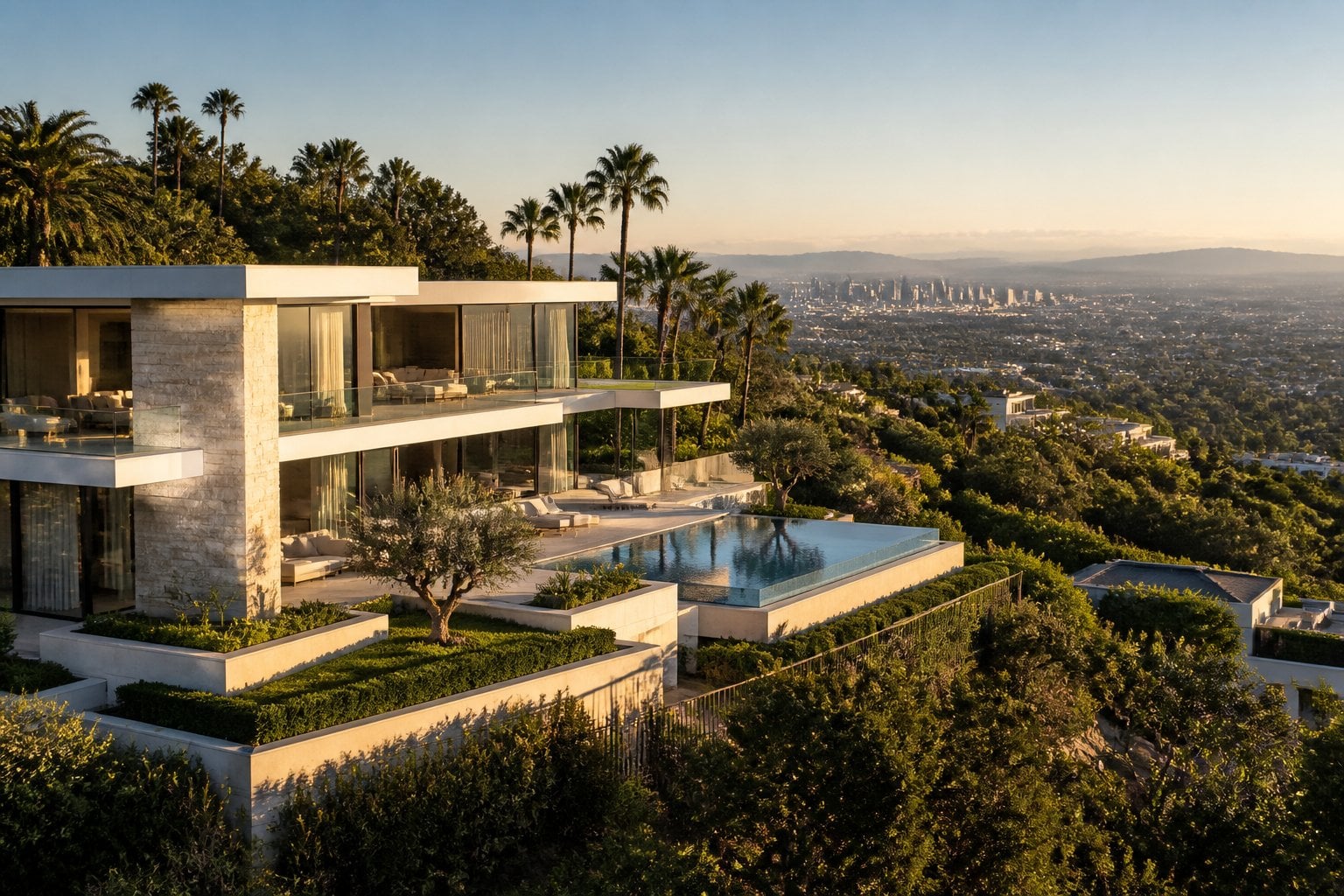
You’ll find Trousdale Estates in the hills north of Sunset Boulevard, spread across roughly 410 acres in the 90210 zip code. Developed in the 1950s, this neighborhood is known for its mid-century modern architecture and panoramic views of Los Angeles.
If you’re house-hunting here, expect flat lots, low-slung homes, and walls of glass designed to frame the view. Many properties feature infinity pools and open floor plans that blend indoor and outdoor space.
Prices in Trousdale typically start around $9 million and can exceed $50 million, depending on the lot, the view, and the architectural pedigree of the home. Renovations here often carry the same weight as new construction, since buyers pay close attention to design lineage.
You should also factor in the Trousdale Ordinance, which governs height and grading rules, along with the Mills Act, if you’re considering a historic property tax reduction.
28. Beverly Hills Flats
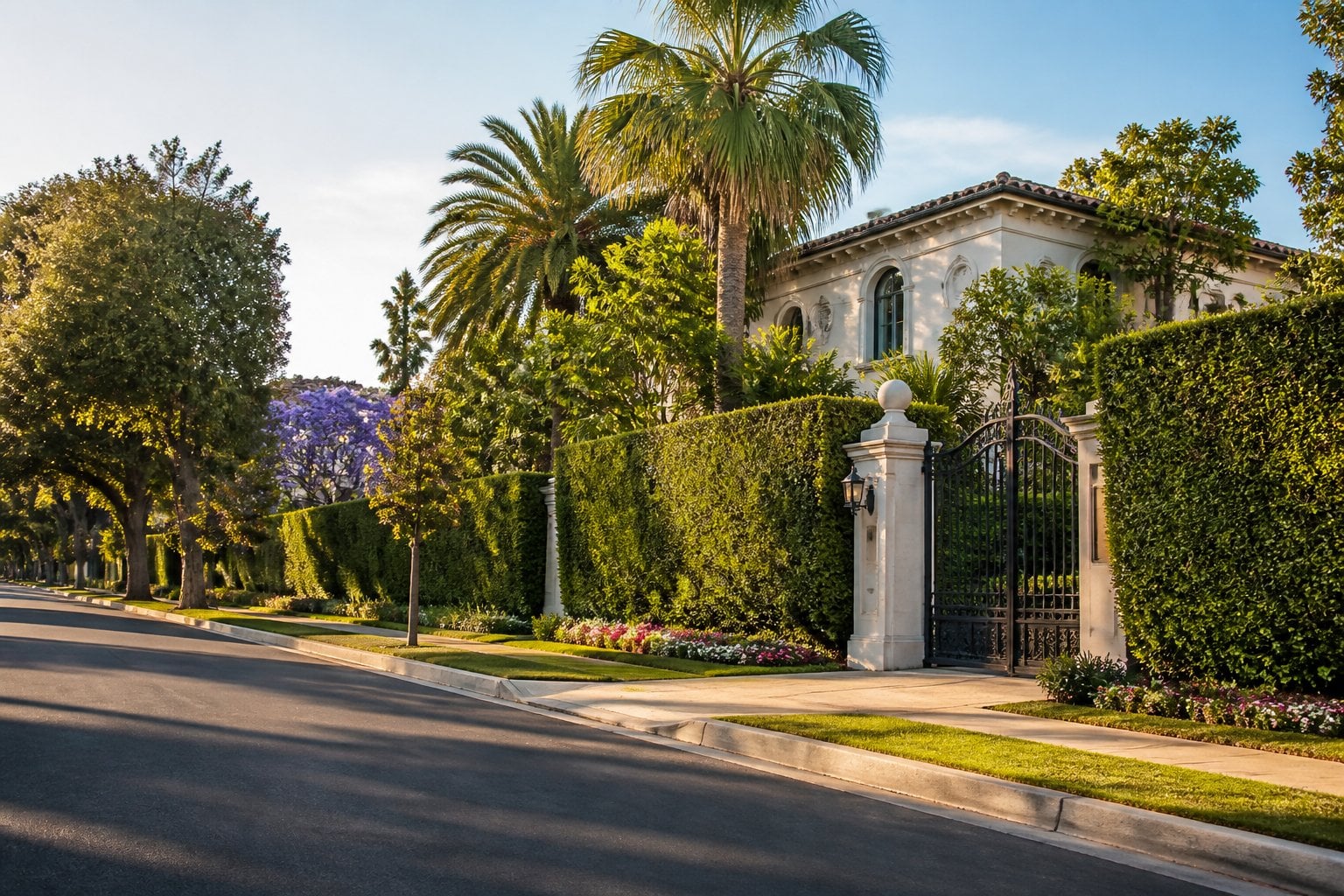
You’ll find one of the most expensive residential areas in the country here, with median home prices around $9.5 million.
Your boundaries are Santa Monica Boulevard to the south, Sunset Boulevard to the north, Doheny Drive to the east, and Whittier Drive to the west. Within this grid, you’ll walk tree-lined streets and see large, flat parcels of land that set this neighborhood apart from the hillside estates nearby.
You’re looking at a housing stock dominated by single-family luxury homes, many built on oversized lots compared to what you’d find in Bel Air or Brentwood. The flat terrain here gives you more usable land per property.
You’ll recognize this area as part of the Golden Triangle, a section of Beverly Hills known for consistent, strong property values. Prices have continued to climb year over year, keeping this neighborhood among the priciest in Los Angeles County.
29. Los Angeles’ Holmby Hills
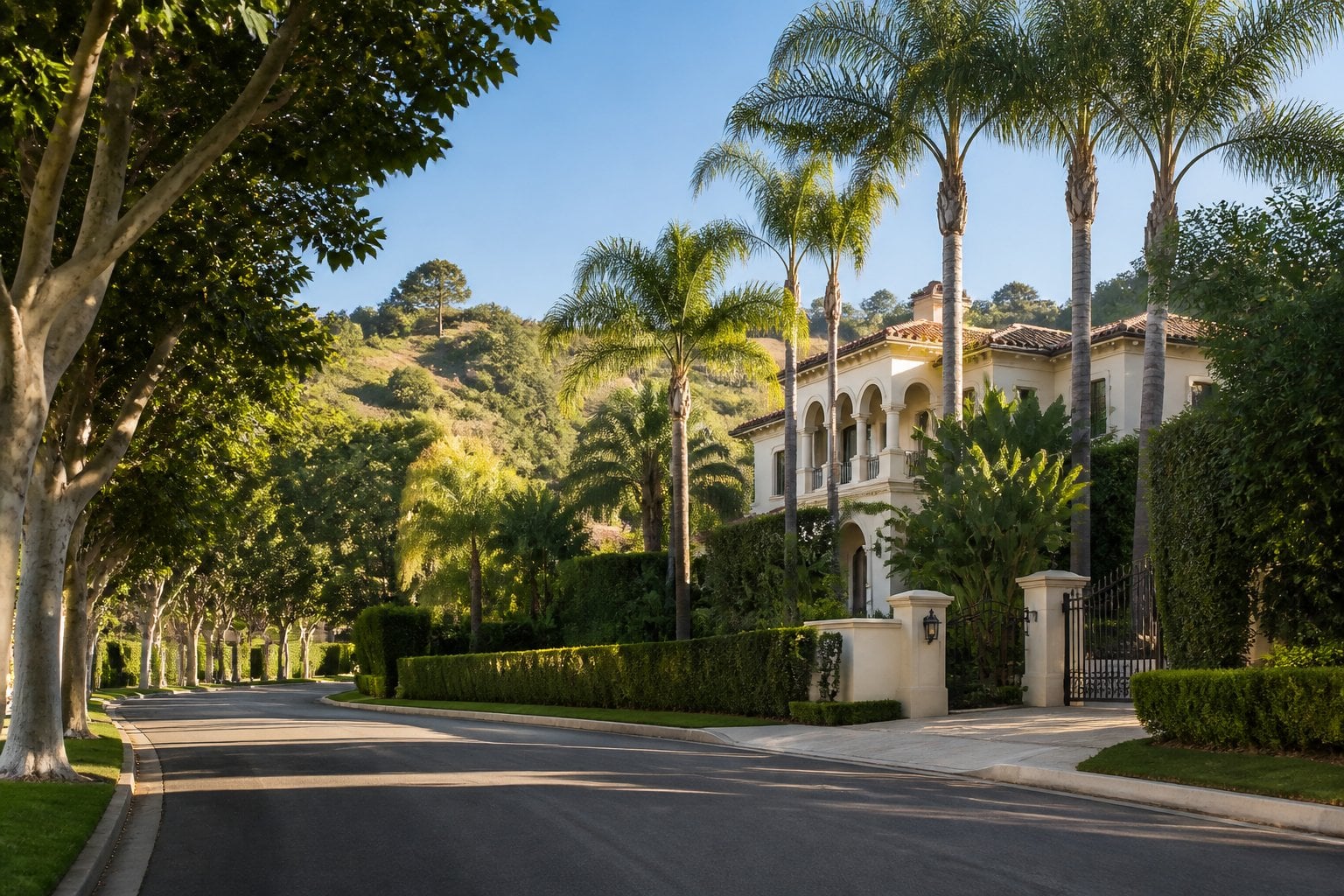
Holmby Hills sits between Beverly Hills and Bel Air, forming the third point of the Platinum Triangle. You won’t find much visible market activity here; transactions happen quietly, away from public listings.
The median sale price for the broader neighborhood, including high-end condos, reached approximately $3.85M in early 2026. Single-family estates tell a different story, averaging closer to $22M.
Homes here tend toward large lots and significant privacy, with fewer properties changing hands compared to neighboring areas. If you’re looking at this market, you’ll need access beyond what’s publicly listed, since much of the activity happens off-market.
Expect gated properties, minimal street visibility, and a buyer pool that values discretion as much as square footage. Your budget here needs to account for both scarcity and the premium attached to privacy.
30. Los Angeles’ Bel Air
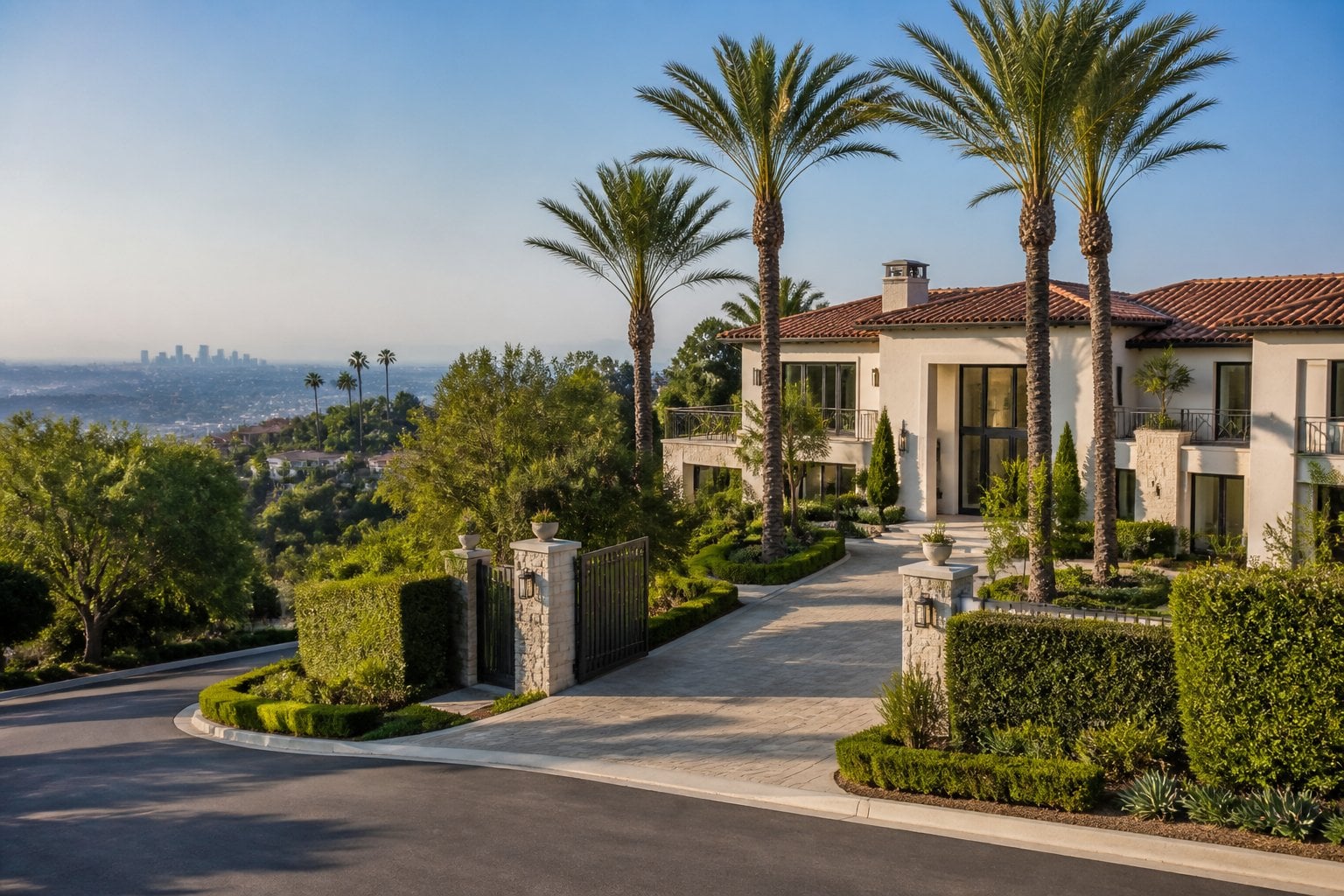
You’ll find Bel Air tucked into the hills between Beverly Hills and Westwood, and it consistently ranks as one of the most expensive neighborhoods in Los Angeles. Winding, gated streets and dense landscaping give you a level of privacy that’s hard to match elsewhere in the city.
Median home prices here sit above $6 million as of 2026. On streets like Stone Canyon Road and Bellagio Drive, you can expect trophy estates that exceed $20 million.
What you’re paying for isn’t just square footage. It’s seclusion, elevation, and proximity to both the city and untouched canyon terrain.
Bel Air’s reputation isn’t new; it’s been synonymous with old money and celebrity residents for decades. If your budget allows it, you’ll gain access to one of the few places in Los Angeles where privacy and prestige carry equal weight.
How California Neighborhood Home Values Are Measured
Rankings of expensive neighborhoods rely on different data points, and the method used affects the final list. You should understand the distinction between median prices and listing prices, plus the local factors that push values higher in certain areas.
Median Sale Price Versus Luxury Listing Prices
Median sale price reflects what buyers actually paid for homes that closed within a given period. This figure comes from completed transactions, so it gives you a realistic picture of a neighborhood’s typical home value.
Luxury listing prices work differently. These are asking prices for homes currently on the market, not confirmed sale amounts.
A neighborhood with a handful of high-priced listings can appear more expensive than its median sale data supports. You should check whether a ranking uses closed sales or active listings, since the two metrics can produce very different results for the same area.
Sources like Zillow’s Home Value Index and county assessor records typically rely on sale-based data rather than listing prices.
Factors That Influence Neighborhood-Level Pricing
Several elements shape home values at the neighborhood level:
- Location and views: Proximity to the coast, hillside settings, or waterfront access typically raises prices.
- School district quality: Highly rated public schools correlate with stronger home values in the surrounding area.
- Lot size and privacy: Larger parcels and gated or low-density streets often command premiums.
- Local amenities: Access to shopping, dining, and recreation adds measurable value.
- Supply constraints: Limited housing inventory in established neighborhoods keeps prices elevated.
You’ll find that these factors combine differently in each neighborhood, which is why two areas with similar median incomes can show very different home values.
Buying Considerations in High-Cost California Markets
Purchasing in these neighborhoods requires more than qualifying for a large mortgage. You need to account for recurring costs that scale with property value and prepare for a buying process shaped by scarce inventory and multiple offers.
Property Taxes, Insurance, And Ongoing Ownership Costs
Your property tax bill is calculated under Proposition 13, which sets the base rate at 1% of assessed value plus local district fees. On a $10 million home, that translates to roughly $100,000 or more per year before any additional assessments.
Insurance costs have risen sharply in fire-prone areas like Malibu and the hills above Los Angeles. Some major insurers have pulled back from these markets entirely, pushing homeowners toward the California FAIR Plan or surplus-line carriers with higher premiums.
You should also budget for:
- HOA dues in gated communities, which can run several thousand dollars monthly
- Maintenance on large lots, pools, and custom systems
- Utility costs tied to square footage and amenities like guest houses or wine cellars
These expenses compound quickly and affect your total cost of ownership beyond the purchase price.
Market Competition And Inventory Constraints
Inventory in top-tier neighborhoods stays limited because few owners sell, and new construction is restricted by zoning and geography. In places like Atherton or Beverly Hills, you may find fewer than a dozen comparable listings at any given time.
This scarcity drives competition even at extreme price points. Cash offers, waived contingencies, and pre-emptive bids before a property is formally marketed are common tactics among buyers in this segment.
You should work with an agent who has direct access to off-market listings, since a meaningful share of high-end transactions never appear on public platforms. Timing matters too: inventory tends to tick up slightly in spring, giving you more options if you can wait for that window.