The 30 Most Expensive Places to Live in Massachusetts: 2026 Rankings by Home Value
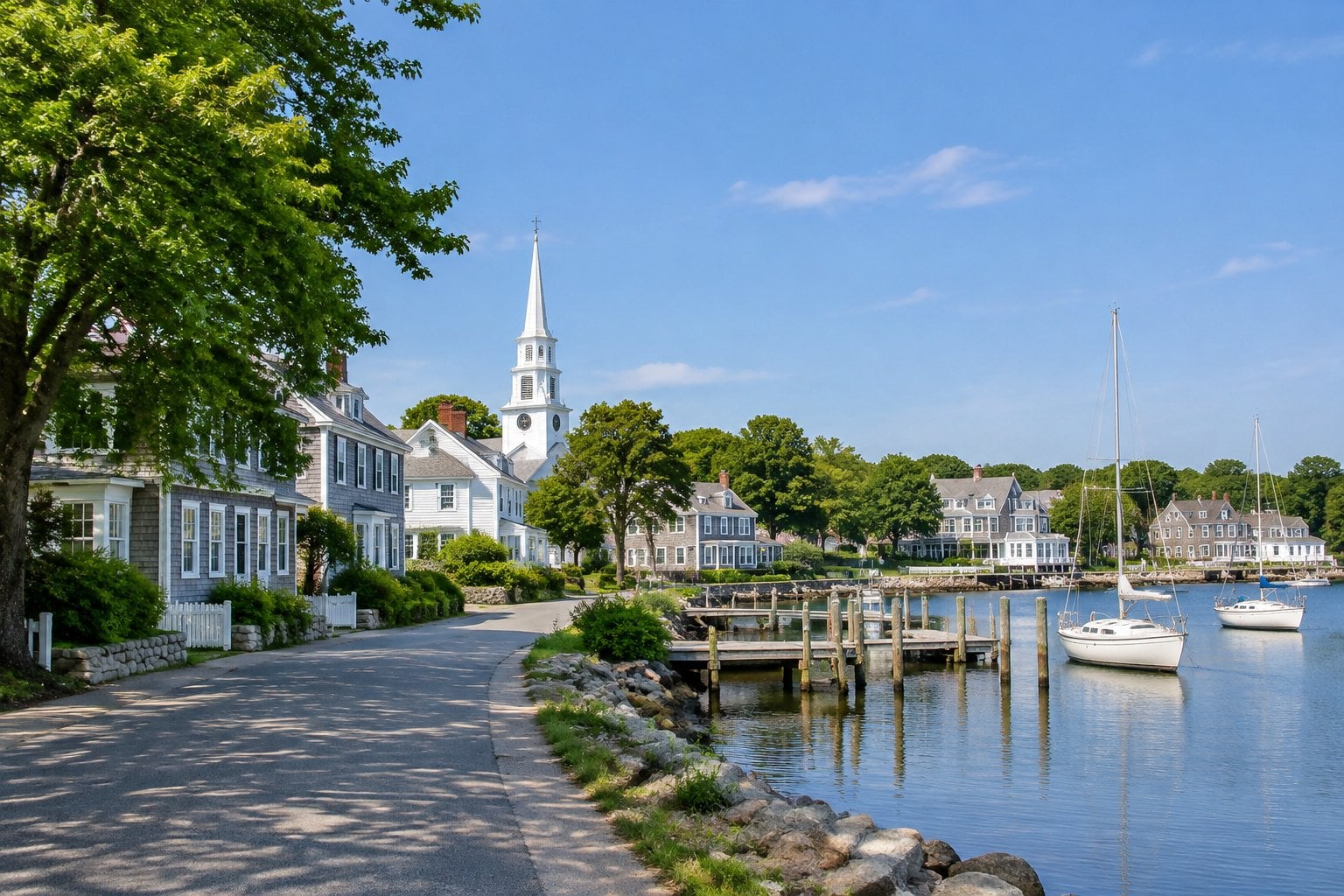
Massachusetts is one of the most expensive states in the country for housing, and its priciest towns sit far above even the state’s high average. Most of them fall into two groups: the islands of Nantucket and Martha’s Vineyard, where land is scarce and second-home demand is strong, and the leafy suburbs west and north of Boston, where well-regarded schools and short commutes push prices up. A handful of South Shore, North Shore and Cape Cod towns round out the list.
The typical home in Massachusetts is worth about $654,000, according to the Zillow Home Value Index for October 2026. In the 30 places below, typical values run from about $1.08 million to $3.3 million.
This list ranks Massachusetts cities and towns with at least 500 year-round residents by Zillow’s typical home value as of October 2026. Population figures come from the 2020 Census. Two small Martha’s Vineyard towns, Aquinnah and Gosnold, also have very high values but fewer than 500 residents, so they are not included.
1. Nantucket, Massachusetts
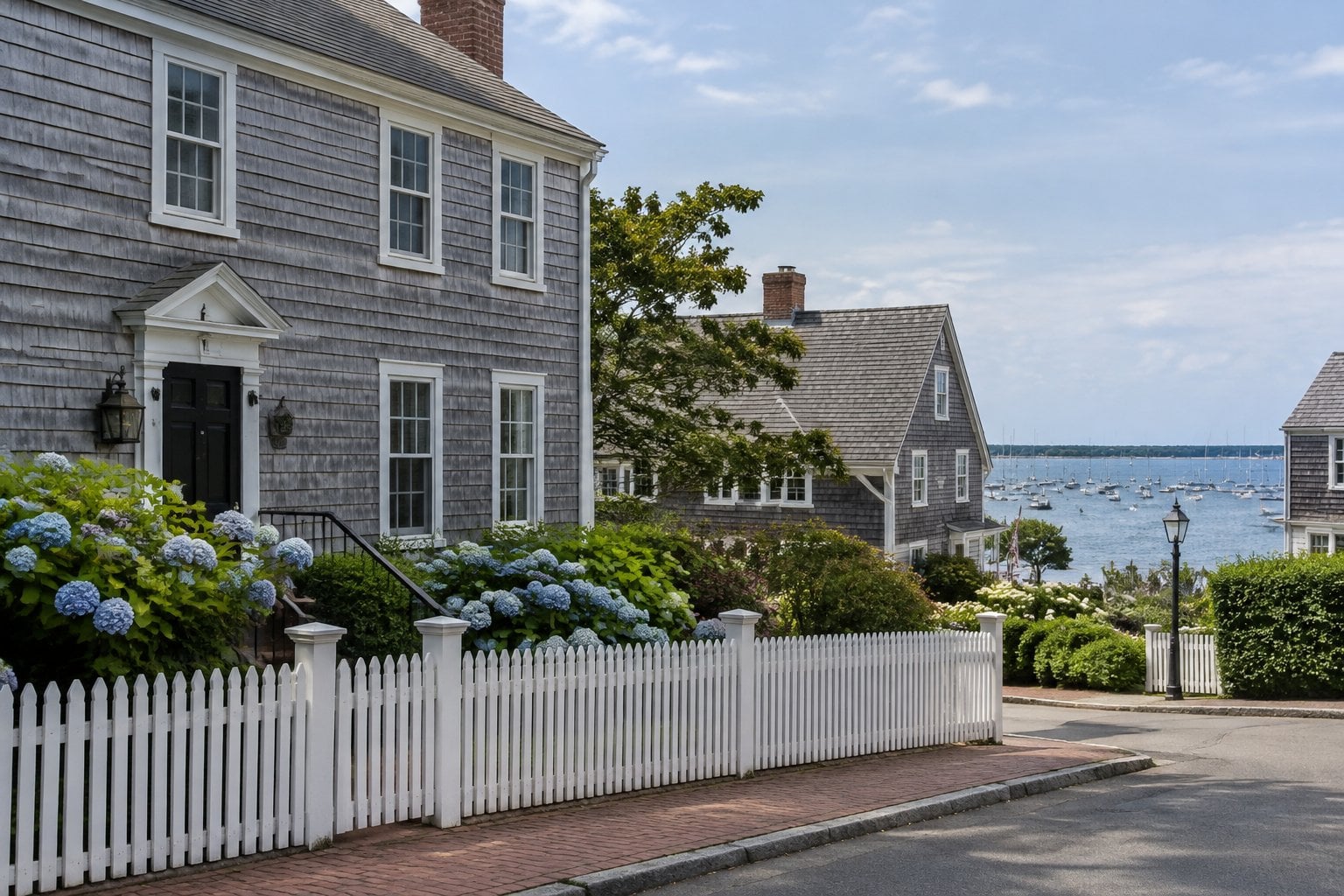
Nantucket tops the list. Zillow puts the typical home value here at about $3.3 million as of October 2026, up nearly 10% from a year earlier. That is roughly five times the Massachusetts typical home value.
The island sits about 30 miles south of Cape Cod, and the town and county share the same borders. The 2020 Census counted 14,255 year-round residents, but the summer population grows to around 80,000 as seasonal homeowners and visitors arrive.
Supply is tight. A large share of the island is protected conservation land, and Nantucket was designated a National Historic Landmark District in 1966, so new building is limited and closely reviewed. The town center keeps its cobblestone streets and gray-shingled houses from the whaling era.
Getting to the mainland means a ferry from Hyannis or a flight, so most year-round residents work on the island. Children attend Nantucket Public Schools.
2. Chilmark, Massachusetts
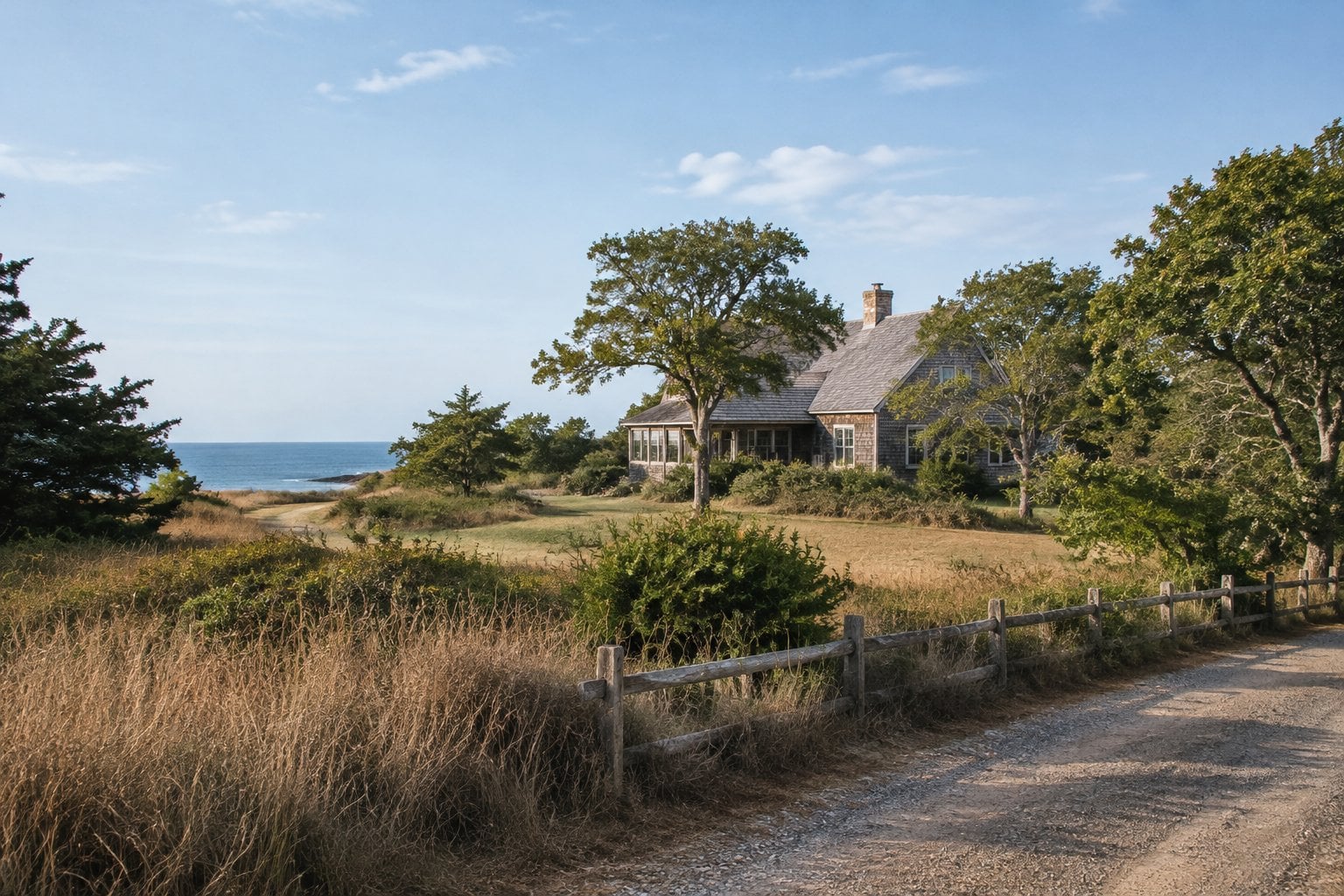
Chilmark, on the southwestern side of Martha’s Vineyard, has a typical home value of about $2.45 million, according to Zillow. That is close to four times the state’s typical value. The town has a long record at the top: it had the highest median home sale price of any Massachusetts town in 2013.
The 2020 Census counted just 1,212 year-round residents. Along with West Tisbury and Aquinnah, Chilmark makes up the quieter “Up-Island” part of the Vineyard, with rolling hills, stone walls, farms and ocean bluffs instead of busy town centers.
The fishing village of Menemsha, on the town’s western edge, has a working harbor and is a well-known place to watch the sunset. Many homes sit on large parcels with water views, which keeps prices high.
Younger children attend the Chilmark School, and older students go to Martha’s Vineyard Regional High School in Oak Bluffs.
3. Weston, Massachusetts
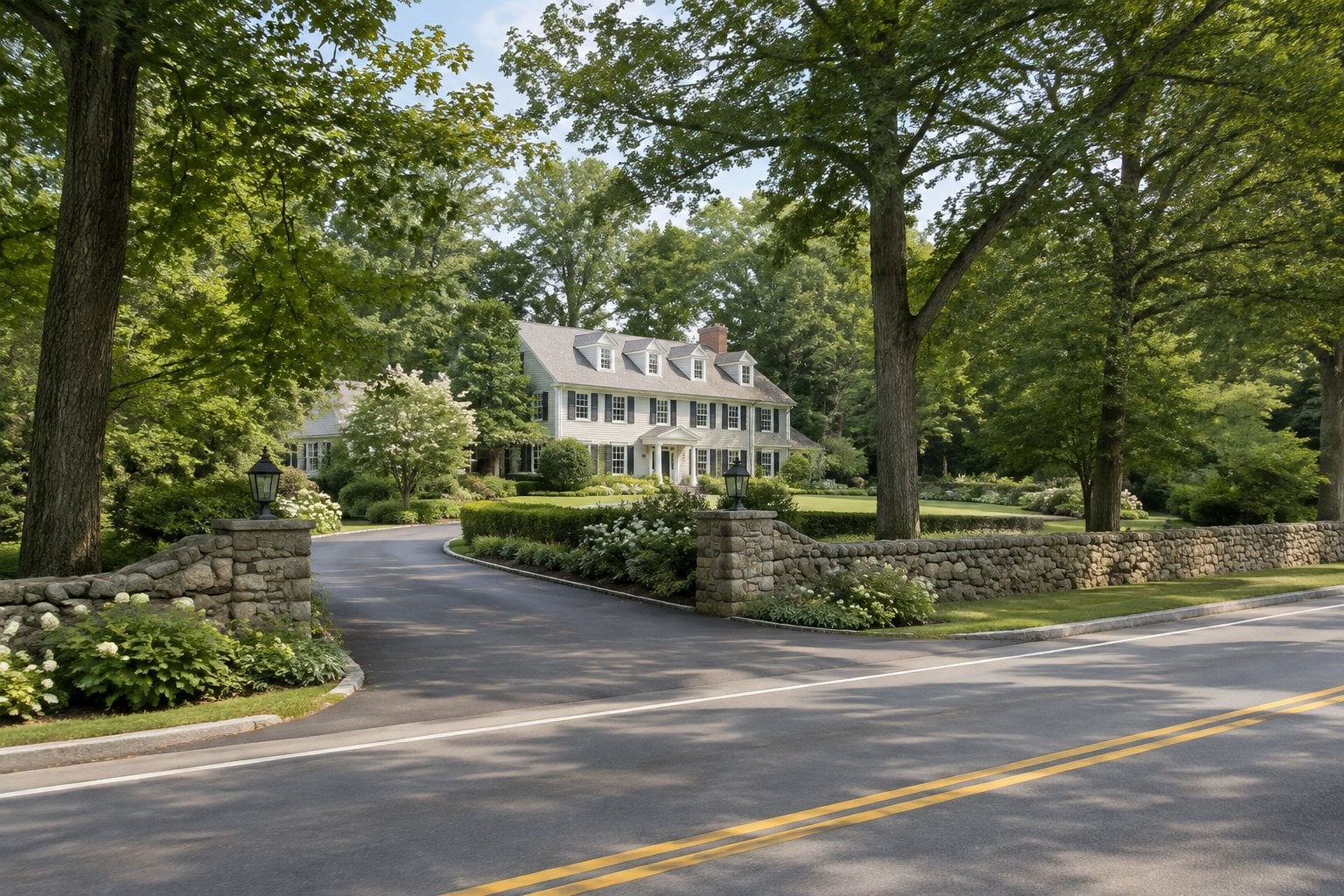
Weston is the most expensive place on the mainland. Zillow puts the typical home value at about $2.22 million, up about 4% over the past year.
The town sits about 15 miles west of Boston and had 11,851 residents at the 2020 Census. Its population density is among the lowest of the Boston suburbs inside or near Route 128. More than 2,000 acres, about 18% of the town, are preserved as parks, fields, wetlands and forests, with roughly 90 miles of trails.
Most homes are single-family houses on large, wooded lots, and dozens of designated scenic roads keep a semi-rural look. Weston was incorporated in 1713 and has several historic districts.
Weston Public Schools are a major draw for families. For commuting, the Massachusetts Turnpike runs through town, Route 128 runs along its eastern edge, and the Fitchburg Line commuter rail stops at Kendal Green.
4. Wellesley, Massachusetts
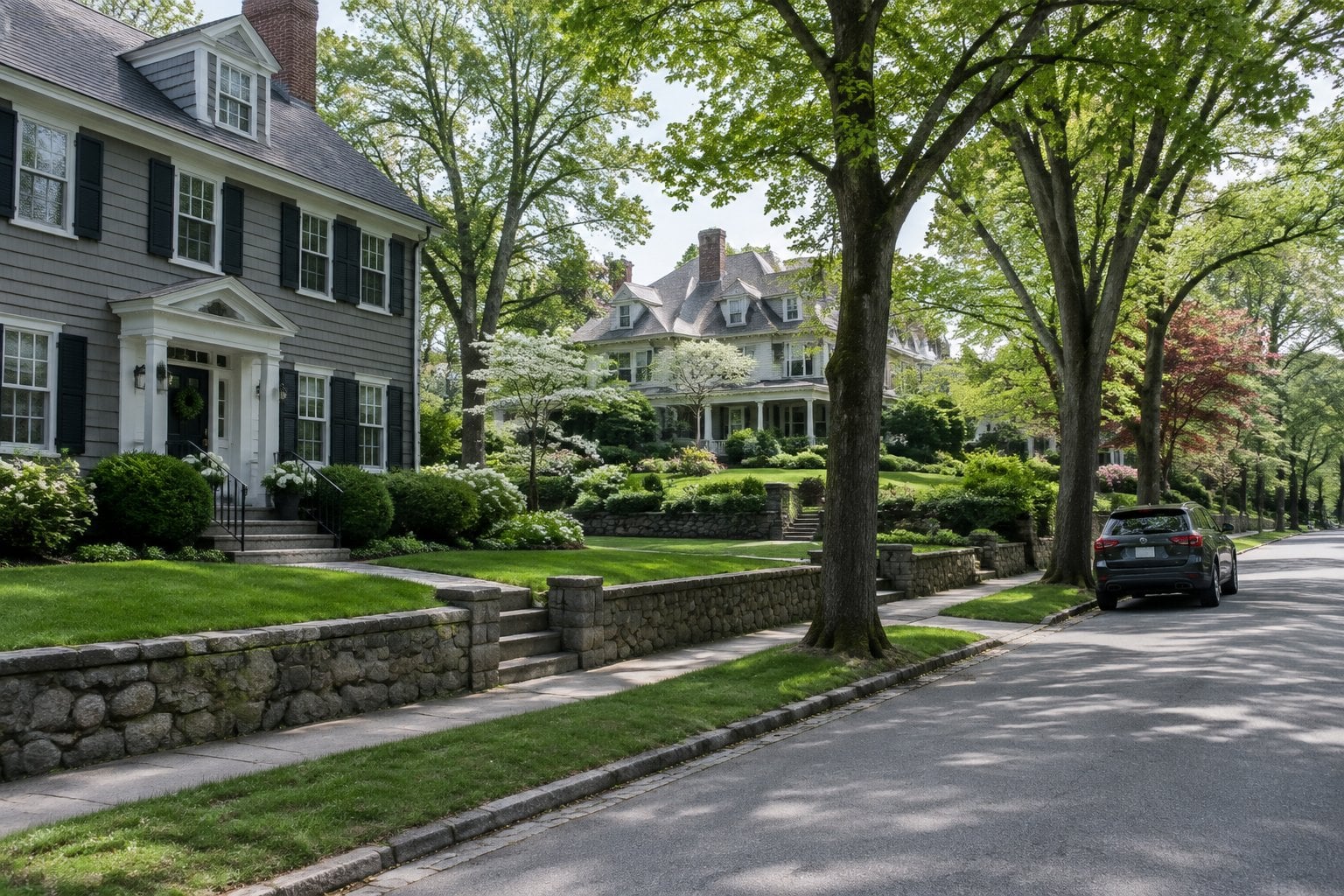
Wellesley’s typical home value is about $2.02 million, according to Zillow, up nearly 5% from a year earlier. It is one of only four places in the state where the typical home is worth more than $2 million.
The town is in Norfolk County, roughly 13 miles west of Boston, and had 29,550 residents at the 2020 Census. It is home to Wellesley College, Babson College and a campus of MassBay Community College, and the Boston Marathon route passes through the town center.
Housing is mostly single-family, from older Colonials near the village centers to large newer homes on bigger lots.
Wellesley Public Schools are well regarded and a common reason buyers choose the town. Commuting is easy by Massachusetts standards: the Framingham/Worcester Line has three stations in town, Wellesley Farms, Wellesley Hills and Wellesley Square, and Route 9, Route 128 and the Massachusetts Turnpike are all close by.
5. Edgartown, Massachusetts
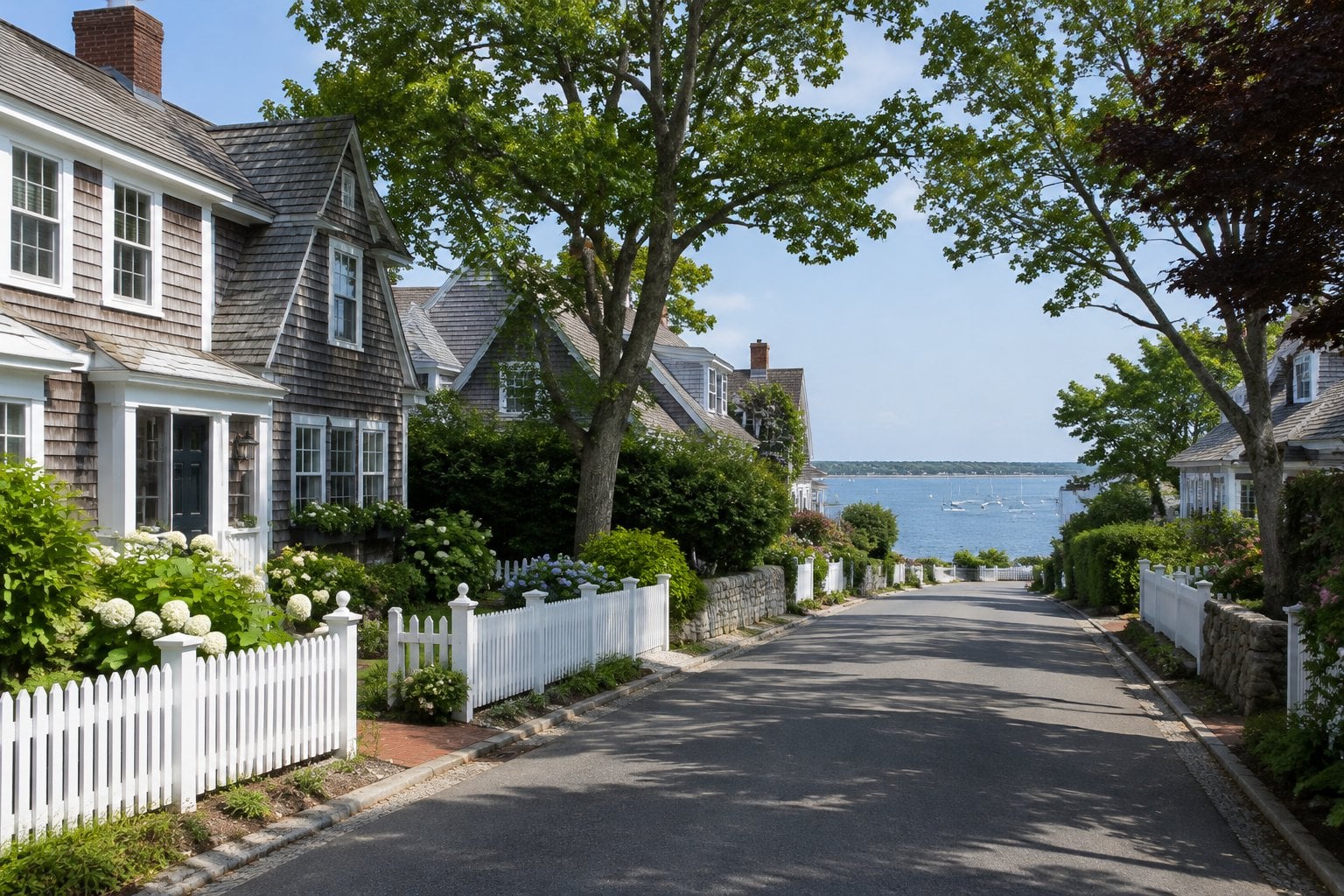
Edgartown is the second Martha’s Vineyard town on the list, with a typical home value of about $1.89 million, according to Zillow. Values rose about 7% over the past year.
The town is the county seat of Dukes County and had 5,168 year-round residents at the 2020 Census. It was once a major whaling port, and its carefully preserved captains’ houses, white fences and narrow streets now draw summer visitors and second-home buyers.
Edgartown also includes Chappaquiddick Island, reached by a short ferry across the harbor. The harbor hosts yachting events, and the Edgartown Lighthouse stands at its entrance.
Children attend the Edgartown School and then Martha’s Vineyard Regional High School. The main ferries from Woods Hole land in Vineyard Haven and Oak Bluffs, so getting off the island starts with a drive to one of those ports.
6. Dover, Massachusetts
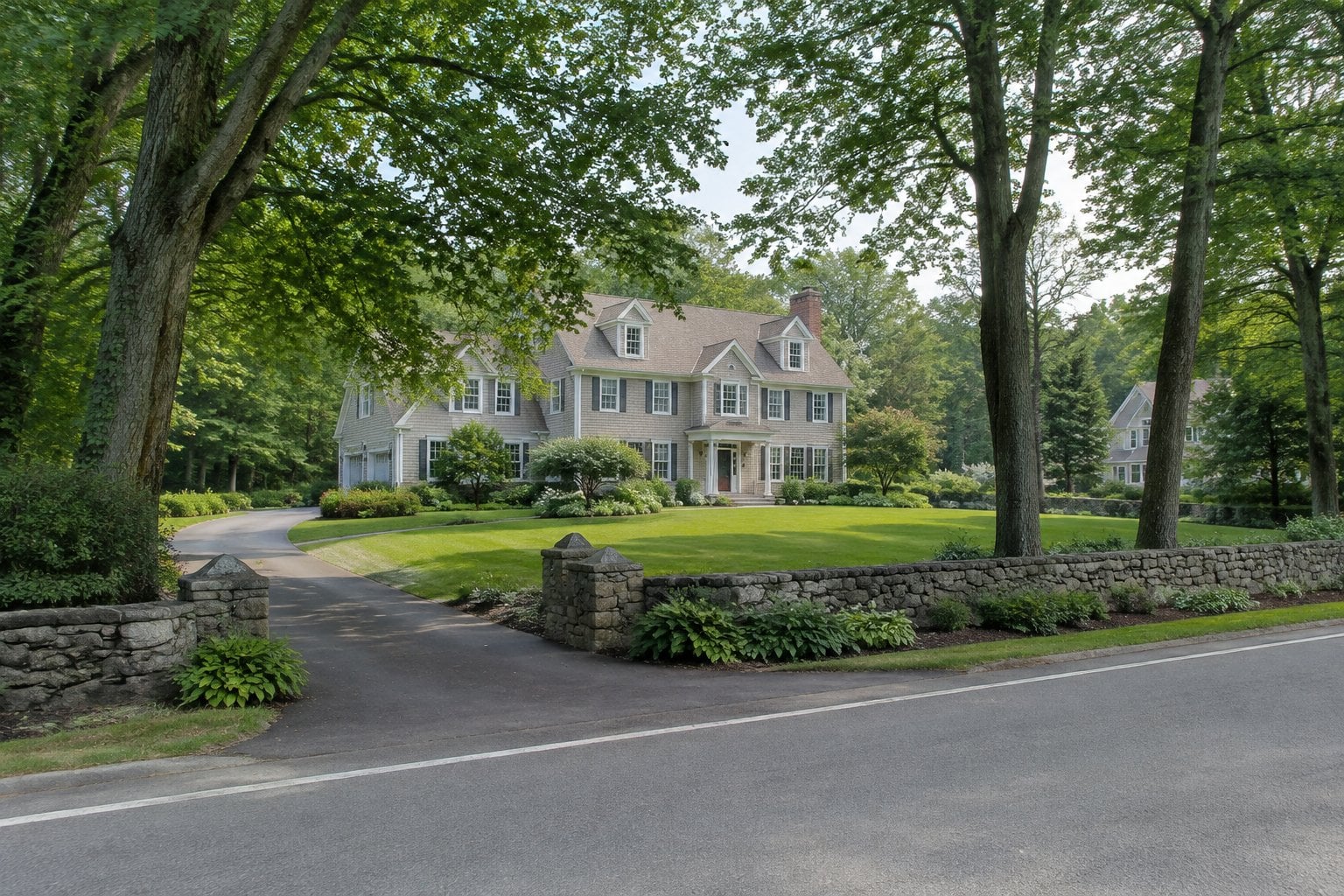
Dover’s typical home value is about $1.74 million, according to Zillow, up about 2% over the past year. The town had 5,923 residents at the 2020 Census.
Dover sits about 15 miles southwest of downtown Boston on the south bank of the Charles River. Almost all of its residential zoning requires lots of one acre or more, which keeps the town rural in feel and limits how many new homes can be built. Only about a mile and a half of its roads are state highway.
Dover also appears among the richest towns in America by household income. Open space includes the Noanet Woodlands, with trails and a hilltop view of the Boston skyline.
Younger children attend the Chickering School in town, and older students attend the Dover-Sherborn regional middle and high schools, shared with neighboring Sherborn. There is no commuter rail station in town, so most residents drive.
7. West Tisbury, Massachusetts
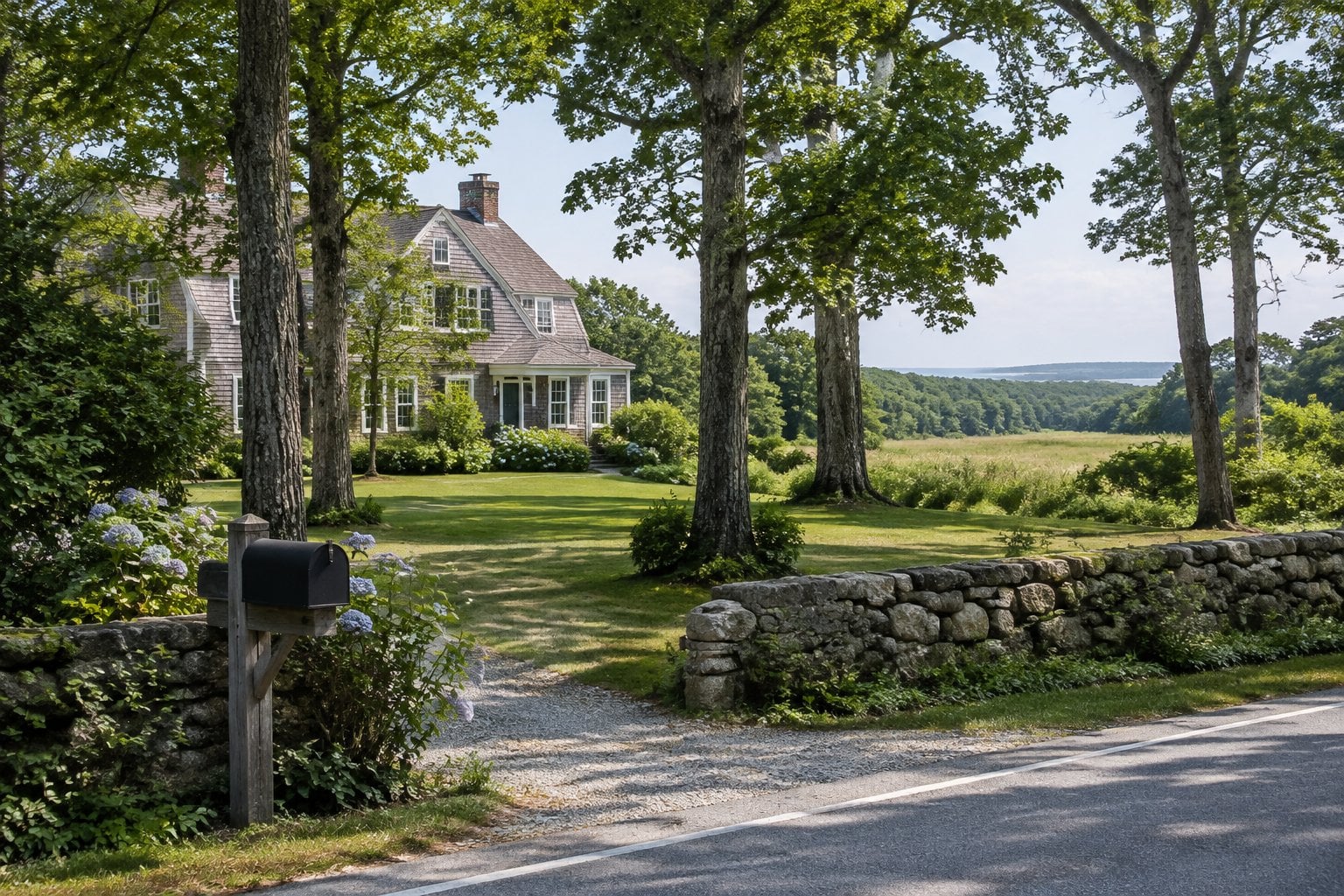
West Tisbury, in the middle of Martha’s Vineyard, has a typical home value of about $1.66 million, according to Zillow, up about 5.5% over the past year.
The 2020 Census counted 3,555 year-round residents. With Chilmark and Aquinnah, West Tisbury is part of “Up-Island,” the rural side of the Vineyard. You will find farms, open fields, stone walls and woodland rather than a busy downtown.
Agriculture is central to the town’s identity. The Martha’s Vineyard Agricultural Society holds its annual livestock show and fair in West Tisbury every August, and the town is also home to the Polly Hill Arboretum.
Younger children attend the West Tisbury School, and older students go to the regional high school in Oak Bluffs. As with the rest of the island, trips to the mainland depend on the ferry schedule.
8. Needham, Massachusetts
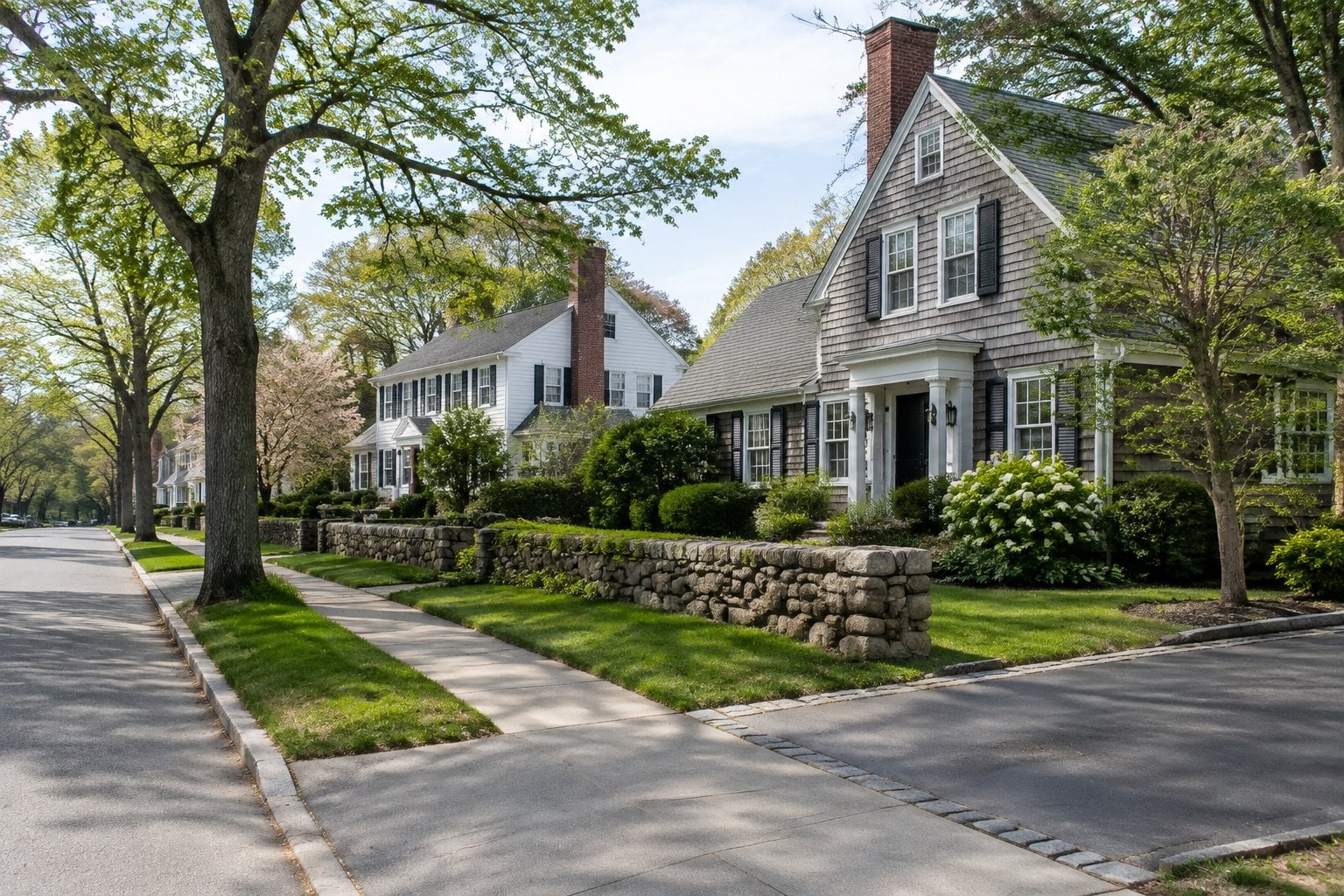
Needham’s typical home value is about $1.56 million, according to Zillow, up nearly 6% from a year earlier. The town had 32,091 residents at the 2020 Census.
Needham is a Norfolk County suburb about 10 miles southwest of downtown Boston. The Charles River runs along much of its border, and the town center has shops and restaurants within walking distance of many homes. It is also home to Olin College of Engineering.
Much of the housing is single-family, and many older Colonials and Capes have been replaced by larger new homes in recent years, which pushes typical values up.
Commuting is a strong selling point. The town has four stations on the MBTA’s Needham Line commuter rail, and Route 128 runs through town. Needham Public Schools are well regarded and a common reason families move here.
9. Lexington, Massachusetts
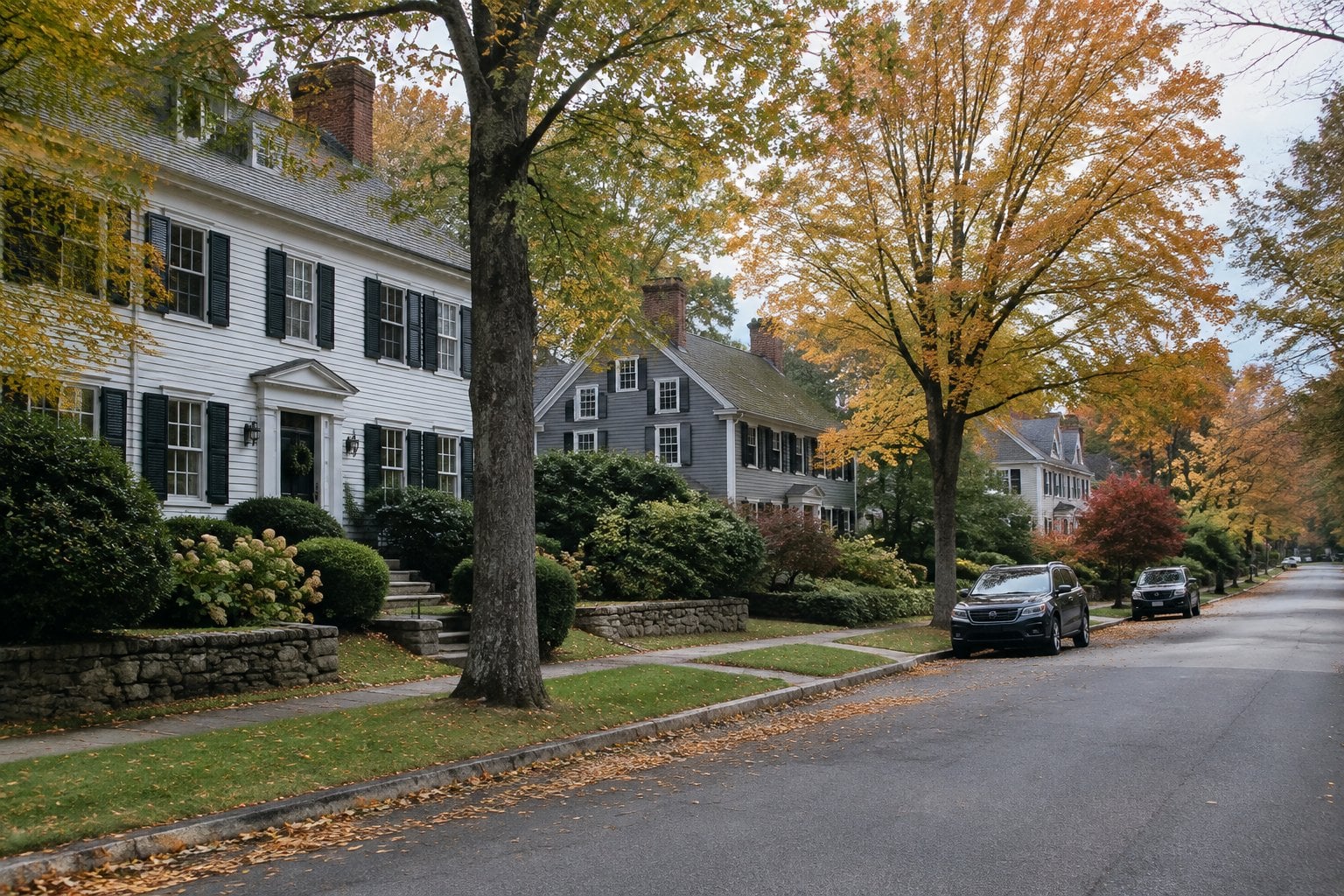
Lexington’s typical home value is about $1.55 million, according to Zillow, up about 2% over the past year. The town had 34,454 residents at the 2020 Census, making it one of the larger towns on this list.
Lexington sits about 10 miles northwest of downtown Boston. It is best known as the site of the first shots of the American Revolution on April 19, 1775. The Battle Green sits in the town center, and Minute Man National Historical Park runs along the town’s western side.
Lexington Public Schools are highly rated, and the schools are a major reason buyers pay a premium here.
For commuting, Route 2 and Route 128 are close by, and MBTA buses connect Lexington to the Red Line at Alewife. The Minuteman Bikeway also runs through town toward Alewife, which some residents use for car-free trips.
10. Winchester, Massachusetts
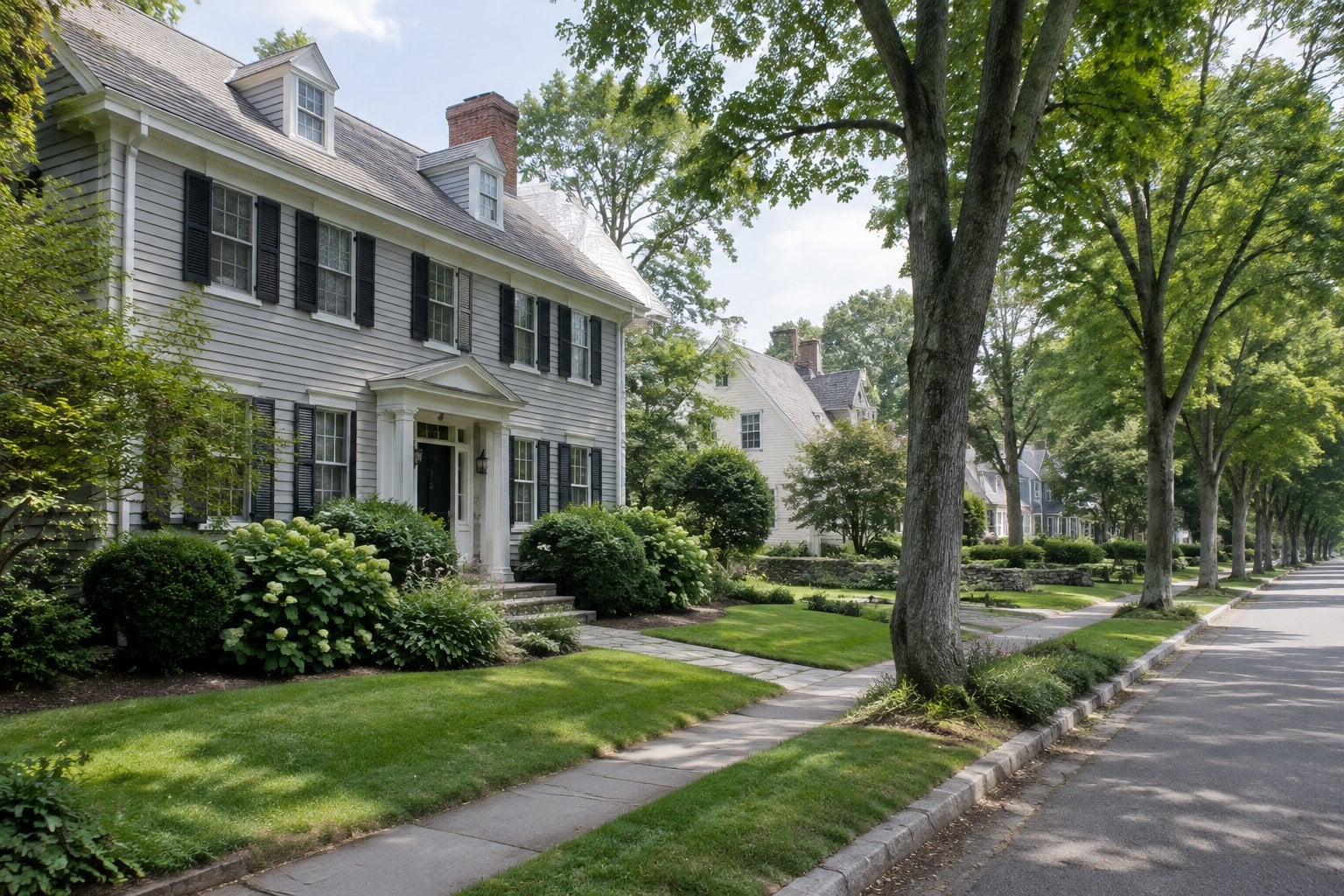
Winchester’s typical home value is about $1.53 million, according to Zillow, up about 2.5% over the past year. The town had 22,970 residents at the 2020 Census.
Winchester sits about 8 miles north of downtown Boston in Middlesex County. It is often described as one of the wealthiest towns in Massachusetts, and its compact town center has shops, restaurants and a commuter rail station.
Older Colonial, Victorian and Tudor-style houses line many streets, and the Mystic Lakes along the town’s southern edge add water views and recreation.
The MBTA’s Lowell Line stops at Winchester Center and Wedgemere, with trains to North Station in Boston, and Interstate 93 is a short drive away. Winchester Public Schools are well regarded and draw many families.
11. Lincoln, Massachusetts
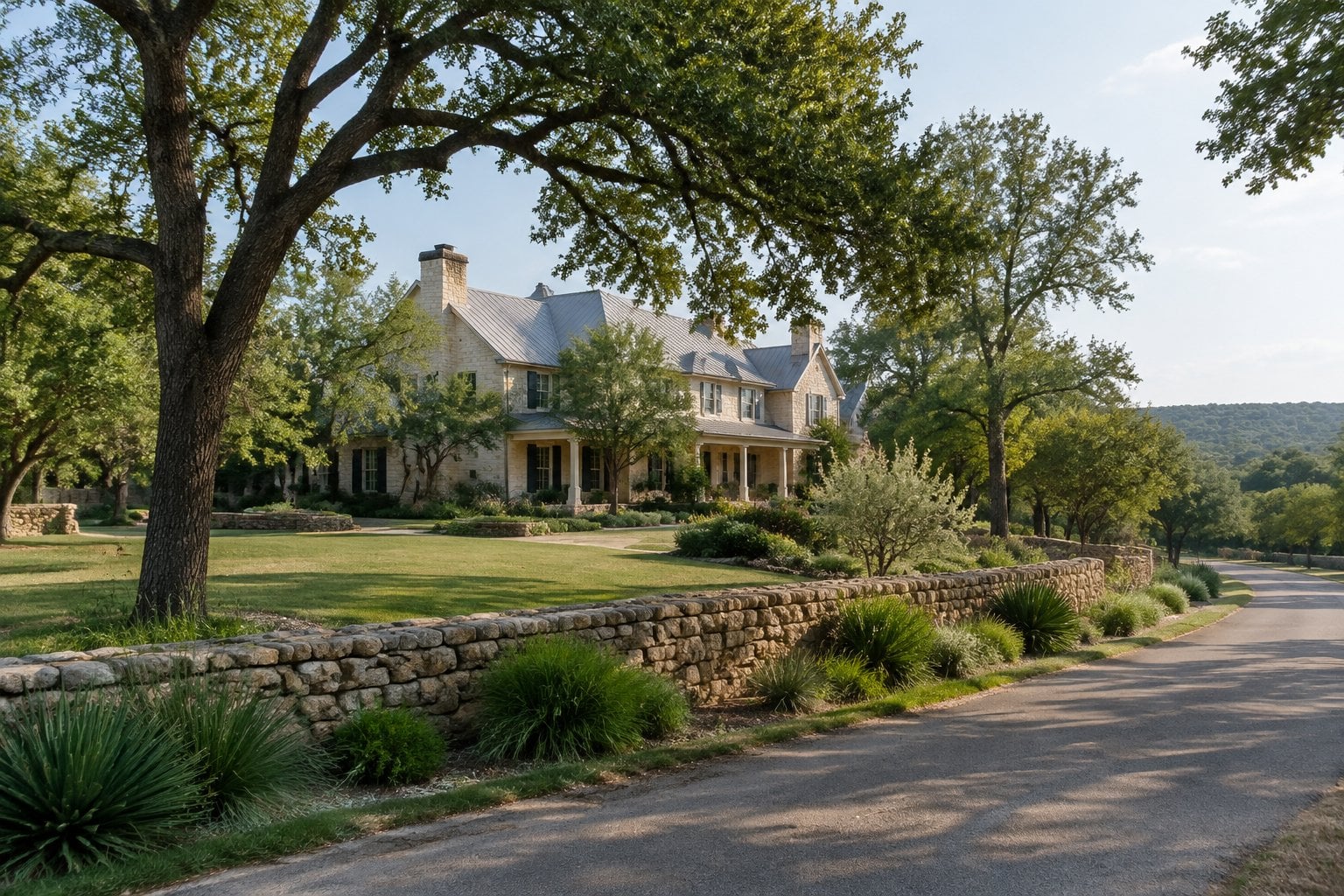
Lincoln’s typical home value is about $1.5 million, according to Zillow, up about 2% from a year earlier. The 2020 Census counted 7,014 residents, a figure that includes people living at Hanscom Air Force Base within town limits.
Lincoln feels more rural than most towns this close to Boston. A large share of the town is conservation land, and it is home to Mass Audubon’s Drumlin Farm, the deCordova Sculpture Park and Museum, and the Gropius House, the modernist home of architect Walter Gropius. Walden Pond sits just over the line in Concord.
Housing ranges from colonial-era farmhouses to mid-century modern homes on wooded lots.
Children attend Lincoln Public Schools through eighth grade, then Lincoln-Sudbury Regional High School. The Fitchburg Line commuter rail stops at Lincoln station, and Route 2 and Route 128 are nearby.
12. Newton, Massachusetts
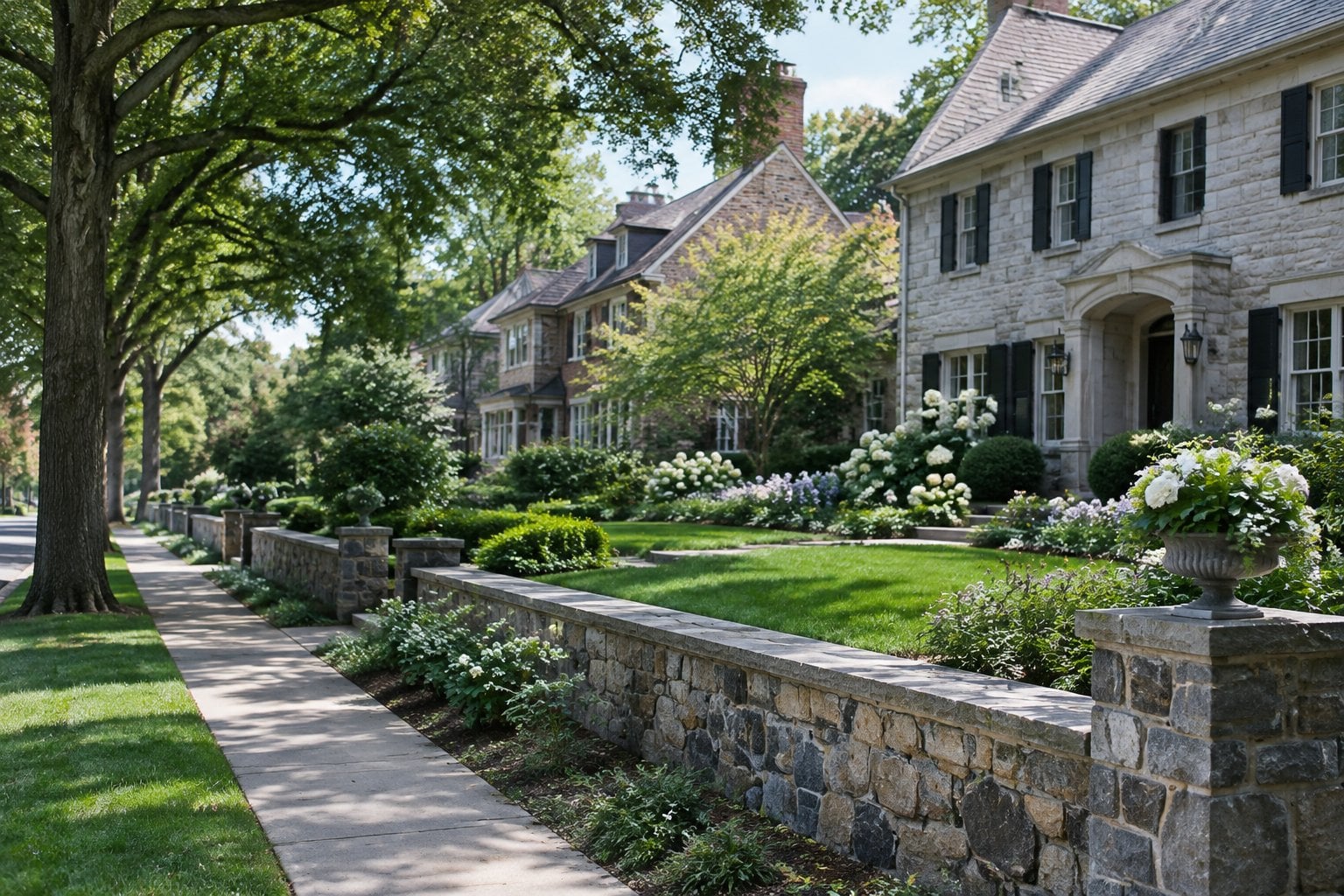
Newton is the only city in the top 12. Zillow puts its typical home value at about $1.49 million, up about 1% over the past year. With 88,923 residents at the 2020 Census, it is by far the largest place on this list.
The city sits about 8 miles west of downtown Boston and is made up of 13 villages, including Newton Centre, Chestnut Hill and West Newton, each with its own center. Boston College’s main campus is in Chestnut Hill, and the Boston Marathon climbs Heartbreak Hill on Commonwealth Avenue in Newton.
Commuting options are a big part of the appeal. The MBTA Green Line D branch runs through the city, commuter rail stops on the Framingham/Worcester Line, and the Massachusetts Turnpike crosses Newton.
Newton Public Schools are well regarded, and the Charles River forms much of the city’s border, with parks and paths along its banks.
13. Cohasset, Massachusetts
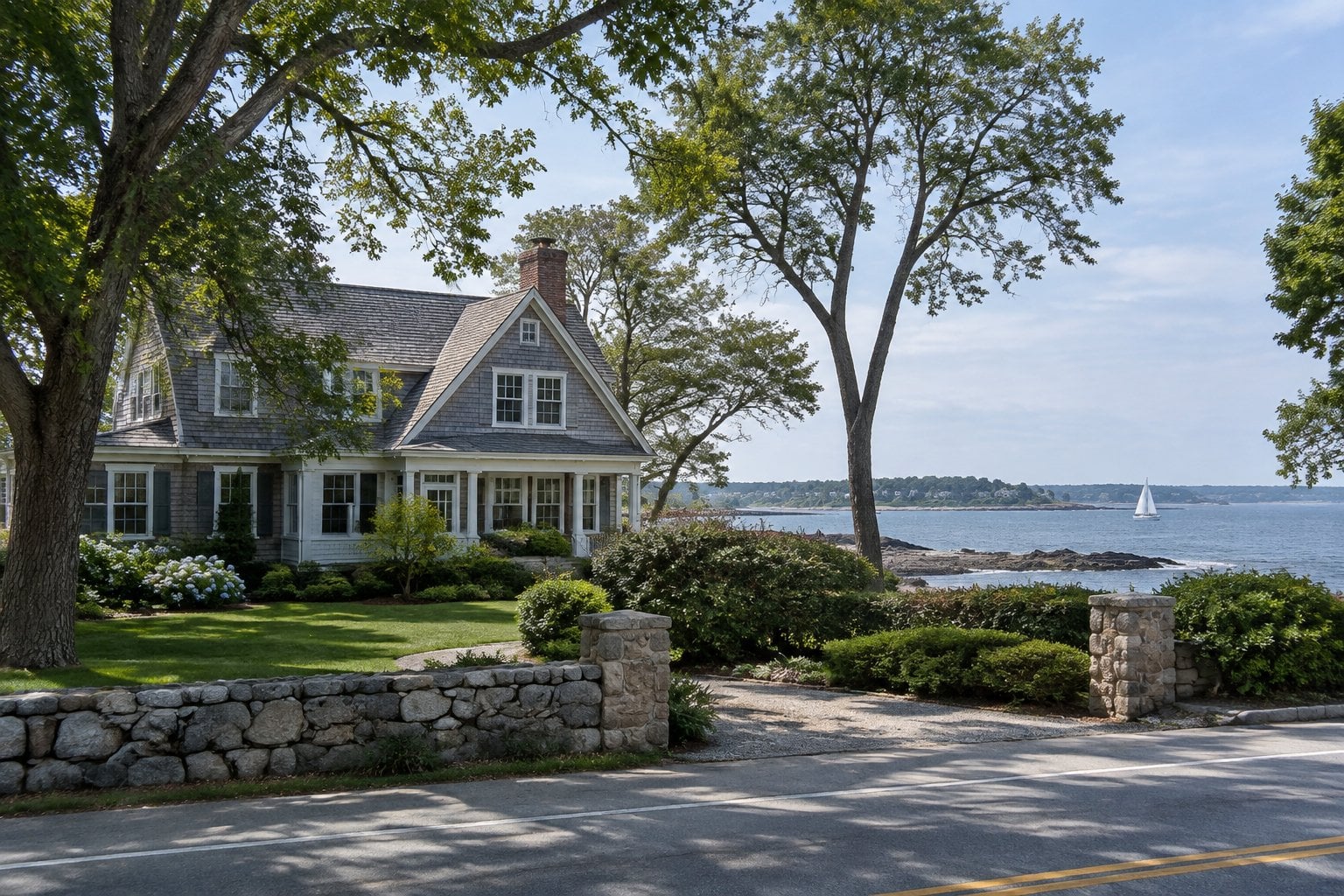
Cohasset’s typical home value is about $1.46 million, according to Zillow, up more than 7% over the past year. The town had 8,381 residents at the 2020 Census.
Cohasset is a South Shore town about 20 miles southeast of Boston. It split off from Hingham in 1770 and is an exclave of Norfolk County, separated from the rest of the county by other towns.
The coastline is rocky, with Cohasset Harbor, Sandy Beach and views of Minot’s Ledge Light offshore. The town center has a large common surrounded by historic buildings, and waterfront homes sell for far more than the typical value.
Cohasset Public Schools serve the town, and the MBTA’s Greenbush Line commuter rail has a station in Cohasset with trains to South Station in Boston. Route 3A connects the town to the rest of the South Shore.
14. Belmont, Massachusetts
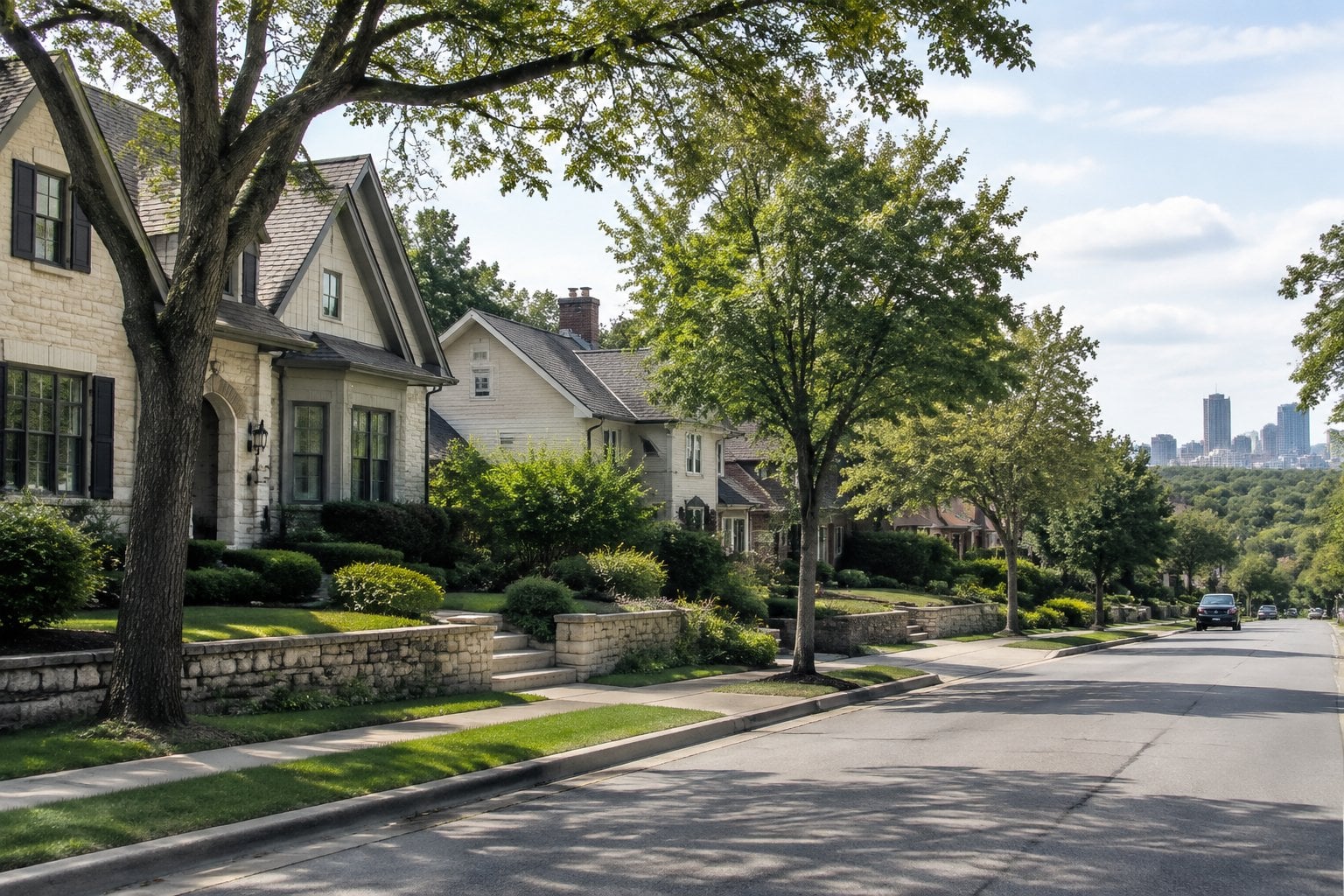
Belmont’s typical home value is about $1.42 million, according to Zillow, up about 1% over the past year. The town had 27,295 residents at the 2020 Census, up 10.4% from 2010.
Belmont sits about 7 miles northwest of downtown Boston, bordering Cambridge, Arlington and Watertown. Its location so close to Cambridge and Boston is a major reason prices are high. The Belmont Hill neighborhood has some of the town’s largest homes.
The Fitchburg Line commuter rail stops at Belmont Center and Waverley, and MBTA buses run to Harvard Square.
Belmont Public Schools are well regarded, and the town is also home to private schools including Belmont Hill School. For open space, you have Beaver Brook Reservation and Rock Meadow, along with walkable shopping districts in Belmont Center, Cushing Square and Waverley Square.
15. Concord, Massachusetts
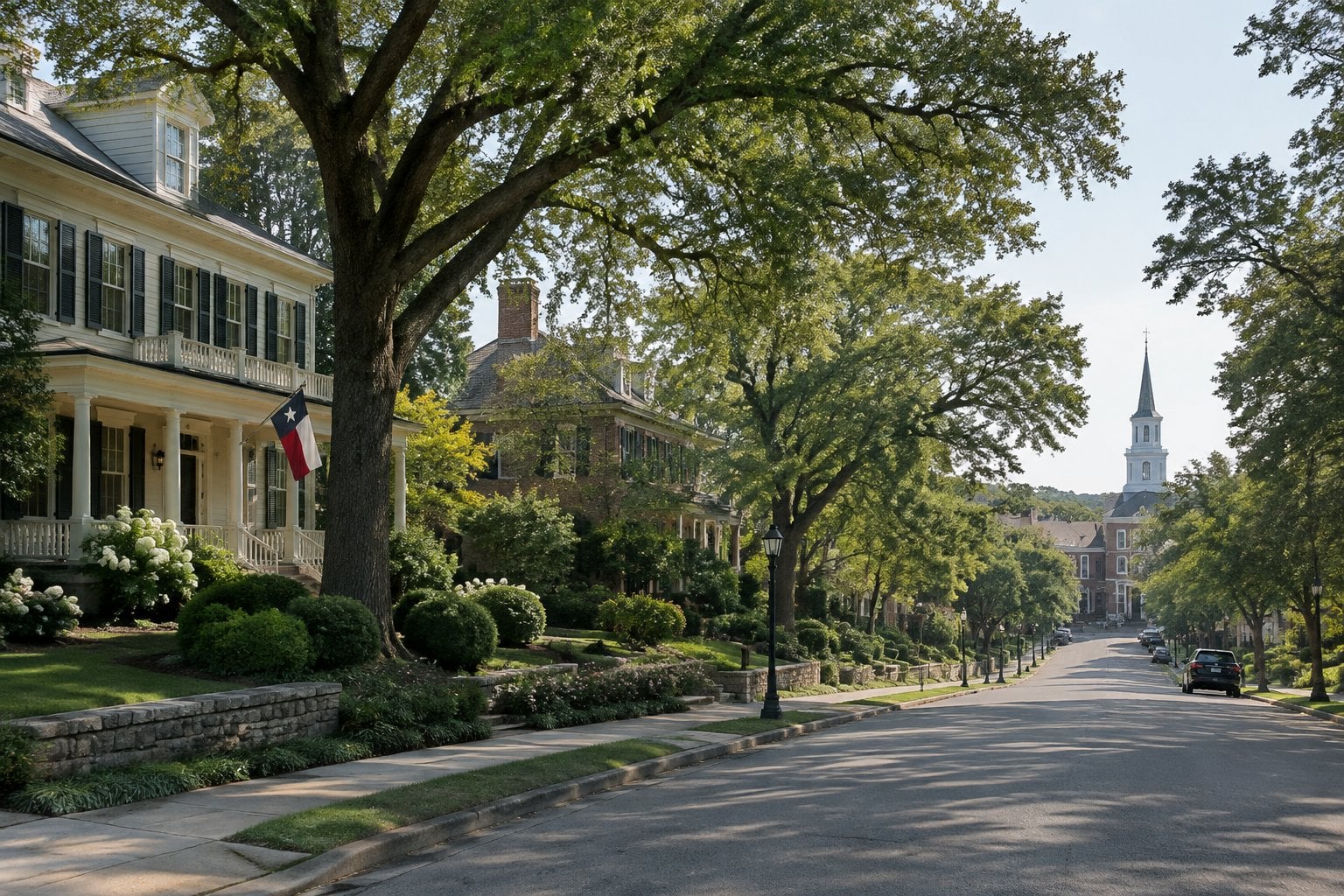
Concord’s typical home value is about $1.42 million, according to Zillow, nearly flat from a year earlier. The town had 18,491 residents at the 2020 Census.
Few towns have more history. Settled in 1635 as the first inland English settlement in New England, Concord is where the fight at the Old North Bridge on April 19, 1775, helped launch the Revolutionary War. It was later home to Ralph Waldo Emerson, Henry David Thoreau, Nathaniel Hawthorne and Louisa May Alcott, who wrote Little Women there. Walden Pond and Orchard House draw visitors year-round.
Today Concord is an affluent suburb about 20 miles northwest of Boston, with a historic town center and the village of West Concord.
Children attend Concord Public Schools and Concord-Carlisle Regional High School. The Fitchburg Line commuter rail stops in both Concord Center and West Concord, and Route 2 runs through town.
16. Tisbury (Vineyard Haven), Massachusetts
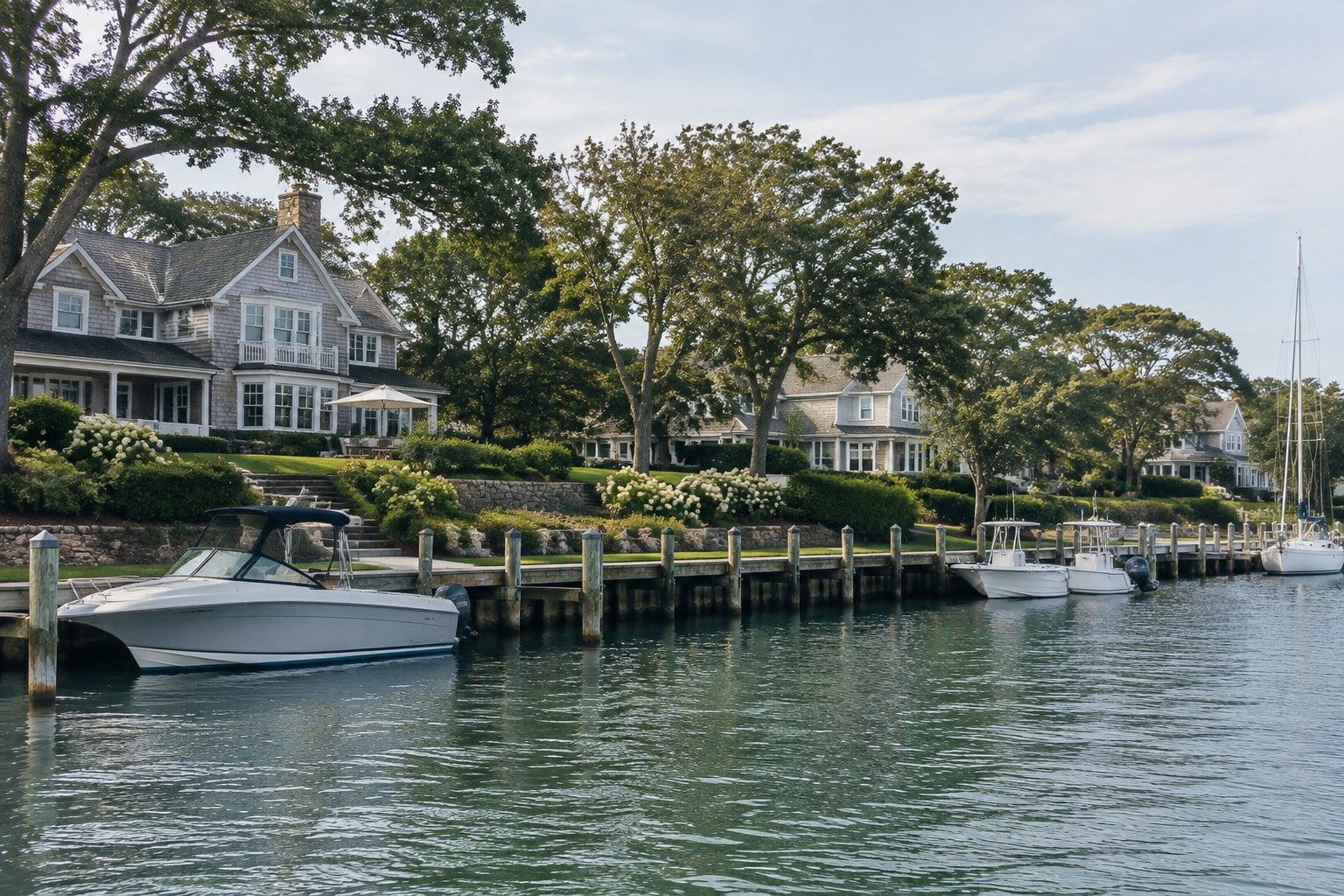
Tisbury’s typical home value is about $1.36 million, according to Zillow, up nearly 9% over the past year. The town had 4,815 year-round residents at the 2020 Census.
Vineyard Haven is Tisbury’s main village, and the two names are often used interchangeably. Vineyard Haven is the main port of entry for Martha’s Vineyard and the only port that operates for most of the year. The Steamship Authority ferry from Woods Hole takes about 45 minutes.
That year-round ferry service makes Tisbury the most practical Vineyard town for people who need to reach the mainland often. Main Street has shops and restaurants, and the harbor is busy with boatyards and sailboats.
Children attend the Tisbury School and then Martha’s Vineyard Regional High School. Prices here are lower than in Chilmark or Edgartown but still about double the state’s typical value.
17. Manchester-by-the-Sea, Massachusetts
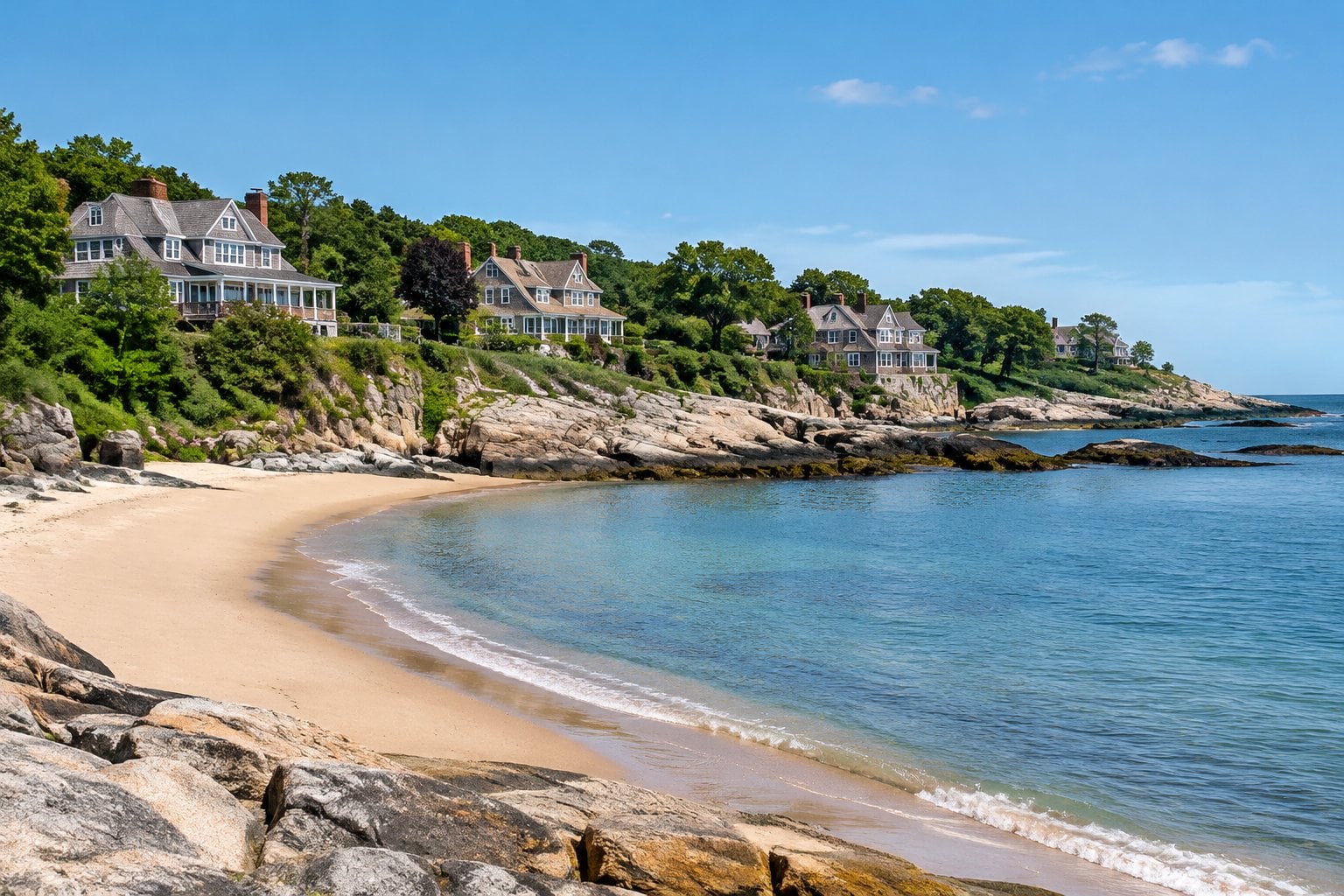
Manchester-by-the-Sea’s typical home value is about $1.35 million, according to Zillow, up about 6.5% over the past year. The town had 5,395 residents at the 2020 Census.
The town sits on the southern side of Cape Ann in Essex County, about 25 miles northeast of Boston. It was called simply Manchester until 1990, and it gained wider attention from the 2016 film that carries its name.
Singing Beach, named for the sound its sand makes underfoot, is a short walk from the town center. The harbor, rocky shoreline and large shingle-style summer homes from the town’s resort era make waterfront property especially costly.
The MBTA’s Newburyport/Rockport Line stops in town, with trains to North Station. Children attend Manchester Essex Regional schools, shared with neighboring Essex.
18. Chatham, Massachusetts
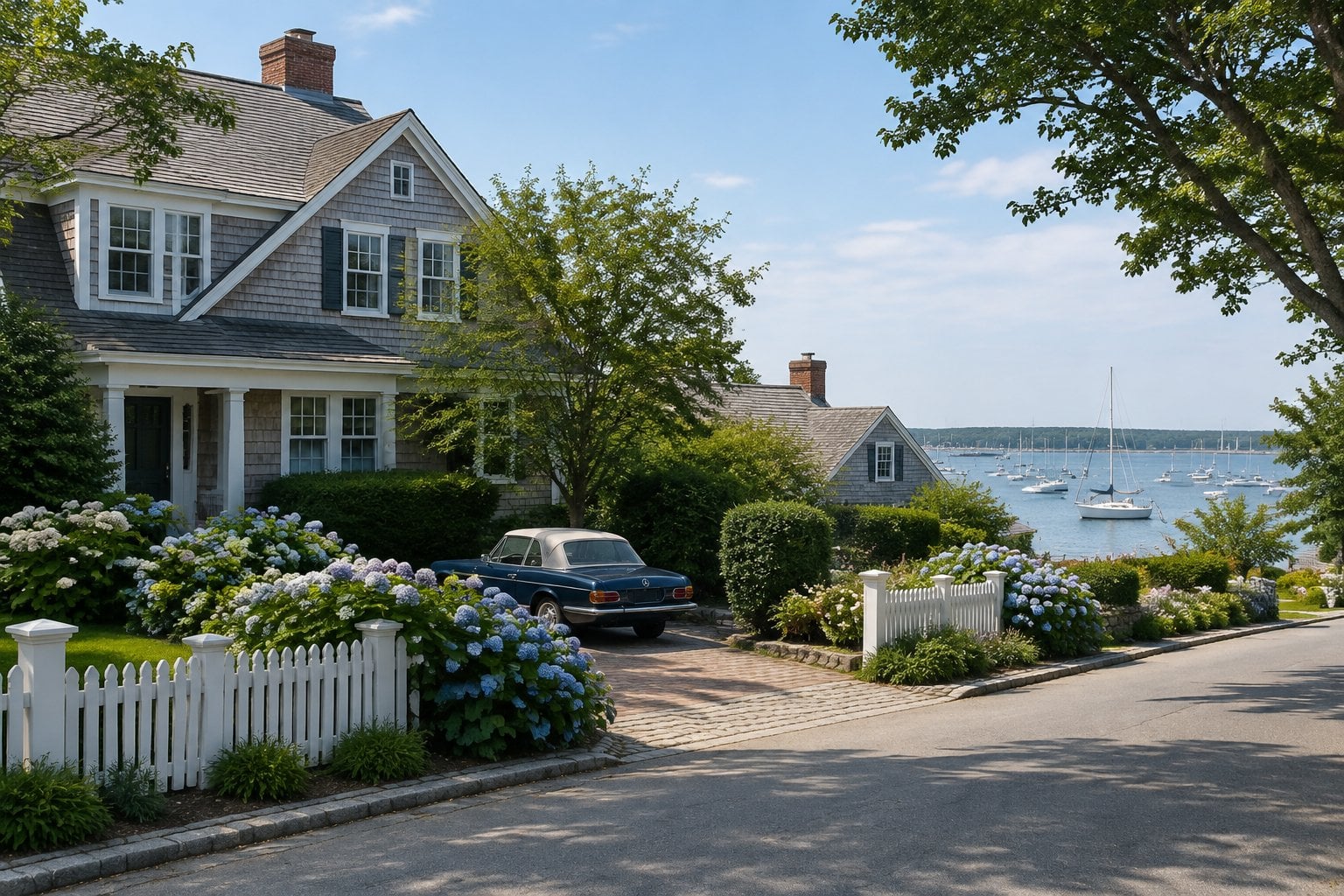
Chatham’s typical home value is about $1.35 million, according to Zillow, up about 9% over the past year, one of the fastest gains on this list. The town had 6,594 residents at the 2020 Census, but its population can swell to about 25,000 in summer.
Chatham sits at the “elbow” of Cape Cod, where the Cape turns north. It has long been a fishing town, and boats still land their catch at the Chatham Fish Pier. Chatham Light, an active Coast Guard lighthouse, overlooks the shore, and the Monomoy National Wildlife Refuge stretches south from town.
Main Street has shops and restaurants, and summer brings Friday evening band concerts in Kate Gould Park.
Children attend the Monomoy Regional School District, shared with Harwich. Boston is roughly 90 miles away, so many owners use their homes seasonally or in retirement.
19. Hingham, Massachusetts
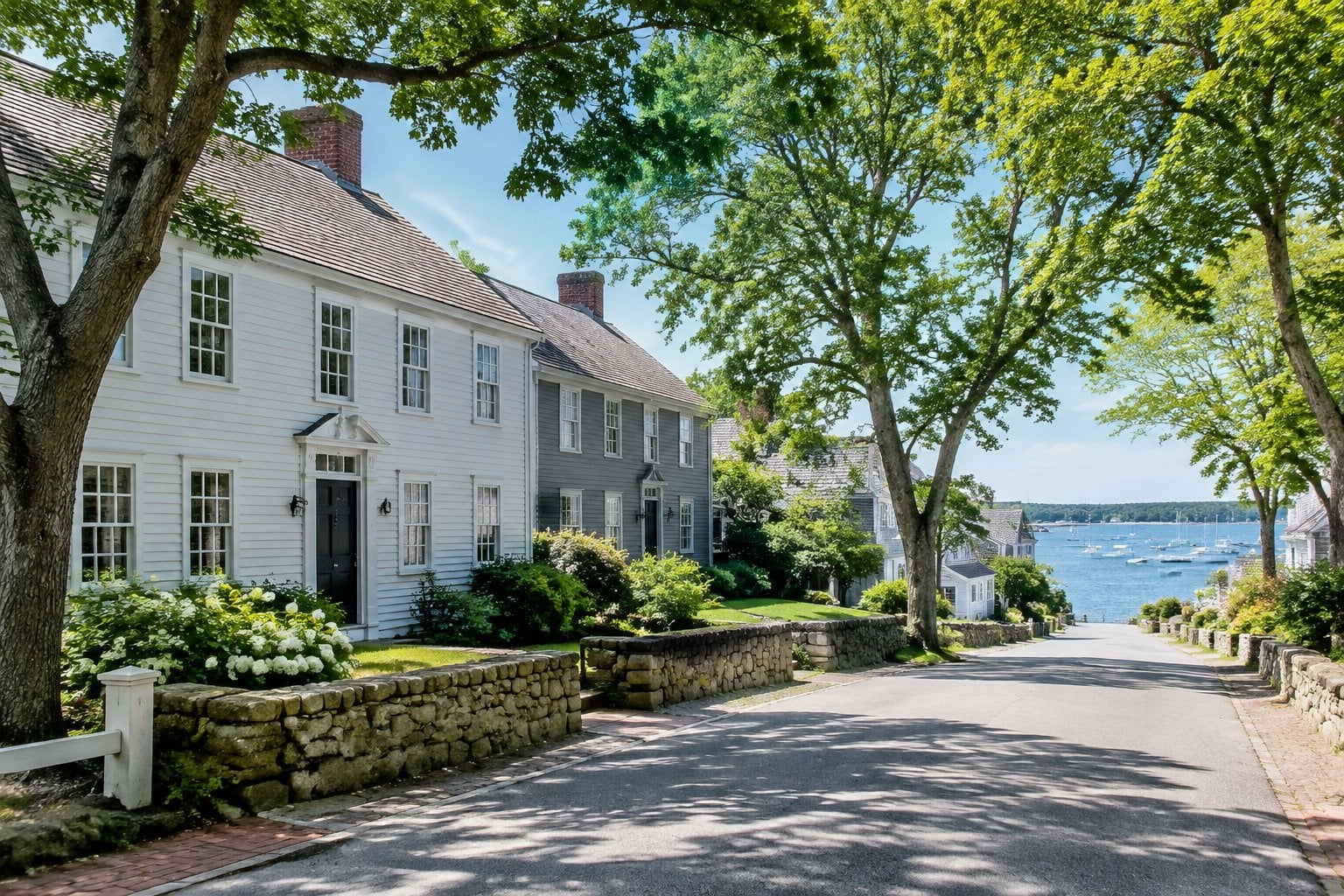
Hingham’s typical home value is about $1.35 million, according to Zillow, up 8% over the past year. The town had 24,284 residents at the 2020 Census.
Hingham is a South Shore town on Boston Harbor, first settled by English colonists in 1633. Its Main Street is lined with historic houses, and the Old Ship Church, built in 1681, is the oldest church building in the country still used for worship. World’s End, a Trustees of Reservations property, offers walking paths with views of the harbor and the Boston skyline.
Commuting options are better than most coastal towns. A commuter ferry runs from Hingham to downtown Boston, and the MBTA’s Greenbush Line has stations in town. Route 3 connects to the city by car.
Hingham Public Schools are well regarded and a common draw for families.
20. Carlisle, Massachusetts
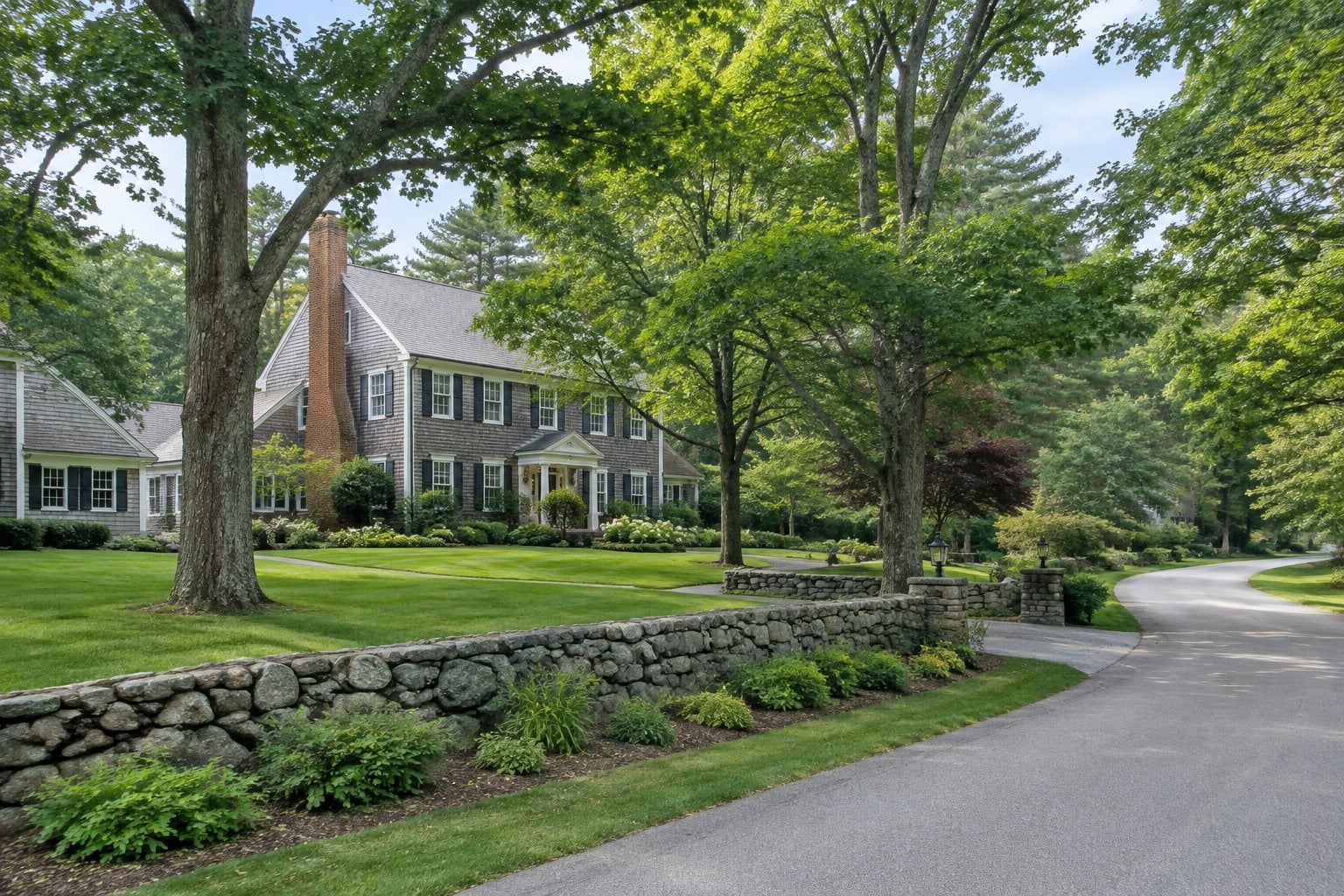
Carlisle’s typical home value is about $1.3 million, according to Zillow, up about 1% from a year earlier. The town had 5,237 residents at the 2020 Census.
Carlisle is a small, rural town about 20 miles northwest of Boston in Middlesex County. It has little commercial development, so residents do most of their shopping in neighboring Concord, Bedford and Chelmsford. Most homes sit on large, wooded lots.
Open space is the main draw. Great Brook Farm State Park, which includes a working dairy farm, lies within the town, along with many acres of town conservation land and trails.
Children attend the Carlisle Public School through eighth grade, then Concord-Carlisle Regional High School. There is no commuter rail station in town, so most residents drive to work or to stations in Concord or nearby towns.
21. Oak Bluffs, Massachusetts
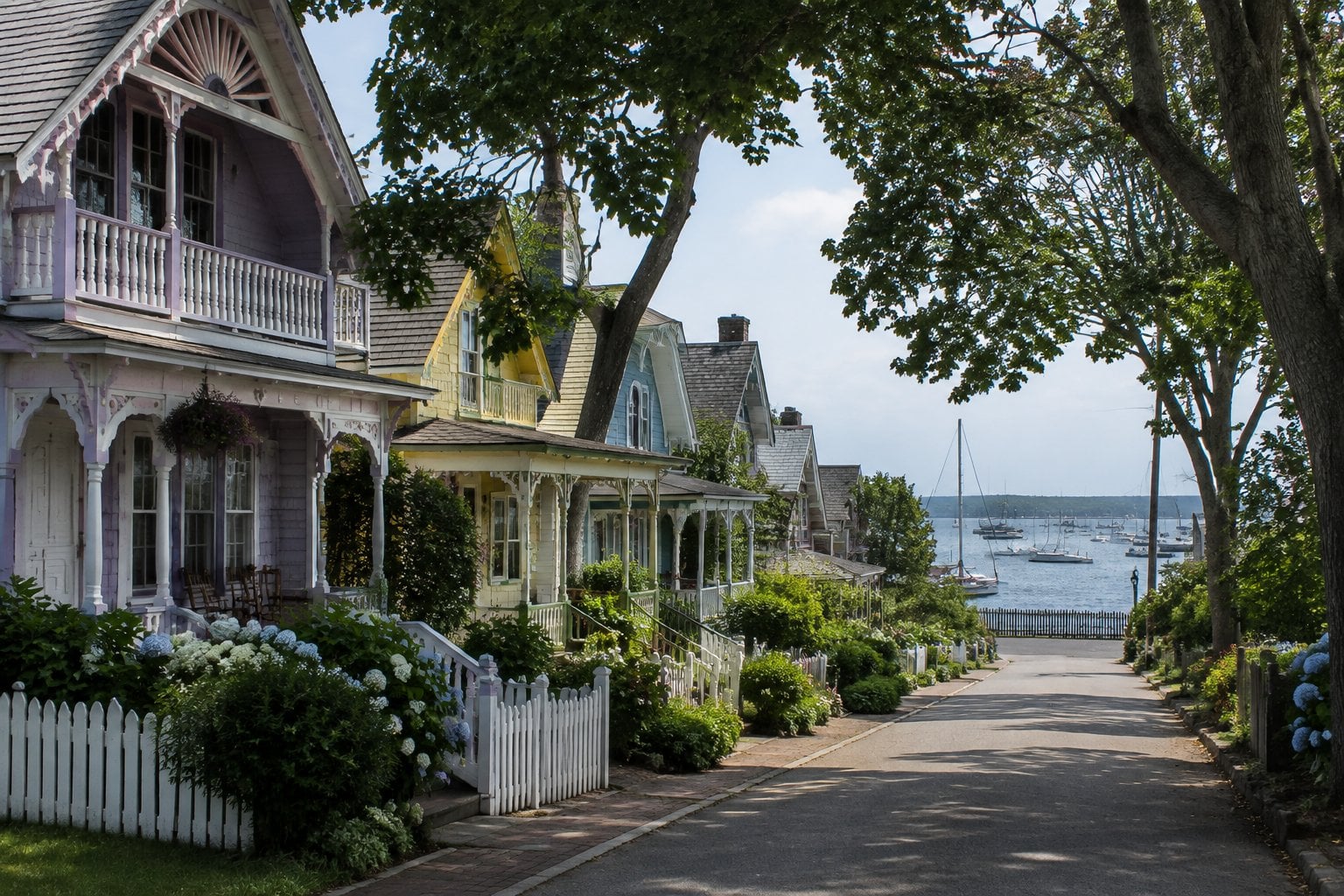
Oak Bluffs’ typical home value is about $1.27 million, according to Zillow, up about 5.5% over the past year. The town had 5,341 year-round residents at the 2020 Census.
Oak Bluffs is one of the main arrival points for summer visitors to Martha’s Vineyard, with seasonal ferries landing at its harbor. The town is known for its colorful “gingerbread cottages” in the Martha’s Vineyard Camp Meeting Association grounds, along with Ocean Park and the Flying Horses Carousel.
It has also been an important center of African American culture since the 18th century, and many families have summered here for generations.
Martha’s Vineyard Regional High School is located in Oak Bluffs, and younger children attend the Oak Bluffs School. Prices are lower than in the Up-Island towns but still close to double the state’s typical value.
22. Brookline, Massachusetts
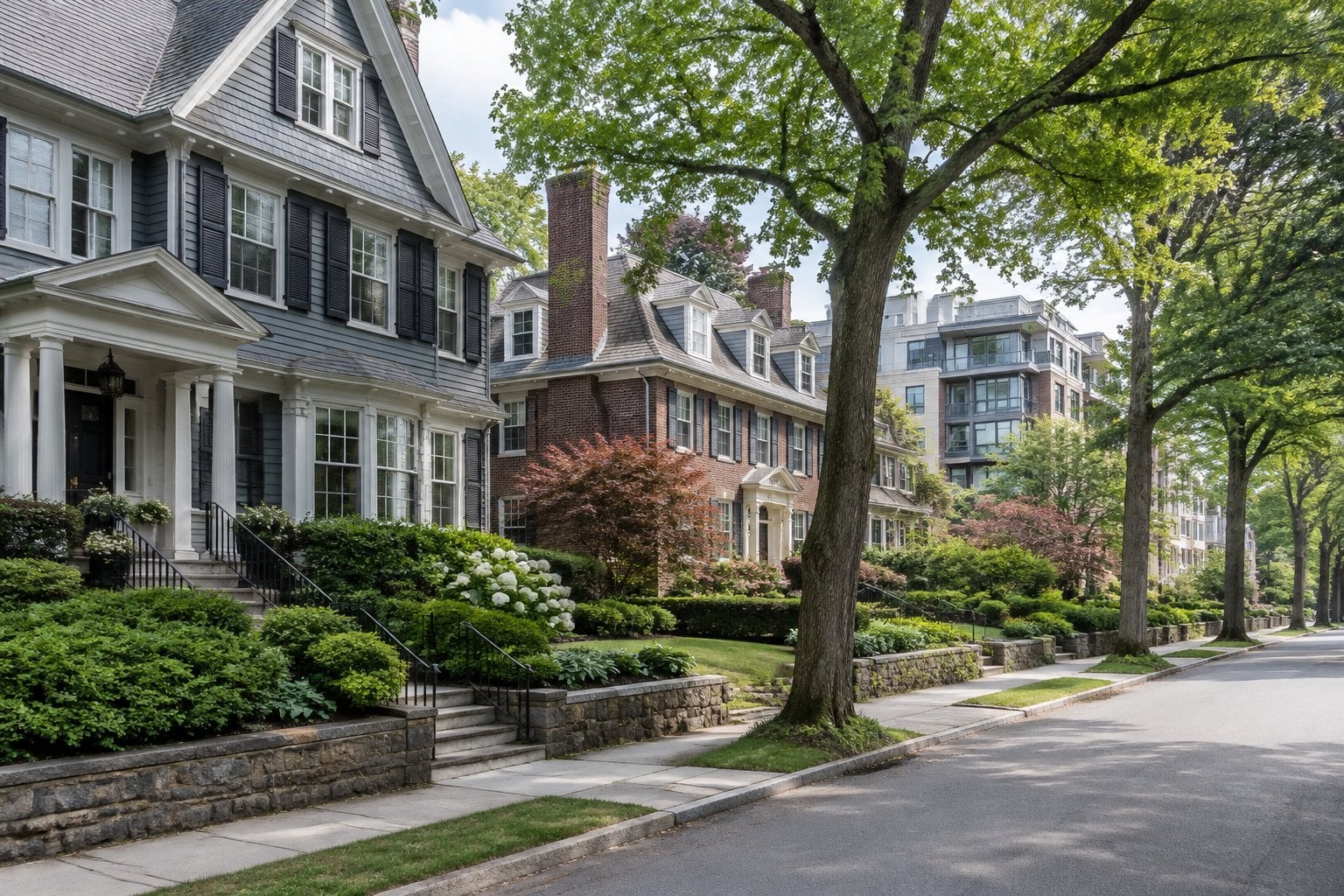
Brookline’s typical home value is about $1.26 million, according to Zillow. It is the only place on this list where values fell over the past year, down nearly 5%.
With 63,191 residents at the 2020 Census, Brookline is the most densely settled town on the list. It borders six Boston neighborhoods, including Brighton, Fenway-Kenmore and Jamaica Plain, and is an exclave of Norfolk County. The northern part of town, along Beacon Street, is urban, with many condos and apartments, while south Brookline has larger single-family homes.
Several branches of the MBTA Green Line run through or along the town, which is a major reason demand stays strong.
Brookline Public Schools are well regarded. The town is the birthplace of President John F. Kennedy, and it is also home to the Frederick Law Olmsted National Historic Site.
23. Westwood, Massachusetts
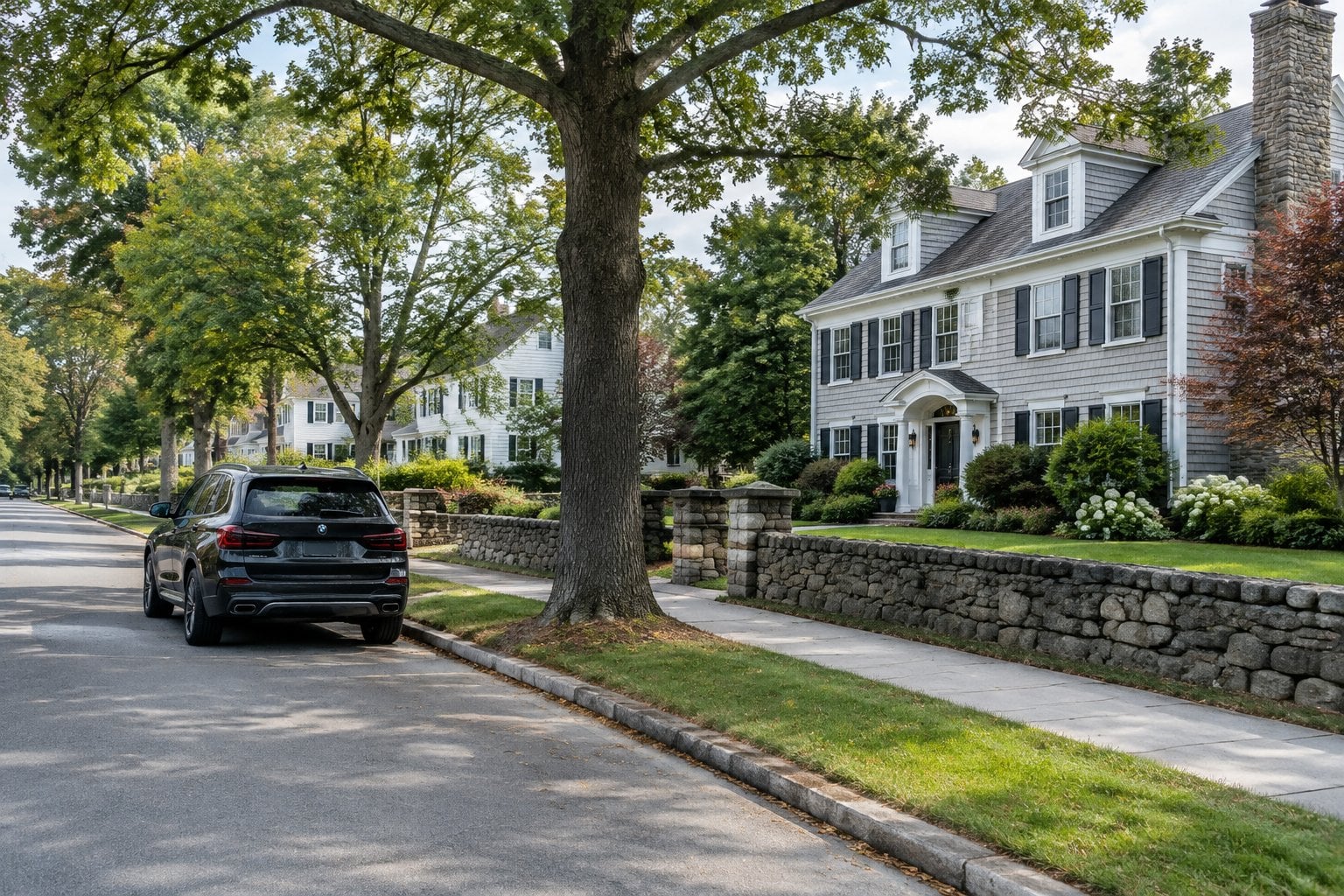
Westwood’s typical home value is about $1.23 million, according to Zillow, up about 3.6% over the past year. The town had 16,266 residents at the 2020 Census.
Westwood is a Norfolk County suburb about 13 miles southwest of Boston. Most homes are single-family, many on wooded lots.
The town has two commuter rail options. Islington station is on the Franklin Line, and Route 128 station, on the Providence/Stoughton Line, is also served by Amtrak trains. The University Station shopping and apartment development sits next to Route 128 station, and Interstate 95 runs along the town’s edge.
Westwood Public Schools are well regarded, and families often cite them as a main reason for moving here. For open space, Hale, a large nonprofit reservation, offers trails, ponds and summer programs.
24. Sherborn, Massachusetts
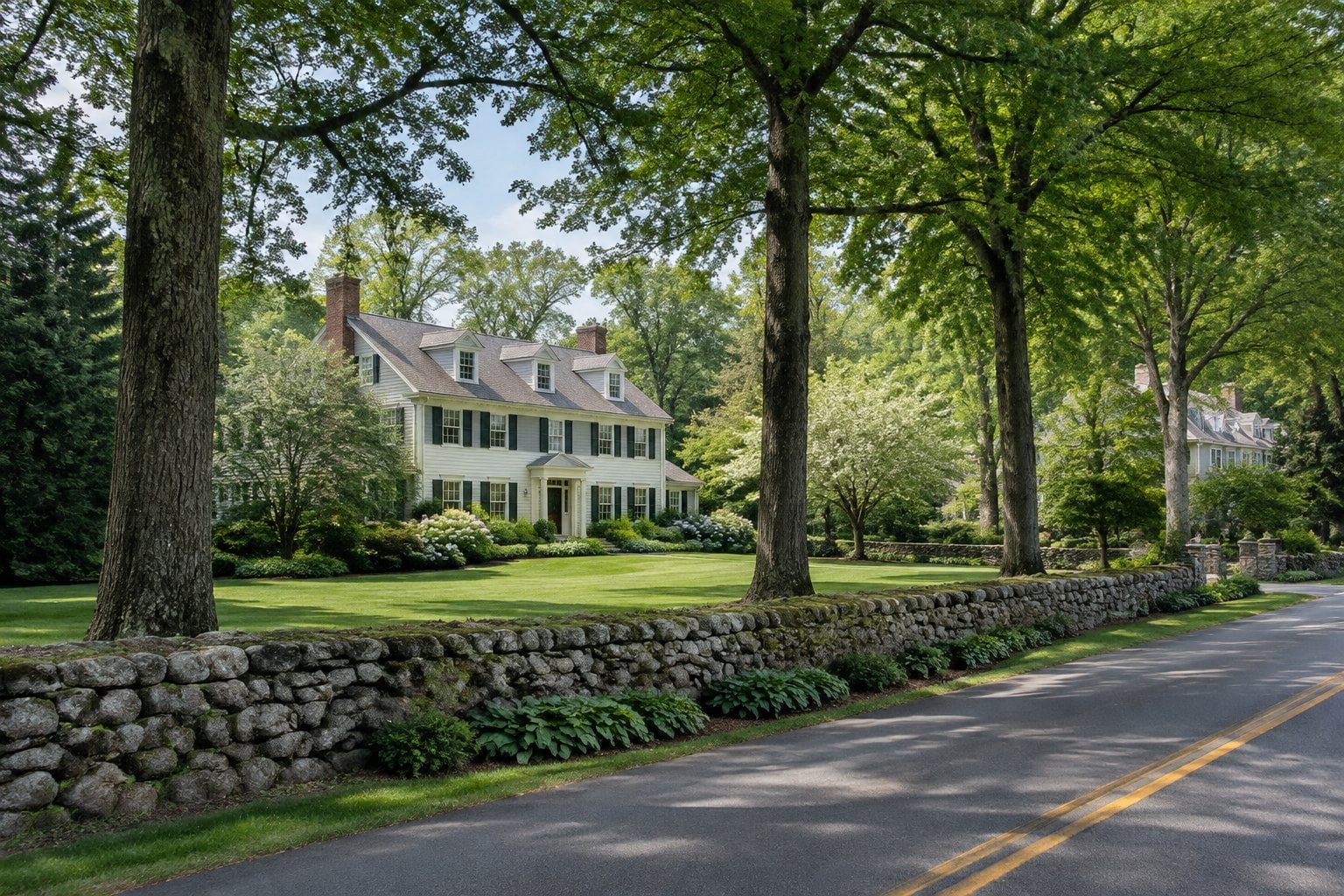
Sherborn’s typical home value is about $1.2 million, according to Zillow, up about 1.4% over the past year. The town had 4,401 residents at the 2020 Census.
Sherborn is a small MetroWest town about 20 miles southwest of Boston. Its large lots, farms and wooded roads give it a quiet, rural feel. The Charles River runs along part of the town, and the Rocky Narrows Reservation protects a stretch of its banks.
Sherborn shares its school system with Dover. Younger children attend Pine Hill School in town, and older students attend the Dover-Sherborn regional middle and high schools, which are among the best regarded in the state.
There is no commuter rail station in Sherborn. Most residents drive, and the nearest trains to Boston stop in nearby towns such as Framingham and Natick.
25. Wayland, Massachusetts
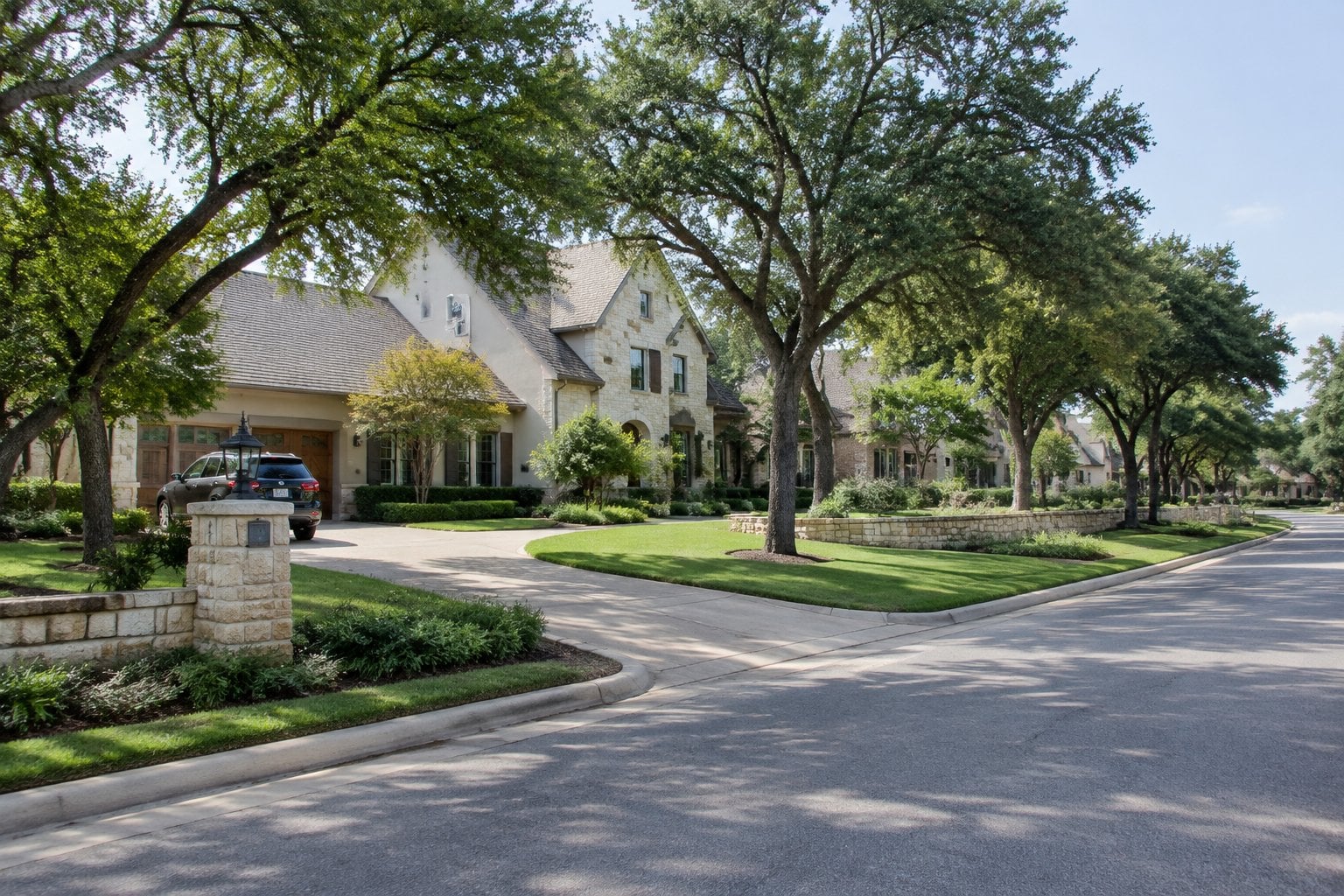
Wayland’s typical home value is about $1.13 million, according to Zillow, up about 1% over the past year. The town had 13,943 residents at the 2020 Census.
Wayland was founded in 1638 as part of neighboring Sudbury and became a separate town in 1780. It sits about 17 miles west of Boston and includes the village of Cochituate.
Water and open land shape the town. Lake Cochituate lies along its southern side, and the Sudbury River runs through wetlands that are part of the Great Meadows National Wildlife Refuge. Most homes are single-family houses on generous lots.
Wayland Public Schools are well regarded and a common draw for families. There is no rail station in town, but Route 20, Route 30 and Route 27 lead to the Massachusetts Turnpike and Route 128.
26. Sudbury, Massachusetts
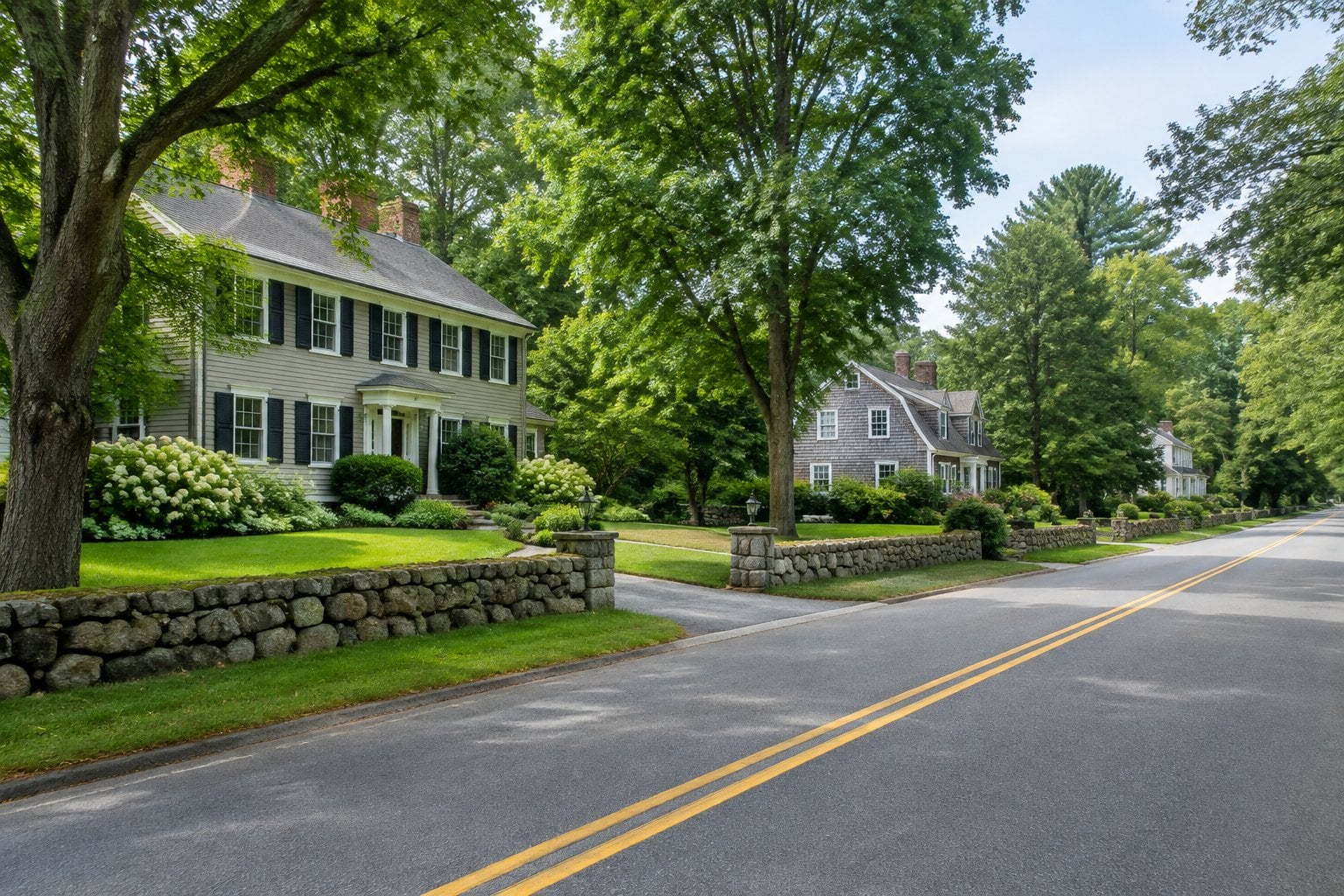
Sudbury’s typical home value is about $1.12 million, according to Zillow, up less than 1% over the past year. The town had 18,934 residents at the 2020 Census.
Sudbury is a MetroWest town about 20 miles west of Boston with roots going back to colonial times. Longfellow’s Wayside Inn, which inspired Henry Wadsworth Longfellow’s “Tales of a Wayside Inn,” is still operating in town. Much of the town is wooded, and the Sudbury River and Great Meadows National Wildlife Refuge add protected open land.
Housing is mostly single-family, from antique colonials to newer homes on larger lots.
Children attend Sudbury Public Schools and then Lincoln-Sudbury Regional High School, both well regarded. Route 20 and Route 117 cross the town, but there is no commuter rail station, so most residents drive.
27. Duxbury, Massachusetts
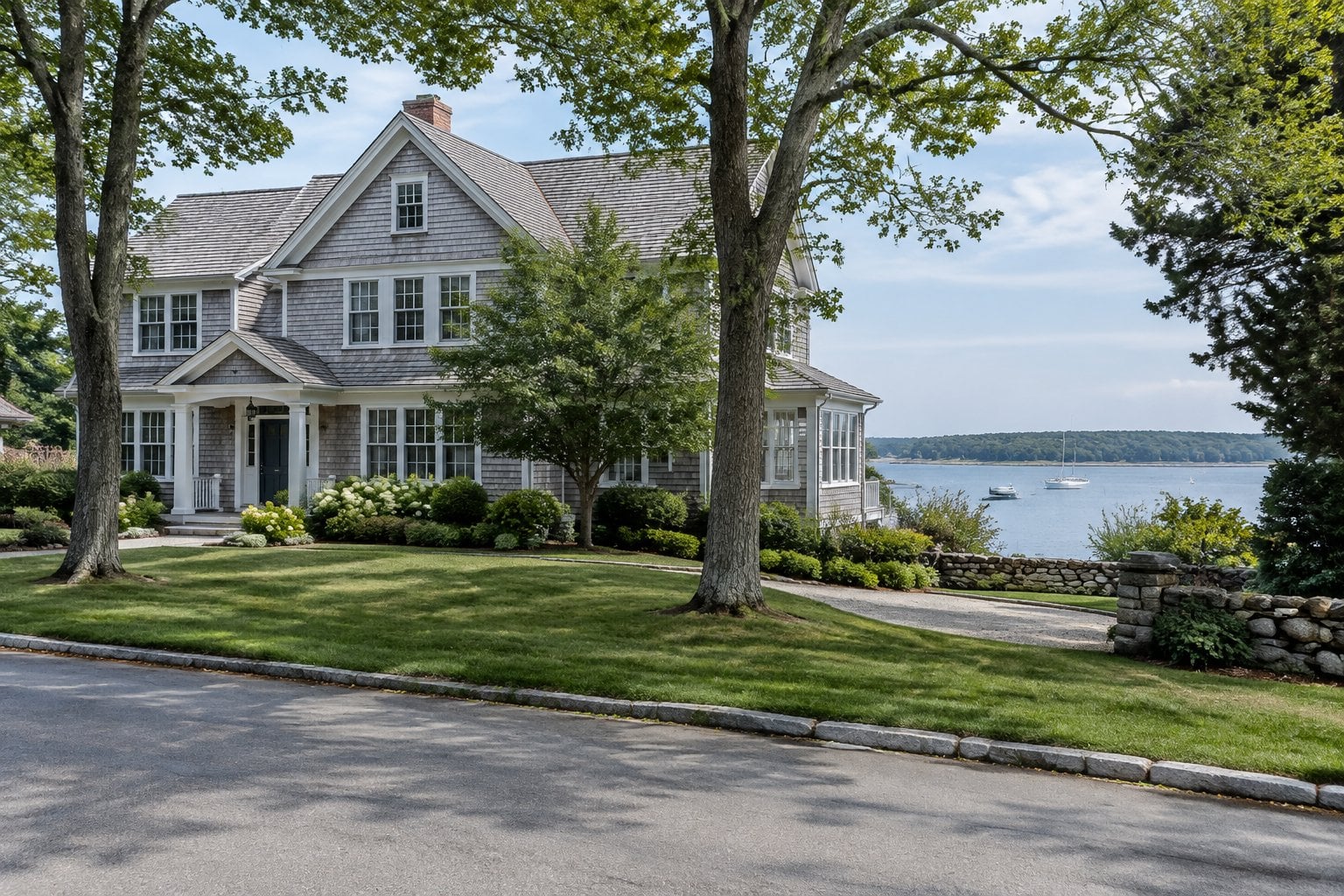
Duxbury’s typical home value is about $1.11 million, according to Zillow, up nearly 5% over the past year. The town had 16,090 residents at the 2020 Census.
Duxbury is a South Shore town about 35 miles southeast of Boston, on Duxbury Bay. It was settled by Pilgrims from Plymouth Colony, including Myles Standish and John Alden, and many historic homes remain.
Duxbury Beach, a long barrier beach, is reached by the wooden Powder Point Bridge. Boating, shellfishing and sailing are part of daily life, and waterfront homes sell for well above the town’s typical value.
Duxbury Public Schools are well regarded. There is no commuter rail station in town; most commuters drive Route 3 or use the station in neighboring Kingston.
28. Provincetown, Massachusetts
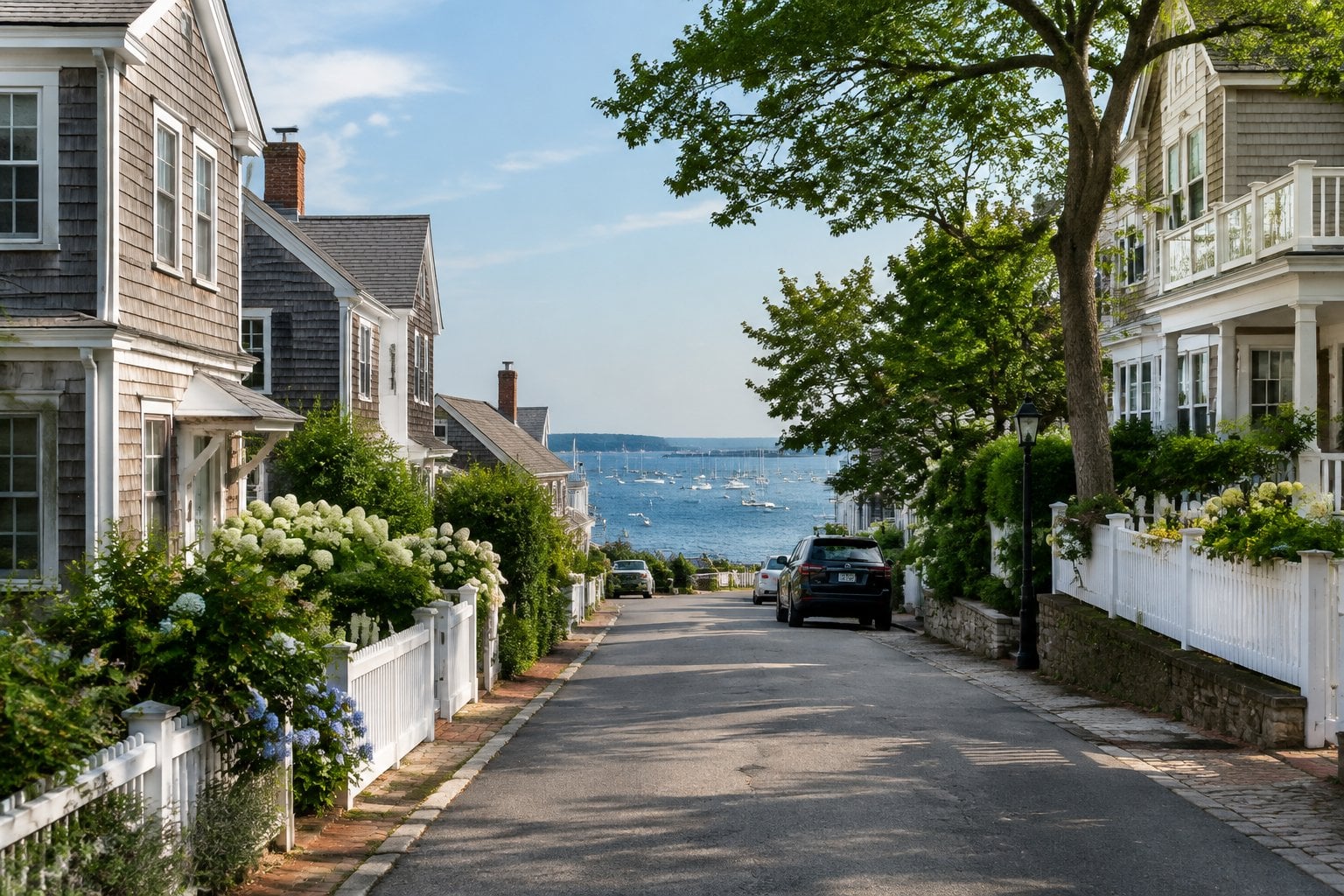
Provincetown’s typical home value is about $1.09 million, according to Zillow, up nearly 5% over the past year. The town had 3,664 year-round residents at the 2020 Census, but its summer population can reach about 60,000.
The town sits at the very tip of Cape Cod. The Pilgrims first landed here in 1620 and signed the Mayflower Compact in its harbor before settling in Plymouth, an event marked by the Pilgrim Monument.
Provincetown has long been an arts colony and is a popular destination for LGBTQ travelers. Much of the surrounding land is protected within the Cape Cod National Seashore, so there is little room to build, and many homes are condos in older buildings near Commercial Street.
Boston is about a two-and-a-half-hour drive away, though seasonal fast ferries make the trip by water.
29. Lynnfield, Massachusetts
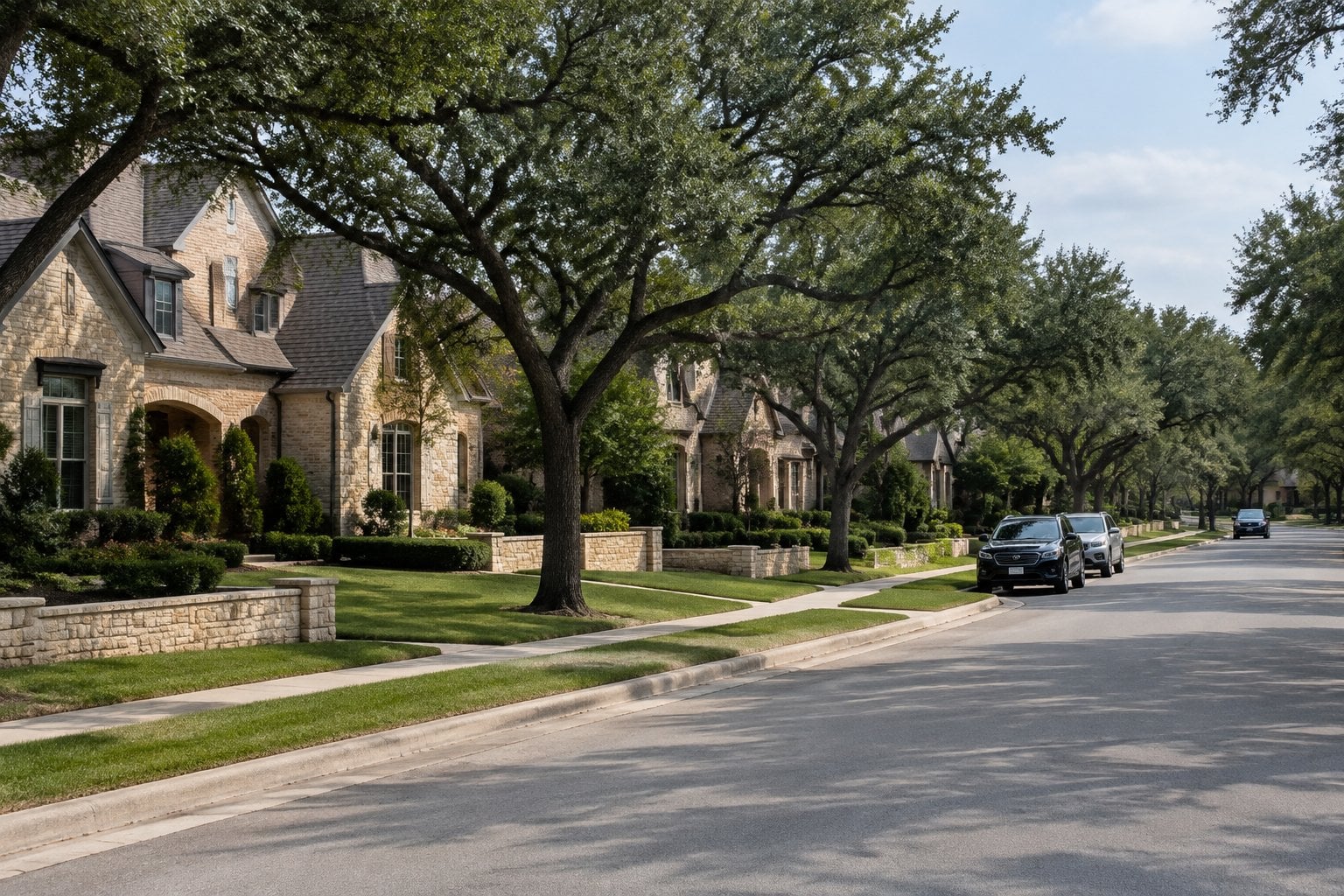
Lynnfield’s typical home value is about $1.09 million, according to Zillow, up about 2% over the past year. The town had 13,000 residents at the 2020 Census.
Lynnfield is a North Shore town in Essex County, about 13 miles north of Boston. It grew from two villages, Lynnfield Center and South Lynnfield, into one of the more prosperous suburbs on the North Shore. Most homes are single-family houses on quiet residential streets.
The town has easy highway access, with Route 128 and Route 1 nearby, and the MarketStreet Lynnfield shopping center is in town. There is no commuter rail station, so most residents drive.
Lynnfield Public Schools serve the town and are a common reason families move here. The historic common in Lynnfield Center gives the town a traditional New England look.
30. Orleans, Massachusetts
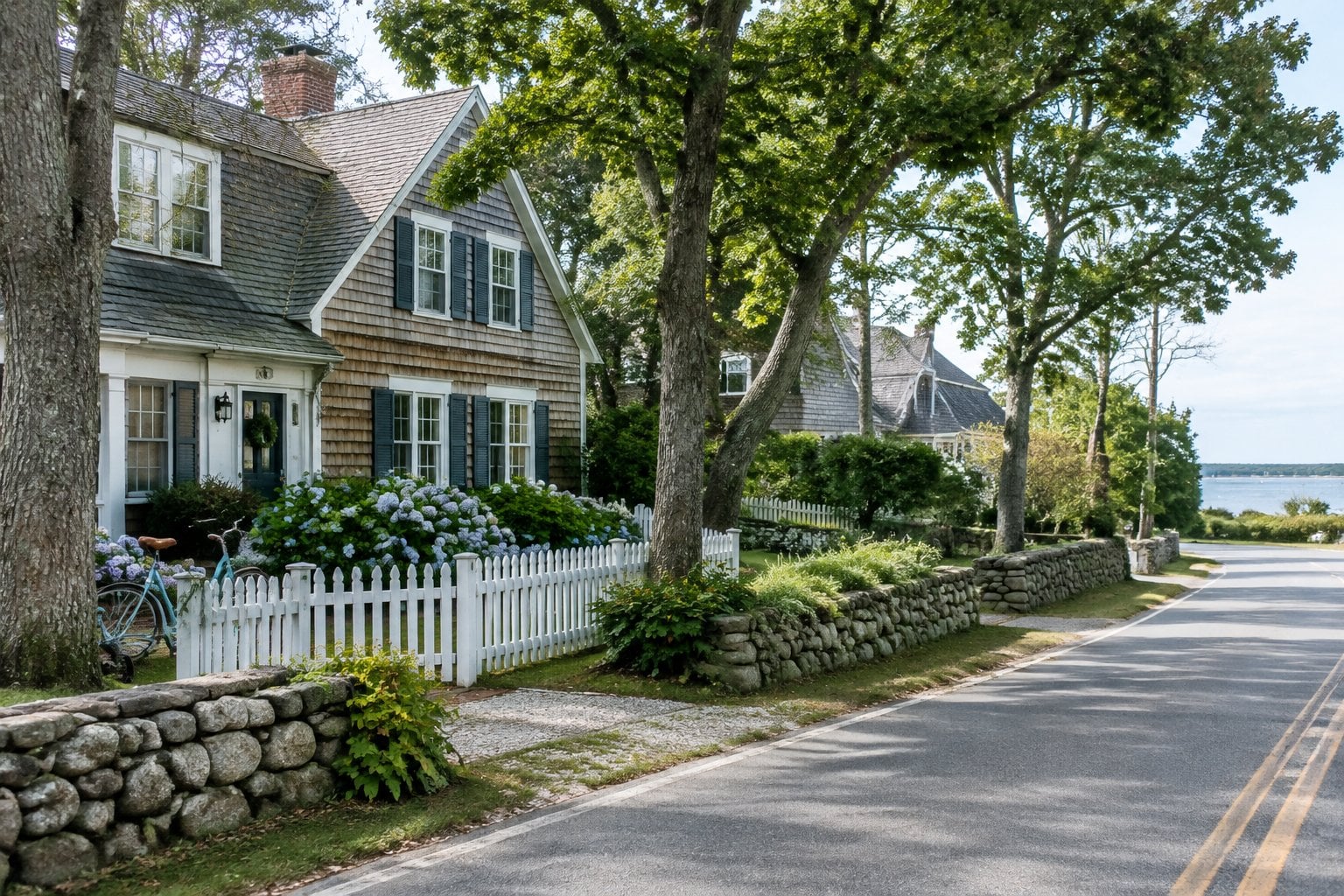
Orleans rounds out the list with a typical home value of about $1.08 million, according to Zillow, up nearly 4% over the past year. The town had 6,307 residents at the 2020 Census. Harwich Port, just behind at about the same value, narrowly misses the top 30.
Orleans sits where the Outer Cape begins, about 90 miles from Boston. It has water on both sides: Nauset Beach faces the open Atlantic, while Skaket Beach on Cape Cod Bay is known for calm water and wide tidal flats at low tide. Pleasant Bay lies along its southeastern side.
The compact town center has shops, restaurants and services that people from neighboring towns also rely on.
Children attend the Nauset Regional schools. Because daily commuting to Boston is not practical, many buyers are retirees, remote workers and second-home owners.
What Drives Living Costs in Massachusetts’ Priciest Towns
Prices in these towns are high for different reasons, but most come down to limited land, strong demand and the extra costs of owning a home in New England.
Islands and Coastline With Little Room to Build
Thirteen of the 30 places on this list are on Nantucket, Martha’s Vineyard, Cape Cod or the coast. Waterfront land cannot be added, a large share of the islands and the Outer Cape is protected from development, and second-home buyers compete with year-round residents for the homes that do come up for sale. Nine Massachusetts towns on this list, led by Nantucket, also rank among the most expensive places to live on the East Coast.
On the islands, everyday costs run higher too. Goods have to arrive by boat, and many local workers struggle to find year-round housing.
Schools, Commutes and Large-Lot Zoning
Sixteen of the 30 places are inland suburbs in Middlesex and Norfolk counties, within about 20 miles of Boston. Buyers there pay for well-regarded public schools and for access to jobs in Boston, Cambridge and along Route 128. Towns such as Dover, Weston and Carlisle are zoned mostly for single-family homes on large lots, which limits how many houses can be built and keeps prices high.
Property Taxes and Other Costs to Budget For
Each Massachusetts city and town sets its own property tax rate per $1,000 of assessed value, and Proposition 2½ limits how fast a town’s total tax levy can grow each year. High-value towns often have lower rates, but tax bills can still be large because the homes are worth so much. The Tax Foundation’s Massachusetts tax data is a useful starting point for comparing the state’s tax burden.
Beyond taxes, budget for heating through long winters, regular upkeep on older homes, and flood insurance for many coastal properties. On the islands and the Cape, ferry costs and seasonal traffic are part of the price of living there.