The 30 Most Expensive Neighborhoods in the U.S.
Wealth in America tends to concentrate in specific pockets of real estate, from coastal enclaves to private urban districts. If you want to understand where the country’s highest home values exist, looking at the most expensive neighborhoods gives you a clear picture of luxury real estate trends.
These areas often share common traits, including proximity to major cities, waterfront access, or exclusive amenities that limit availability. Factors like location, land scarcity, and demand from high-income buyers shape these markets.
You’ll find that certain states appear repeatedly on lists of premium neighborhoods, reflecting broader economic and geographic patterns. Examining these areas helps you recognize what drives extreme property values across different regions.
1. Atherton, California
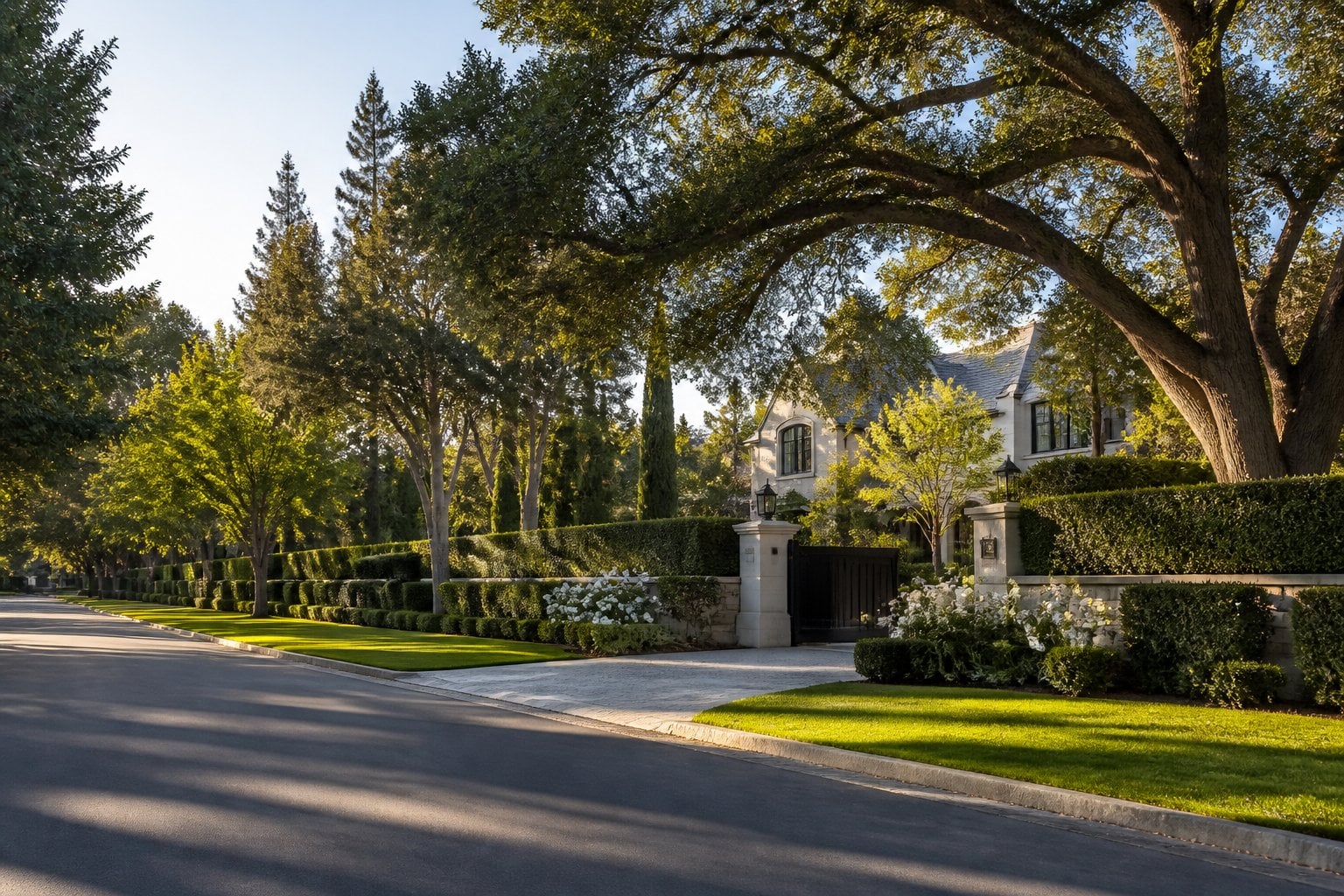
You’ll find Atherton holding the top spot as the most expensive ZIP code in the United States, a position it has claimed multiple times in recent years. This San Mateo County town sits at the heart of Silicon Valley, and its exclusivity comes from decades of tech-driven wealth concentration.
Your neighbors here likely include tech executives and high-profile investors drawn to the area’s proximity to major companies and venture capital firms. Home prices reflect this demand, with median values reaching into the tens of millions.
You won’t find crowded streets or commercial density in Atherton. The town maintains large lot sizes and limited housing inventory, which keeps supply low and prices high.
Recent sales activity backs up its ranking. Atherton has recorded multiple home sales of $30 million or more within a single year, putting it ahead of other elite markets like Miami’s Fisher Island.
2. Hillsborough, California
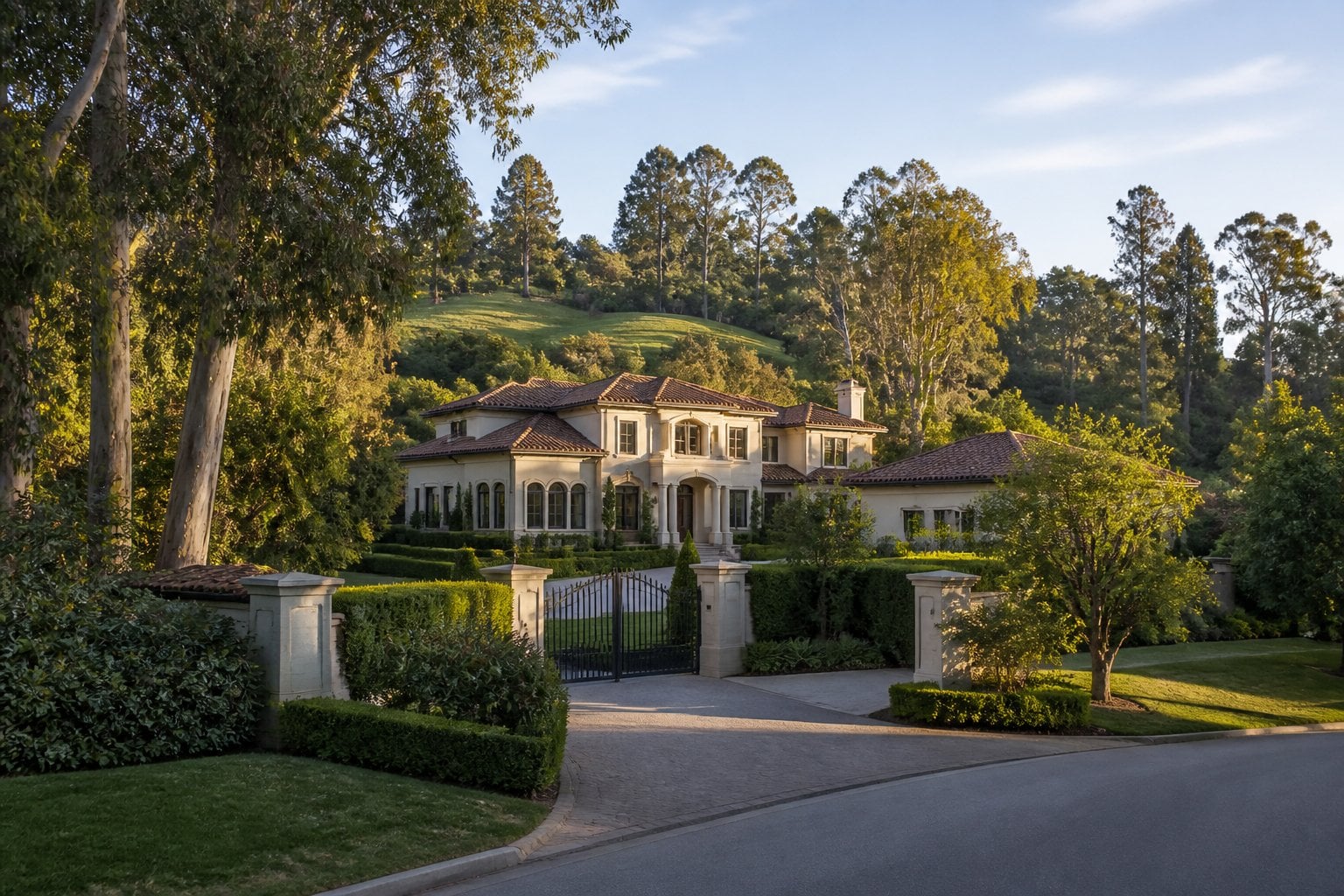
Hillsborough sits on the San Francisco Peninsula in San Mateo County. You’ll find a town of roughly 11,000 residents, with no commercial districts and strict zoning that bans apartments, condos, and townhouses.
Median household income here exceeds $370,000, placing it among the top-earning communities in the country. Home values average close to $5.7 million, and many properties sit on large lots with mature landscaping and privacy.
Architectural styles vary widely across the town, from historic estates to newer custom builds. You can expect expansive grounds, pools, and tennis courts on many properties, reflecting the low-density, large-lot character the town has maintained for decades.
Its proximity to Silicon Valley draws tech executives and established families seeking seclusion without straying far from major business hubs. The town’s zoning restrictions have kept its residential character intact, reinforcing its reputation as one of the most exclusive addresses in California.
3. Woodside, California
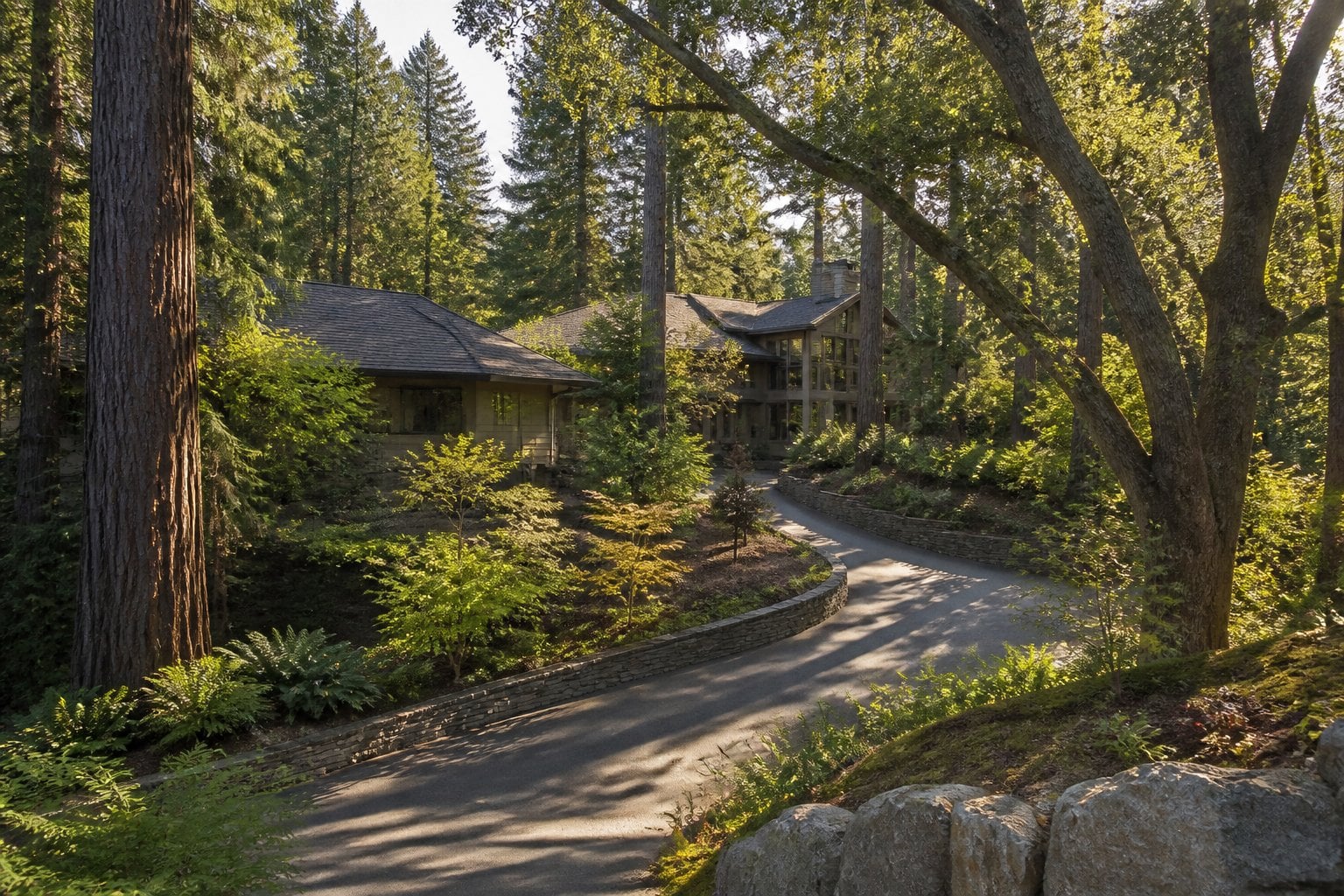
Woodside sits in San Mateo County, tucked into the hills of Silicon Valley. With a population of just over 5,000, it remains one of the smallest and most exclusive towns in the state.
Home values here regularly exceed $4 million, placing Woodside among the priciest housing markets in the country. You’ll find mostly large, single-family properties set on spacious lots, many offering privacy through wooded terrain and hillside positioning.
The town has built a reputation as a haven for tech executives and venture capitalists. Its proximity to major tech hubs, combined with its secluded, rural character, appeals to buyers seeking distance from urban density without sacrificing access to Silicon Valley’s business centers.
Woodside’s zoning favors low-density development, which helps preserve its open, estate-like feel. This approach limits new construction and keeps inventory tight, factors that continue to support its high property values year after year.
4. Los Altos Hills, California
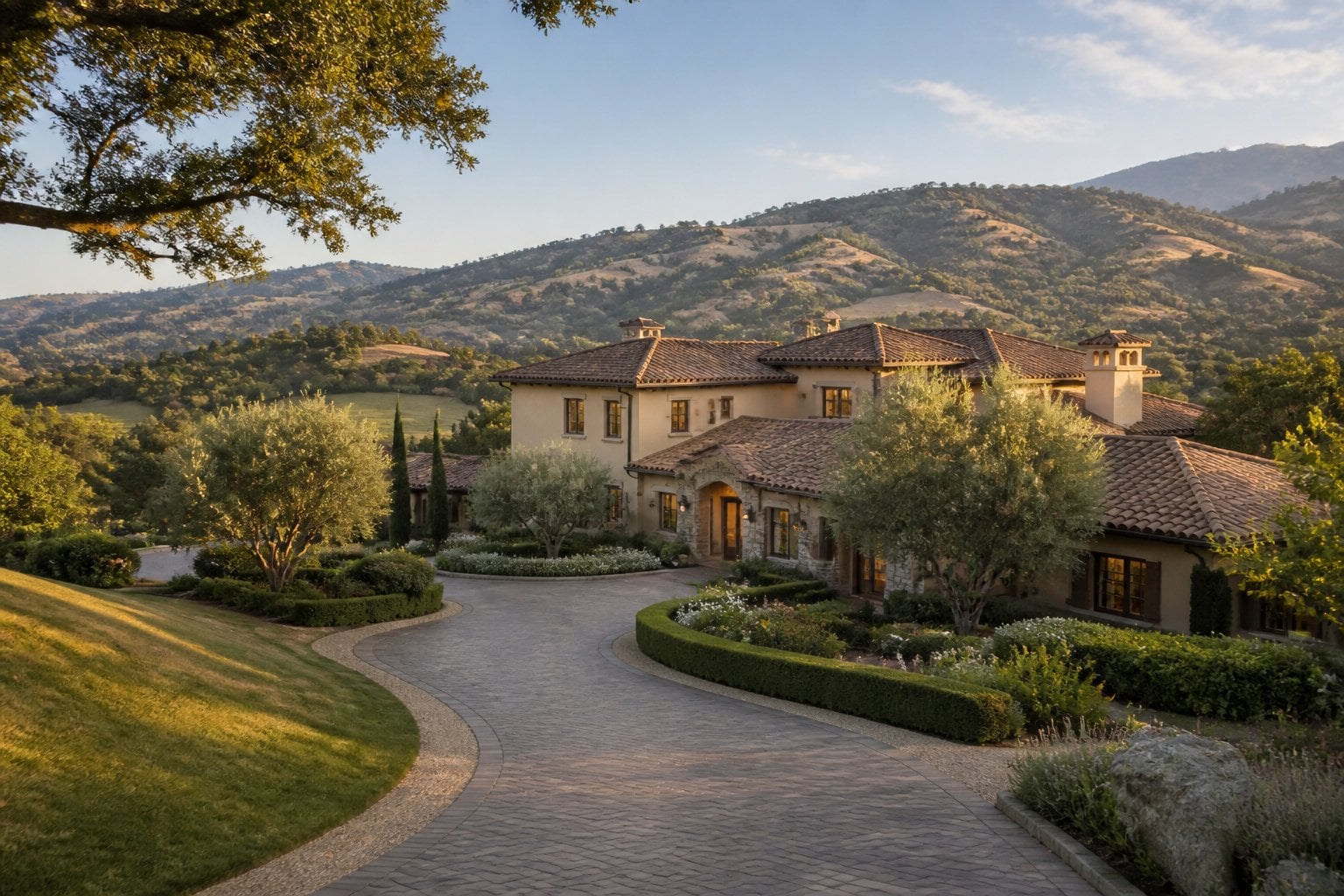
If you’re looking at Los Altos Hills, you’re looking at one of the wealthiest small towns in the country. The community has roughly 8,400 residents and a median home value that exceeds $5 million.
You’ll find that most properties here consist of large, single-family estates on generous lots. Zoning rules favor low-density development, so you won’t see the dense housing common in nearby Silicon Valley cities.
Your neighbors would likely include tech executives and other high-income professionals, given the town’s proximity to major employers in the region. Mean household income sits above $400,000, and a large share of residents hold at least a bachelor’s degree.
You can expect privacy and space to be defining features of life here, more so than commercial activity or nightlife, since the town is almost entirely residential.
5. Bel Air, Los Angeles, California
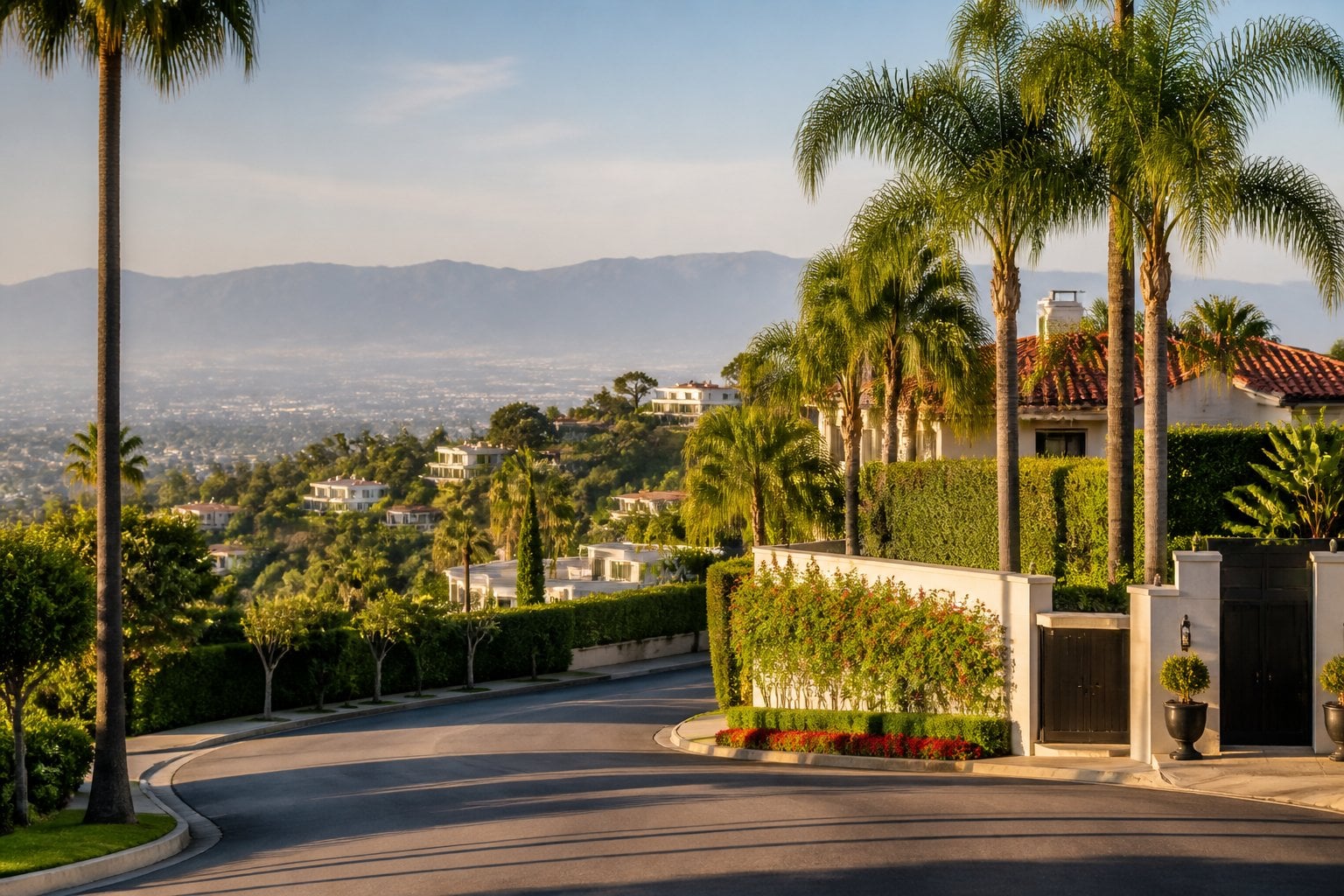
You know Bel Air by reputation before you ever see it. This gated community sits within LA’s Westside, forming part of the Platinum Triangle alongside Beverly Hills and Holmby Hills.
Homes here average $1,318 per square foot, among the highest rates in the city. You’ll find estates set back from winding, hillside streets, offering privacy that few other LA neighborhoods can match.
If you’re renting instead of buying, expect a one-bedroom to cost around $3,480 per month, roughly 45% above the city average.
The architecture ranges from sprawling contemporary compounds to classic Mediterranean-style mansions. Many properties include multiple acres, private gates, and views stretching toward the city or ocean.
Bel Air’s combination of security, space, and prestige keeps it at the top of Los Angeles real estate rankings year after year.
6. Beverly Hills, California
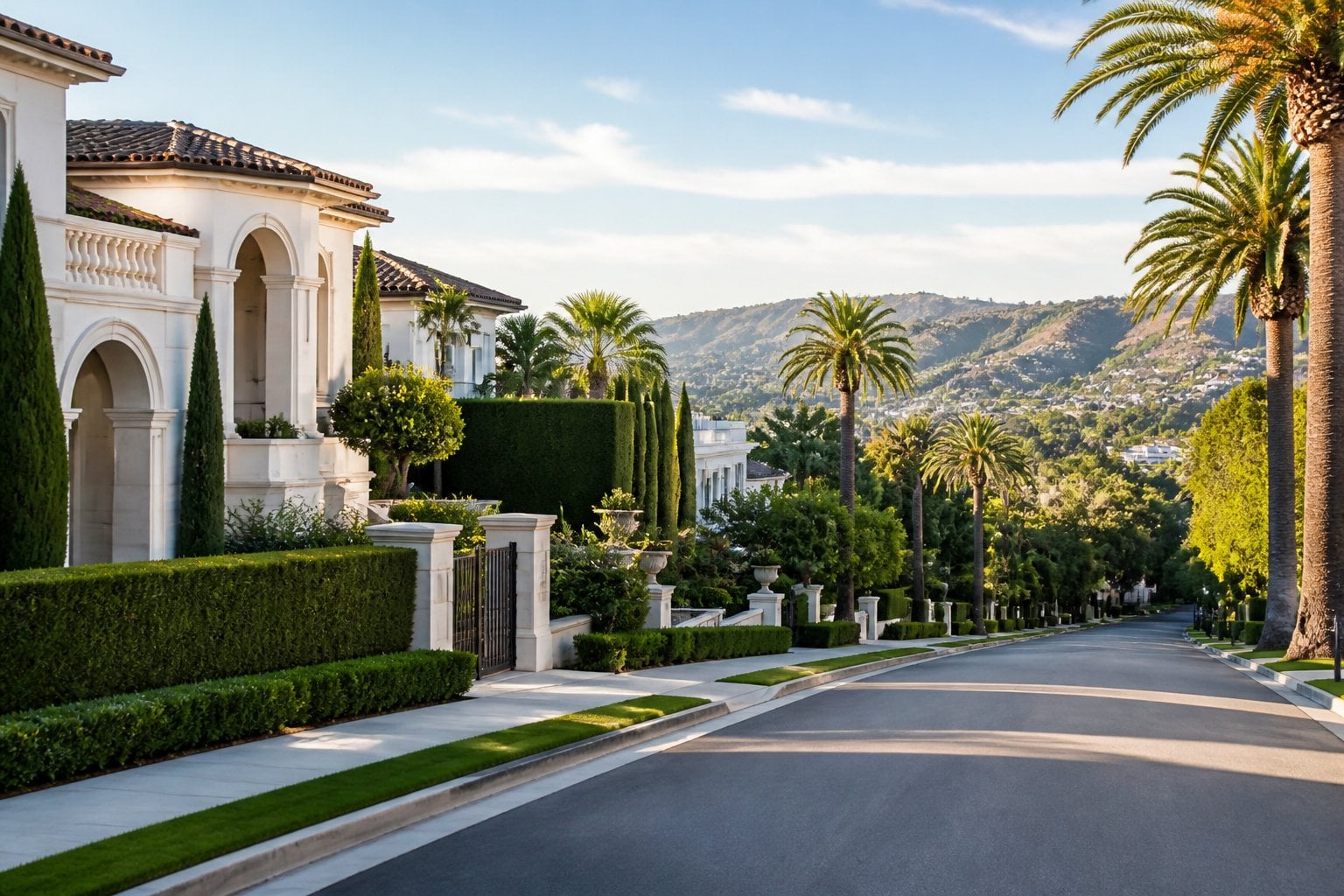
You know Beverly Hills by its zip code alone. 90210 has become shorthand for wealth, and the real estate backs that reputation up.
Median listing prices in this zip code now approach $10.5 million, a sharp increase from prior years. This puts Beverly Hills among the top-ranked expensive zip codes in the country.
You’ll find gated mansions, manicured lawns, and palm-lined streets throughout the flats and hills. The city has long attracted entertainment industry figures and business leaders who want privacy paired with proximity to Los Angeles.
Rodeo Drive sits at the center of the city’s luxury retail scene, drawing shoppers to its high-end boutiques. Beyond shopping, you’ll notice the architecture varies widely, from Mediterranean revival estates to sleek modern builds, reflecting decades of wealth accumulation in a compact 5.7-square-mile area.
7. Holmby Hills, Los Angeles, California
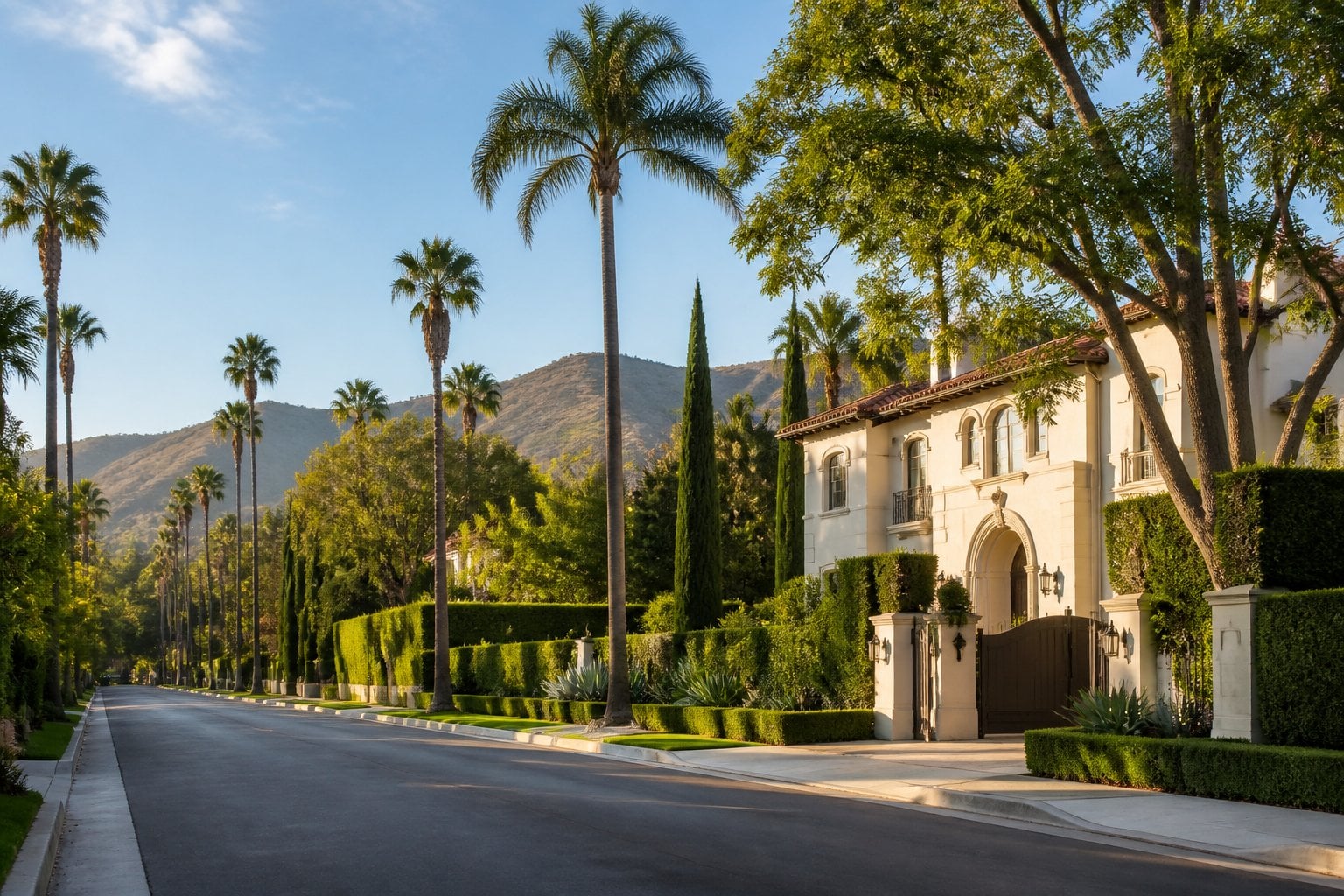
You’ll find Holmby Hills tucked between Bel Air and Beverly Hills, completing what’s known as the Platinum Triangle of Westside luxury. This small enclave was developed in the early 20th century by the Janss Investment Company, the same firm behind much of Westwood.
Estate sizes here often exceed 10,000 square feet, sitting on generous lots with mature landscaping. You may recognize some addresses, including the former Playboy Mansion and the Spelling Manor.
Prices routinely reach into the tens of millions, with select properties commanding far more. The neighborhood favors architectural pedigree, and many homes function as showcases for notable designers and builders.
Unlike busier luxury markets, Holmby Hills operates with limited inventory and low turnover. You won’t see frequent listings, since transactions tend to happen quietly, often before properties reach public platforms.
8. Pacific Heights, San Francisco, California
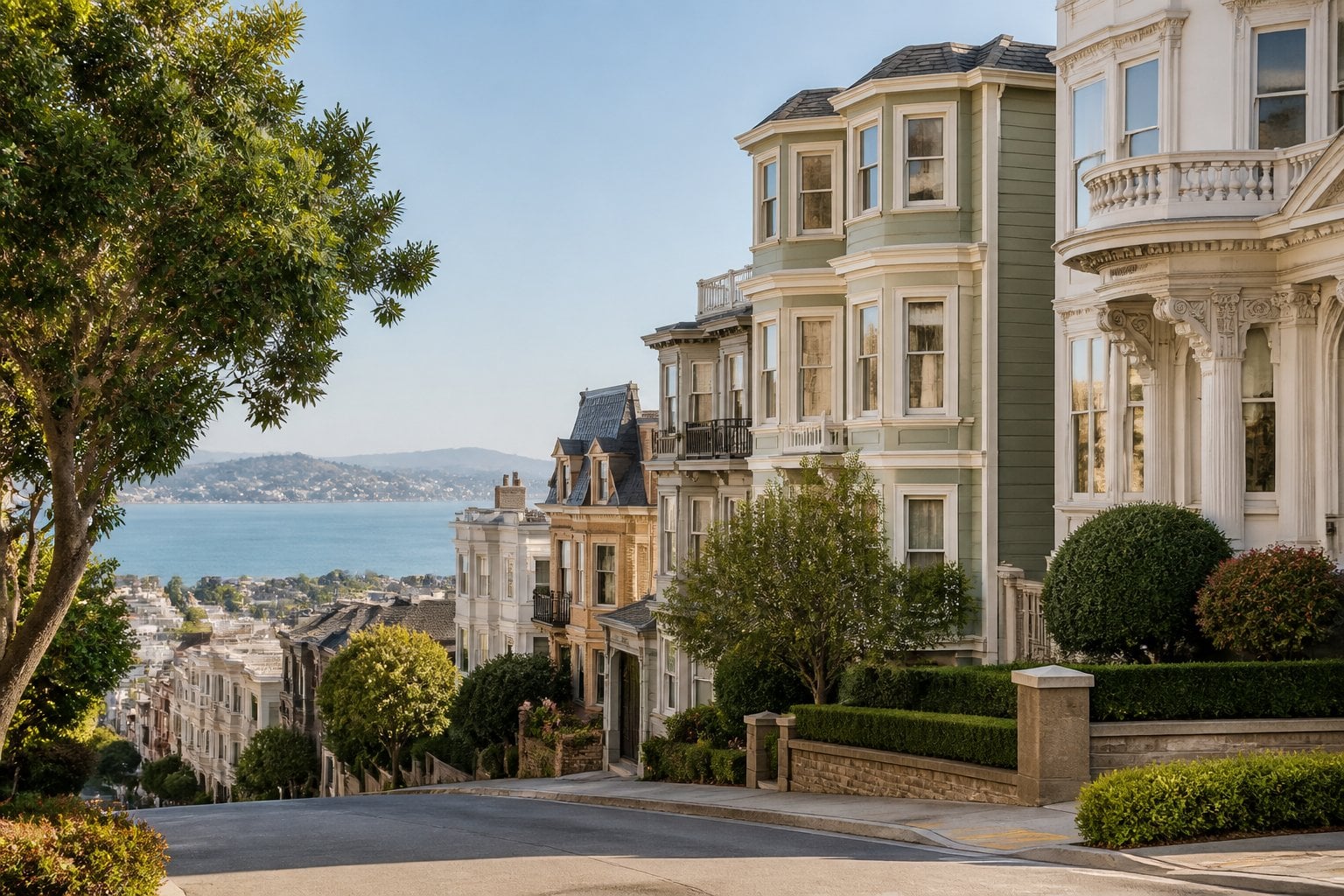
You’ll find Pacific Heights sitting on a hillside above the Marina, with clear views of the Golden Gate Bridge and the bay. Median home prices reached $6.35 million in early 2026.
Your neighbors here live in a mix of Victorian mansions, stately townhouses, and high-end condos. Many of these properties date back over a century, yet they’ve been maintained or renovated to match current luxury standards.
If you’re looking at real estate on Billionaires Row, you’re in one of the most exclusive pockets of the city. This stretch has hosted some of San Francisco’s highest recorded residential sales.
You should expect this market to stay competitive. Tech-sector wealth has continued flowing back into the city, pushing demand for properties in this area even higher than in prior years.
9. Presidio Heights, San Francisco, California
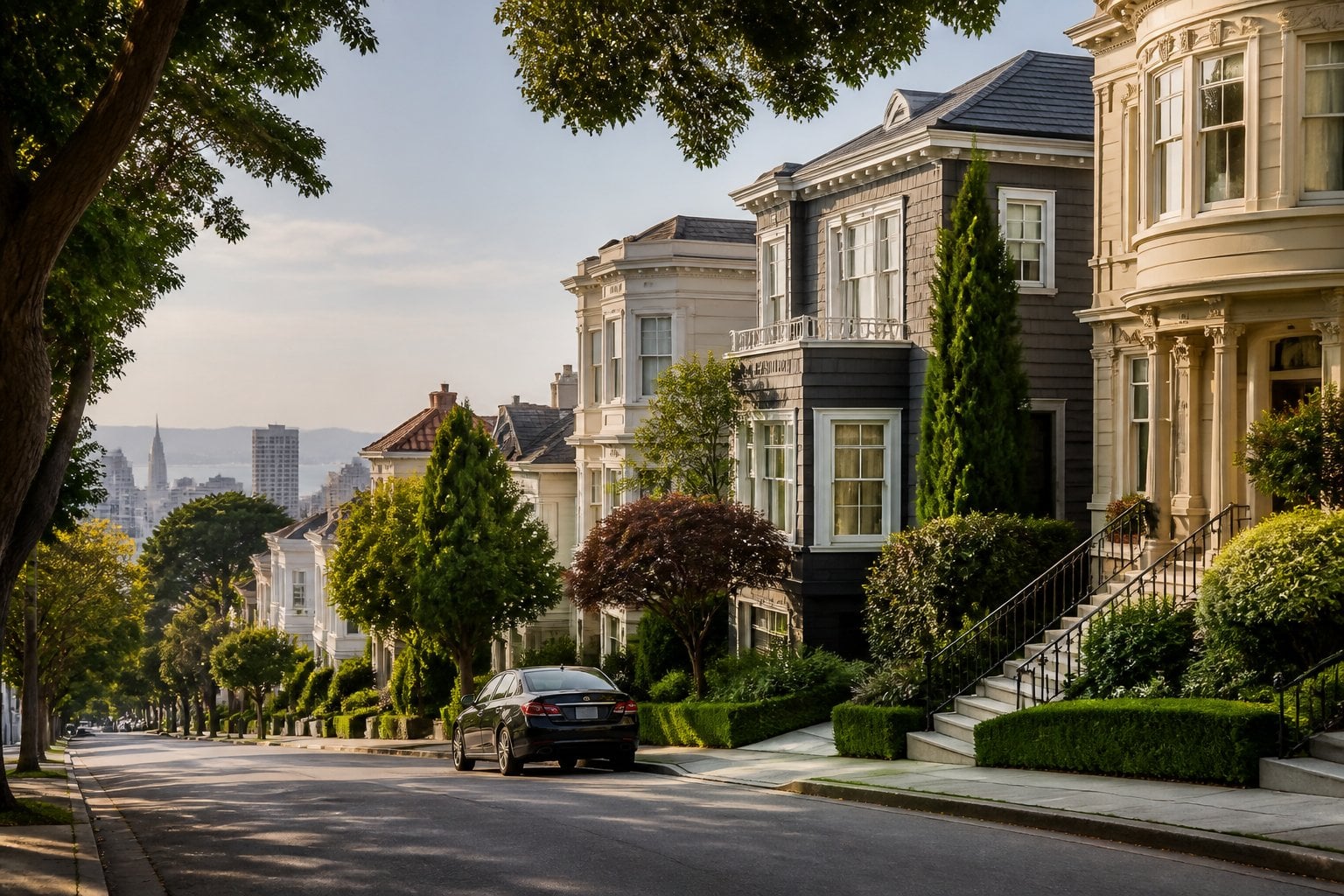
You’ll find Presidio Heights at the city’s northwest edge, bordered by Presidio National Park. This location gives you green space access and a quieter, more residential feel than nearby Pacific Heights.
The numbers here reflect the neighborhood’s standing among the city’s priciest markets. In March 2026, the median sale price reached $7,559,500, with homes trading at roughly $1,980 per square foot.
Your options vary by property type. Condos carry a median price around $2.47 million, while single-family homes median closer to $7.90 million.
If you’re considering a purchase, expect quick turnover. Recent data shows homes selling in a median of 16 days, signaling steady demand despite the high price point.
Architectural character sets this neighborhood apart. You’ll encounter some of San Francisco’s most distinguished residential design, drawing buyers who value privacy and provenance over proximity to commercial strips.
10. Nob Hill, San Francisco, California
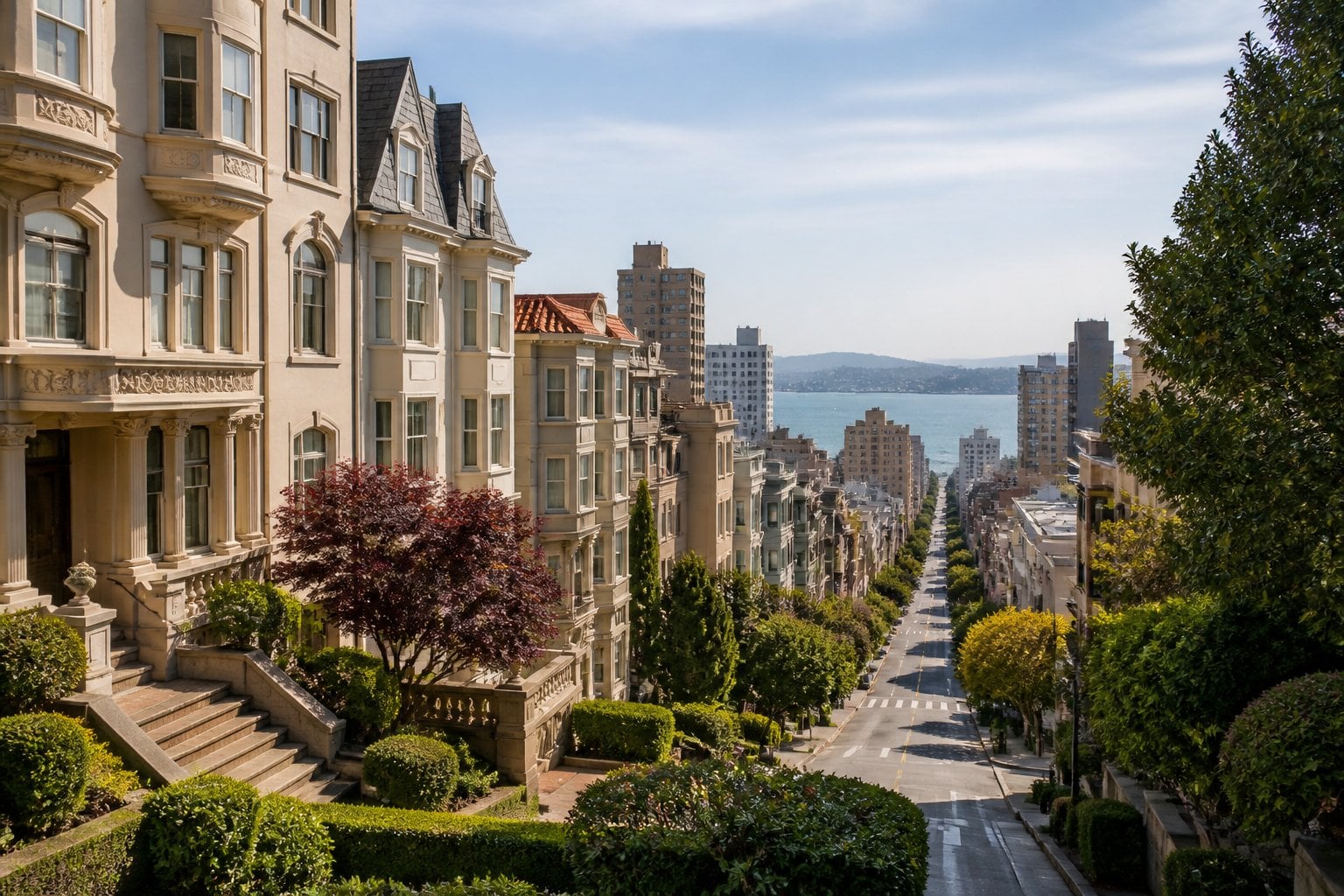
You’ll find Nob Hill sitting on one of San Francisco’s original “Seven Hills,” a location that has defined its status for over a century. This neighborhood has served as a center of the city’s upper class since the 1800s, and that legacy still shapes what you see today.
Luxury hotels and historic mansions line the streets here. You’ll notice architecture that reflects old wealth alongside modern high-rise condos, creating a mix of eras within a few blocks.
Nob Hill remains one of the highest-income neighborhoods in the country. Home prices reflect this standing, with the market consistently ranking among the most expensive in San Francisco.
If you’re drawn to sweeping city views, you’ll get them here. The elevation gives you sightlines across downtown and toward the bay, which adds to the appeal for buyers seeking both prestige and scenery.
11. La Jolla, San Diego, California
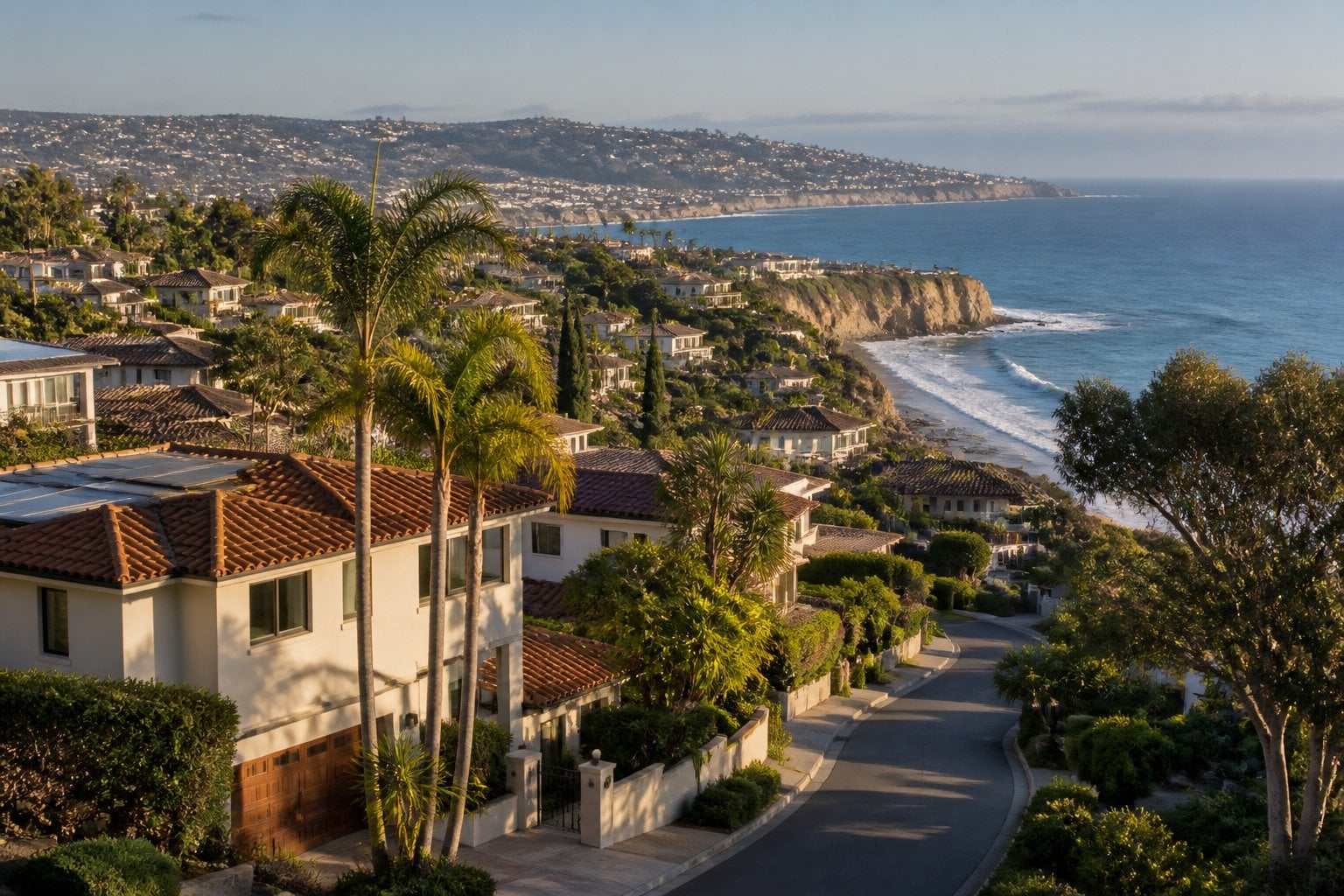
You’ll find La Jolla anchoring the top tier of San Diego’s luxury market, with a coastline that stretches from Bird Rock to La Jolla Farms. Median home prices in the area sit around $2.3 million, but that figure only tells part of the story.
If you’re looking at the bluff-top estates near La Jolla Farms Road or Camino de la Costa, prices regularly climb between $10 million and $40 million. In September 2025, one oceanfront property here sold for $47 million, setting the record for the most expensive single-family home ever sold in San Diego County.
You’re also near UC San Diego, which sits within La Jolla’s boundaries. Beyond the price tags, you get ocean views, private beach access, and lots often exceeding an acre in the Farms district. Village and Shores neighborhoods offer somewhat more accessible entry points, though still well above regional averages.
12. Newport Coast, Newport Beach, California
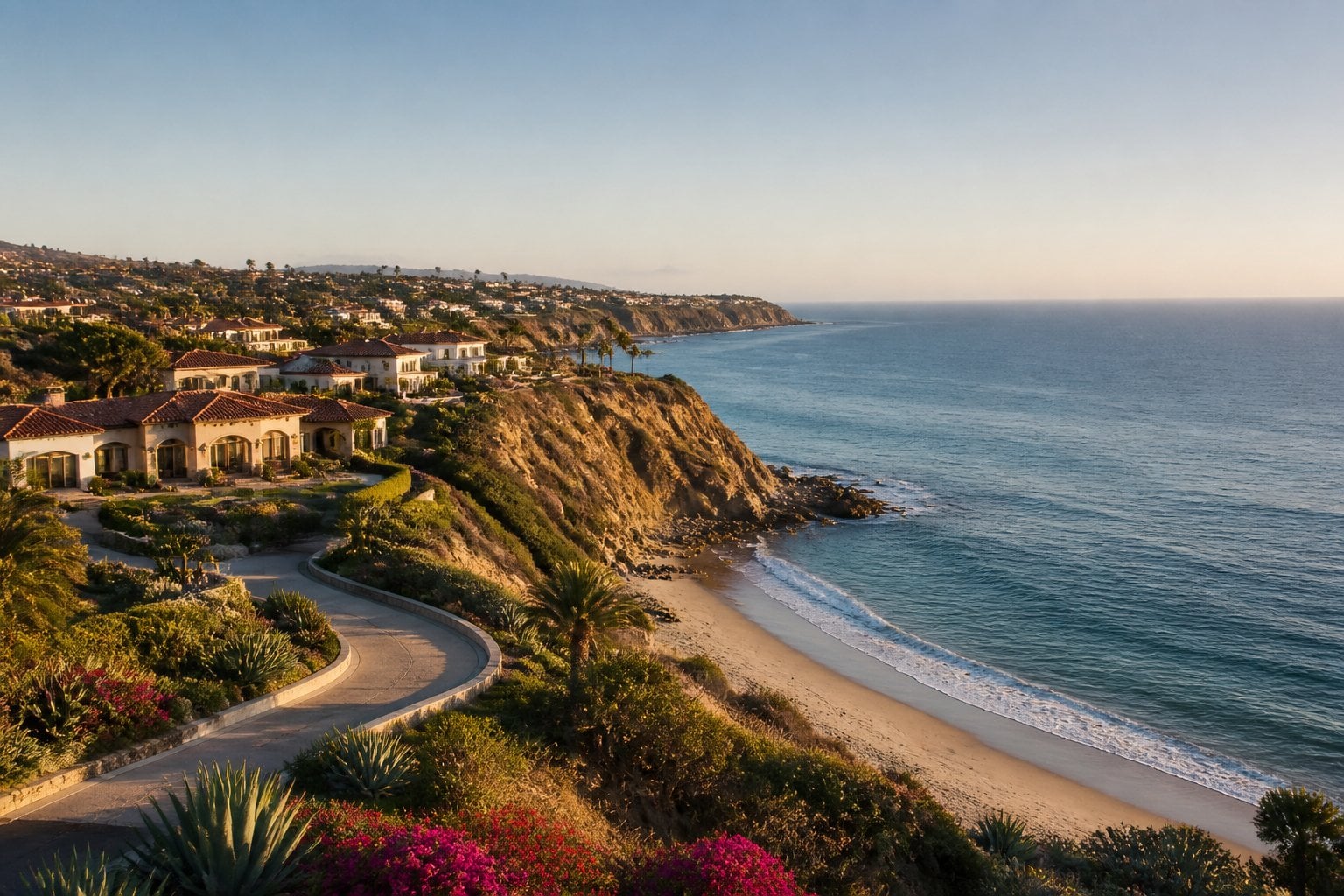
If you’re looking at Newport Coast, you’re looking at one of the most expensive ZIP codes in the entire country. In early 2026, the 92657 ZIP code overtook Miami Beach’s Fisher Island to claim the top national spot, with a median listing price around $12.5 million.
You’ll find this community built around guard-gated enclaves like Pelican Hill, Pelican Crest, and Pelican Point. Homes in these areas regularly sell for over $20 million, and the neighborhood’s record sale sits at $61 million, set in 2020.
What you’re paying for is oceanfront positioning, hillside views, and privacy. Newport Coast sits along the coastline near Crystal Cove, giving you access to beaches and canyon terrain within a controlled, low-density setting.
Median home prices here typically range from $4 million to $5 million, though individual sales vary widely depending on lot size and ocean exposure.
13. Malibu, California
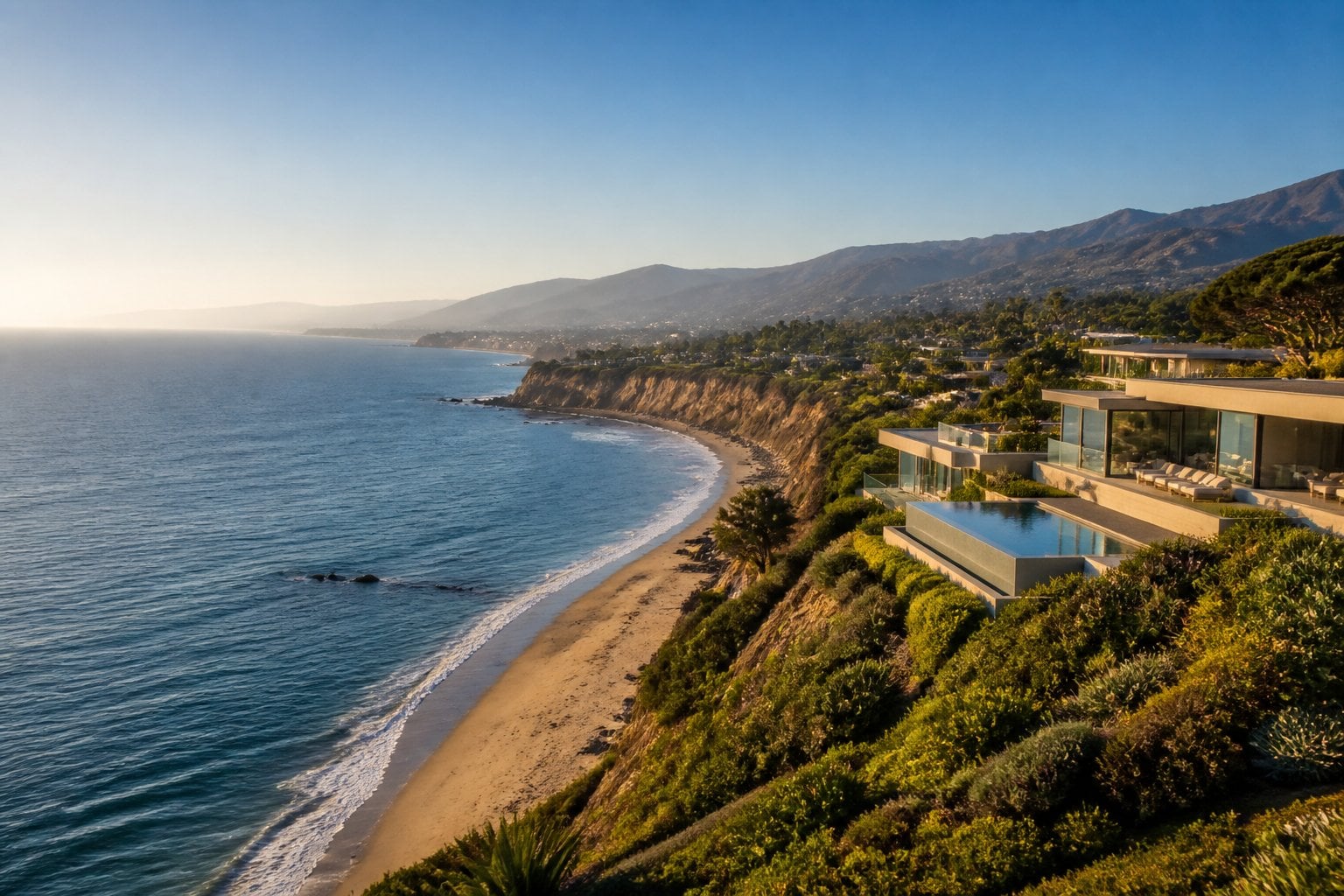
You know Malibu for its beaches, but the real story here is land value. This 27-mile stretch of coastline holds some of the priciest residential property in the country, with median home prices climbing well into the millions.
Malibu Colony and Carbon Beach represent the upper tier, where gated access and direct beach frontage push prices past $15 million in many cases. If you’re looking at Point Dume or the Malibu Beach area, you’ll still find median figures near $5 million.
What sets Malibu apart is scarcity. Limited buildable lots, strict coastal regulations, and a small year-round population of just over 10,000 keep supply tight.
You won’t find much inventory under $2 million here, and the top end of the market can reach into the hundreds of millions for oceanfront estates.
14. Montecito, California
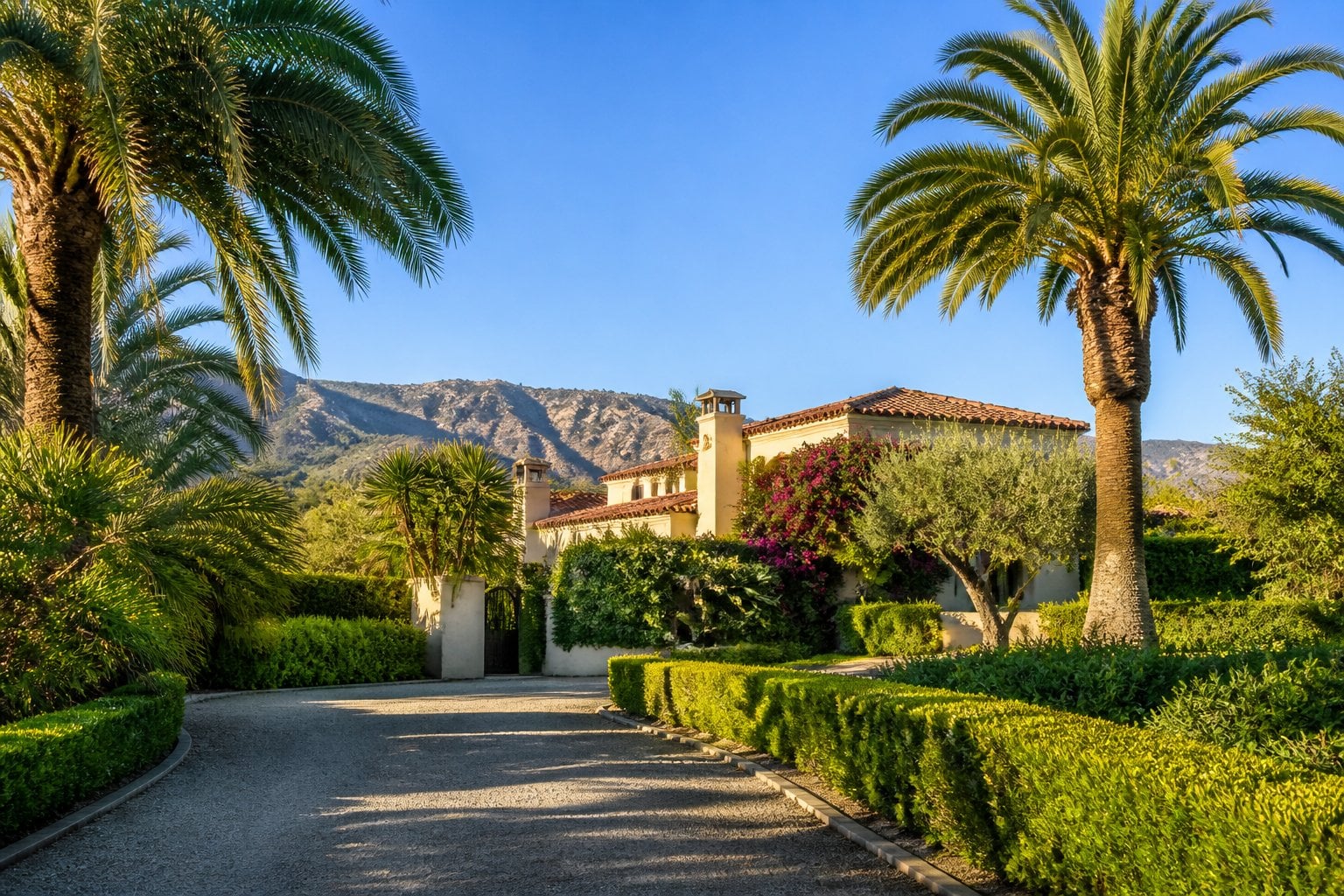
You’ll find Montecito tucked along the coast just east of Santa Barbara, home to roughly 9,000 residents and some of the highest property values in the country.
Estates in Riven Rock and the Golden Quadrangle command the steepest prices, with many listings between $10 million and $25 million. You’re paying for multi-acre lots, mature privacy hedges, and ocean or mountain views that shield homes from public sightlines.
The area draws celebrities and high-net-worth buyers, partly due to its combination of privacy and proximity to Santa Barbara’s amenities. Oprah Winfrey and Prince Harry and Meghan Markle are among the notable residents you’ll hear associated with the community.
Median home prices here place Montecito among California’s priciest towns, driven by limited inventory and strict zoning that keeps development low. If you’re considering this market, expect competition for available properties and minimal turnover in the most sought-after enclaves.
15. Manhattan Beach, California
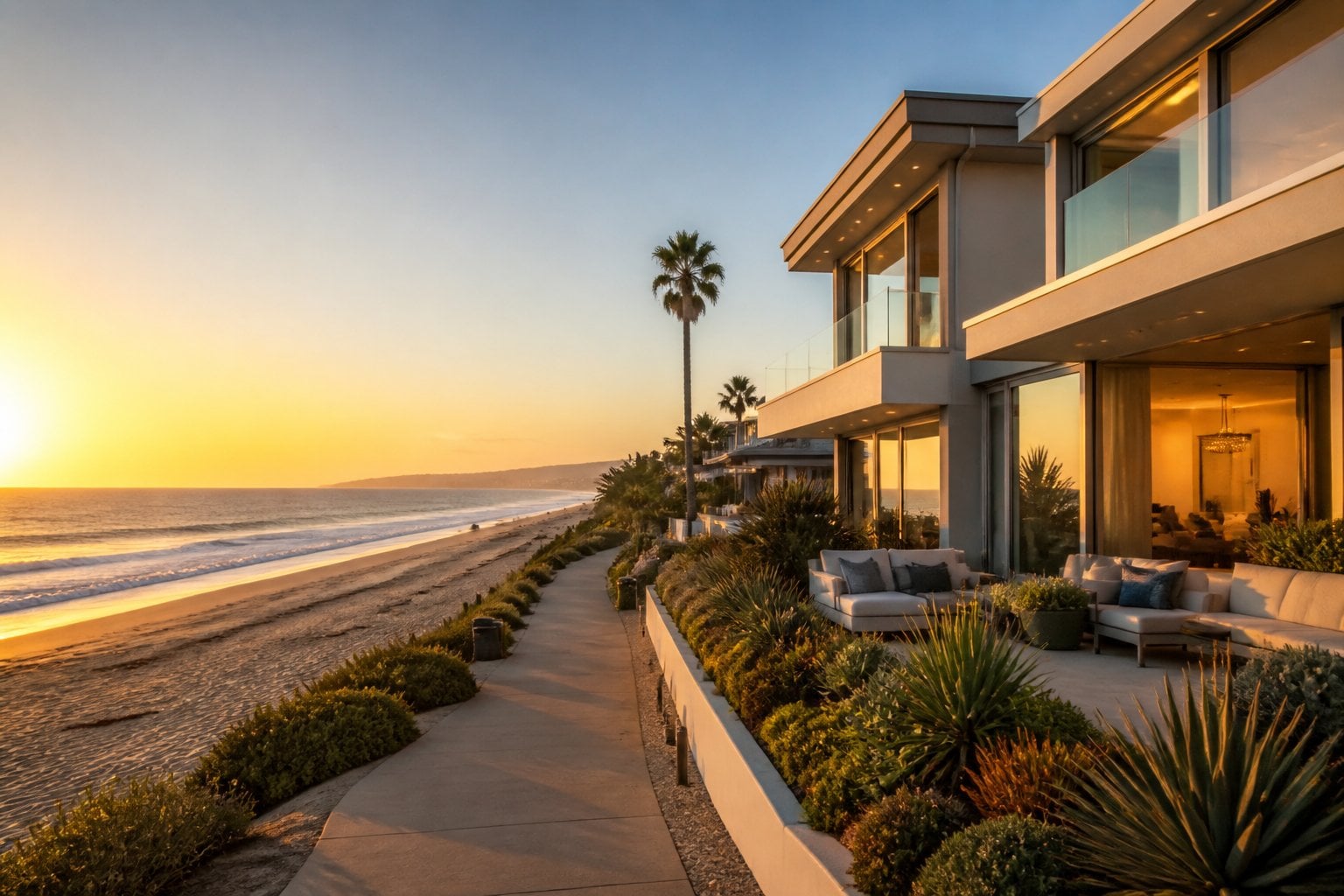
Manhattan Beach sits along the Pacific coastline in Los Angeles County, just south of El Segundo. You’ll find a city of about 33,000 residents known as the “Pearl of the South Bay,” established in 1912.
Three distinct neighborhoods within Manhattan Beach rank among the priciest in Los Angeles: the Hill Section, Sand Section, and Tree Section. The Sand Section offers direct beachfront access, while the Hill Section commands elevated views of the coastline.
You can expect median home values here to sit well above $3 million. Beyond the real estate, you’ll notice the city’s appeal comes from its historic pier, walkable downtown, and range of restaurants and breweries.
The combination of oceanfront location, limited housing supply, and proximity to Los Angeles employment centers keeps demand—and prices—consistently high in this market.
16. Greenwich, Connecticut
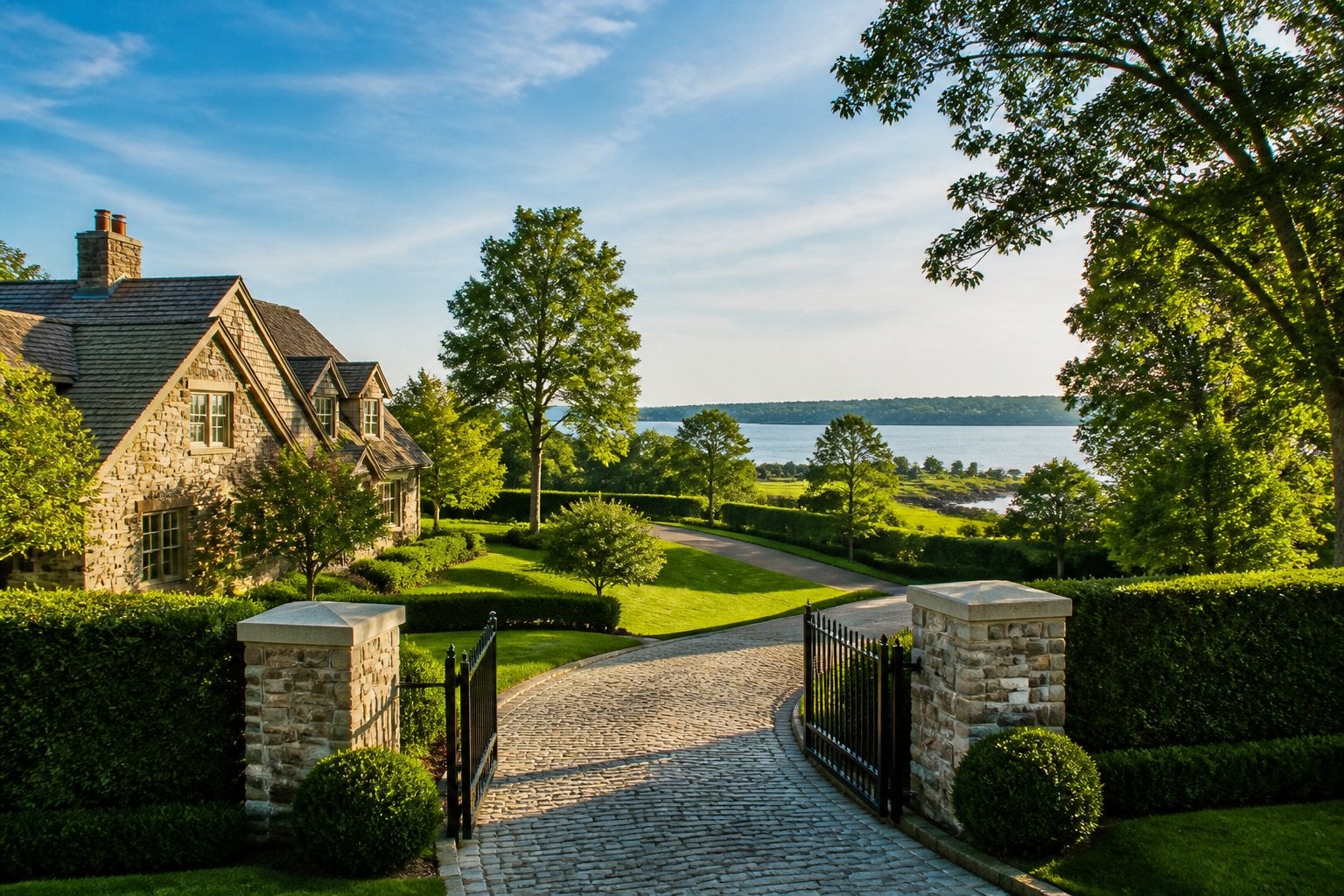
You’ll find Greenwich in Fairfield County, about 30 miles from Manhattan. This proximity to New York City has shaped the town into one of the wealthiest suburbs in the country.
Greenwich isn’t a single market. It contains distinct pockets, including Old Greenwich and Riverside, where waterfront homes and private beaches drive prices even higher.
Old Greenwich alone has a mean household income above $348,000, giving you a sense of the wealth concentrated in this area. Fairfield County as a whole accounts for much of Connecticut’s overall affluence.
You’ll notice the housing stock varies widely, from historic estates to newer luxury construction. Large lot sizes and coastal access remain common features across the town’s most desirable sections.
Greenwich consistently ranks among Connecticut’s most expensive communities, and its reputation extends well beyond the state.
17. Darien, Connecticut
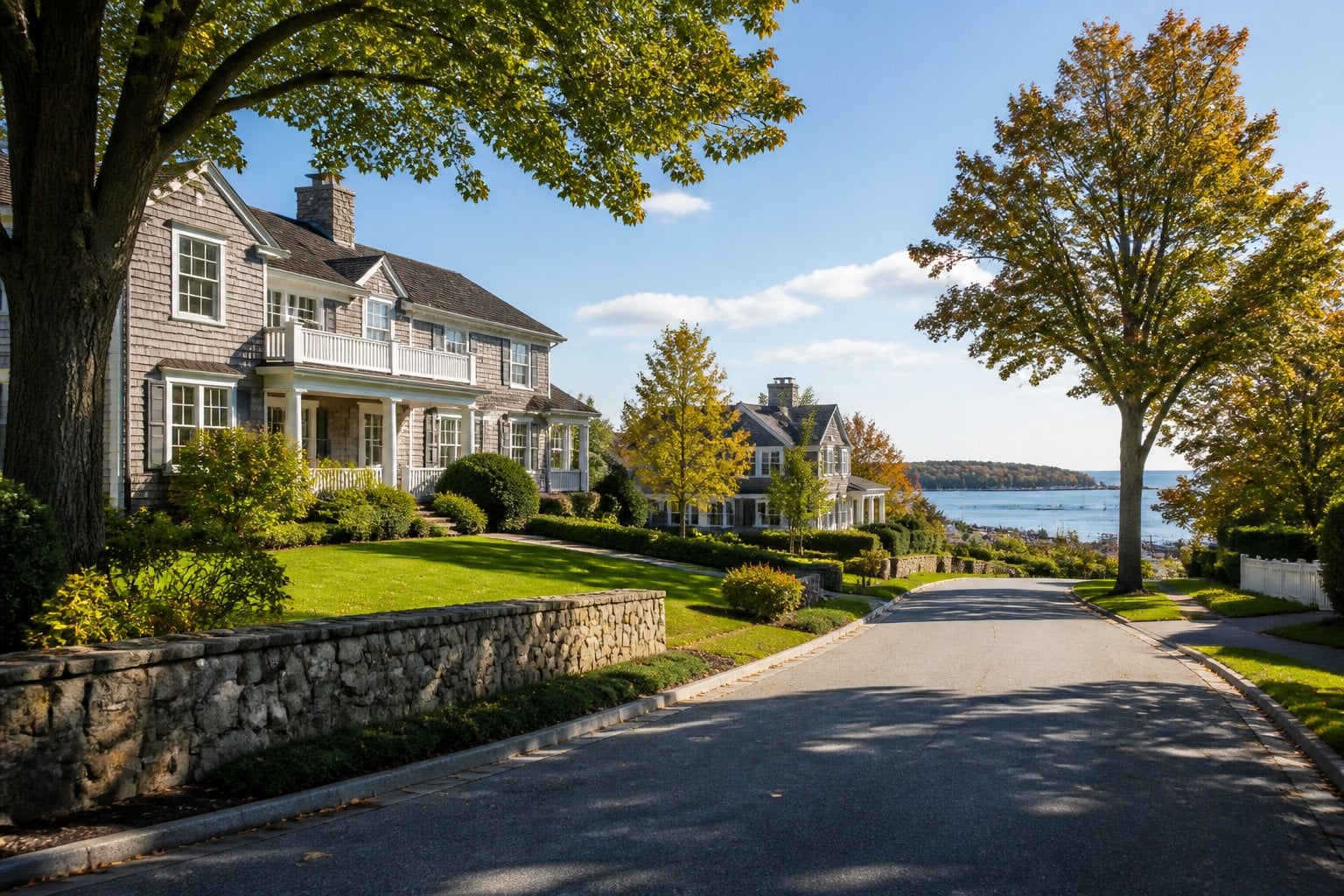
You’ll find Darien along the Connecticut coastline in Fairfield County, roughly an hour from New York City by train. This access to Manhattan, paired with waterfront property, has made Darien one of the most expensive places to live in the country.
Home prices here reflect that demand. Median home values run well above $2 million, and average household incomes exceed $350,000 a year, placing Darien among the wealthiest towns in the state.
You’ll notice the town’s amenities match its price tag. Darien offers private beaches, yacht clubs, and country clubs, along with a compact downtown that keeps a New England feel despite the wealth surrounding it.
Schools are a major draw as well. Darien’s public school system consistently ranks among the top in Connecticut, which continues to attract families willing to pay a premium for both location and education.
18. New Canaan, Connecticut
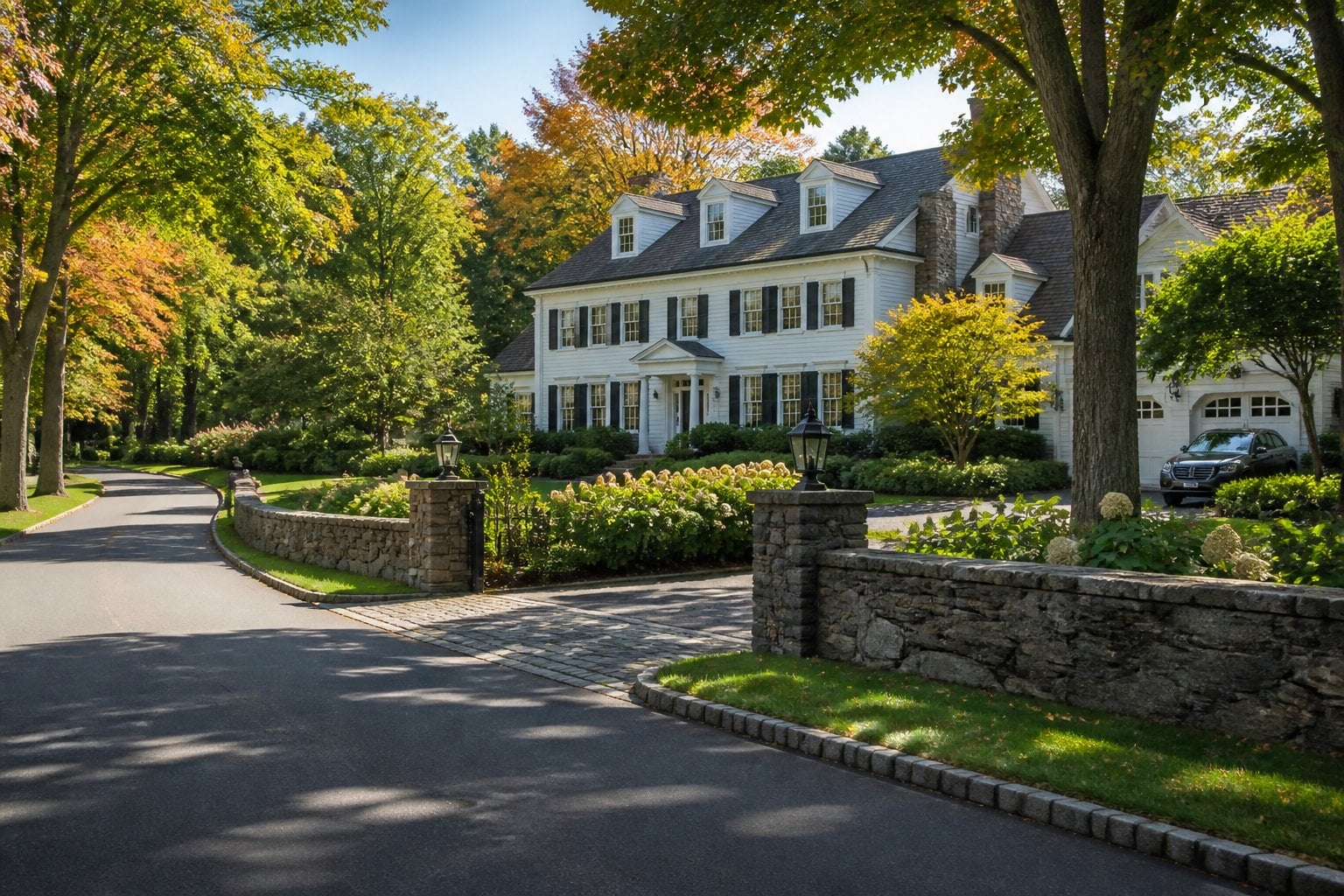
You’ll find New Canaan in Fairfield County, roughly an hour from Manhattan by train. It’s a town built around large, single-family homes on generous acreage, favoring privacy over density.
The average home value sits at approximately $2.23 million, with prices up over 12% in the past year. Median household income exceeds $250,000, placing you among the wealthiest towns in Connecticut.
Unlike Greenwich or Westport, New Canaan doesn’t offer waterfront property. Instead, you’re paying for inland estate living, mature landscaping, and larger lots.
Schools rank among the state’s best, which supports long-term demand from families. The mill rate stands at 16.144, a factor you’ll want to weigh against home value when budgeting.
If you’re comparing coastal versus inland luxury in Fairfield County, New Canaan represents the inland option with fewer flood zone concerns.
19. Palm Beach, Florida
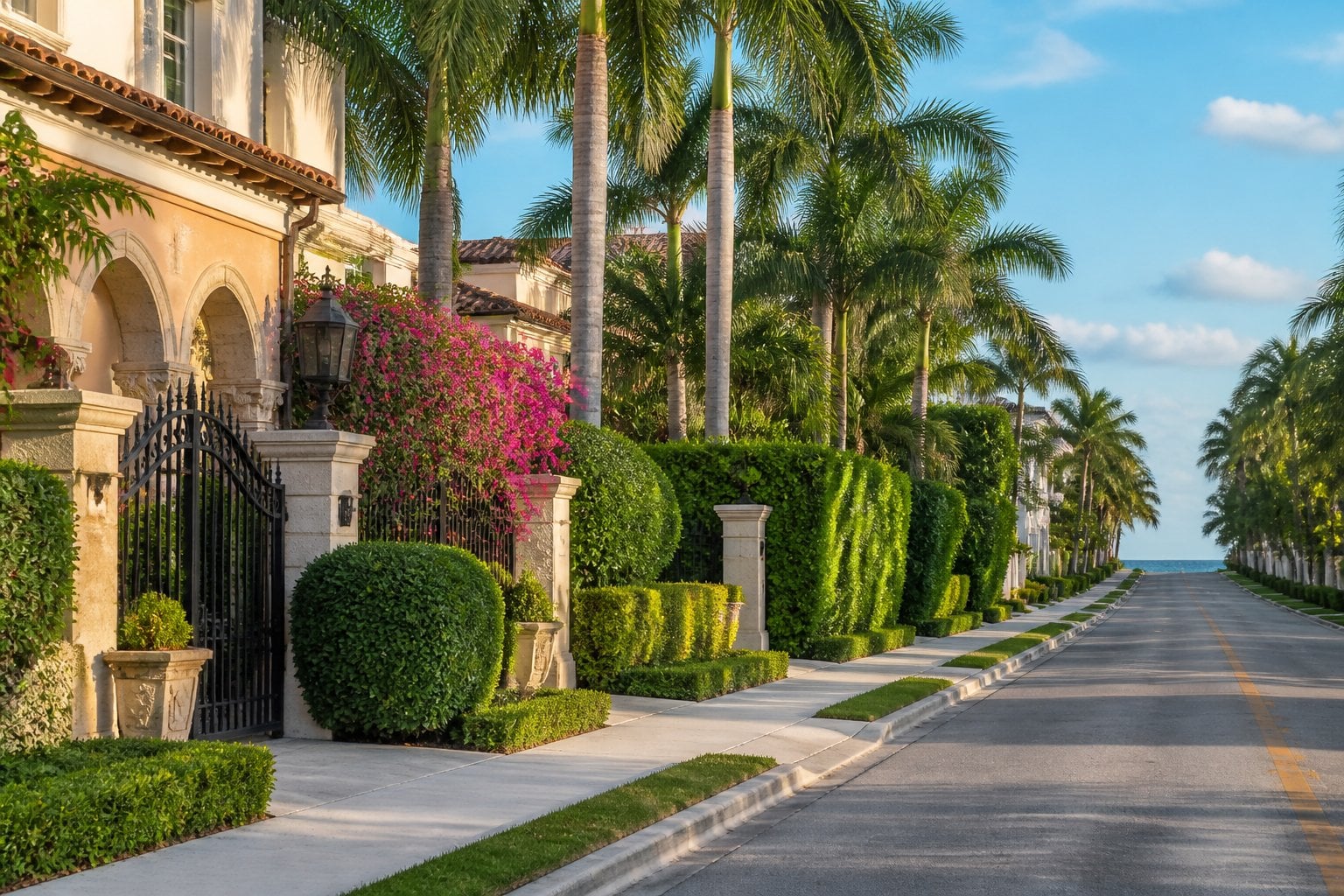
You’ll find Palm Beach on a narrow barrier island separated from West Palm Beach by the Intracoastal Waterway. This town has long attracted old wealth, corporate executives, and international buyers seeking privacy and waterfront access.
Neighborhoods like Everglades Island, the North End, and the Estate Section feature multi-million dollar properties, many with direct ocean or Intracoastal frontage. Worth Avenue anchors the area’s retail scene, lined with designer boutiques and galleries.
You’ll notice strict zoning and architectural review boards that maintain the town’s Mediterranean Revival aesthetic. Lot sizes tend to be large, and many estates include private docks for yachts.
Membership-based clubs, including the Everglades Club and Bath & Tennis Club, reinforce the exclusivity here. Property values reflect limited inventory, since the island’s geography restricts new development.
20. Fisher Island, Miami Beach, Florida
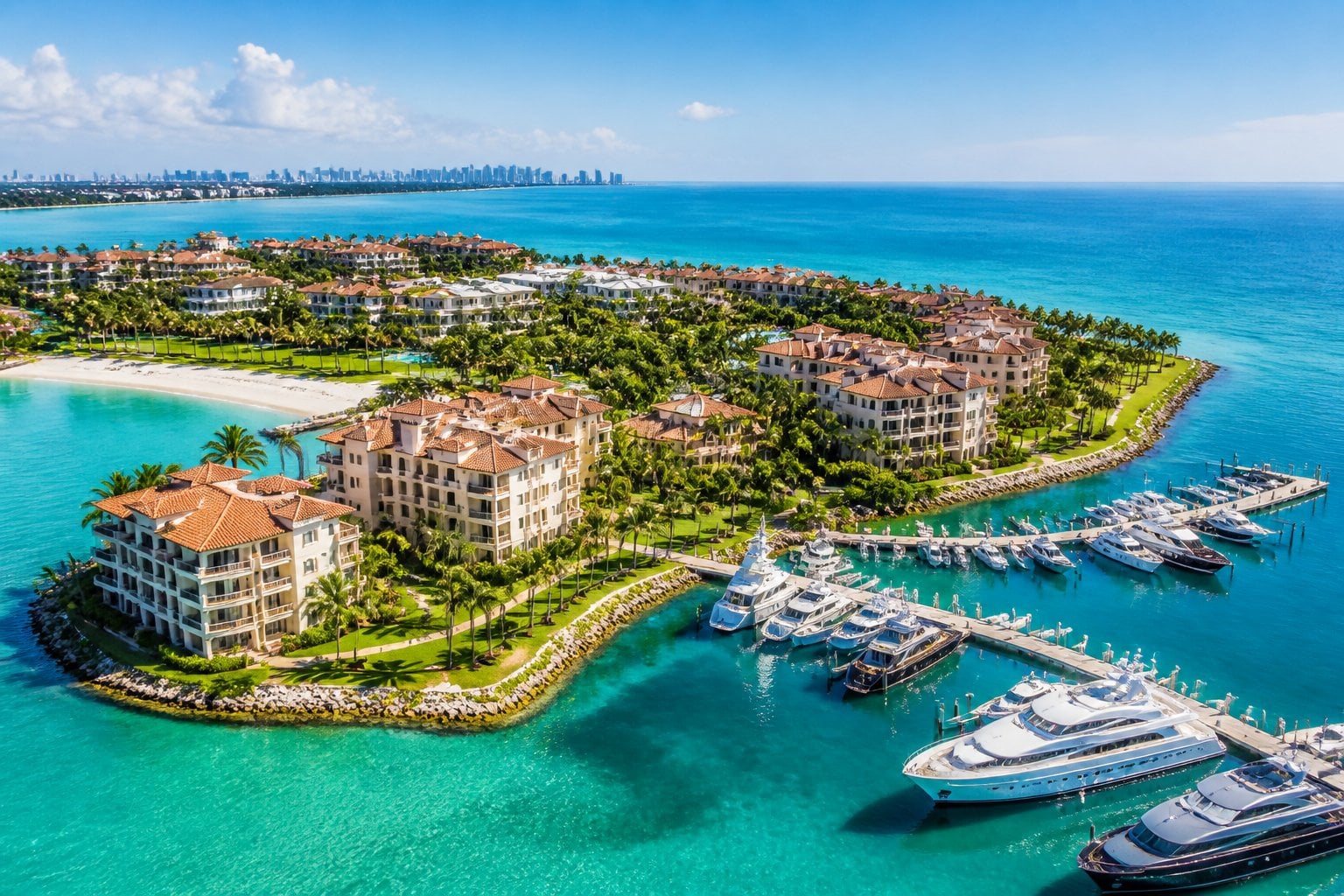
You reach Fisher Island only by private ferry, yacht, or helicopter, since no bridge connects it to the mainland. This 216-acre island sits about three miles off Miami Beach and has long held a reputation as one of the wealthiest ZIP codes in the country.
Real estate here runs from roughly $5 million to $90 million, and if you want full access to the island’s amenities, expect club membership fees near $250,000.
Recent market data shows median listing prices near $9.5 million to $11.9 million, though rankings shift year to year as other enclaves like Newport Coast or Surfside post competing figures.
You’ll find residents drawn to the privacy, the golf course, marina, and beach club, along with new developments like Six Fisher Island adding fresh inventory to an already scarce market.
21. Indian Creek Island, Florida
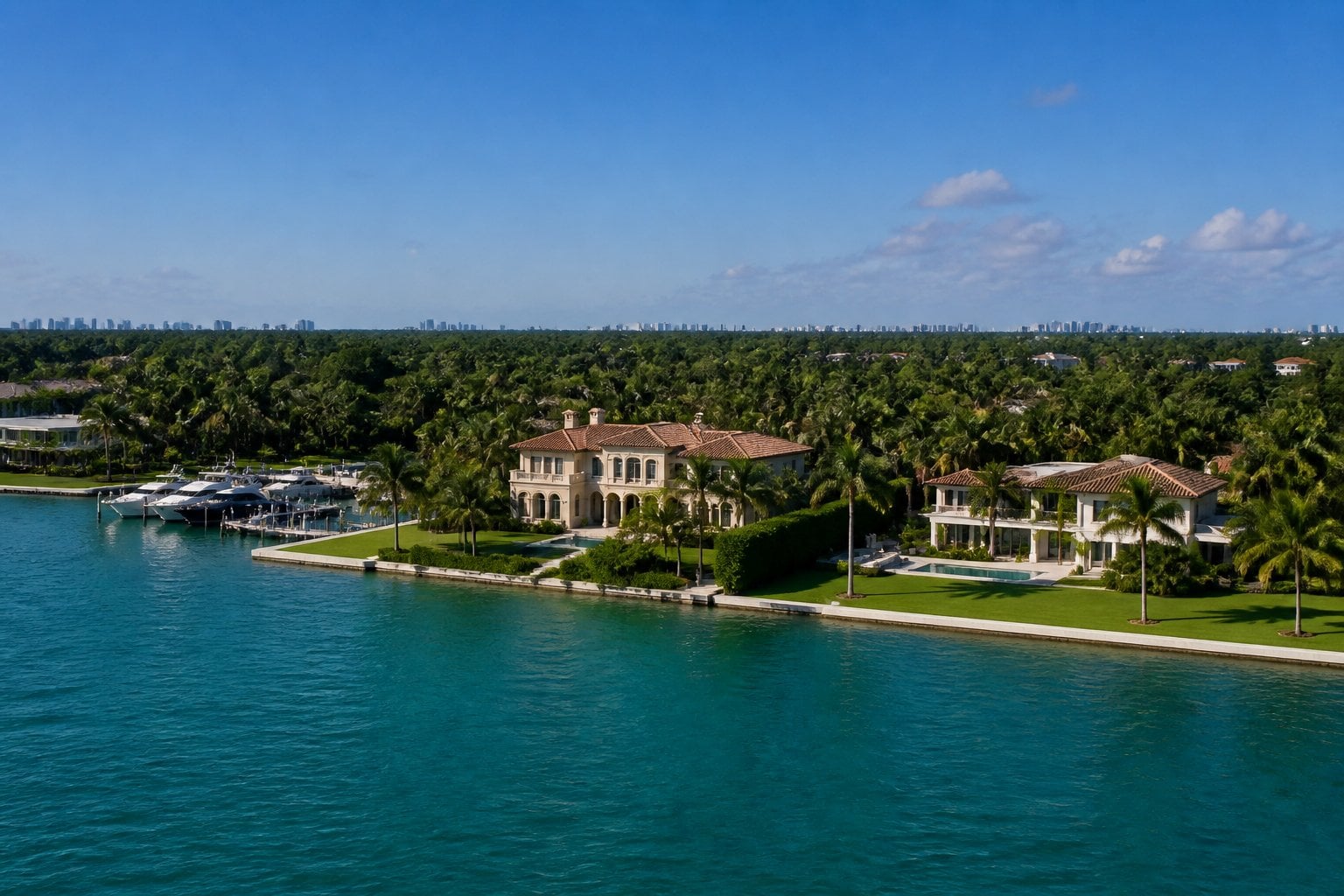
You’ll find Indian Creek Island tucked into Biscayne Bay, just north of Miami Beach. It’s a 300-acre man-made island with only 41 waterfront lots, making it one of the most restrictive residential markets in the country.
A single bridge connects the island to the mainland, and it’s guarded around the clock. The village runs its own police force, so you’re looking at a level of security most neighborhoods simply can’t match.
Home values here typically range from $60 million to $200 million. In early 2026, a property sold for $170 million, setting a new Miami-Dade County record.
Roughly 84 residents live on the island, according to 2020 figures. Many buyers value the privacy as much as the price tag, and a significant share of sales happen off-market, away from public listings.
22. Golden Beach, Florida
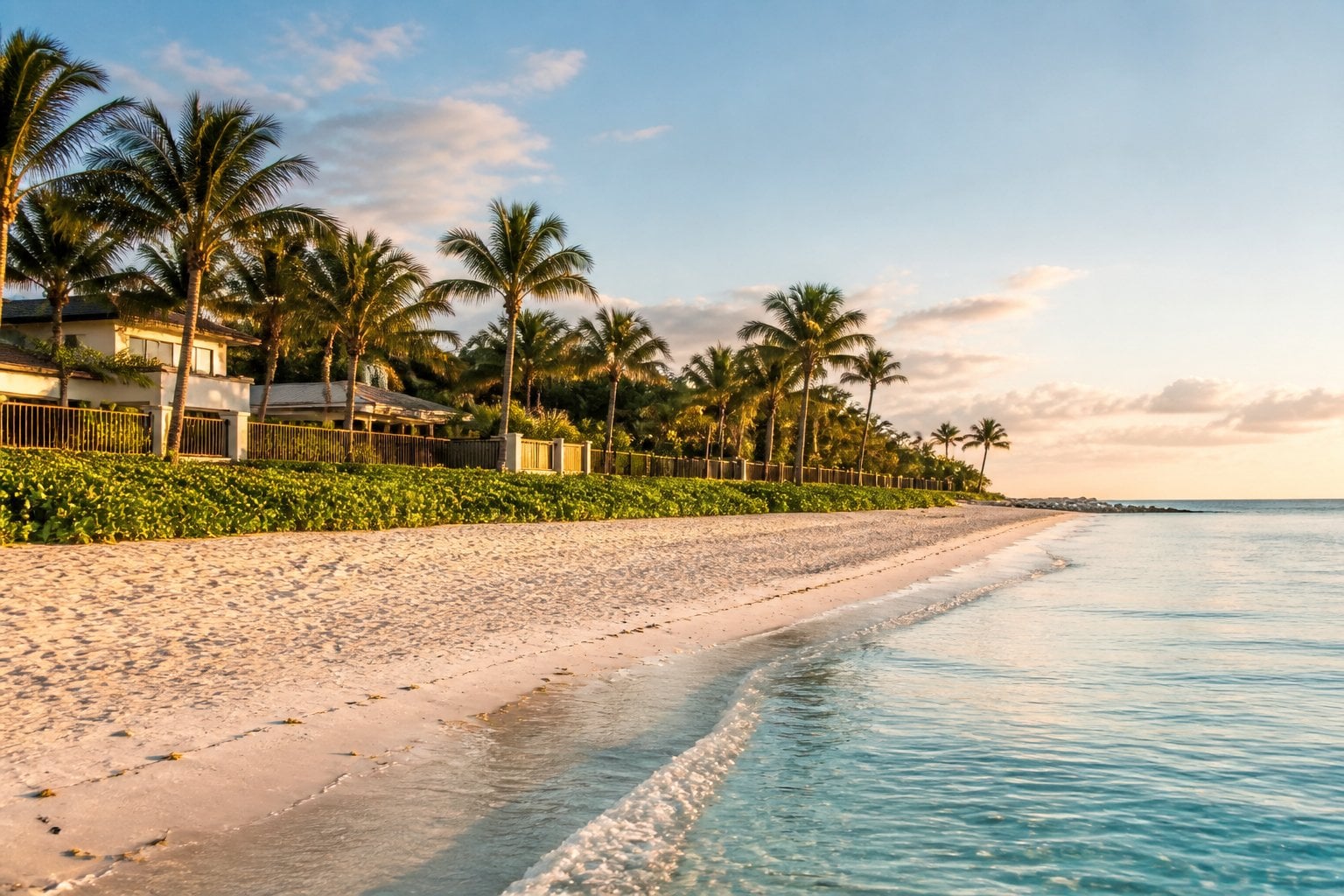
If you’re looking at Golden Beach, you’re considering one of Florida’s most private waterfront communities. This small town sits between Miami and Fort Lauderdale, offering direct ocean access and a strict residential zoning policy that keeps commercial development out.
You’ll find that privacy is the defining feature here. The town enforces its own police force, gated entry points, and low-density housing rules, which appeal to buyers who value discretion over visibility.
Properties typically include large waterfront estates with private docks and unobstructed ocean or Intracoastal views. Your neighbors are likely to include high-net-worth individuals and public figures drawn by the area’s seclusion.
Demand has increased in recent years, pushing home values higher as buyers compete for a limited number of available lots. You won’t find high-rise condos or commercial strips—just single-family homes on spacious parcels, reinforcing the exclusive, low-key atmosphere the town has cultivated for decades.
23. Naples, Florida
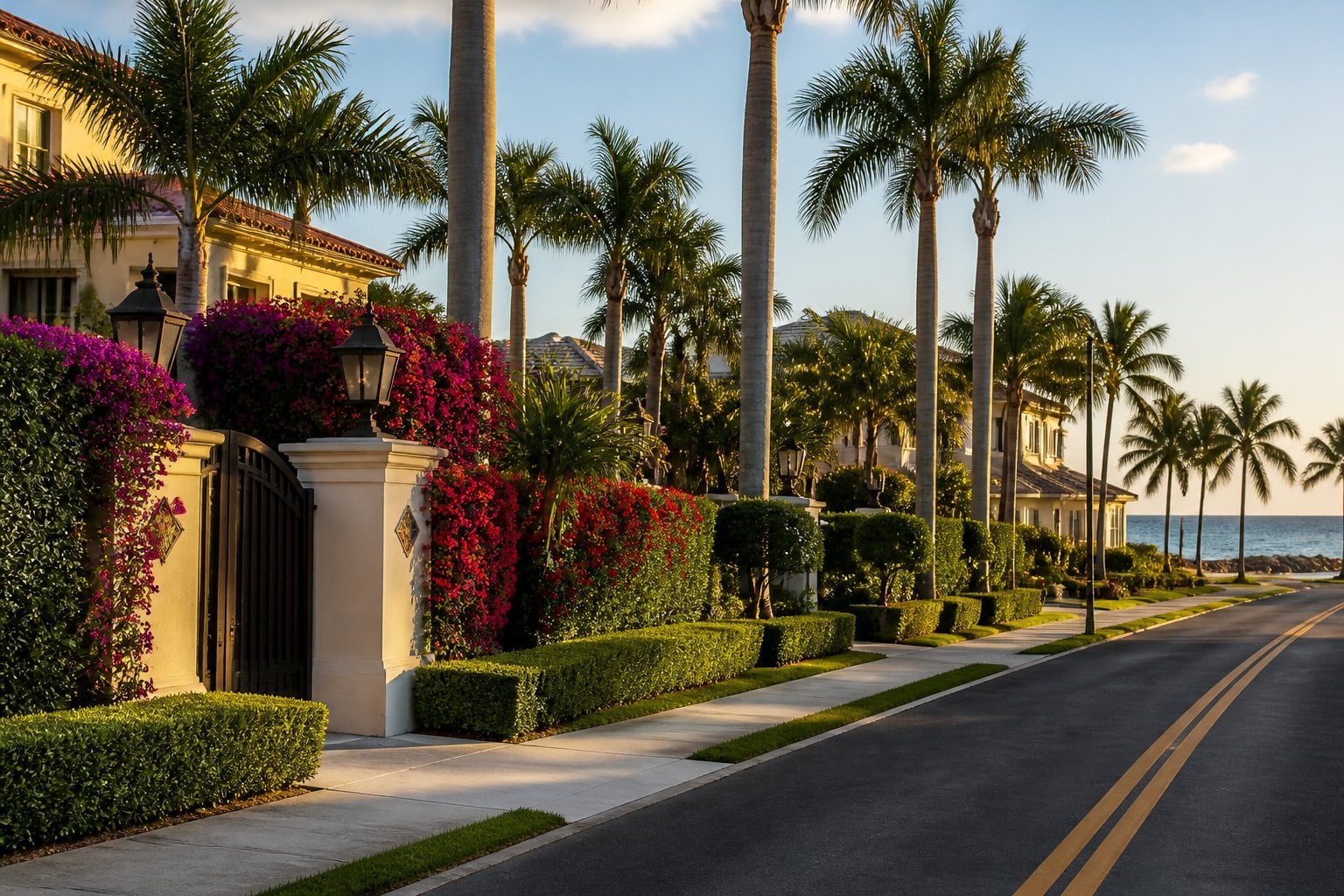
You’ll find some of the most expensive real estate in America along Naples’ Gulf Coast. Port Royal stands out as the city’s priciest neighborhood, with waterfront estates commanly starting around $10 million.
Other high-value areas include Bay Colony, where beachfront properties start near $5 million, and Grey Oaks and Estuary, where homes typically begin around $3.5 million.
Quail West and Mediterra offer a slightly lower entry point, with homes starting near $2.5 million. You’ll notice these communities share certain features: gated access, golf courses, and proximity to the water.
Naples attracts buyers seeking privacy and a warm climate. Florida’s lack of state income tax adds to the appeal for high-net-worth residents.
Your search here reveals a market shaped by limited inventory and strong demand, keeping prices elevated across nearly every price tier in the city.
24. Coral Gables, Florida
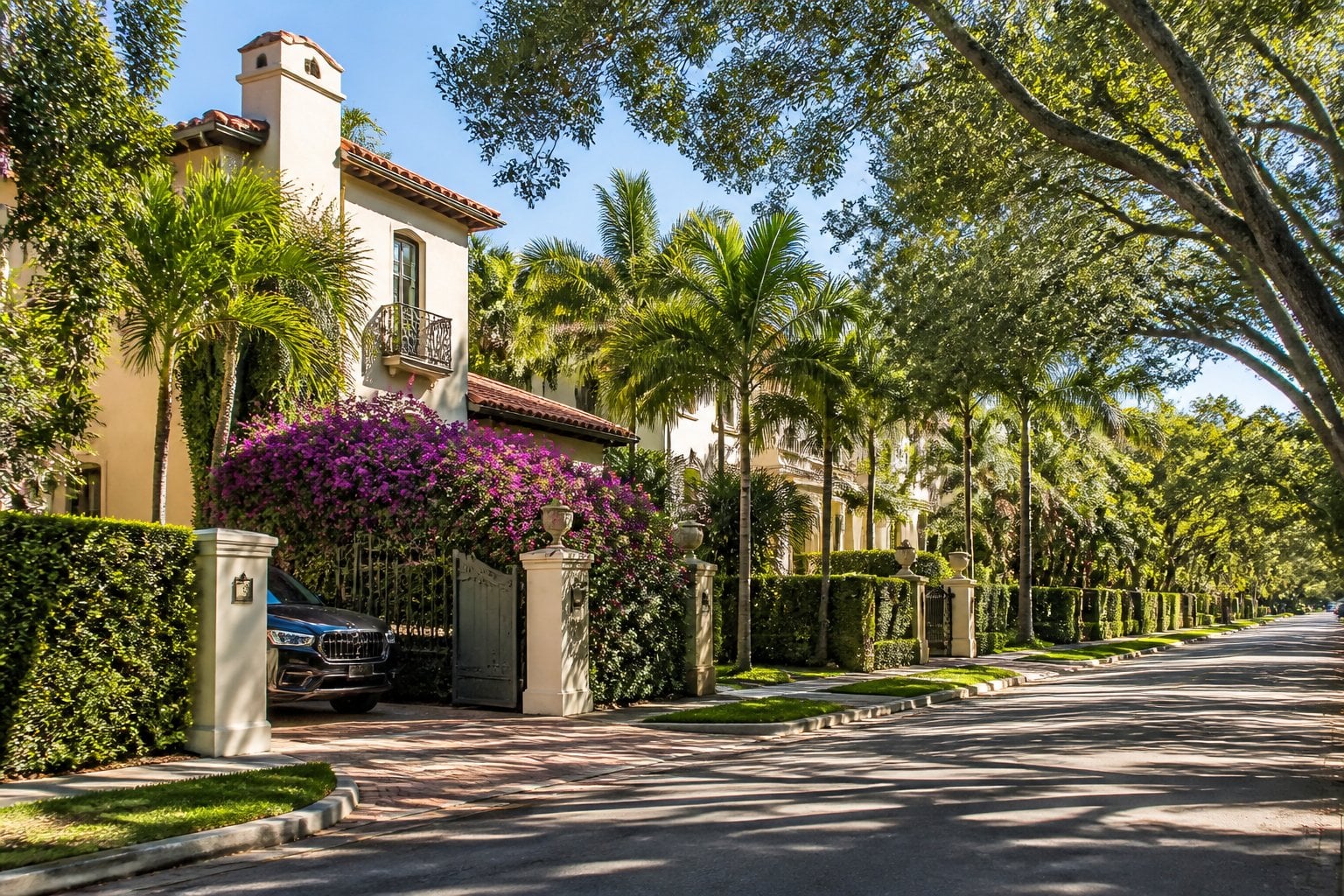
Coral Gables anchors this list through Gables Estates, a gated enclave within the city that has emerged as one of the nation’s priciest addresses. You’ll find typical home values near $21.2 million there, according to Zillow data.
Every property in Gables Estates sits on waterfront, connected to Biscayne Bay through a private canal system. With only 160 to 180 estates in total, scarcity plays a direct role in pricing.
Access isn’t simple. You’ll encounter a membership process that includes sponsorship requirements and application fees running into six figures, alongside 24/7 security.
Beyond this specific enclave, Coral Gables carries broader recognition as one of Miami’s wealthiest communities, spanning multiple zip codes and housing tens of thousands of residents. The combination of tree-lined streets, historic architecture, and waterfront exclusivity gives you a neighborhood that competes directly with Beverly Hills for national rankings.
25. Lincoln Park, Chicago, Illinois
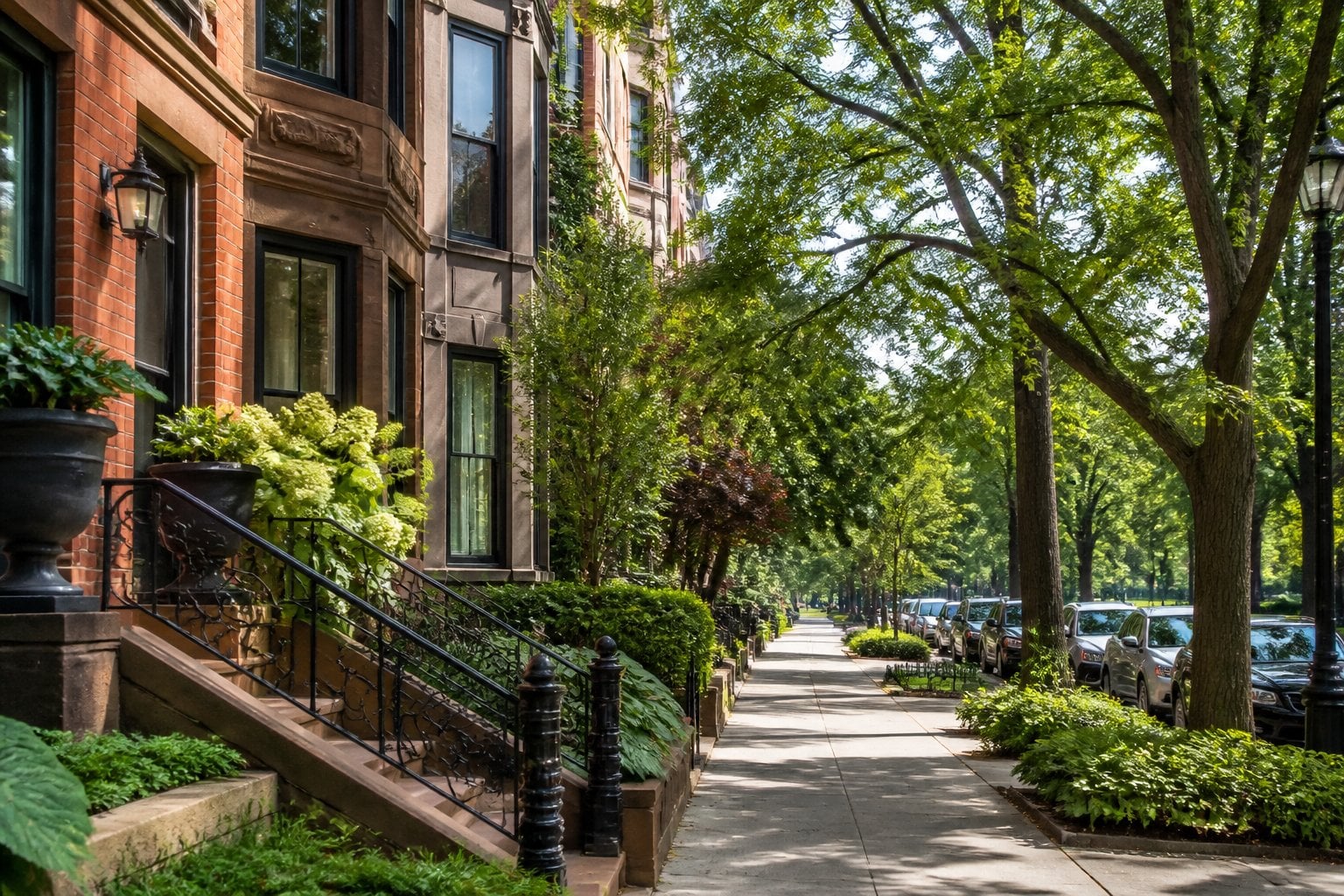
Lincoln Park sits along Chicago’s lakefront, just north of the city’s downtown core. You’ll find it holds the top spot in the city for single-family home prices, with premium streets trading between $2 million and $6 million or more.
Burling Street stands out as one of the most prestigious addresses in the neighborhood. A $45 million sale there ranks among the highest recorded for a single-family home in Chicago’s history.
The population runs around 65,000, making this one of the larger neighborhoods in the city. You’ll notice the demographics skew affluent and educated, with median household income surpassing $100,000 and a high concentration of graduate degrees.
What draws buyers here includes top-rated schools, direct park access, and walkability to dining and transit. These factors let Lincoln Park compete directly with Gold Coast at the high end of the market.
26. Gold Coast, Chicago, Illinois
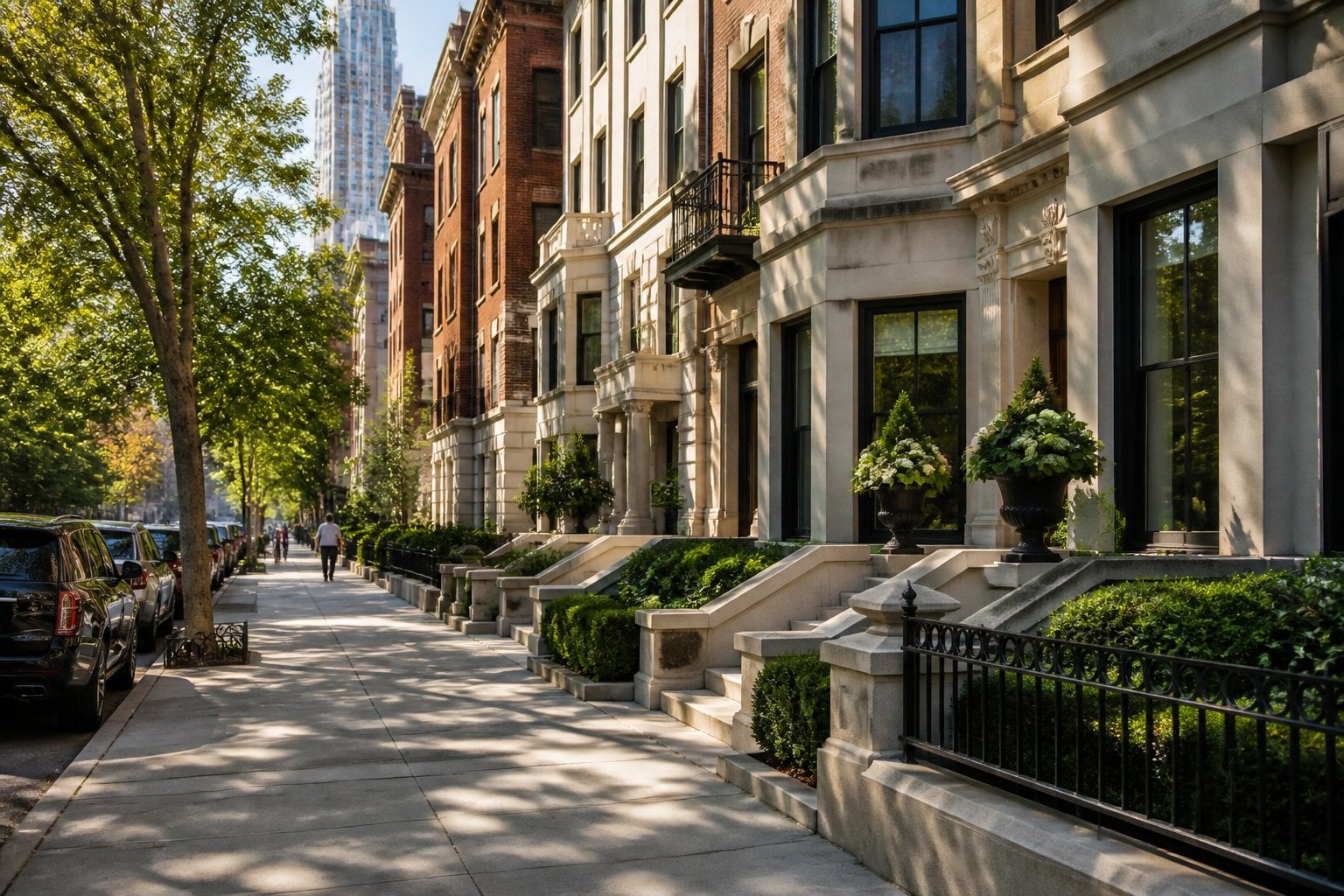
You’ll find Gold Coast just north of downtown Chicago, hugging the Lake Michigan shoreline. This neighborhood has held its status as one of the city’s premier addresses for well over a century.
The housing stock here mixes historic limestone mansions with high-rise condominiums and co-ops. You can expect median home prices in the range of $500,000 to over $1 million, depending on the property type and exact location.
Architecture plays a major role in the appeal. Many of the row houses and mansions date back to the late 1800s, giving you a sense of Chicago’s Gilded Age history alongside modern amenities.
Your access to the Magnificent Mile, Lake Shore Drive, and Oak Street Beach adds to the practical value of living here. Upscale boutiques, restaurants, and cultural institutions sit within walking distance, making daily life convenient without sacrificing prestige.
27. Back Bay, Boston, Massachusetts
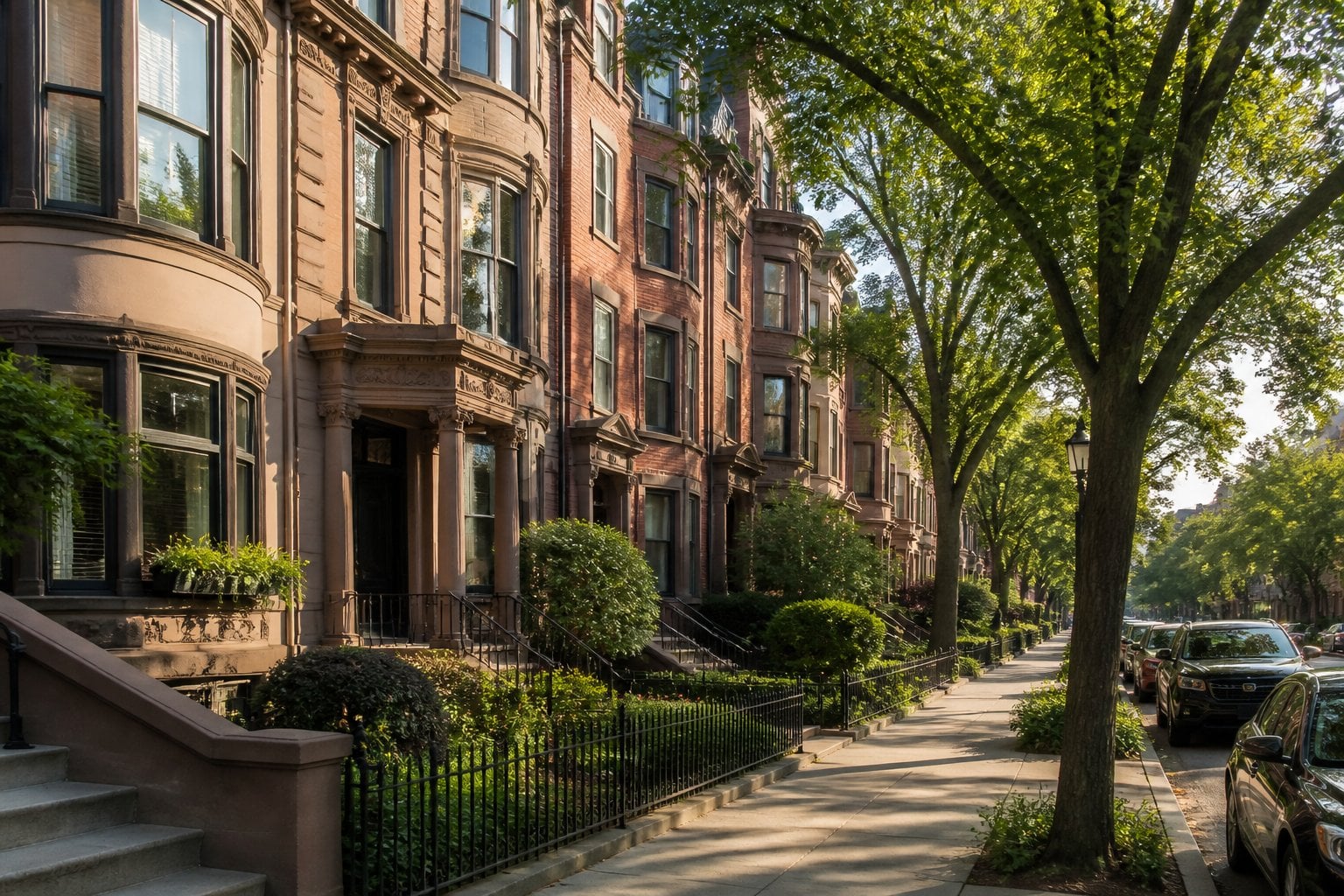
Back Bay sits on filled land developed between 1857 and the 1890s, giving you one of the most intact examples of 19th-century urban planning in the country. You’ll find Queen Anne brownstones and Romanesque Revival facades lining Commonwealth Avenue and the surrounding grid.
If you’re shopping for a single-family home here, expect to pay in the millions. Condos in converted brownstones command premium prices too, particularly those with original architectural details intact.
Newbury Street anchors the neighborhood’s retail and dining scene, drawing high-end shoppers and residents alike. Copley Square adds another layer of prestige with its mix of historic and modern landmarks.
Rental rates in Back Bay run well above Boston’s citywide average. A one-bedroom apartment typically costs significantly more than what you’d pay in most other parts of the city, reflecting the neighborhood’s enduring appeal.
28. Beacon Hill, Boston, Massachusetts
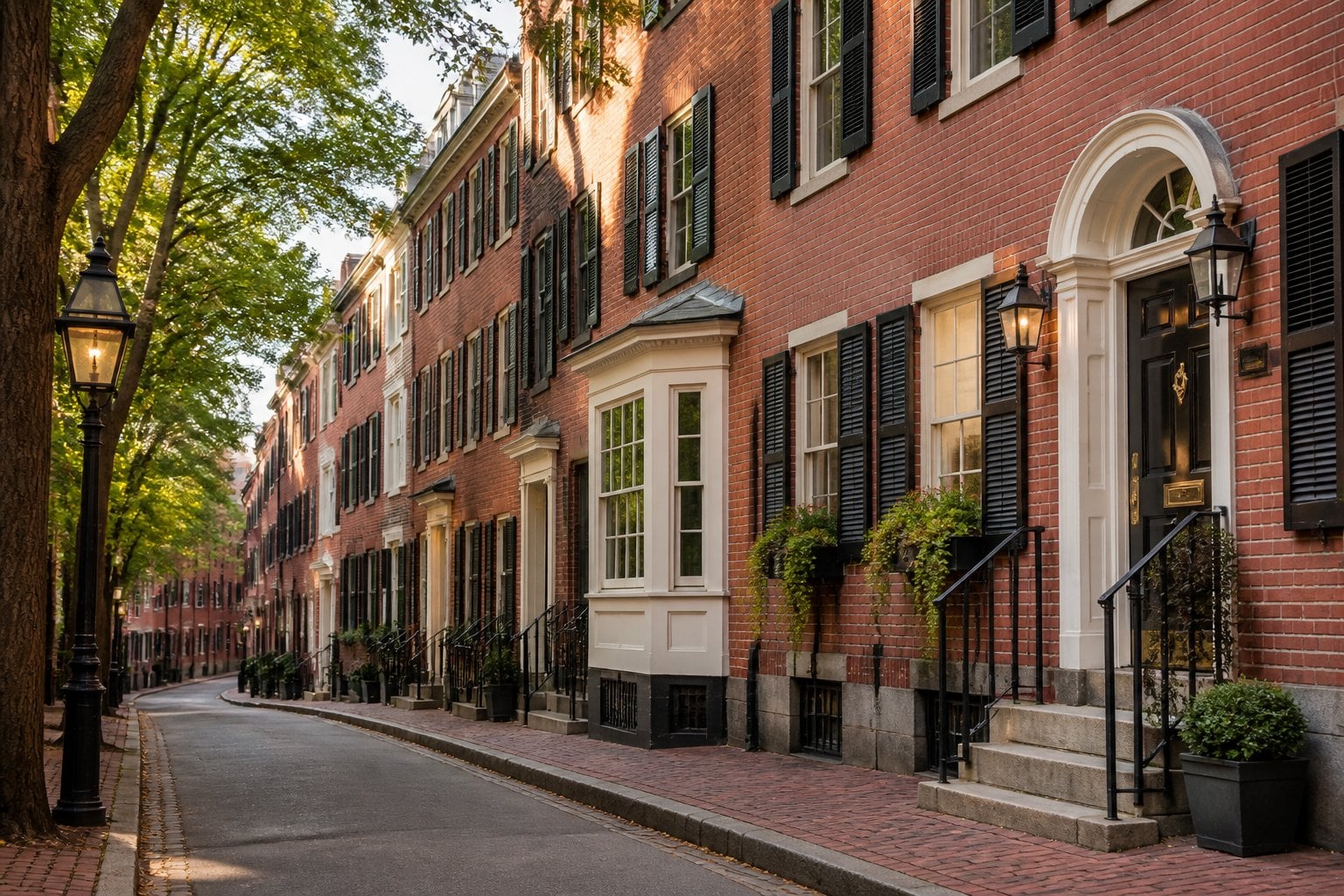
You’ll find Beacon Hill at the top of most lists ranking Boston’s priciest neighborhoods, and the numbers back that up. Median home prices in the area sit above $1 million, with prime addresses like Beacon Street commanding significantly more.
The neighborhood’s value comes from strict historical protections. Beacon Hill was designated Massachusetts’ first historic district in 1955 and later became a National Historic Landmark in 1962. Those rules limit new construction and preserve the brick rowhouses, cobblestone streets, and gas lamps you’ll see throughout the area.
Scarcity plays a role too. With a limited housing stock and few new listings available at any given time, competition for property here stays high.
If you’re considering Beacon Hill, expect to pay a premium for a walkable, historic setting near the State House and Boston Common, with few opportunities for expansion or new development.
29. Wellesley, Massachusetts
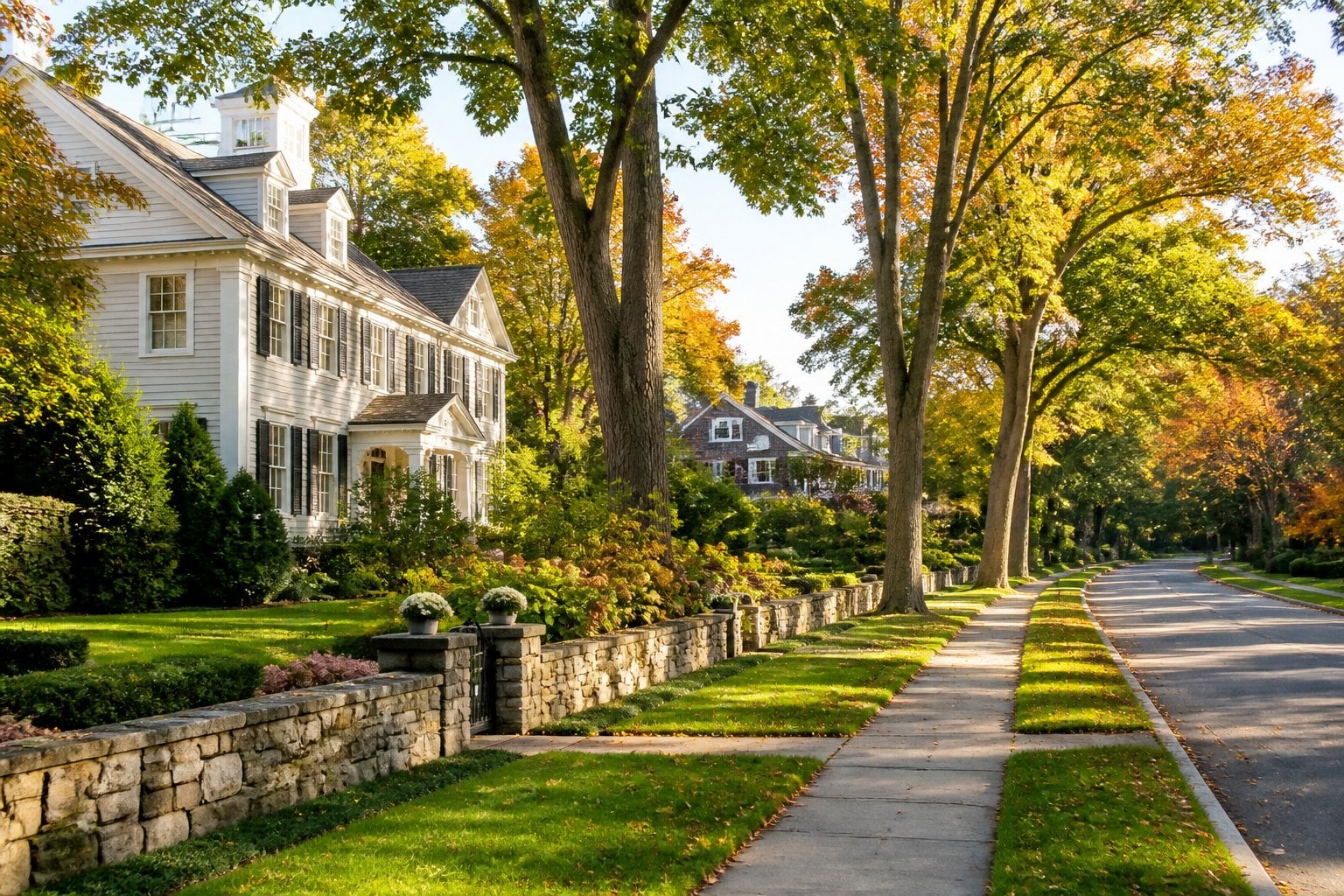
Wellesley ranks among the wealthiest suburbs in the country, with an average household income of $368,179. It sits about 15 miles west of Boston, making it a practical option if you work in the city but want distance from it.
You’ll find that home prices here consistently rank among the highest in Massachusetts and the nation. Wellesley Square, one of the town’s most sought-after areas, has a median home price above $3.5 million.
The town’s appeal comes from more than just wealth. You’ll notice a high concentration of residents working in computer and math fields, reflecting the education levels common in the area.
Neighborhoods like Dana Hall and Cliff Estates offer walkability and access to Wellesley Center, giving you convenience alongside exclusivity. Strong schools and proximity to Boston continue to drive demand, keeping property values elevated year after year.
30. Georgetown, Washington, D.C.
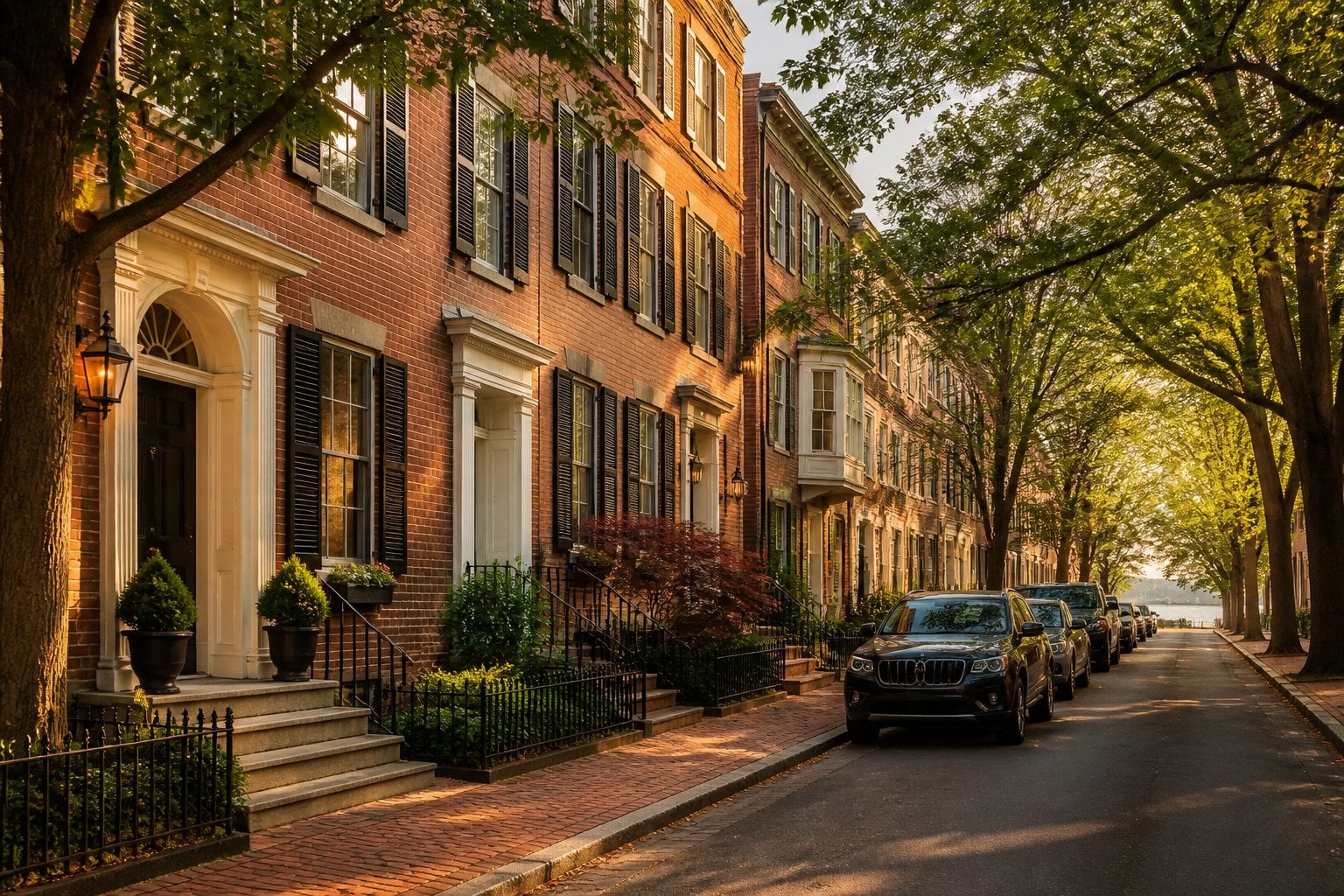
Georgetown predates Washington, D.C. itself, founded in 1751 along the Potomac River. You’ll recognize it by cobblestone streets, Federal-style rowhouses, and a waterfront lined with shops and restaurants.
Home prices here regularly climb past $1 million, and the West Village section holds some of the highest values in the neighborhood. Multi-million dollar estates sit on quiet, tree-lined blocks just steps from busy commercial corridors.
You’re paying for more than architecture. Georgetown’s proximity to federal offices, embassies, and Georgetown University keeps demand steady among buyers who want history alongside convenience.
Renters face high costs too, with one-bedroom units often priced well above the city average. If you’re considering this neighborhood, expect a market shaped by limited inventory, strict historic preservation rules, and buyers competing for a fixed supply of centuries-old properties.
How Neighborhood Wealth And Home Prices Are Measured
Rankings of expensive neighborhoods rely on real estate data sources like Zillow, along with public records and MLS listings. Two factors shape these figures most: the pricing metric used and the physical characteristics of the homes themselves.
Median Sale Price vs. Median Listing Price
When you look at a “most expensive neighborhood” ranking, check whether it uses median sale price or median listing price. These are not the same thing.
Median sale price reflects what buyers actually paid for homes that closed. Median listing price only shows what sellers are asking, which can run higher due to negotiation room or overpricing.
Some rankings use average price instead of median. This matters because:
- Average price gets skewed by a handful of ultra-luxury estates
- Median price shows the true middle point of the market, unaffected by outliers
If you’re comparing neighborhoods across different sources, you may see conflicting numbers simply because one uses averages and another uses medians.
The Role of Property Size, Amenities, and Inventory
Home price alone doesn’t tell you everything about a neighborhood’s wealth. You need to factor in square footage, lot size, and price per square foot to compare areas fairly.
A neighborhood with sprawling estates on multi-acre lots will naturally show higher average prices than one with smaller homes on tighter lots, even if both areas attract similarly wealthy residents.
Amenities also drive valuation. Waterfront access, private security, golf course frontage, and proximity to exclusive schools or country clubs all push prices upward independent of square footage.
Inventory plays a role too. Neighborhoods with very few homes for sale at any given time can show volatile pricing, since one or two high-end transactions can shift the median significantly.
What Drives Exceptional Housing Costs
Several factors combine to push prices in these neighborhoods far above national norms. Land scarcity, proximity to high-paying jobs and top-rated schools, and steep tax and insurance burdens each play a distinct role in shaping what you’ll pay to live there.
Limited Land and High Demand
Geography sets a hard ceiling on supply in many of these neighborhoods. Fisher Island, for example, is only accessible by ferry or boat, and Manalapan sits on a narrow stretch of coastal land in Palm Beach County.
When land is finite, new construction becomes rare or impossible. This scarcity means every available lot faces bidding pressure from buyers with substantial capital.
You’ll notice this pattern most in coastal communities, islands, and dense urban cores. Demand doesn’t ease just because supply is fixed; instead, prices absorb the difference.
Zoning restrictions often compound the issue. Many exclusive neighborhoods maintain low-density rules that prevent subdivision or multi-unit development, keeping housing stock permanently constrained.
Access to Employment, Schools, and Lifestyle Amenities
Location relative to economic opportunity matters as much as the physical property. Neighborhoods near major financial hubs, tech corridors, or entertainment industries command premiums because they cut commute times for high earners.
School district quality also factors heavily into pricing. Buyers with children often pay a direct premium for boundary lines tied to top-performing public schools, regardless of home size or age.
Lifestyle amenities round out the equation:
- Waterfront access or private beaches
- Golf courses and country clubs
- Proximity to fine dining and cultural institutions
- Privacy and low visibility from public roads
These features aren’t just conveniences. They’re often the primary reason buyers select one exclusive area over another with comparable home values.
Taxes, Insurance, and Ongoing Ownership Costs
Buying the home is only the first expense. Property taxes in these areas often run into six figures annually, calculated as a percentage of assessed value that climbs with each reassessment.
Insurance costs add another layer, particularly in coastal or wildfire-prone regions. Florida properties like those in Manalapan or Fisher Island face elevated windstorm and flood insurance premiums due to hurricane exposure.
HOA fees in gated or amenity-rich communities can reach tens of thousands per year. You should also factor in maintenance costs for large properties, which scale with square footage and landscaping demands.
A financed home in one of these ZIP codes can carry annual ownership costs approaching $700,000 before factoring in taxes and insurance, based on standard mortgage terms. That figure changes the calculation for anyone considering a purchase.